Establishing secure connection…Loading editor…Preparing document…

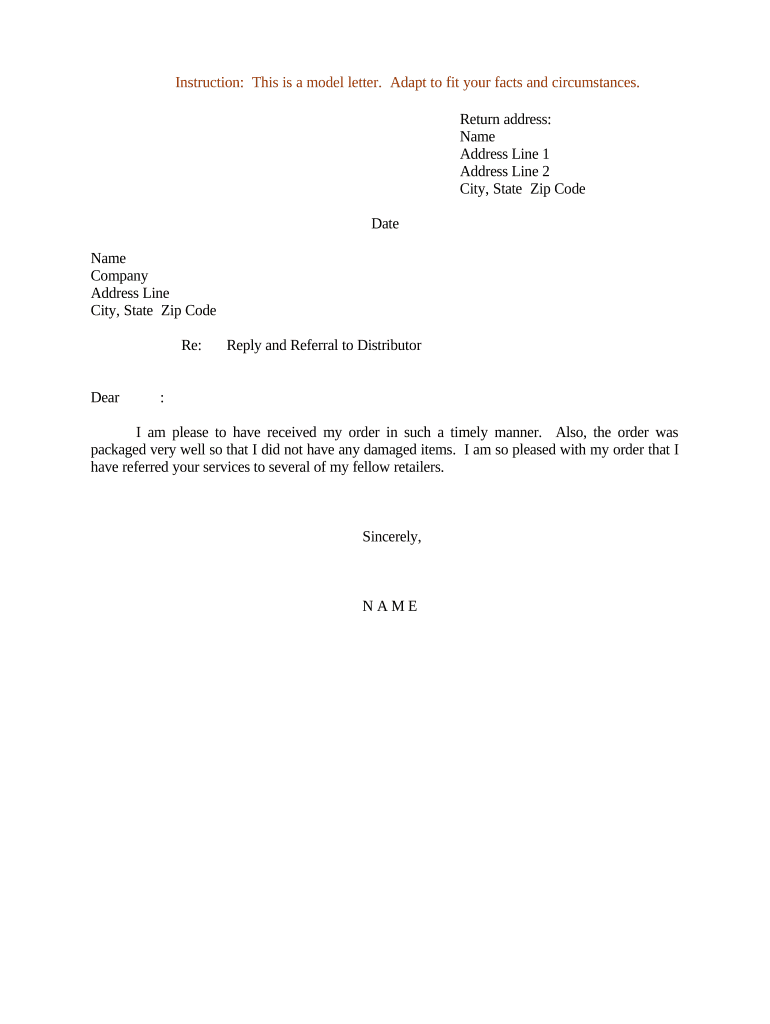
Letter of Referral to Distributor

This template is fully customizable. Edit the text, fill out the fields, and send it for signature. Give it a try!
Letter of Referral to Distributor

What a Letter of Referral to Distributor Is and When it’s Used

A Letter of Referral to Distributor is a concise business document that endorses a specific distributor to receive, market, or resell goods on behalf of the referring party. It identifies the referring party, the distributor, the products or product lines covered, scope of the referral, contact information, and any limits of authority. The letter documents intent, facilitates introductions, and can include commercial terms or a referral fee schedule. In most U.S. transactions the letter may be executed electronically consistent with the ESIGN Act (15 U.S.C. ch. 96) and UETA where applicable.

Why a Clear Referral Letter Matters for Distributor Relationships

A well‑crafted referral letter creates a documented chain of introduction, reduces onboarding friction for the distributor, clarifies responsibilities, and preserves evidence of commercial intent. It also helps protect referral fees, sets expectations, and supports compliance with tax and contract obligations in downstream transactions.

Why a Clear Referral Letter Matters for Distributor Relationships

Who Typically Prepares and Receives These Letters

Organizations and individuals use referral letters to formalize introductions and document permissions before distribution begins.

  • Manufacturers and brand managers seeking verified reseller or distributor partnerships for specific territories or SKUs.
  • Sales representatives or brokers who require documented consent to introduce a distributor to customers or markets.
  • Distributors and resellers who need written authorization or background from a manufacturer to onboard accounts or access inventory.

Essential Elements to Include in the Letter of Referral to Distributor

A professional referral letter contains defined parties, scope, effective dates, contact and product details, any compensation or fee terms, and signature blocks for authorized signatories.

Parties

Identify the referring party and the distributor by full legal name and business entity type to avoid ambiguity in enforcement or tax reporting.
Scope

Describe the product lines, geographic territory, customer segments, or account lists the referral covers to limit disputes about applicability.

Authority

State whether the letter grants authority to negotiate, sell, solicit, or only to introduce; clarify limitations such as non‑binding introductions versus appointment.

Compensation

Document referral fees, commission percentages, payment timing, and conditions for earning or forfeiting referral compensation.

Effective Dates

Specify the effective date and any expiration or review date; include start and end dates to control the referral period precisely.

Signatures

Provide signature blocks for authorized representatives and include printed names, titles, dates, and any witness or notarial blocks required by law.

Step-by-Step: Preparing and Issuing the Letter

Follow these practical steps to prepare, approve, and distribute a Letter of Referral to Distributor for reliable onboarding.

  • 01
    Draft the Letter: Populate parties, scope, dates, and referral fee terms clearly and concisely.
  • 02
    Review Internally: Legal or sales operations should confirm authority and tax handling before issuing.
  • 03
    Obtain Signatures: Have authorized representatives sign; include notary or witness if required.
  • 04
    Share with Parties: Send the signed letter to the distributor and retain a copy for records and tax purposes.

How Electronic Completion and Delivery Typically Flow

Electronic workflows streamline execution. The typical flow moves from draft to sign and then to archival and distribution.

  • Upload Document: Prepare the letter in PDF or DOCX and upload to your eSignature platform.
  • Add Fields: Place signature, date, and initial fields and any conditional fields for fee tables.
  • Authenticate Signers: Select signer authentication level such as email link, SMS code, or stronger methods where needed.
  • Route and Store: Route the completed letter to signers and store a copy in secure document storage.

Typical Online Workflow Settings for the Letter

Configure the digital workflow to ensure correct signing order, authentication, and retention policies.

Field Configuration
Document Template Create a reusable template with preplaced fields for consistent execution.
Signature Method Choose e-signature or digital signature per compliance and buyer requirements.
Signer Authentication Select email link or SMS code; use KBA or two-factor for high-risk deals.
Storage / Retention Configure secure storage with export to your document management system.

Delivery Channels and Technical Requirements

Confirm that chosen platforms support audit trails, secure storage, and the export formats your legal and tax teams require.

  • File Formats: PDF and DOCX are standard; ensure text is selectable for field detection.
  • Integrations: Connect to CRM, ERP, or cloud storage like Salesforce, NetSuite, or Google Workspace.
  • Authentication: Use email, SMS, or stronger identity checks for sensitive referrals.

Typical Timelines, Deadlines, and Processing Expectations

Set clear internal deadlines for review, signature collection, distribution, and tax reporting to avoid missed opportunities or reporting errors.

Internal Review Window:

Allow 3–5 business days for legal and sales operations to review the letter.

Signature Collection Target:

Aim to collect signatures within 7–14 calendar days to preserve momentum.

Distributor Acknowledgement:

Request acknowledgement within 5 business days to confirm acceptance and activate fees.

Tax Reporting Deadlines:

Retain records for tax year reporting obligations and provide documentation to accounting as needed.

Expiration or Renewal:

Track expiration dates and set reminders 30–60 days before the referral term ends.

Common Mistakes to Avoid When Preparing Referral Letters

  • Using informal or trade names instead of legal entity names, which complicates enforcement and tax reporting.
  • Leaving the scope vague, such as 'all products' without SKU ranges or territory limits, leading to disputes.
  • Failing to document compensation triggers or invoicing procedures, which can cause delayed or denied referral payments.
  • Not specifying effective and expiration dates, allowing parties to disagree about whether a referral remains active.

Key Risks and Consequences of an Incorrect or Missing Letter

Contract Disputes: May arise if parties disagree on scope or authority.
Payment Disputes: Referral fees can be withheld for incomplete terms.
Tax Complications: Incorrect payee details can trigger backup withholding.
Compliance Failures: Privacy or regulatory rules may be violated without proper controls.
Onboarding Delays: Distributor may delay account setup without clear authorization.
Reputational Risk: Unclear introductions can harm long-term partnerships.

Industry Examples: How Referral Letters Are Used

Real-world examples show how letters of referral streamline distributor onboarding and protect referral arrangements.

Trade Partner Introduction

A regional manufacturer introduced a logistics distributor to handle Midwest fulfillment

  • The letter limited the distributor to specified SKUs and territory
  • The written referral clarified fee triggers and reduced onboarding time while preserving the manufacturer’s right to appoint other distributors outside the defined region.

Healthcare Supply Referral

A medical supplier referred a certified distributor to hospitals for PPE distribution

  • The letter required HIPAA‑aware handling and a BAA when patient data was involved
  • Including explicit privacy language and a signature block enabled faster contract execution and satisfied procurement review teams.

Typical eSignature Pricing and Feature Comparison for Referral Letters

Vendor pricing models and feature sets vary; compare starting prices, trial options, bulk send, audit trails, HIPAA support, and envelope caps.

signNow DocuSign Adobe Sign PandaDoc HelloSign
Starting Price $8/user/mo $15/user/mo $14/user/mo $19/user/mo $15/user/mo
Free Trial 7-day free trial Varies by plan Varies by plan Varies by plan Varies by plan
Bulk Send Yes Yes Yes Yes No
Audit Trail Yes Yes Yes Yes Yes
HIPAA Compliant Yes Yes Yes No No

Security and Compliance Checklist for Electronic Referral Letters

Encryption: TLS 1.2/1.3 in transit; AES‑256 at rest
Audit Trail: Timestamped logs and signer metadata
Access Controls: Role-based access and permissions
HIPAA / BAA: BAA available where required
21 CFR Part 11: Compliant options for regulated records
Certifications: SOC 2 Type II and ISO 27001

Frequently Asked Questions: Letter of Referral to Distributor

Answers to common questions about completing, signing, and storing a Letter of Referral to Distributor.


Need help? Contact support

be ready to get more
Join over 28 million airSlate SignNow users