Heading
Project name, parcel ID, municipal case number and current zoning designation; places the letter in the file.
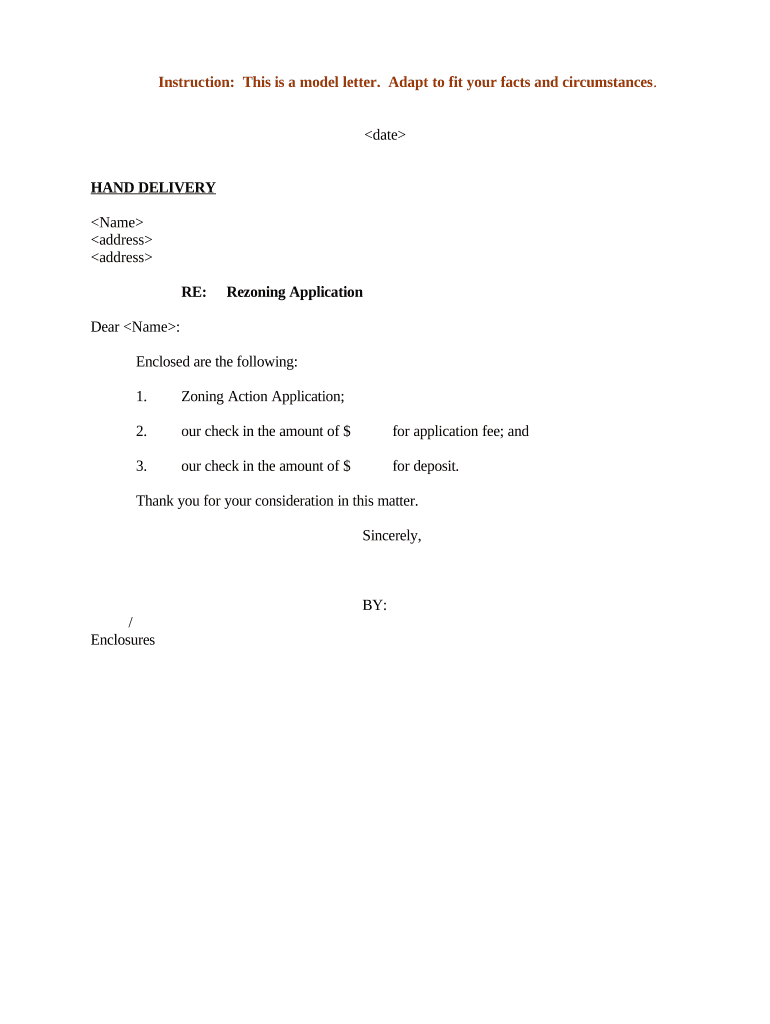
A well-prepared letter frames the rezoning request, clarifies intent, and highlights compliance with local plans and standards. It helps reviewers and the public understand impacts, mitigations, and the legal basis for approval.

The following stakeholders commonly draft, submit, or review rezoning letters as part of local land use proceedings.
Tailor content and tone to the intended audience: administrative reviewers require precise facts; elected bodies often value brief policy summaries.
Project name, parcel ID, municipal case number and current zoning designation; places the letter in the file.
Full legal name, mailing address, contact phone and email for the applicant and authorized agent or attorney.
Street address, legal description or parcel number, acreage, and an accurate site map reference.
Clear statement of the rezoning sought (zoning districts to/from) and any related map or code amendments.
Concise justification tying the request to the comprehensive plan, land use compatibility, traffic, utilities, and other technical points.
List of supporting documents: plats, surveys, traffic studies, environmental assessments, and application forms.
| Field | Configuration |
|---|---|
| Document Title | Use exact project name matching application. |
| File Types | Accept PDF for letter, plans, and studies. |
| Signer Role | Assign Owner or Authorized Agent role for signature. |
| Delivery Receipt | Enable email confirmation and retain audit trail. |
Many municipalities accept or prefer electronic letters and attached exhibits when the files meet format and authentication standards.
Confirm the local jurisdiction's electronic submission policy, including required file formats, maximum file sizes, and any identity verification rules.
Submit by the municipal filing deadline to meet the next review cycle.
Public notice often requires 10–30 days before the hearing, per local code.
Staff typically issues a report 7–21 days before the public hearing.
Hearing dates follow the published schedule; plan for multiple hearings if continued.
Appeals usually must be filed within 30 days after the decision, depending on local rules.
Intake office accepts application and assigns a case number.
Planning staff evaluates zoning consistency and technical requirements.
Decision-making body holds a hearing and records the outcome.
Council or board issues ordinance or resolution implementing rezoning if approved.
A small developer submitted a concise letter linking the request to the comprehensive plan
A public agency provided a technical letter focused on utilities and access
| signNow | DocuSign | Adobe Sign | PandaDoc | HelloSign | |
|---|---|---|---|---|---|
| Starting Price | $8/user/mo | $15/user/mo | $14/user/mo | $19/user/mo | $15/user/mo |
| Free Trial | 7-day free trial | No | No | Yes, limited | Yes, limited |
| Bulk Send | Yes | Yes | Yes | Yes | No |
| Audit Trail | Yes | Yes | Yes | Yes | Yes |
| HIPAA Compliant | Yes | Yes | Yes | No | No |