Caption
Complete court caption with case number, court name, party names, and attorney contact details so the clerk and judge can identify the matter.
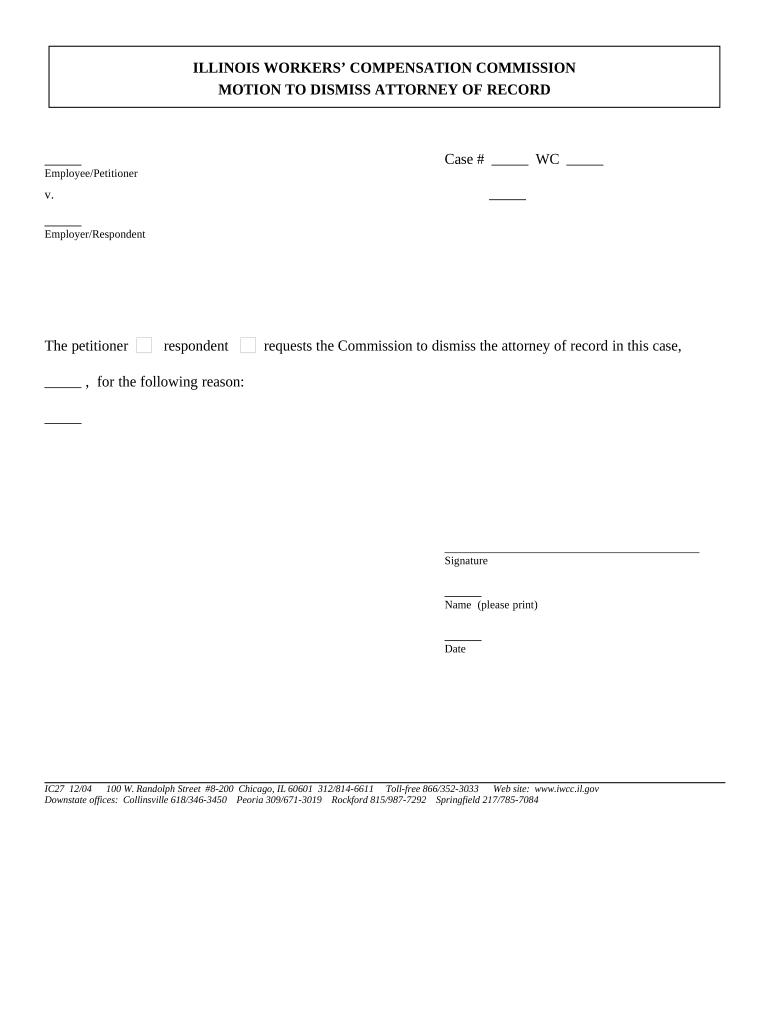
A correctly prepared Motion to Dismiss can dispose of claims early, reduce discovery costs, and narrow litigation scope. It frames the legal arguments for the court and preserves jurisdictional or pleading defenses that might otherwise be waived.

Lawyers, self-represented litigants, and court clerks commonly prepare or process Motions to Dismiss; specifics vary by case complexity and party resources.
Regardless of who prepares the document, accuracy in captioning, grounds cited, service, and timing is essential to preserve defenses and avoid procedural sanctions.
Complete court caption with case number, court name, party names, and attorney contact details so the clerk and judge can identify the matter.
Clear title stating 'Motion to Dismiss' with the specific rule or statute invoked, for example lack of jurisdiction or failure to state a claim.
Concise, nonargumentative factual background limited to what is necessary to support the legal grounds for dismissal.
Pointed statutory and case-law citations explaining why the complaint is deficient, including standards applied on a motion to dismiss.
Attach only documents referenced in the motion and clearly label exhibits so the court can review relevant materials quickly.
A one-page proposed order the judge may sign granting or denying the motion, formatted to local court requirements.
| Field | Configuration |
|---|---|
| Caption Field | Locked text block replicating court caption for reuse. |
| Exhibit Attachments | Required file upload fields with size limits and labels. |
| Signature Field | Signer email and date; attach audit trail capture. |
| Proof of Service | Checkbox and text field for service method and date. |
Use an e-signature platform that preserves an audit trail, supports required file formats, and meets court e-filing acceptance rules.
Confirm the local court accepts electronically signed documents and that your platform can export native PDF with embedded audit information for the court record.
Often 21 days from service; verify Federal Rules of Civil Procedure.
Commonly 21–30 days from service; check local civil procedure rules.
Local rules may require a specific number of days' notice before hearing.
Parties may stipulate or seek court extensions when permitted.
Deadlines run from valid service; inaccurate service dates cause waiver risks.
Draft motion and exhibits; allow time for legal review.
Submit e-file or deliver in person; clerk docketing follows.
Opposing party files response or waiver within rule period.
Court issues order, may schedule hearing or rule on papers.
| signNow | DocuSign | Adobe Sign | PandaDoc | HelloSign | |
|---|---|---|---|---|---|
| Starting Price | $8/user/mo | $15/user/mo | $14/user/mo | $19/user/mo | $15/user/mo |
| Free Trial | 7-day trial (no credit card) | Varies by plan | Varies by plan | Varies by plan | Varies by plan |
| Bulk Send | Yes (Business Premium) | Varies by plan | Varies by plan | Varies by plan | Varies by plan |
| Audit Trail | Yes | Yes | Yes | Yes | Yes |
| Envelope Cap | No envelope cap | 100 envelopes/user/year limit | Varies by plan | Varies by plan | Varies by plan |