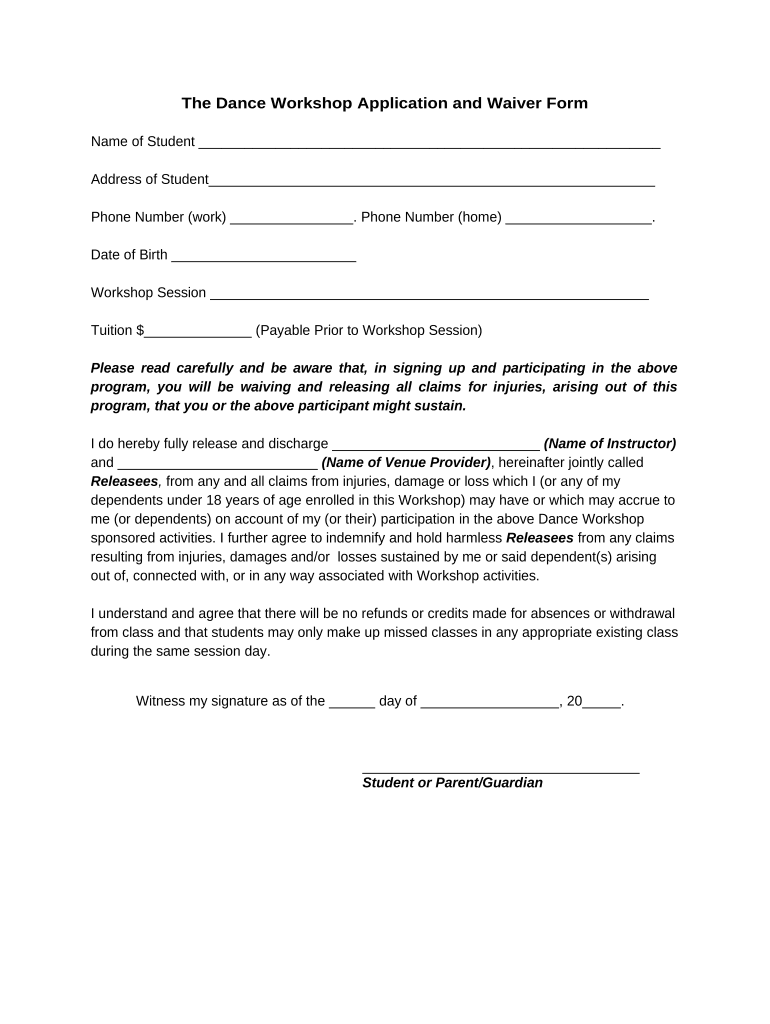
School Waiver Form
What a School Waiver Form Is and When It’s Used
Why a Clear School Waiver Form Matters
A well‑constructed waiver reduces ambiguity about risks and documents consent, supporting better incident response and administrative records while protecting institutional interests within applicable law.
Who Typically Completes a School Waiver Form
Schools, activity leaders, and parents use waivers to document consent and emergency details before events or ongoing programs.
- K–12 administrators and teachers who coordinate field trips and after‑school programs.
- Athletic directors and coaches collecting season or event participation consent.
- Parents or adult participants providing contact, medical, and signature information.
Key Risks if a Waiver Is Incomplete or Incorrect
Common Mistakes to Avoid When Preparing Waivers
- Using vague language that does not clearly describe the activity or the specific risks involved, which weakens enforceability and harms informed consent.
- Allowing unsigned or undated forms to be used; missing dates or signatures can render a waiver ineffective in disputes.
- Collecting sensitive health information without limiting access and proper privacy safeguards, risking HIPAA or FERPA exposure for student records.
- Failing to offer an accessible paper alternative or failure to obtain explicit consent for electronic delivery where consumer‑facing disclosure is required.
Step‑by‑Step: Filling Out a School Waiver Form
-
01Identify Parties: Enter student and parent/guardian legal names.
-
02Describe Activity: Specify event name, location, and dates.
-
03Provide Medical Details: List allergies, medications, and emergency contacts.
-
04Sign and Date: Parent or adult signs and records MM/DD/YYYY date.
How to Configure an Online Waiver Workflow
| Field | Configuration |
|---|---|
| Form Fields | Use required fields for name, date, and emergency contact. |
| Conditional Logic | Show medical fields only when 'medical condition' is checked. |
| Authentication | Use email + SMS OTP for parent verification. |
| Reminders | Enable automated reminders before event deadlines. |
Digital Signing Requirements and Integrations
Choose a platform that supports HIPAA, audit trails, and common integrations for education workflows.
- Integrations: Google Workspace, Microsoft 365
- Formats Supported: PDF, DOCX, HTML
- Authentication: Email, SMS, KBA
Ensure the chosen solution can export signed PDFs with audit trails and connect to student information systems for centralized records.
Where to Submit a Completed Waiver
-
School Office: Deliver physical or upload electronic copy to administrative office.
-
Activities Coordinator: Send completed form to program coordinator for event rosters.
-
Student Information System: Upload signed PDF to the student's record in SIS.
-
Event Lead: Provide copy to coach or trip leader for on‑site use.
Timelines and Processing Expectations
Submission Deadline:
Submit at least 7–14 days before the activity.
Verification Window:
Allow 48–72 hours for staff validation.
Late Submissions:
May be refused depending on risk and staffing.
Record Entry:
Archivist enters into SIS within 5 business days.
Retention Notice:
Notify signers of electronic copy availability.
Key Processing Milestones Before an Event
Draft and Review
Legal and program staff finalize language and risk disclosures.
Distribution
Forms are sent to parents and participants for completion.
Collection and Verification
Signed waivers are checked and missing items flagged for follow up.
Archival
Completed forms are stored in the student record and backups created.
eSignature Vendor Comparison for School Waiver Workflows
| signNow | DocuSign | Adobe Sign | PandaDoc | HelloSign | |
|---|---|---|---|---|---|
| Starting Price | $8/user/mo | $15/user/mo | $14/user/mo | $19/user/mo | $15/user/mo |
| Free Trial | 7‑day free trial, no card required | Varies by plan | Varies by plan | Varies by plan | Varies by plan |
| Bulk Send | Yes | Yes | Yes | Yes | No |
| Audit Trail | Yes | Yes | Yes | Yes | Yes |
| HIPAA Compliant | Yes | Yes | Yes | No | No |
Practical Examples: Common School Waiver Scenarios
Field Trip Permission
A middle school sends waivers for a museum visit by email
- Parents complete emergency contact and allergy fields immediately
- Signed digital copies are stored in the student information system and printed rosters are provided to chaperones.
Athletic Participation
A district distributes a season waiver for high school athletics with medical release and insurance info
- Coaches confirm completion before first practice
- Completed forms are kept for the season plus seven years for incident investigations.
Best Practices for Accurate and Efficient Waiver Management
FAQs and Troubleshooting for School Waiver Forms
-
Are electronic signatures valid on waivers?
Yes. Electronic signatures are enforceable under the federal ESIGN Act (15 U.S.C. ch. 96) and state UETA laws when intent, consent, attribution, and retention standards are met.
-
Do parents need to notarize waivers?
Not typically. Notarization is uncommon for routine permission slips; use notarization only if state law or district policy requires it for specific releases.
-
What if a waiver is missing a signature?
If unsigned, the waiver generally lacks enforceability. Contact the parent promptly to obtain a signature or document a written exception from legal counsel.
-
Can a minor sign a waiver on their own?
Minors generally cannot provide legal consent; a parent or legal guardian must sign for participants under the age of majority unless a statute allows otherwise.
-
How can a signer revoke consent?
Revocation procedures should be specified in the form. Practically, revocation is handled by notifying program staff and may limit future participation; legal effect varies by jurisdiction.
-
How should completed waivers be stored?
Store signed waivers in a secure system, retain according to applicable retention rules (see HIPAA and IRS standards), and limit access to authorized personnel only.