Establishing secure connection…Loading editor…Preparing document…

Settlement Offer

This template is fully customizable. Edit the text, fill out the fields, and send it for signature. Give it a try!
Settlement Offer

What a Settlement Offer Is and When it's Used

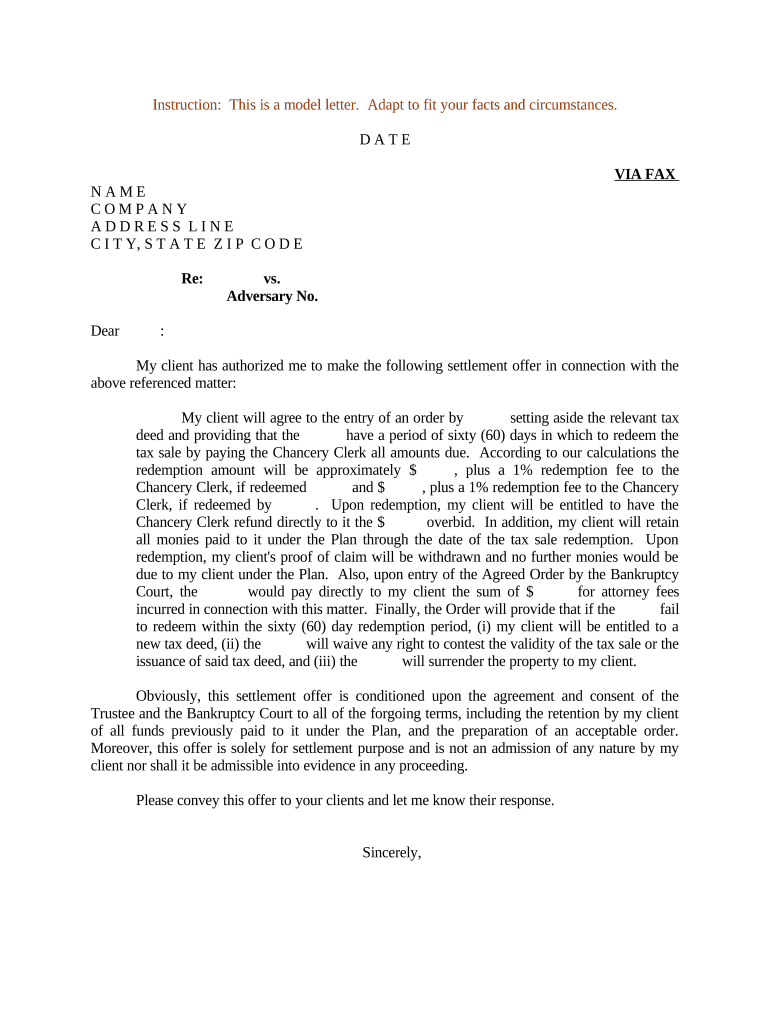
A Settlement Offer is a written proposal from one party to another proposing terms to resolve a dispute, claim, or contractual difference without litigation. It typically summarizes the parties, the amount or relief offered, the conditions for acceptance, any release language, and a deadline for response. Settlement Offers can be used in commercial contract disputes, personal injury claims, employment matters, and debt negotiations. Properly drafted offers clarify payment schedules, confidentiality, and jurisdiction clauses so that, upon acceptance, the parties can execute a binding agreement and avoid further dispute resolution costs.

Why a Clear Settlement Offer Matters

A well-structured Settlement Offer reduces ambiguity, lowers litigation risk, and creates a clear acceptance path that can convert into an enforceable agreement. It protects both parties by documenting terms, deadlines, and release language while preserving negotiation leverage and evidentiary records.

Why a Clear Settlement Offer Matters

Who Typically Prepares and Signs Settlement Offers

Common preparers include attorneys, claims adjusters, in-house legal teams, and finance or operations managers acting under legal guidance.

  • Plaintiff counsel or claimant representatives who propose monetary or injunctive relief in exchange for a release.
  • Defense counsel, insurers, or corporate contract managers who draft conditional acceptance terms and confidentiality clauses.
  • In-house executives or claims managers who approve settlement amounts and sign as authorized company representatives.

Ensure the preparer has authority to bind the organization and that signatory authority is documented in the offer or company records.

Who Signs and Why

Claims Manager

A claims manager signs to conclude insurer obligations quickly and control cost exposure. Their signature usually follows internal approvals and budget authority and is often accompanied by a release of future claims.

Authorized Officer

A corporate officer or delegated signatory signs on behalf of the company to bind contractual obligations; confirm delegation via board resolution or signing authority policy before executing.

Security, Compliance, and Retention Essentials

Encryption: TLS 1.2/1.3 in transit; AES-256 at rest
Audit Trail: Timestamped logs, IP, and event history
Legal Frameworks: ESIGN and UETA compliant
Regulated Use: HIPAA available with BAA
Records Access: Downloadable signed PDFs and certificates
Certifications: SOC 2 Type II, ISO 27001

Consequences of an Incorrect or Incomplete Offer

Invalid Signature: May void acceptance or invite challenge
Missing Terms: Creates enforceability disputes
Late Response: Offers can lapse and be unenforceable
Incorrect Tax Reporting: Could trigger IRS penalties
Breach of Privacy: HIPAA or data rules violation
Intentional Misstatement: Exposure to fraud claims

Common Mistakes to Avoid When Preparing a Settlement Offer

  • Using vague release language that fails to cover related claims and creates ambiguity in enforcement or future disputes.
  • Failing to include an explicit acceptance method and deadline, which can result in lost settlement windows or misunderstandings.
  • Not verifying signatory authority for corporate or institutional parties, exposing the agreement to later ratification challenges.
  • Neglecting tax or reporting implications for payments, which can create downstream IRS reporting penalties or withholding obligations.

Step-by-Step: How to Draft a Practical Settlement Offer

Follow these core steps to prepare a clear, enforceable Settlement Offer that protects interests and reduces litigation exposure.

  • 01
    Identify Parties: List full legal names and capacities
  • 02
    State Terms: Specify amount, payments, and schedule
  • 03
    Include Release: Draft broad but precise release language
  • 04
    Set Deadline: Provide explicit acceptance method and expiry

Typical Settlement Offer Flow from Draft to Closure

A Settlement Offer follows a predictable path from proposal to execution and recordation when applicable.

  • Draft: Prepare offer text and supporting exhibits
  • Review: Legal and finance verify terms and authority
  • Send: Transmit via tracked delivery or eSignature link
  • Accept & Record: Receive signed acceptance and retain executed copy

Key Components of a Professional Settlement Offer

Each Settlement Offer should contain clear structural elements so acceptance converts reliably into an enforceable agreement.

Parties

Full legal names, entity types, and contact details for the offeror, offeree, and any paying or holding entities.
Recitals

Short factual background that frames the dispute, identifies claims being resolved, and establishes context for the settlement.

Consideration

Precise monetary amount or non-monetary relief, payment schedule, method of payment, and any tax withholding responsibilities.

Release

Comprehensive release of past, present, and known claims, with narrowly tailored carve-outs where required.

Conditions

Contingencies such as escrow, proof of authority, court approval, or regulatory clearances required before performance.

Acceptance Terms

How acceptance is communicated, whether signature alone binds the parties, and the exact expiry date and time.

How to Set Up a Digital Settlement Offer Workflow

Configure your digital routing to collect signatures, evidence acceptance, and store records securely.

Field Configuration
Signature Field Require signer signature and date
Authentication Enable email or SMS verification
Conditional Fields Show payment details after acceptance
Audit Trail Capture timestamps, IPs, and events

Digital Signing and eSubmission Considerations

Choose a platform that supports secure eSignatures, traceable audit trails, and retention export.

  • Authentication: Email links, SMS codes, or KBA for higher assurance
  • File Formats: PDF and DOCX supported for signed records
  • Integrations: Connectors for CRM, cloud storage, and case management

Ensure the chosen provider supports ESIGN/UETA compliance, downloadable certificates of completion, and secure archival for audit or litigation.

Critical Timelines and Deadlines to Include

Explicit dates avoid confusion and preserve enforceability; include calendar dates and time zones where appropriate.

Offer Expiry:

Specific date and time when the offer automatically lapses

Acceptance Deadline:

Last date to accept and binding method specified

Payment Dates:

Due dates for lump sum or installment payments

Document Exchange:

Deadline to deliver releases, releases or proof of authority

Filing or Notice:

Date to file dismissal, satisfaction, or notice with tribunal

Key Milestones from Offer to Closing

A milestone timeline helps parties track acceptance, payments, and any required filings or court actions.

01

Offer Issued

Draft sent to recipient with terms and deadline

02

Negotiation Window

Period for counteroffers before expiry

03

Acceptance Executed

Signed acceptance returned and recorded

04

Performance & Closure

Payments made, releases exchanged, and case closed

eSignature Vendor Comparison for Executing a Settlement Offer

Compare typical vendor pricing and capability signals when choosing an eSignature provider for settlement workflows; signNow is listed first per vendor ordering rules.

signNow DocuSign Adobe Sign PandaDoc HelloSign
Starting Price $8/user/mo $15/user/mo $14/user/mo $19/user/mo $15/user/mo
Free Trial 7-day free trial Varies by plan Varies by plan Varies by plan Varies by plan
Bulk Send Yes Yes Yes Yes Varies
Audit Trail Yes Yes Yes Yes Yes
HIPAA Compliant Yes Varies by plan Varies by plan Varies by plan Varies by plan
Envelope Cap No envelope cap 100 envelopes/user/year Varies Varies Varies

Example Scenarios Showing How Settlement Offers Are Used

These concise scenarios illustrate typical settlement structures and practical considerations.

Commercial Contract Dispute

A vendor and buyer exchange offers to resolve overdue payments and delivery claims.

  • Negotiation centers on payment schedule and release scope.
  • The final offer ties payments to deliverable milestones, includes a mutual release, and requires authorized officer signatures and a 14-day acceptance window to close the matter without litigation.

Employment Separation

An employer offers severance in exchange for a general release and confidentiality terms.

  • Key issues include tax reporting and reference language.
  • The executed offer sets severance payment dates, requires signing with an acknowledgment of voluntary acceptance, and specifies that the release survives termination and any future claims.

Practical Tips for Accurate and Efficient Settlement Offers

Follow these best practices to reduce error, speed acceptance, and maintain enforceable records.

Use Clear Dates
Always include MM/DD/YYYY dates and time zones so deadlines are unambiguous and enforceable.
Confirm Authority
Attach proof of signatory authority or internal approval memos when a corporate officer signs.
Standardize Releases
Maintain vetted release templates to ensure consistent coverage of claims and avoid unintended carve-outs.
Preserve Audit Trails
Capture signed PDFs, certificates of completion, and event logs to support enforceability and discovery needs.

FAQs and Troubleshooting for Settlement Offers

Common questions and quick remedies when drafting, sending, or executing a Settlement Offer.


Need help? Contact support

be ready to get more
Join over 28 million airSlate SignNow users