Establishing secure connection…Loading editor…Preparing document…

Stock Pledge Agreement

This template is fully customizable. Edit the text, fill out the fields, and send it for signature. Give it a try!
Stock Pledge Agreement

What a Stock Pledge Agreement Is and When Parties Use It

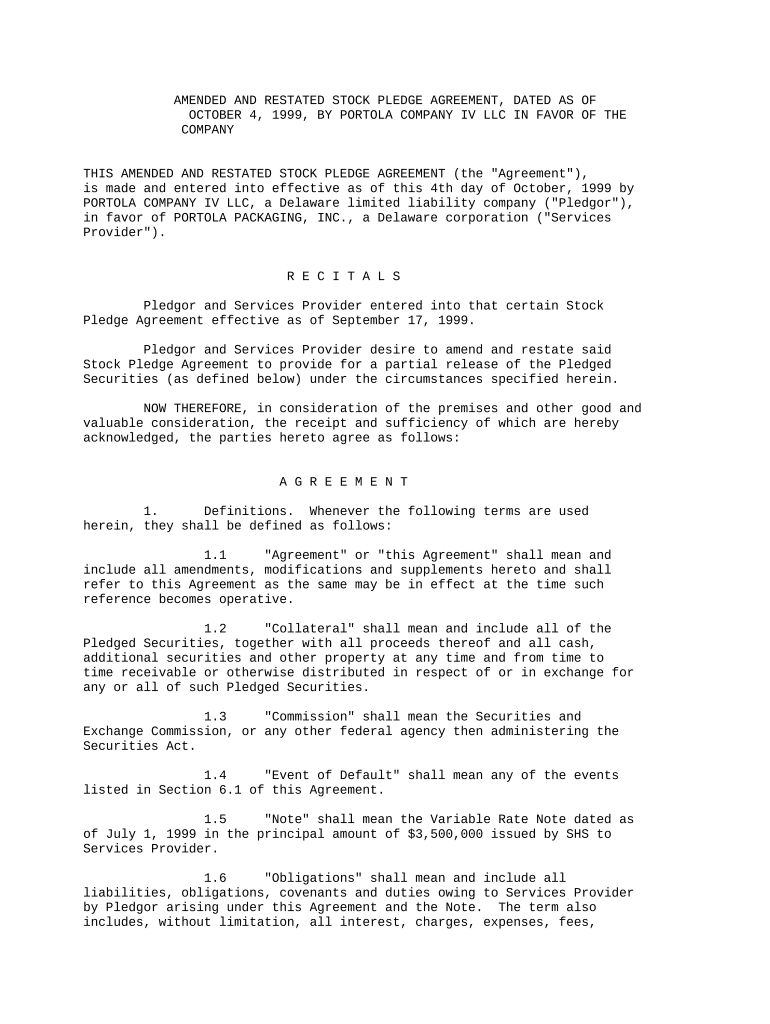
A Stock Pledge Agreement creates a security interest in shares of stock to secure an obligation, typically a loan. The pledgor (shareholder) grants the pledgee (lender) a collateral interest in specified shares, describing certificates or book-entry positions, number of shares, and transfer mechanics. The agreement defines representations, covenants, events of default, and remedies (including sale or transfer of pledged shares). Perfection steps such as delivering certificates, stock powers, and filing a UCC-1 financing statement are commonly included to protect the pledgee's priority.

Why a Clear Stock Pledge Agreement Matters

A well-drafted Stock Pledge Agreement clarifies collateral scope, preserves lender priority, limits disputes over voting and dividends, and sets predictable enforcement steps if the debtor defaults.

Why a Clear Stock Pledge Agreement Matters

Typical parties and situations that use stock pledge agreements

Common users include lenders, private equity firms, startups with investor loans, and shareholders granting collateral for corporate obligations.

  • Banks and credit funds seeking collateral for secured credit facilities
  • Private lenders or venture lenders securing loans to companies or founders
  • Corporate borrowers arranging intra-group credit or seller financing

Core components to include in a professional Stock Pledge Agreement

Include precise definitions and operational mechanics so parties and third parties can easily determine the pledged collateral, perfection steps, and remedies. Clarity reduces litigation risk and expedites enforcement when necessary.

Grant of Security

A clear grant clause identifying pledged shares by class, number, certificate numbers or book-entry details and scope of collateral including dividends and proceeds.
Representations

Pledgor warranties about title, ownership free of other liens, authority to pledge, and absence of transfer restrictions that would invalidate the security interest.

Covenants

Ongoing obligations such as maintaining good standing, not transferring shares, providing stockholder notices, and delivering required documentation on demand.

Perfection Steps

Delivery of certificates, executed stock powers, corporate resolutions, and filing a UCC-1 financing statement to perfect and prioritize the pledgee's security interest.

Events of Default

Defined triggers such as payment default, insolvency, breach of covenants, or unauthorized transfer that permit acceleration and enforcement remedies.

Remedies

Rights upon default including notice procedures, sale or transfer of shares, application of proceeds, and allocation of surplus or deficiency.

Step-by-step: completing and perfecting a Stock Pledge Agreement

Follow an ordered process to reduce execution risk and establish priority for the secured party.

  • 01
    Drafting: Prepare agreement with precise collateral description and remedy clauses.
  • 02
    Execution: Obtain signatures from pledgor and pledgee, with corporate officer attestations if needed.
  • 03
    Delivery: Deliver stock certificates, endorsed stock powers, or transfer-agent instructions promptly.
  • 04
    Perfection: File UCC-1 financing statement in the correct state filing office to perfect the security interest.

Where the executed Stock Pledge Agreement goes next

After signing, route copies to the secured party, the pledgor, corporate records, and any third parties required for perfection.

  • Lender File: Pledgee retains an executed original in its collateral file for enforcement readiness.
  • Company Records: Deliver copies to the issuing corporation for transfer-agent notation and board minutes.
  • Transfer Agent: Supply endorsed certificates or transfer instructions to the transfer agent where applicable.
  • UCC Filing Office: File or index a UCC-1 at the appropriate Secretary of State office to perfect the lien.

Configuring an online workflow for Stock Pledge Agreements

Set up document routing and signer authentication to match the agreement's legal and corporate requirements.

Field Configuration
Signer Order Specify pledgor then pledgee; include corporate approver if required
Authentication Use email + SMS code or stronger KBA for high-value pledges
Attachments Require stock certificates, stock powers, and board resolutions as mandatory uploads
Retention Store executed PDF/A with audit trail and export for UCC filing

Digital signing and technical considerations for secure execution

Use an eSignature platform that supports strong authentication, audit trails, and secure file formats for evidentiary weight.

  • Authentication: Email + SMS code or higher
  • Audit Trail: Timestamp, IP, and action log
  • Formats: PDF/A export and long-term preservation

Typical eSignature vendor comparison for Stock Pledge workflows

Compare entry-level price, trial availability, bulk send capability, audit trail presence, HIPAA support, and envelope caps when selecting an eSignature provider.

signNow DocuSign Adobe Sign PandaDoc HelloSign
Starting Price $8/user/mo $15/user/mo $14/user/mo $19/user/mo $15/user/mo
Free Trial 7-day free trial Varies Varies Varies Varies
Bulk Send Yes Yes Yes Yes No
Audit Trail Yes Yes Yes Yes Yes
HIPAA Compliant Yes Yes Yes No No

Common drafting and execution mistakes to avoid

  • Imprecise collateral descriptions that omit certificate numbers or book-entry details, leading to unenforceable pledges or priority disputes.
  • Failure to deliver endorsed certificates or stock powers promptly, preventing attachment and timely perfection of the security interest.
  • Neglecting transfer-agent or corporate approval requirements, resulting in refusal to transfer or freeze of pledged shares at enforcement.
  • Omitting intercreditor or subordination clauses when other secured creditors exist, creating unexpected priority and litigation risk.

Key legal and financial risks from incorrect or incomplete Stock Pledge Agreements

Perfection Failure: Loss of priority
Securities Violations: Regulatory exposure
Tax Consequences: Potential withholding
Corporate Rejection: Transfer refused
Enforcement Delay: Higher costs
Priority Dispute: Litigation risk

Typical timeframes and response windows to plan for

Identify milestone dates for execution, delivery of instruments, perfection, notice periods, and any cure windows to avoid acceleration.

Execution Date:

Date parties sign and obligations attach

Certificate Delivery:

Deliver endorsed certificates promptly, typically within a few business days

UCC Filing:

File UCC-1 immediately to protect priority

Default Notice:

Observe any contractual cure period before enforcement

Release:

Record a UCC termination upon satisfaction

Key milestones from agreement signing to final release

Track milestones in sequence so each event leads to the next without administrative gaps or lost priority.

01

Signing

Parties sign the Stock Pledge Agreement and contemporaneous documents.

02

Delivery of Instruments

Pledgor delivers stock certificates, powers, and corporate authorizations to pledgee or escrow.

03

Perfection Filing

Pledgee files a UCC-1 financing statement to perfect and publicize the lien.

04

Ongoing Compliance

Parties comply with covenants; monitor for events of default and cure windows.

Practical tips for accurate and efficient completion

Adopt standard templates, a checklist for exhibits, and a single point of contact for corporate and transfer-agent coordination.

Use Precise Descriptions
Describe shares by class, number, and certificate or book-entry ID to minimize ambiguity and speed transfer-agent acceptance.
Coordinate with Transfer Agent
Confirm transfer-agent requirements early to avoid rework; obtain any required corporate resolutions or medallion guarantees.
File UCC-1 Promptly
File in the correct state office immediately after execution to secure priority over subsequent creditors.
Keep an Audit Trail
Retain executed originals, notarizations if used, and an electronic audit trail with timestamps and signer authentication.

Practical scenarios where a Stock Pledge Agreement is used

Two concise examples show how parties typically use pledges in lending and corporate financing contexts.

Lender Collateralization

A regional lender extends a working capital facility to a closely held company and takes a pledge of founder shares to secure repayment.

  • The pledge requires UCC-1 perfection and delivery of endorsed certificates.
  • On default, the lender follows agreed notice procedures, sells shares through a broker, and applies proceeds to the loan balance, documenting each step in the enforcement file.

Seller-Financing Security

A seller provides purchase financing for a minority stake and accepts the buyer's newly issued shares as collateral.

  • The agreement limits transfers and requires board approval for enforcement transfers.
  • If the buyer defaults, the seller enforces collateral rights per the agreement, coordinating with the transfer agent to effect ownership change consistent with corporate requirements.

Frequently asked questions about Stock Pledge Agreements

Answers to common legal and practical questions about enforceability, perfection, and electronic execution of stock pledges.


Need help? Contact support

be ready to get more
Join over 28 million airSlate SignNow users