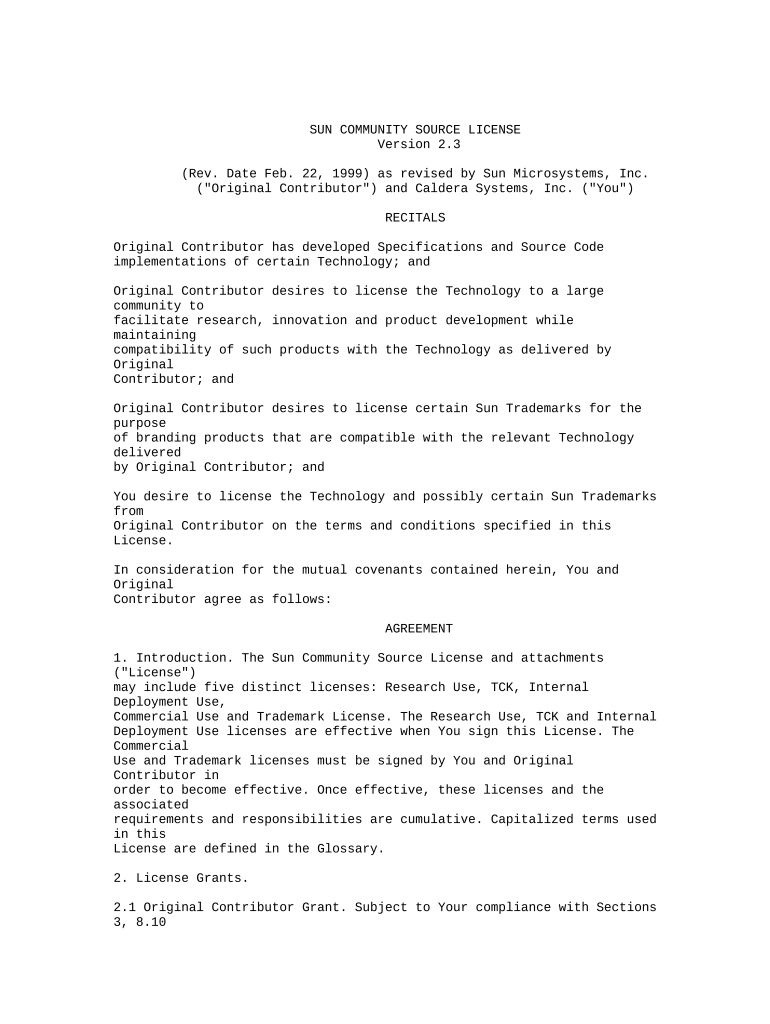
Technology License Agreement
What a Technology License Agreement Covers
Why a Clear License Agreement Matters
A well-drafted Technology License Agreement reduces commercial risk, preserves IP rights, and sets predictable payment and enforcement rules. Clear scope, termination, and audit rights prevent disputes and support due diligence for investors and acquirers.
Who Typically Drafts or Signs This Agreement
Assigning clear internal owners for legal, technical, and commercial items reduces iteration and supports faster, enforceable agreements.
- General counsel and outside counsel responsible for drafting, negotiating IP clauses, and ensuring regulatory compliance.
- Product managers or engineering leads who describe the licensed technology and acceptance criteria for deliverables.
- Finance and business development teams that set royalty terms, milestones, and reporting requirements.
Common Signatory Roles
Licensor — Executive
Typically a CEO, CTO, or authorized IP manager who confirms ownership or right to license the technology and signs covenant and warranty sections on behalf of the licensor entity.
Licensee — Legal Lead
Often a General Counsel or procurement head who accepts risk allocation, payment terms, and compliance obligations, and who has authority to bind the licensee organization.
Key Legal Risks to Watch
Common Preparation Mistakes
- Using vague definitions for 'licensed technology' that leave room for later dispute and narrowing of rights.
- Failing to specify sublicensing, assignment, or improvement ownership, which causes conflicts during product development.
- Omitting audit and reporting rights, preventing the licensor from verifying royalty calculations and compliance.
- Neglecting export-control, privacy, or data-processing provisions required for certain regulated technologies or user data.
Step-by-Step: Preparing and Signing a Technology License Agreement
-
01Draft Key Terms: Define scope, term, royalties, territory
-
02Technical Attachment: Attach clear specifications and deliverables
-
03Legal Review: Counsel reviews IP, indemnities, warranties
-
04Execution: Sign by authorized officers with dates
How Electronic Execution Typically Works
-
Upload Document: Sender uploads final agreement file
-
Place Fields: Add signature, initial, and date fields
-
Authenticate: Signers verify via email or SMS
-
Complete: System stores signed PDF and audit trail
Recommended Online Workflow Settings
| Field | Configuration |
|---|---|
| Signature Type | Electronic signature with audit trail |
| Authentication | Email link or SMS code |
| Auto-Reminders | Send every 3 days until executed |
| Bulk Send | Enable for template distribution |
Technical Requirements for eSigning and Storage
Ensure any chosen eSignature provider supports required security certifications and your document retention policy.
- Integrations: Salesforce, NetSuite, Google Workspace
- File Formats: PDF and DOCX supported
- Authentication: SMS, email, or advanced KBA
Typical Deadlines and Time Sensitivities
Effective Date:
Date parties agreed; use MM/DD/YYYY format
Royalty Reporting:
Typical quarterly or annual reporting deadlines
Tax Reporting:
1099 reporting as required by IRS deadlines
Patent Filing Window:
Preserve filing priority for inventions
Record Retention:
Maintain signed records per policy
Key Milestones from Negotiation to Recordkeeping
Term Negotiation
Finalize scope, exclusivity, and fees
Contract Execution
Signatures obtained and dated
Post-Execution Tasks
Deliverables, registrations, and notices
Ongoing Compliance
Royalty audits and reporting
Exclusive vs Non-Exclusive License: Key Differences
| Aspect | Exclusive | Non-exclusive |
|---|---|---|
| Market Control | high | low |
| Sublicensing | typically allowed | typically allowed |
| Licensor Residual Rights | limited | broad |
| Royalty Expectation | higher | lower |
eSignature Vendor Pricing Snapshot for Licensing Workflows
| signNow | DocuSign | Adobe Sign | PandaDoc | HelloSign | |
|---|---|---|---|---|---|
| Starting Price | $8/user/mo | $15/user/mo | $14/user/mo | $19/user/mo | $15/user/mo |
| Free Trial | 7-day free trial | No | No | Yes, limited | Yes, limited |
| Bulk Send | Yes | Yes | Yes | Yes | No |
| Audit Trail | Yes | Yes | Yes | Yes | Yes |
| HIPAA Compliant | Yes | Yes | Yes | No | No |
Frequently Asked Questions About Technology License Agreements
-
Can this agreement be signed electronically?
Yes. Electronic signatures are generally valid under the ESIGN Act (15 U.S.C. ch. 96) and UETA in most states, provided intent, consent, attribution, and record retention requirements are met.
-
Is notarization required for a license?
Not usually. Most technology licenses do not require notarization, but specific filings (assignments of patent rights) or state-specific formalities might require notarized acknowledgements.
-
What makes a grant scope enforceable?
Clear descriptions of licensed technology, territory, field of use, exclusivity, and measurable performance or acceptance criteria are critical to avoid later disputes.
-
How should royalties and reports be handled?
Specify calculation methods, reporting frequency, audit rights, and interest on late payments. Include currency, taxes, withholding, and sample reporting forms if needed.
-
Can the licensor audit the licensee?
Yes, include limited-scope audit rights with notice periods, confidentiality protections, and mutually agreed timing to verify royalty compliance.
-
How do I correct an executed agreement?
Use a written amendment signed by authorized signatories. For minor clerical corrections, a signed rectification or confirmation letter executed by both parties is preferable.