Establishing secure connection…Loading editor…Preparing document…

Letter Thanking for Advice

This template is fully customizable. Edit the text, fill out the fields, and send it for signature. Give it a try!
Letter Thanking for Advice

What a Letter Thanking for Advice Is and When to Use It

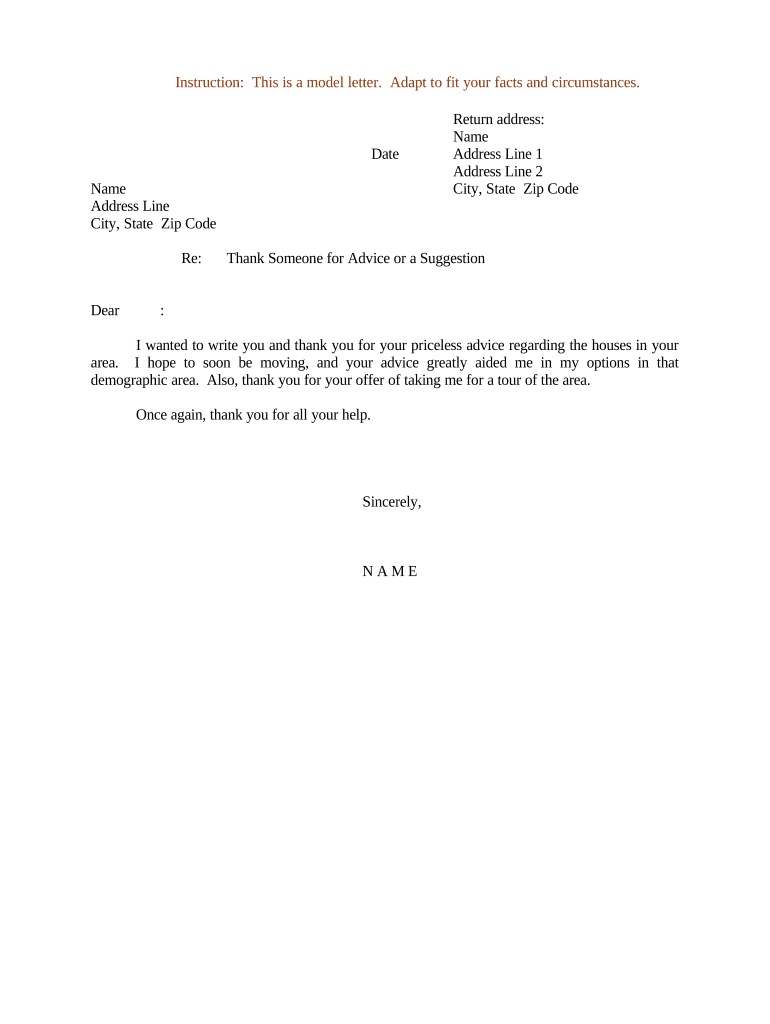
A Letter Thanking for Advice is a brief, professional communication sent to acknowledge and appreciate guidance received from a colleague, mentor, advisor, or professional. It confirms you received the advice, summarizes key points or next steps, and records any commitments made. The letter helps preserve goodwill, create a clear record of the conversation, and provide context for future follow-up. It can be used in personal, academic, business, and regulatory settings and should be concise, specific about the advice, and courteous in tone.

Why Sending a Thank-You Letter Matters

A clear, timely thank-you letter reinforces relationships, reduces misunderstandings, and documents advice that may affect decisions. It signals professionalism, preserves an auditable record of guidance, and can serve as a reference in later discussions or formal processes.

Why Sending a Thank-You Letter Matters

Who Typically Sends and Receives These Letters

Use the letter when you want a short, formal record of advice and any agreed next steps; adjust tone to match the relationship and context.

  • Recent graduates seeking career guidance or references.
  • Junior staff confirming managerial or HR advice.
  • Clients acknowledging legal, financial, or medical guidance.

Step-by-Step: Drafting a Clear Thank-You Letter

Follow these steps to produce a concise, professional letter that documents advice accurately and respectfully.

  • 01
    Draft Opening: Address recipient by name and state purpose of the letter.
  • 02
    Summarize Advice: Briefly restate the key recommendations or instructions received.
  • 03
    Confirm Actions: Note any steps you will take and expected timelines.
  • 04
    Close Politely: Express appreciation and offer to stay in contact.

Frequently Asked Questions About Thank-You Letters

Answers to common issues when preparing, sending, or storing a Letter Thanking for Advice.


Need help? Contact support

Essential Elements to Include in the Letter

A professional thank-you letter balances gratitude with a neutral record of the advice; include these six elements to make it useful and defensible.

Heading

Date and recipient identification at the top to create a clear, timestamped record for filing and future reference.
Purpose Statement

One sentence stating that the letter acknowledges advice received and the context in which it was given.

Advice Summary

Concise restatement of the core recommendations, written objectively to avoid mischaracterization of counsel.

Action Items

Specific next steps, responsible parties, and timelines to convert advice into measurable outcomes.

Appreciation

A short, professional expression of thanks; keep language factual and avoid hyperbole.

Signature

Typed or electronic signature with printed name and contact details to enable attribution and follow-up.

Required Information and Minimal Fields

Sender: Full legal name and role.
Recipient: Full name and title.
Date: MM/DD/YYYY formatted date.
Advice Summary: One-paragraph neutral summary.
Next Steps: Responsibilities and target dates.
Signature: Typed or signed attribution.

Risks of an Inaccurate or Untimely Letter

Misattribution: Can create confusion about who said what.
Regulatory Exposure: Incorrect record may affect compliance matters.
Contract Risk: Inaccurate commitments can be treated as binding.
Reputational Harm: Perceived unprofessionalism damages relationships.
Privacy Breach: Disclosing protected health information risks HIPAA violations.
Audit Issues: Poor recordkeeping complicates future reviews.

Common Mistakes to Avoid

  • Waiting too long to send the letter, which erodes context and credibility and may complicate follow-up.
  • Overstating or editorializing advice instead of providing an objective summary that accurately reflects what was said.
  • Including sensitive or protected information without confirming consent or necessary safeguards, creating privacy and compliance risk.
  • Failing to record agreed timelines or responsibilities, which undermines accountability and can cause missed deliverables.

Typical Process for Creating, Signing, and Storing the Letter

A simple workflow ensures consistent drafting, approval, and secure retention of the thank-you letter.

  • Draft: Prepare a neutral summary and next steps.
  • Review: Verify facts and dates with involved parties as needed.
  • Sign: Apply handwritten or electronic signature.
  • Archive: Store securely with related records.

Digital Workflow Settings for Online Completion

Configure a simple digital workflow to collect signatures and archive the letter securely.

Field Configuration
Date Field Auto-fill MM/DD/YYYY
Signature Field Require signer attribution and timestamp
Email Receipt Send signed copy to each party
Archive Tag Assign project ID and retention policy

Distribution Channels and Platform Integrations

Ensure any chosen platform supports required security controls and integrates with your record retention processes.

  • Email: Common delivery; retain sent message for records.
  • eSignature Platforms: Supports audit trail and secure storage.
  • Document Management: Integrate with Box, Google Drive, or NetSuite.

Recommended Timelines and Response Expectations

Timely acknowledgment improves clarity and follow-through; adopt internal deadlines to track commitments.

Immediate Acknowledgment:

Draft within 24–72 hours to preserve conversational context.

Confirm Actions:

State next-step dates within one week after advice.

Follow-Up Reminder:

Send status update if actions are pending after two weeks.

Archive Deadline:

Move final signed letter to records within 30 days.

Retention Review:

Review stored letters annually for relevance and compliance.

Key Milestones From Advice to Archive

A compact milestone view helps teams track completion and archival steps after advice is given.

01

Draft Created

Write a concise summary and proposed actions immediately after the meeting.

02

Recipient Review

Send draft to recipient for factual confirmation where appropriate.

03

Sign and Distribute

Apply signature and send copies to all relevant parties.

04

Archive and Tag

Store signed letter with project records and retention metadata.

How a Formal Letter Differs from an Informal Thank-You Email

Compare common formats to choose the right level of formality and permanence for your acknowledgment.

Criteria Formal Letter Informal Email
Tone formal and documented conversational and brief
Delivery printed or signed pdf standard email message
Record Quality high — suitable for filing moderate — inbox retention
When to Use legal/regulatory advice routine courtesy or quick thanks

Typical eSignature Provider Pricing and Feature Snapshot

Compare starting prices and feature availability across common eSignature vendors; signNow is listed first per guidance and pricing is shown as published for annual billing tiers.

signNow DocuSign Adobe Sign PandaDoc HelloSign
Starting Price $8/user/mo $15/user/mo $14/user/mo $19/user/mo $15/user/mo
Free Trial 7-day free trial Varies Varies Varies Varies
Bulk Send Yes (premium tier) Yes Yes Yes No
Audit Trail Yes Yes Yes Yes Yes
Envelope Cap No cap 100 envelopes/user/yr Varies Varies Varies

Practical Examples: Using a Thank-You Letter After Receiving Advice

Two concise examples show common formats and how to record next steps while expressing appreciation.

Example 1

After a compliance meeting, an operations manager sends a brief letter summarizing required reporting changes and deadlines.

  • The manager lists the three actions agreed with dates.
  • The letter closes with thanks, contact details, and an instruction to flag any discrepancies for correction within five business days.

Example 2

A junior associate thanks a mentor for career guidance and confirms agreed introductions to industry contacts.

  • The associate names the contacts and the intended outreach timeline.
  • The message ends with appreciation and an offer to provide requested documents, creating a clear record for both parties.

Tips for Accurate, Efficient, and Professional Completion

Adopt consistent practices to ensure letters are clear, defensible, and easy to retrieve.

Be Concise and Specific
Limit the summary of advice to factual points and concrete next steps; avoid speculation or commentary that could alter the advisor's meaning or create unintended obligations.
Use a Standard Template
Maintain a short template with required fields (date, parties, summary, actions, signature) to reduce drafting time and improve consistency across the organization.
Protect Sensitive Information
Redact or exclude protected personal or health information unless necessary, and apply appropriate access controls and encryption when storing the letter digitally.
Record Confirmation
When factual accuracy matters, invite a brief confirmation from the advisor by email or signed acknowledgment to reduce later disputes over content.

Who Typically Signs or Approves These Letters

Sender — Professional

Usually the individual who received the advice or a supervisor who coordinates the response; signs to confirm acknowledgement and planned actions.

Advisor — Reviewer

In some cases the advisor reviews or confirms the summary; their acknowledgement is useful when advice has regulatory or contractual implications.

be ready to get more
Join over 28 million airSlate SignNow users