What is the sign agreement
A sign agreement is a legally binding document that outlines the terms and conditions agreed upon by parties involved in a transaction or relationship. This type of agreement can encompass various contexts, including leases, contracts, and service agreements. It serves to formalize an understanding and ensure that all parties are on the same page regarding their rights and responsibilities.
In the context of electronic signing, a sign agreement can be completed and executed digitally, providing a convenient and efficient way to manage agreements without the need for physical paperwork. This process enhances accessibility and speed, allowing users to finalize agreements from anywhere with internet access.
How to use the sign agreement
Using a sign agreement involves several straightforward steps. First, the document must be prepared, which can include filling in necessary details such as names, dates, and specific terms. Once the document is ready, it can be uploaded to an electronic signature platform like airSlate SignNow.
After uploading, users can designate signers and specify the order in which signatures are required. The platform allows users to send the document for signature via email, ensuring that all parties receive a notification to review and sign the agreement electronically. Once signed, the completed document is securely stored, providing easy access for future reference.
Steps to complete the sign agreement
Completing a sign agreement electronically is a simple process that can be broken down into a few key steps:
- Prepare the document: Ensure all necessary fields are filled out, including names, addresses, and agreement terms.
- Upload to airSlate SignNow: Access your airSlate SignNow account and upload the prepared sign agreement.
- Designate signers: Specify who needs to sign the document and in what order.
- Send for signature: Use the platform to send the document to the designated signers via email.
- Monitor progress: Track the signing status of the document within your airSlate SignNow dashboard.
- Store the completed agreement: Once all parties have signed, the finalized document is automatically stored for easy retrieval.
Key elements of the sign agreement
When drafting a sign agreement, several key elements should be included to ensure clarity and enforceability:
- Parties involved: Clearly identify all parties entering into the agreement.
- Terms and conditions: Outline the specific obligations and rights of each party.
- Effective date: Specify when the agreement takes effect.
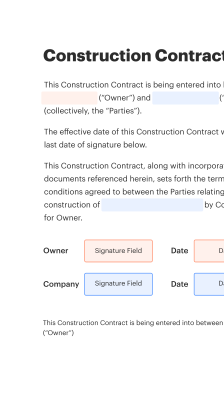
- Signature lines: Include designated areas for signatures, ensuring all parties can sign electronically.
- Governing law: Indicate which state’s laws will govern the agreement.
Security & Compliance Guidelines
Ensuring the security and compliance of sign agreements is crucial in maintaining their legal validity. When using an electronic signature platform like airSlate SignNow, several guidelines should be followed:
- Use secure platforms: Choose a reputable eSignature provider that complies with industry standards, such as the ESIGN Act and UETA.
- Authentication methods: Implement robust authentication methods to verify the identity of signers.
- Audit trails: Utilize platforms that provide detailed audit trails documenting each step of the signing process.
- Data encryption: Ensure that all documents are encrypted during transmission and storage to protect sensitive information.
Digital vs. Paper-Based Signing
Digital signing offers several advantages over traditional paper-based signing methods. With electronic signatures, users can complete and sign agreements quickly from any location, eliminating the need for printing, scanning, or mailing documents. This not only saves time but also reduces paper waste, making it an environmentally friendly option.
Additionally, digital signing provides enhanced security features, such as encryption and authentication, which are often not available with paper-based methods. This increased security helps protect against fraud and ensures that documents are legally binding and compliant with regulations.