Recoge Pagos Y Firmas. Obtén Las Funciones Robustas De Firma Electrónica Que Necesitas.

Permite que un firmante realice un pago mientras firma tu documento. Recoge fácilmente pagos y firmas al enviar una invitación para firmar y completar tu documento.

Solución de firma electrónica galardonada

Understanding how to collect payments and signatures together

Collect payments and signatures refers to a combined digital process where a signer completes an electronic signature and pays a required fee within the same transaction flow. This approach places a payment field or gateway inside the document or signing workflow so the payer signs and settles payment without switching systems. It reduces manual reconciliation, preserves a single audit trail for the payment and signature events, and supports common payment methods such as credit card or ACH through integrated processors like Stripe. Implementations must follow applicable U.S. laws and data protection practices.

Why collect payments and signatures in a single workflow

Combining payments and signatures streamlines customer experience, reduces processing time, and centralizes records for auditability and compliance within a single transaction record.

Why collect payments and signatures in a single workflow

Common challenges when collecting payments and signatures

  • Ensuring PCI-compliant handling of card data while preserving a verifiable signature audit trail across systems and records.
  • Coordinating payment confirmations and signed documents so both are recorded atomically to avoid reconciliation gaps.
  • Providing seamless mobile payment and signing experiences without compromising authentication or increasing abandonment rates.
  • Meeting industry-specific privacy and record-retention rules, such as HIPAA requirements for healthcare payment records.

Representative users and roles

Office Manager

An office manager configures payment-enabled templates, sets reminders, and reviews reconciliation reports. They coordinate with finance to ensure documents and payments align with accounting entries and retention schedules.

Compliance Officer

A compliance officer verifies that payment collection and signature capture meet regulatory requirements such as ESIGN and HIPAA where applicable, manages BAAs, and reviews audit trails for forensic and retention needs.

Typical organizations that collect payments and signatures

Organizations across sectors use combined payment-and-signature flows to speed transactions and keep legal and payment records together.

  • Real estate agents and brokerages processing earnest money or fees with contracts.
  • Healthcare practices accepting patient consent forms together with copayments or service fees.
  • Professional services and consulting firms collecting retainers when executing engagement letters.

The approach scales from small merchants to enterprise teams that need consistent records and regulatory controls.

Additional capabilities that improve payment-plus-signature workflows

Beyond core features, consider these capabilities to support scale, automation, and integration with business systems.

Template Library

Reusable templates with embedded payment fields speed recurring transactions, reduce setup errors, and allow consistent application of terms, payment amounts, and billing details across similar documents.

Bulk Send

Bulk Send allows sending identical documents with payment requirements to many recipients at once while tracking each transaction and payment outcome separately.

CRM Integration

Two-way sync with CRM platforms maps signer and payment data to customer records, automating invoicing and reducing manual reconciliation across systems.

Webhook Notifications

Real-time webhooks report signature completion and payment settlement events to downstream systems, enabling automated fulfillment or accounting entries.

Conditional Logic

Conditional fields display payment options or alternate clauses based on signer choices, improving clarity and personalizing the transaction flow.

Reporting and Exports

Prebuilt and custom reports provide transaction-level detail for finance, compliance, and audit teams, and export formats support bookkeeping and record retention.

prepárate para obtener más

Elige una mejor solución

Core features to look for when you collect payments and signatures

Selecting a solution for combined payment-and-signature workflows should focus on security, compliance, integration, and user experience to minimize friction and maintain legal validity.

Integrated Payments

Support for payment processors such as Stripe or equivalent so payers submit card or ACH details securely within the signing session, minimizing redirection and simplifying reconciliation with a single transaction identifier.

Audit Trail

Comprehensive logging of signing events, payment authorizations, IP addresses, timestamps, and document hashes to provide an immutable record needed for legal enforceability and dispute resolution.

Authentication Options

Multiple signer verification choices including email, SMS OTP, knowledge-based verification, and ID check services to meet varying assurance levels for both signatures and payment authorizations.

Data Handling Controls

Role-based access, encrypted storage, and configurable retention policies so organizations can align document and payment data practices with regulatory obligations such as HIPAA or state privacy laws.

How a combined payment-and-signature transaction proceeds

This sequence outlines the typical flow from document creation through signature and payment settlement.

  • Create: Author document and insert payment field.
  • Send: Deliver to signer with clear payment terms.
  • Sign and pay: Signer authenticates, signs, and completes payment.
  • Confirm: System records audit trail and posts payment receipt.
Recoger firmas
24x
más rápido
Reduce los costos en
$30
por documento
Guardar hasta
40h
por empleado / mes

Quick steps to set up a payment-enabled signature workflow

Follow these concise steps to configure a document that collects both payment and signatures in a single process.

  • 01
    Prepare document: Add signature fields and designate payment field location.
  • 02
    Connect payment processor: Link Stripe or approved gateway to the account.
  • 03
    Set authentication: Require email, SMS, or ID verification as needed.
  • 04
    Test and deploy: Run a live test transaction before sending broadly.
prepárate para obtener más

Por qué elegir airSlate SignNow

  • Prueba gratuita de 7 días. Elige el plan que necesitas y pruébalo sin riesgos.
  • Precios honestos para planes completos. airSlate SignNow ofrece planes de suscripción sin cargos adicionales ni tarifas ocultas al renovar.
  • Seguridad de nivel empresarial. airSlate SignNow te ayuda a cumplir con los estándares de seguridad globales.
illustrations signature

Recommended configuration for payment-enabled signing workflows

Use these configuration settings as a baseline when enabling payment capture inside signature workflows to ensure consistent processing and recordkeeping.

Setting Name for Workflow Configuration Default values and configuration examples
Reminder Frequency and Escalation Intervals Every 48 hours for three reminders
Payment Provider and Transaction Settings Stripe with card and ACH options
Authentication Method and Verification Options Email OTP plus optional SMS verification
Document Retention and Storage Rules Signed PDFs retained seven years
Auto-Fill and Data Mapping Behavior Map form fields to CRM automatically

Platform and device considerations for collecting payments and signatures

Ensure the signing environment supports secure payment fields, modern browsers, and mobile-friendly layouts before deploying payment-enabled documents.

  • Desktop Browsers: Chrome, Edge, Safari supported
  • Mobile Devices: iOS and Android native apps
  • API and Webhooks: REST API with webhook callbacks

Test across target devices and networks, confirm tokenized payment flows, and verify receipt generation and audit logging on each platform configuration.

Security controls for combined payment-and-signature flows

Encryption: TLS and at-rest encryption
PCI compliance: Tokenized payment fields
Access controls: Role-based permissions
Audit logging: Immutable event records
Authentication: Multi-factor options
Document sealing: Tamper-evident signatures

Two industry examples of collecting payments and signatures

Practical examples show how payment-enabled signing reduces steps and creates a single auditable transaction record for both signature and payment.

Medical Consent and Copay

A clinic sends a treatment consent form that includes a payment field for the patient copay, embedded in the same signing session so the patient signs and pays using a secure card tokenization process

  • Payment field uses Stripe integration
  • Payment posts to the practice's merchant account and posts to billing software

Resulting in a single signed document and a matched payment record for easier claims and audits.

Closing Fee with Real Estate Contract

A brokerage sends a purchase agreement that requires an earnest money deposit and signature prior to contract acceptance, with an embedded payment processor collecting funds during signing

  • Payment collection supports ACH and card options
  • The signed contract and transaction ID are stored together in the transaction folder

Leading to faster closings and a consolidated audit trail for title and escrow reconciliation.

Best practices when you collect payments and signatures

Adopt clear procedural and technical safeguards to reduce risk and improve the signer experience while maintaining legal and payment compliance.

Use clear payment disclosure language and itemization
Present the payment amount, purpose, refund policy, and billing descriptor clearly in the document so signers understand charges before they authorize payment and sign, reducing disputes and chargebacks.
Keep payment processing PCI-compliant and separate from stored documents
Use tokenization and a PCI-compliant payment provider to handle card data, and avoid storing raw card details in document repositories to reduce breach exposure and scope of compliance.
Maintain a single audit trail linking signature to payment
Ensure the system stores a unified transaction record that links the signed document, transaction ID, timestamps, and signer authentication so reconciliation and legal review are straightforward.
Confirm retention and BAA requirements in advance
Abide by retention schedules and execute business associate agreements when handling protected health information paired with payments, and document the policies and access controls implemented for audits.

FAQs and troubleshooting for collecting payments and signatures

Answers to common questions and practical troubleshooting steps for payment-enabled signature workflows, focused on configuration, compliance, and failure modes.

Feature comparison when you collect payments and signatures

High-level capability comparison across eSignature providers relevant to payment-enabled signing workflows in the U.S. market.

Feature or Capability Column Name signNow (Recommended) DocuSign Adobe Sign
ESIGN and UETA legal compliance status
Audit trail and tamper-evidence
HIPAA support and BAA availability Yes (BAA) Yes (BAA) Yes (BAA)
Payment collection capability in-workflow Yes (Stripe) Yes (DocuSign Payments) Via integration
prepárate para obtener más

¡Obtenga firmas legalmente vinculantes ahora!

Risks and potential penalties to consider

Noncompliance fines: Regulatory penalties
Data breach costs: Remediation expenses
Invalid contract risk: Enforceability issues
Chargeback exposure: Financial losses
Reputational harm: Customer trust loss
Operational delays: Rework and audits

Pricing and plan notes for payment-capable eSignature platforms

Pricing and plan features vary; this table summarizes entry-level availability and common attributes relevant to collecting payments and signatures.

Plan or Package Name signNow (Recommended) DocuSign Adobe Sign Dropbox Sign PandaDoc
Free trial or free tier availability Yes, trial available Yes, trial available Yes, trial available Yes, limited free tier Yes, trial available
Entry-level plan includes payments Included with Business plans Available on select plans Available via add-on or integration Via integration only Included on Business plans
API access at entry level Available on API plans Available via developer account Available on enterprise plans Available via API plan Available on Business plans
HIPAA / BAA support offered Available with BAA Available with BAA Available with enterprise BAA Contact sales for BAA Available with enterprise plan
Typical customer support level Email and priority support options Tiered support and phone Enterprise support tiers Email support and help center Email and dedicated support options

Cómo recopilar pagos con airSlate SignNow

airSlate SignNow permite a los destinatarios realizar pagos mientras firman. Como Administrador de la Organización (“Super Administrador”) de tu cuenta de airSlate SignNow, puedes conectar tu cuenta de comerciante para aceptar pagos de los firmantes al completar el documento. Para hacerlo, necesitarás una cuenta válida de sistema de pagos.

Conectar un sistema de pagos

Inicia sesión en airSlate SignNow usando las credenciales de tu cuenta de Administrador de la Organización. Luego, haz clic en el botón Mis Organizaciones en la esquina inferior izquierda del panel de control.
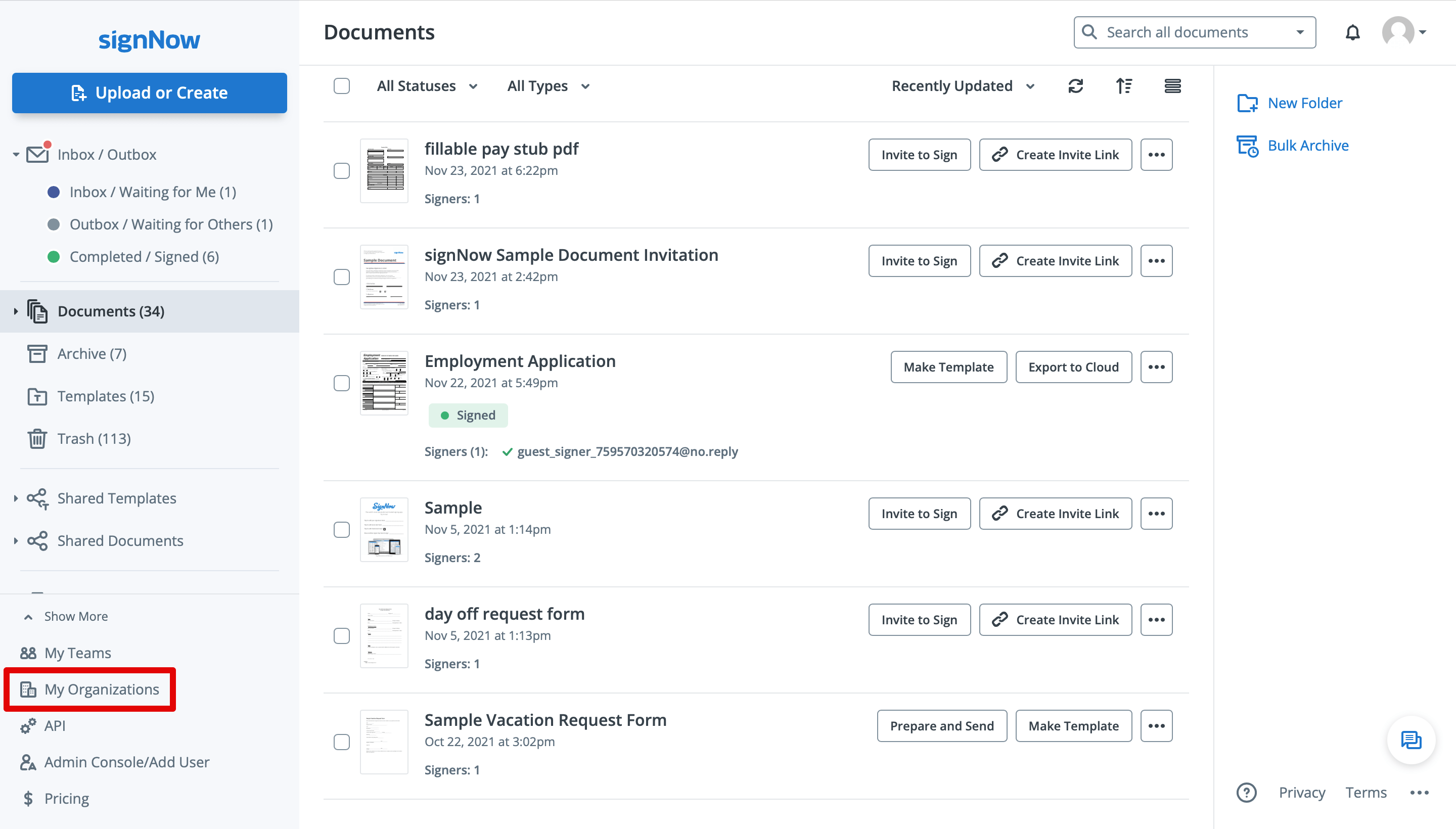
ilustración-guía-llenado

Ve a la pestaña Mis Organizaciones y haz clic en Ir al Panel de Administración. Serás redirigido al Panel de Administración de la Organización.
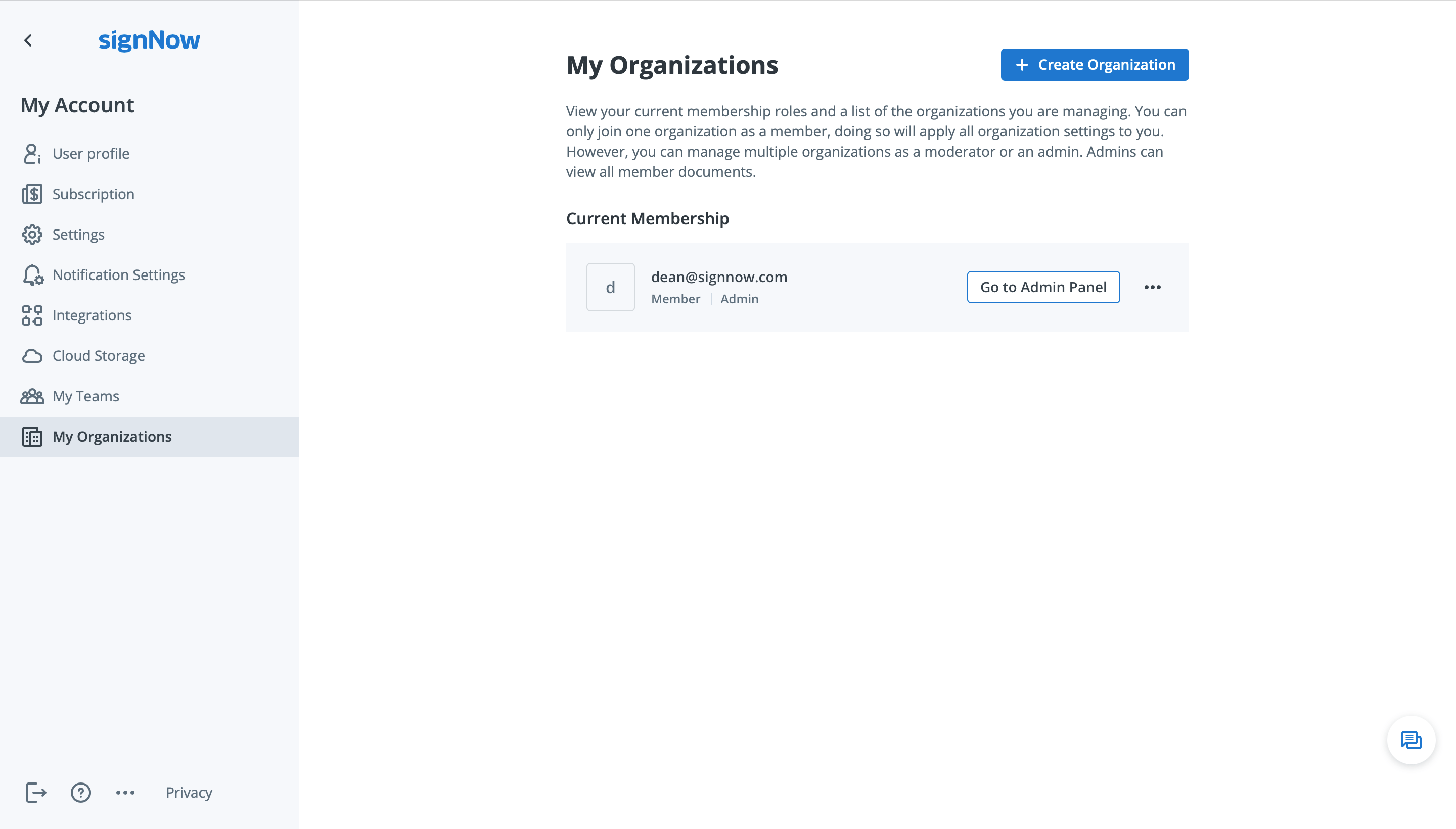
ilustración-guía-llenado

En la pestaña Cuentas de Comerciante, selecciona tu sistema de pagos y haz clic en Conectar. airSlate SignNow te permite recibir pagos a través de Stripe y CardConnect.
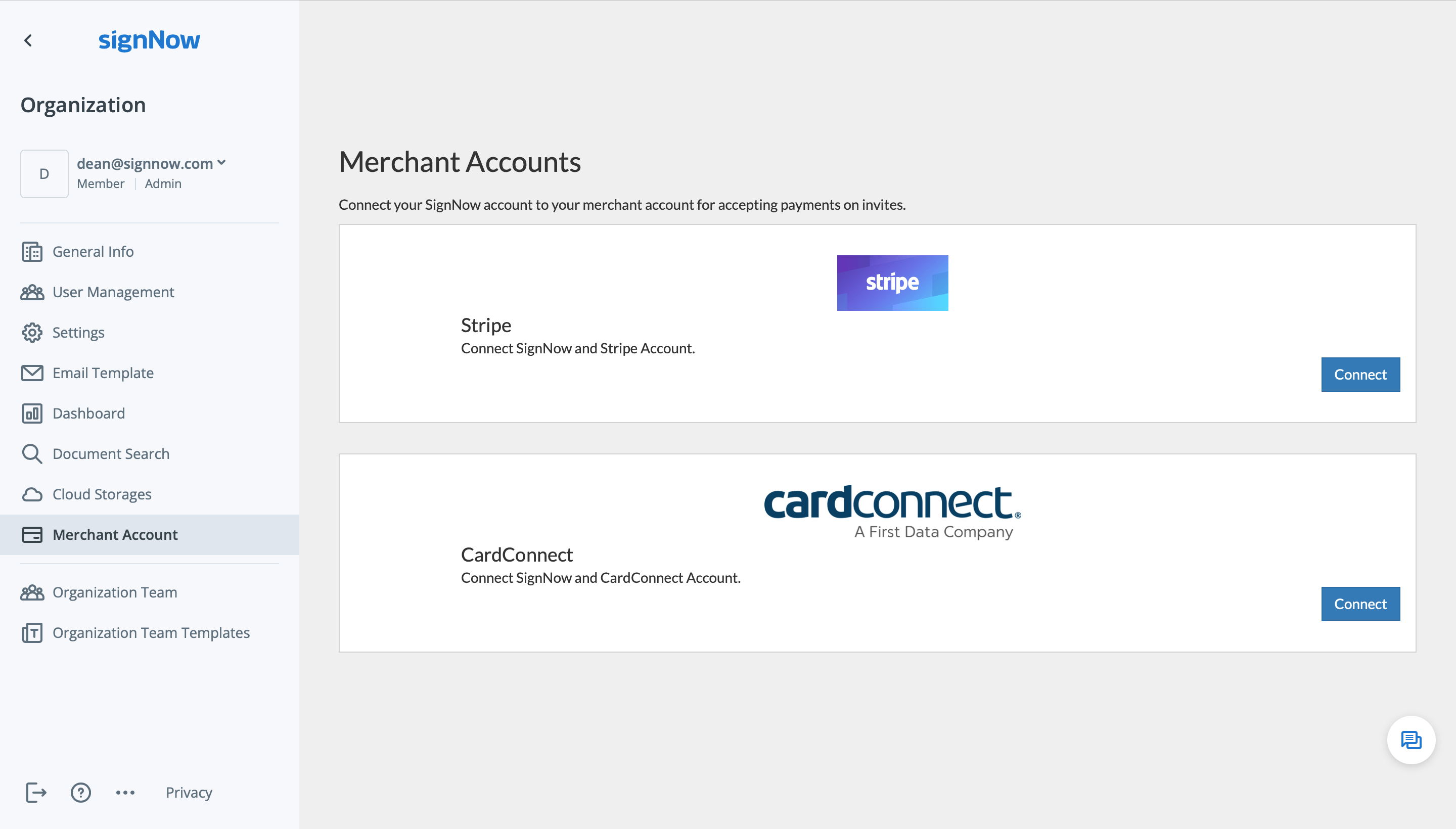
ilustración-guía-llenado

Ingresa el nombre de tu cuenta, las credenciales del sistema de pagos y selecciona tu moneda preferida. Luego, haz clic en Conectar.
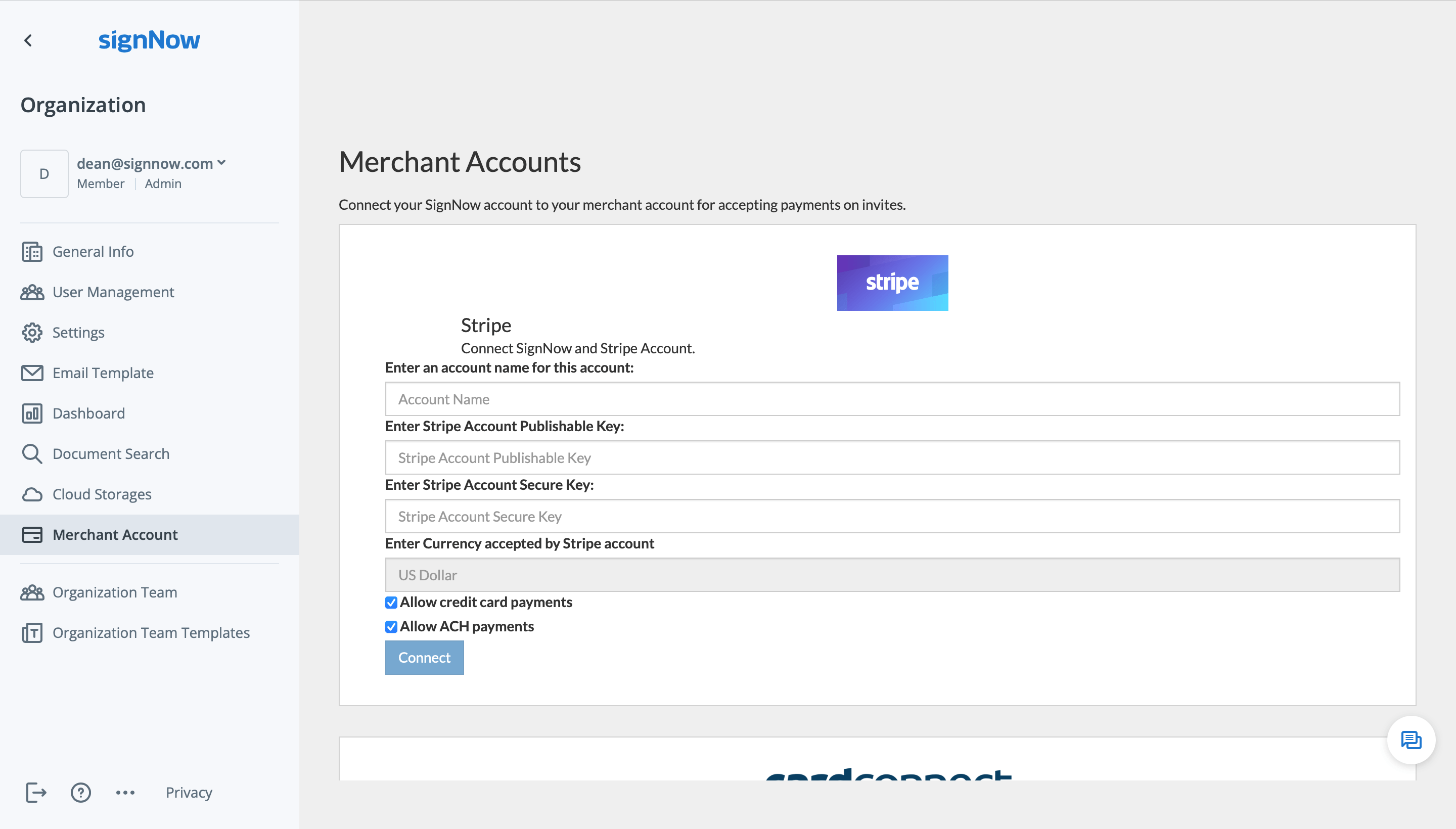
ilustración-guía-llenado

Una vez que tu cuenta del sistema de pagos esté conectada, puedes solicitar pagos usando uno de los siguientes métodos.

Método 1: Solicitar pago usando campos rellenables

Abre un documento y crea un campo de texto. Luego, conviértelo en un campo de pago usando el menú a la derecha (Avanzado > Hacer este campo de pago). Especifica Tipo de Validación, Texto Prellenado y otros parámetros si es necesario.
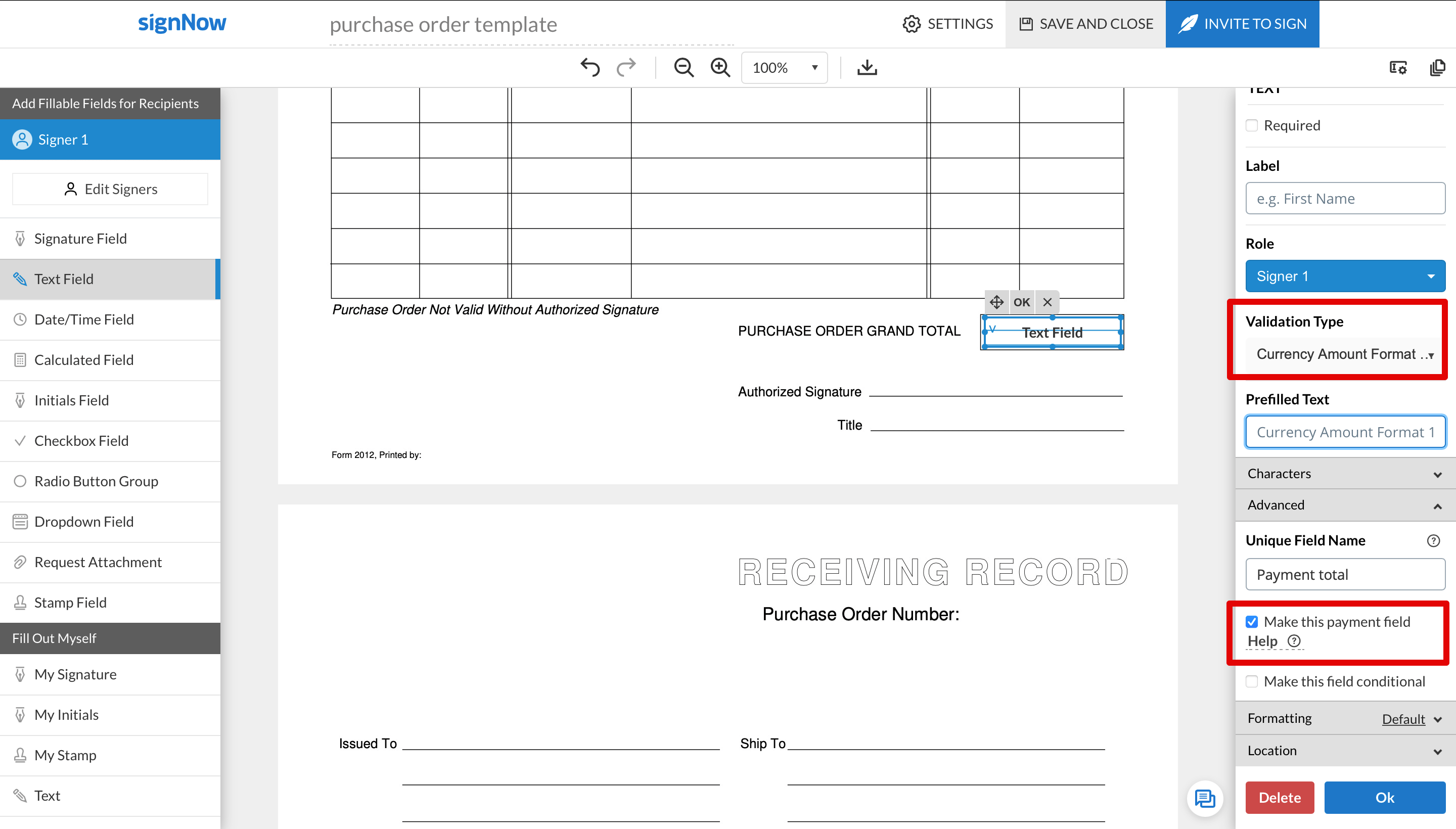
ilustración-guía-llenado

Método 2: Solicitar pago al enviar un documento para firma

Elige el documento que necesitas enviar para firma y haz clic en Invitar a Firmar.
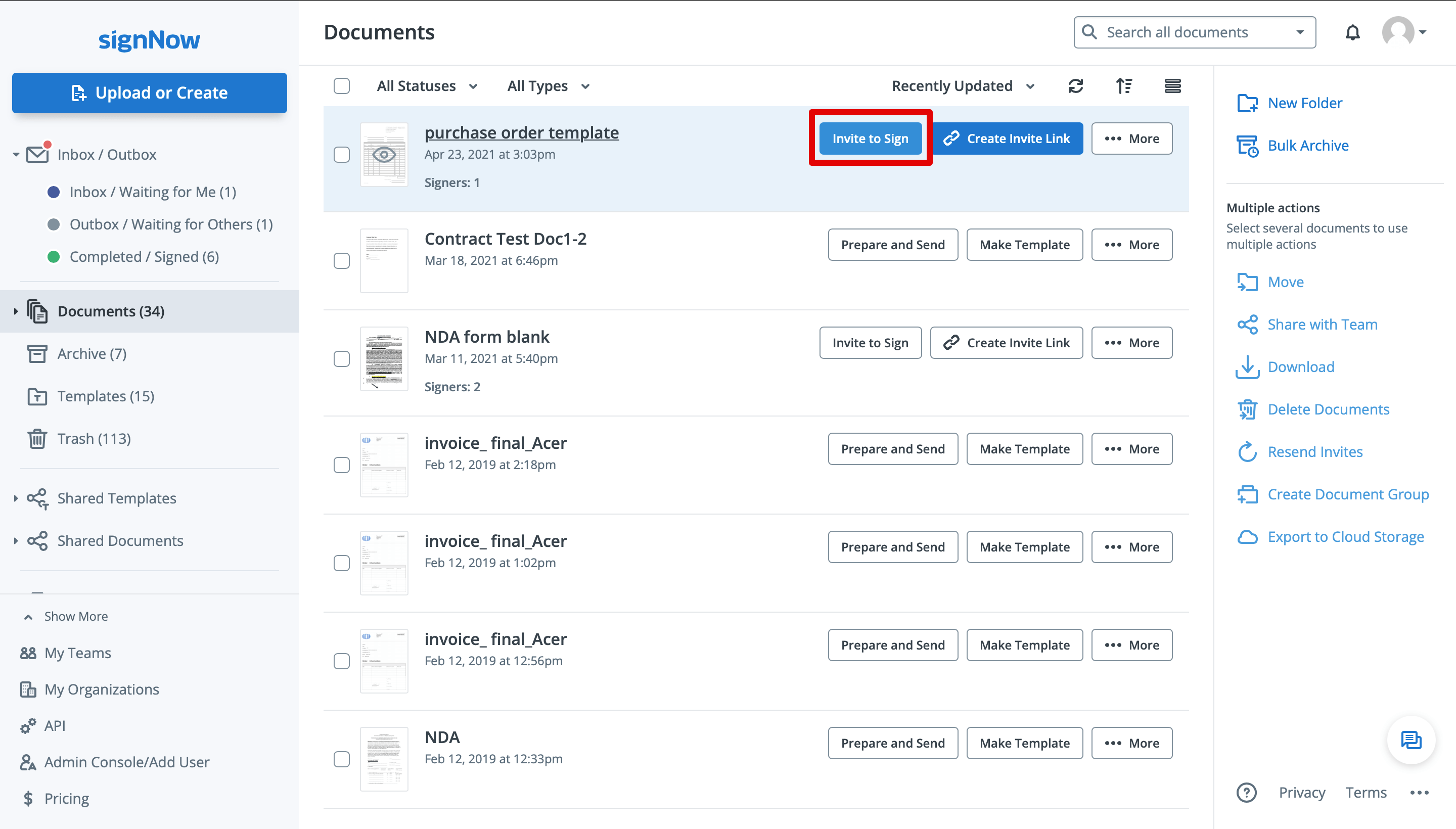
ilustración-guía-llenado

Haz clic en el botón Acciones al Finalizar y activa la opción Solicitar un Pago. Selecciona el pagador del menú desplegable e ingresa un monto de pago. Luego, haz clic en Aplicar.
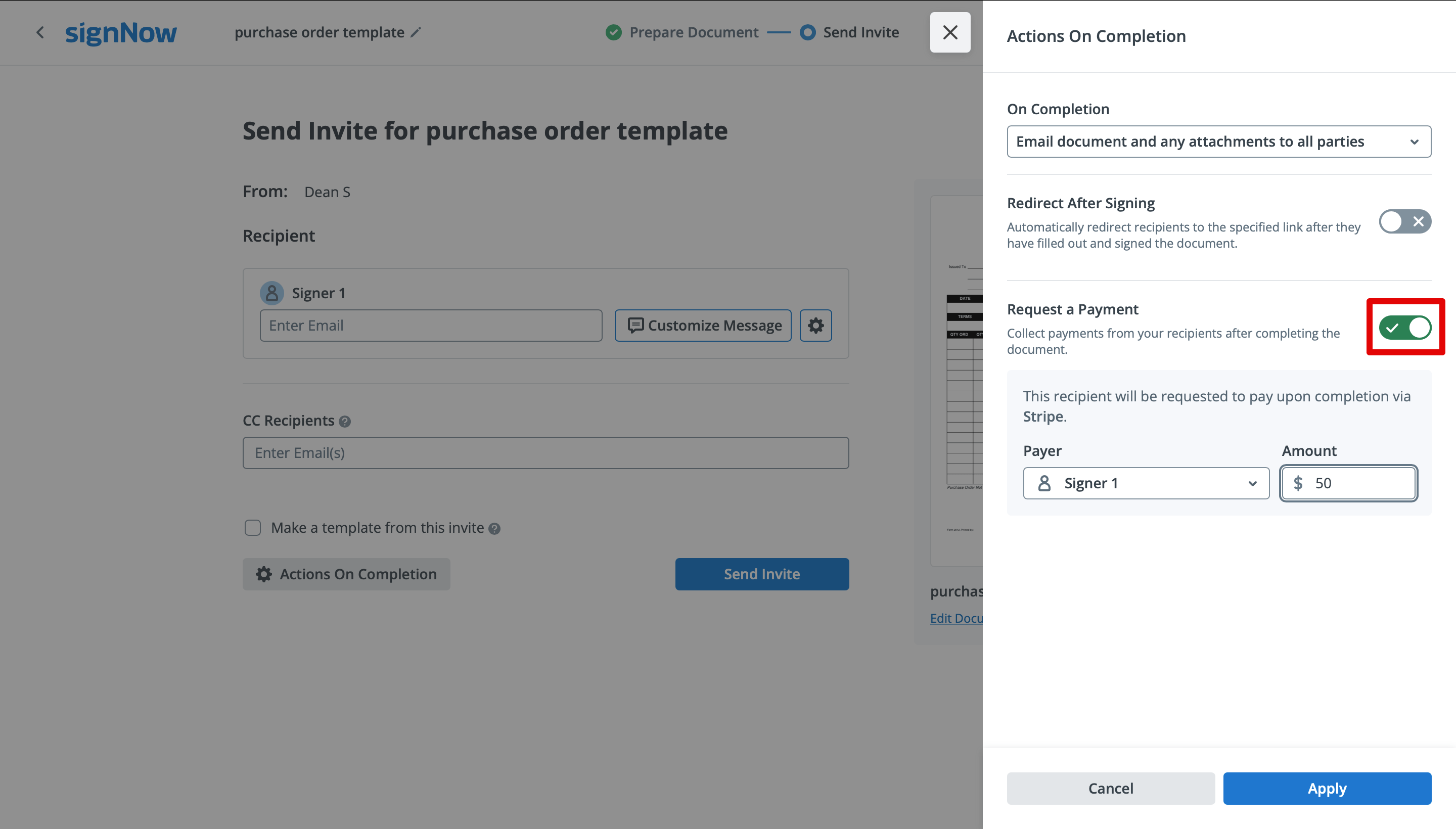
ilustración-guía-llenado

Tu solicitud de pago ahora está activa y puedes enviar tu invitación para firmar.

walmart logo
exonMobil logo
apple logo
comcast logo
facebook logo
FedEx logo
esté listo para obtener más

¡Obtenga ahora firmas vinculantes desde el punto de vista jurídico!