Print Signature Block Signature with SignNow

Get rid of paper and automate digital document management for increased productivity and unlimited opportunities. Sign any papers from your home, quick and professional. Discover a better strategy for running your business with airSlate SignNow.

Award-winning eSignature solution

What print signature block signature means in practice

A print signature block signature refers to a document area formatted specifically for capture of a handwritten signature after the document is printed, or to a printable representation of a digital signature field included for hybrid workflows. It provides clear signer name, title, date, and signature lines and can include witness or notary fields. In environments that alternate between electronic and paper processes, a well-designed print signature block preserves intent, attribution, and placement so physical signatures align with document metadata and downstream recordkeeping requirements.

Why a correct print signature block signature matters

A correctly formatted print signature block reduces signing errors, preserves legal intent for hybrid transactions, and enables consistent audit metadata capture when documents are later scanned or archived for electronic workflows.

Why a correct print signature block signature matters

Common challenges when using printable signature blocks

  • Misaligned fields after printing lead to signatures placed outside intended areas, complicating acceptance and scanning processes.
  • Insufficient signer identifiers cause ambiguity about the signing party when forms are detached from metadata or scanned.
  • Inconsistent witness or notary instructions increase the risk of noncompliance for regulated documents requiring formal acknowledgment.
  • Poor print resolution or small font sizes make signature blocks unreadable once scanned into electronic records.

Roles that design or manage print signature blocks

Office Administrator

Office administrators create and standardize printable signature blocks for routine forms, ensuring fields include signer name, title, date, and witness lines so that documents remain machine-readable after scanning.

Compliance Officer

Compliance officers set rules for when printed signature blocks are permitted, specify required witness or notary language, and document retention expectations to meet organizational and regulatory standards.

Who typically uses printable signature blocks

Organizations that mix paper and digital workflows commonly require printable signature blocks to maintain continuity between physical and electronic recordkeeping.

  • Legal departments and law firms handling agreements that may need both original ink signatures and electronic archives.
  • Human resources teams using printed offer letters or consent forms that are later scanned into employee records.
  • Real estate and title professionals processing documents that move between closing tables and digital storage.

Proper use reduces rework, supports compliance, and simplifies integration when printed documents re-enter digital systems.

Additional capabilities for hybrid signing workflows

Advanced options support authentication, compliance, and operational efficiency when using printable signature blocks in regulated or high-volume environments.

Authentication

Multi-factor identity checks ensure the signer on the printed page matches recorded identity metadata linked to the document.


Audit logging

Comprehensive logs capture who generated the printable document, printing events, and who scanned the signed copy back into the system.

Custom fields

Custom metadata fields printed alongside the signature block increase contextual information for downstream processing and verification.

Notary support

Designated notary blocks and standardized wording facilitate compliance with jurisdictional notarization requirements.

Batch printing

Batch print capabilities streamline producing multiple documents with consistent signature blocks for events such as enrollments or large closings.

Retention rules

Integration with retention policies automates archival timelines once signed documents are scanned and ingested.

be ready to get more

Choose a better solution

Key tools to support effective print signature block signatures

Use software features and document design choices to make printable signature blocks accurate, consistent, and easy to process after scanning.

Template control

Centralized templates enforce consistent placement, fonts, and field sizes so printed signature blocks align correctly and reduce signer confusion during in-person signing.

Document ID embedding

Visible and machine-readable document identifiers ensure scanned pages can be matched to electronic records and workflows, maintaining traceability across paper and digital versions.

Print preview

A print preview feature verifies layout scaling and margins before producing hard copies, preventing misalignment and ensuring signature lines remain within printable areas.

Scan guidance

Providing explicit scanning instructions such as resolution and color mode helps preserve legibility and reduces OCR or indexing errors when signatures are digitized.
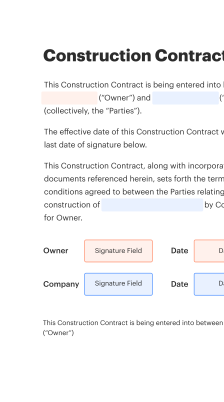
How printable signature blocks integrate with electronic workflows

Printable signature blocks serve as a bridge between in-person signing and electronic records by preserving essential signer data and placement.

  • Create: Embed printable block in document template.
  • Print: Produce paper copy for in-person signing.
  • Scan: Scan signed document at recommended resolution.
  • Archive: Attach scanned image to electronic record with metadata.
Collect signatures
24x
faster
Reduce costs by
$30
per document
Save up to
40h
per employee / month

Step-by-step: preparing a print signature block signature

Follow these basic steps to design and apply a printable signature block that will be reliable for paper signing and later digital archiving.

  • 01
    Design block: Include signer name, title, date, and signature line.
  • 02
    Include identifiers: Add unique document ID and version number.
  • 03
    Provide instructions: Note witness or notary requirements clearly.
  • 04
    Test print: Verify alignment and scan legibility at 300 DPI.
be ready to get more

Why choose airSlate SignNow

  • Free 7-day trial. Choose the plan you need and try it risk-free.
  • Honest pricing for full-featured plans. airSlate SignNow offers subscription plans with no overages or hidden fees at renewal.
  • Enterprise-grade security. airSlate SignNow helps you comply with global security standards.
illustrations signature

Typical workflow settings for printable signature block processes

Configure these workflow settings to ensure printed signature blocks are created, signed, scanned, and archived consistently across your organization.

Workflow Setting Name and Configuration Header Default Configuration Column
Default Signing Order and Routing Behavior Sequential by recipient
Reminder Frequency and Expiration Controls 48 hours reminder
Scan and Ingest Quality Requirements 300 DPI color
Audit Trail Retention Period 7 years
Notification and Delivery Settings Email and SMS alerts

Platform and device considerations for printable signature blocks

Ensure users have the right devices, software, and printer settings to generate, print, and scan signature blocks without layout or quality issues.

  • Printer compatibility: PDF-ready printers
  • Scanning standards: 300 DPI or higher
  • File formats: PDF preferred

Confirm desktop or mobile PDF rendering is consistent, educate staff on printer settings and scanning protocols, and maintain a documented standard so printed signature blocks integrate smoothly with your electronic records and audit processes.

Security and authentication elements for printed signature blocks

Signature identifier: Signer name and title
Date stamping: Signed date field
Witness lines: Optional witness signature
Notary space: Notary block placement
Document ID: Unique form identifier
Scan quality guidance: 300 DPI minimum

Practical examples of printed signature block use

Real-world scenarios show how a print signature block signature supports hybrid processes across industries.

Healthcare consent form

A clinic prints a patient consent with a clear signature block including patient name and date

  • The printed block prompts patient to provide ink signature
  • Staff scan the signed form and attach the form ID to the patient record

Ensures signed consent is captured and archived for audits, resulting in consistent clinical documentation.

Real estate closing documents

A title company prepares closing documents with designated signature lines and notary area

  • Buyers and sellers sign original paper copies at closing
  • The office scans originals and records the document ID in the closing package

Leading to a single trustworthy archive that ties printed signatures to the electronic case file.

Best practices for secure and accurate printable signature blocks

Adopt these design and operational practices to improve reliability and compliance for print signature block signatures across hybrid workflows.

Standardize template design across documents
Create centralized templates with fixed margins, font sizes, and clearly labeled fields so signature lines print consistently. Standardization reduces alignment errors and ensures that scanning and OCR processes reliably locate signer metadata.
Require document identifiers and versioning
Include a unique document ID, version number, and date near the signature block so scanned copies can be matched unambiguously to electronic records and archived correctly for audits or legal review.
Provide clear signer and witness instructions
Print concise instructions next to signature lines indicating required information such as printed name, title, date, and witness or notary presence to avoid incomplete or noncompliant signings.
Establish scanning and retention policies
Set minimum scan quality, file format, and retention schedules. Ensure scans are stored with associated metadata and that retention aligns with legal and organizational recordkeeping requirements.

FAQs and troubleshooting: print signature block signature

Answers to common questions about designing, printing, signing, and scanning signature blocks to avoid errors and maintain a reliable audit trail.

Feature availability: printable signature block support

Comparing core capabilities across major eSignature platforms shows which vendors provide native support and complementary tools for printable signature blocks.

Feature or Compliance Criteria Header Row signNow DocuSign Adobe Sign
ESIGN and UETA Legal Recognition Status
Comprehensive Audit Trail and Forensic Logs Comprehensive Comprehensive Comprehensive
Mobile and Offline Signing Capability Details
Bulk Send and Batch Processing Limits Bulk Send Bulk Send Batch Send
be ready to get more

Get legally-binding signatures now!

Risks of improper print signature block usage

Document rejection: Non-acceptance by counterparty
Legal ambiguity: Unclear signer identity
Regulatory fines: Compliance penalties possible
Data loss: Metadata detachment risk
Operational delay: Rework and resubmission
Authentication gaps: Weak audit trail

Pricing and plan comparison relevant to printable workflows

Costs and included features vary by plan; review starting prices and whether advanced authentication or HIPAA support is included for printable workflow compliance.

Plan and Feature Column Header signNow DocuSign Adobe Sign Dropbox Sign OneSpan
Starting Monthly Price $8/mo $10/mo $14.99/mo $15/mo $30/mo
Core eSignature Features Included Templates, Bulk Send, Audit Trail Templates, Bulk Send, Advanced Routing Templates, Integrations, Audit Trail Templates, Basic Routing Advanced workflows, security
Advanced Authentication Options SMS, Knowledge-based, SSO Phone, ID Verification, SSO ID Verification, SSO SMS, SSO PKI, Smartcard
HIPAA Support Availability Available with business plan Available with enterprise Available with business agreement Limited Available with enterprise
Enterprise Deployment Details Admin controls, SSO, API access Dedicated support, SSO, API Enterprise API, SSO, support Team management, APIs On-premise options, advanced security

Simplify complex workflows

Create, execute, and manage workflows of any complexity, electronically from virtually anywhere. Scalable eSignature capabilities allow you to share documents with the right people in the correct order and define roles for each recipient. Execute document workflows faster and easier than ever before.

Automate document management

Optimize complex signing processes with airSlate SignNow’s powerful features to enhance your business. Control your automated eSignature workflows to ensure they're running at peak performance with instant notifications and reminders.

Optimize in team collaboration

Bring teams together in a secure, shared environment. Manage documents, use form templates and notifications to create more efficient cross-organization collaboration. Free your employees from having to spend time on repetitive activities so that they can focus on valuable, business-critical tasks.

Integrate into your existing systems

Run your projects with industry-leading integration. Collect Salesforce, Microsoft Teams, and SharePoint all in one business flow. Connect your software to a single system for endless possibilities and more productiveness.

Stay compliant with best-in-class data security

Feel confident understanding that your information is protected by the newest in encryption security. airSlate SignNow is GDPR and eIDAS certified and provides you exposure into your eSigning process with court-admissible audit trails. Configure user access permissions and rights to regulate who has access to what.


walmart logo
exonMobil logo
apple logo
comcast logo
facebook logo
FedEx logo
be ready to get more

Get legally-binding signatures now!