Configura Etiquetas De Anclaje Para Marcar Los Campos Para Firma Electrónica

Prepara tu documento para firmar antes de subirlo a airSlate SignNow. Configura etiquetas de anclaje para marcar los campos designados que aparecerán una vez que hayas subido y abierto tu documento.

Solución de firma electrónica galardonada

What it means to set anchor tags to mark the fields

Setting anchor tags to mark the fields is a technique used to place form fields automatically by matching text markers inside a document. Anchor tags are short, recognizable strings or patterns that a signing platform scans for and replaces with interactive fields such as signature, date, or text inputs. This approach reduces manual field placement, supports consistent template reuse, and can be combined with pattern matching or regular expressions to handle variations. When implemented carefully, anchor tagging streamlines document preparation while preserving field location accuracy across different document versions and formats.

Why using anchor tags matters for field placement

Anchor tags improve speed and consistency when preparing documents, reduce manual errors, and make templates reusable across contracts and forms, freeing staff time for higher-value work.

Why using anchor tags matters for field placement

Common challenges when using anchor tags

  • Inconsistent anchor text across versions prevents automatic detection and requires manual adjustments before sending.
  • Changes in document formatting, font, or spacing can shift matched text and misplace attached fields.
  • Excessively generic anchors produce false positives and lead to fields appearing in unintended locations.
  • Locale or language differences break literal anchors unless pattern matching or placeholders are used.

User roles and how they work with anchor tags

HR Manager

An HR Manager creates reusable onboarding templates and uses anchor tags to ensure signature, name, and date fields appear reliably for each new hire, reducing manual placement work and maintaining consistent onboarding documentation across departments and document versions.

Legal Counsel

A Legal Counsel defines standardized anchor naming conventions and reviews template mappings to prevent ambiguous anchors, ensuring that signature blocks and clause acknowledgments are captured correctly for audits and regulatory compliance.

Teams that commonly use anchor tags to mark fields

Anchor tags are useful across organizational teams that send similar documents repeatedly and need consistent field placement.

  • Human resources teams using templates for onboarding and benefits enrollment.
  • Sales teams applying signature and initials fields in contract templates.
  • Legal and compliance teams standardizing approval blocks and dates in recurring forms.

Implementing anchor tags centrally helps cross-functional teams reduce preparation time and maintain document consistency.

prepárate para obtener más

Elige una mejor solución

Core tools that support anchor tags in signing platforms

Key features enable reliable anchor detection, flexible pattern matching, and integration with templates so anchors can be applied at scale across documents and systems.

Anchor parsing

Automatic parsing identifies predefined anchor strings and inserts corresponding fields, reducing manual placement while preserving intended field types and sequence within each document.

Regex matching

Regular expression support lets templates match variable anchors such as numbered signer tags or localized date markers, improving detection across document variations.

Bulk apply

Bulk application tools let administrators apply anchor-tag mappings across multiple templates or documents, saving time for high-volume workflows.

API support

REST APIs expose endpoints for uploading documents, specifying anchor mapping rules, and retrieving placement results for integration with CRM or document management systems.

How anchor-tag placement works online

The platform scans document content, locates matching anchor text or patterns, and replaces matches with interactive fields mapped to recipients and roles.

  • Scan document: Platform reads document text and structure.
  • Detect anchors: Matches literal text or regex patterns.
  • Place fields: Inserts mapped field types at matches.
  • Verification: Preview and confirm field positions.
Recoger firmas
24x
más rápido
Reduce los costos en
$30
por documento
Guardar hasta
40h
por empleado / mes

Step-by-step: How to set anchor tags to mark the fields

Follow these practical steps to add anchor tags to a document, have the platform detect them, and verify the correct field types and recipients.

  • 01
    Open document: Upload the file to the signing platform.
  • 02
    Insert anchors: Place standardized tag text where fields should appear.
  • 03
    Map field types: Assign signature, date, and text field types to anchors.
  • 04
    Test and send: Preview detections, adjust anchors, then send for signature.
prepárate para obtener más

Por qué elegir airSlate SignNow

  • Prueba gratuita de 7 días. Elige el plan que necesitas y pruébalo sin riesgos.
  • Precios honestos para planes completos. airSlate SignNow ofrece planes de suscripción sin cargos adicionales ni tarifas ocultas al renovar.
  • Seguridad de nivel empresarial. airSlate SignNow te ayuda a cumplir con los estándares de seguridad globales.
illustrations signature

Configuring workflow settings for anchor-tagged fields

Use the settings below to standardize how anchor tags are detected and applied within document workflows; align these with template controls and notification rules.

Feature Value
Default anchor tag regular expression /sig_[0-9]+/i
Field matching and priority order First-match priority
Reminder frequency and escalations 48 hours
Notification preferences for senders Email and in-app
Webhook endpoint for placement events Configured URL

Platform and device support for anchor-tag workflows

Anchor-tag detection is typically performed server-side, so platform support focuses on file compatibility and API access rather than signer device capabilities.

  • Desktop: Full template tools
  • Mobile: Preview and sign only
  • API: REST endpoints available

Ensure documents use supported formats and that any integrations call the anchor-detection endpoints before presenting files to signers, so placement is consistent across desktop and mobile recipients.

Security and protection features related to anchor-tagged fields

Field locking: Prevents post-signature edits
TLS encryption: Secures file transfer
Access controls: Restricts editing rights
Audit trail: Records field placements
Document hashing: Verifies integrity
Two-factor auth: Adds signer verification

Industry examples: Using anchor tags to mark fields

Two concise case examples show how anchor tagging reduces manual work and supports compliance across common document workflows.

Onboarding forms in HR

A mid-sized employer standardized anchor tags like [sign_hr] and [date_hr] across offer letters and benefit forms to automate field placement

  • The system used consistent naming and template locking to prevent accidental edits
  • This reduced manual setup time and ensured fields appeared correctly across PDF and Word versions

Resulting in faster new hire processing and fewer setup errors for HR staff.

Sales contracts at scale

A sales operations team embedded anchor tags in proposal templates and used pattern matching for variations such as /sig_[0-9]+/

  • Automated parsing matched multiple signer blocks and assigned roles programmatically
  • That allowed reps to create personalized proposals without manual field placement while maintaining signature order and role assignments

Leading to more consistent contracts and shorter time-to-sign across high-volume deals.

Best practices when you set anchor tags to mark the fields

Adopt consistent naming, test mappings across formats, and enforce template controls to maximize accuracy and security when using anchor tags.

Standardize anchor tag naming conventions
Use a predictable format with prefixes, role identifiers, and optional numbering to avoid collisions and make mappings simple to maintain, for example: signer_1_name, signer_1_signature.
Use template-based anchor placement and locking
Create controlled templates, lock the anchor regions where possible, and restrict who can edit templates to prevent accidental changes that would break automatic detection.
Validate anchors across document formats
Test anchors in PDF, Word, and other source formats to confirm detection and field placement remain correct after conversion between file types or when fonts and spacing differ.
Log changes and maintain a naming registry
Keep a central registry of anchor tags and a changelog so teams can audit tag usage, reduce duplication, and quickly identify why a tag stopped resolving.

FAQs and troubleshooting for anchor tag placement

Common questions and fixes for anchor detection failures, field misplacement, and integration issues when using anchor tags to mark fields in documents.

Quick comparison: anchor tag capabilities across platforms

A concise feature matrix comparing anchor-tag support and technical behavior among leading eSignature platforms for common deployment considerations.

Platforms Compared signNow (Recommended) DocuSign Adobe Sign
Support for Anchor Tag Fields
Regular expression matching capability in templates Limited
Case sensitivity configuration for anchor tags Configurable Fixed Configurable
Bulk apply anchor tags across multiple documents
prepárate para obtener más

¡Obtenga firmas legalmente vinculantes ahora!

Timing considerations when using anchor tags

Plan template updates and validation cycles so anchor changes do not disrupt live workflows or pending signature requests.

01

Template review schedule

Quarterly checks recommended

02

Pre-deployment validation

Test before bulk use

03

Change freeze window

Avoid edits during sends

04

Fallback manual placement

Allow manual override as needed

Risks and penalties from incorrect anchor usage

Invalid signatures: Signer intent unclear
Compliance fines: Regulatory exposure
Data leakage: Fields placed incorrectly
Contract disputes: Ambiguous field locations
Operational delays: Manual corrections needed
Audit failures: Incomplete trails

Pricing and feature comparison for anchor tag support

Representative starting prices and feature availability for platforms that support anchor-based field placement; signNow is listed first as a featured option and appears comparably on core capabilities.

Platform signNow (Featured) DocuSign Adobe Sign HelloSign PandaDoc
Starting monthly price (approx.) From $8/user From $10/user From $14/user From $15/user From $19/user
Annual price per user (approx.) From $96/user From $120/user From $168/user From $150/user From $228/user
Free trial availability Yes, limited Yes, standard Yes, standard Yes, standard Yes, limited
Anchor tag support included Included Included Included Included Included
API access and developer tools Available Extensive Extensive Available Available
HIPAA compliance option Available Available Available Not standard Available

Cómo configurar etiquetas de anclaje con airSlate SignNow

Para agregar instantáneamente campos de firma o fecha a tu documento, simplemente inserta las etiquetas de anclaje correspondientes usando cualquier procesador de textos. Luego, sube el archivo a airSlate SignNow.

Agregar etiquetas de anclaje a un documento de texto

Abre un documento en tu editor de texto preferido y agrega etiquetas de anclaje usando el método en la imagen a continuación.
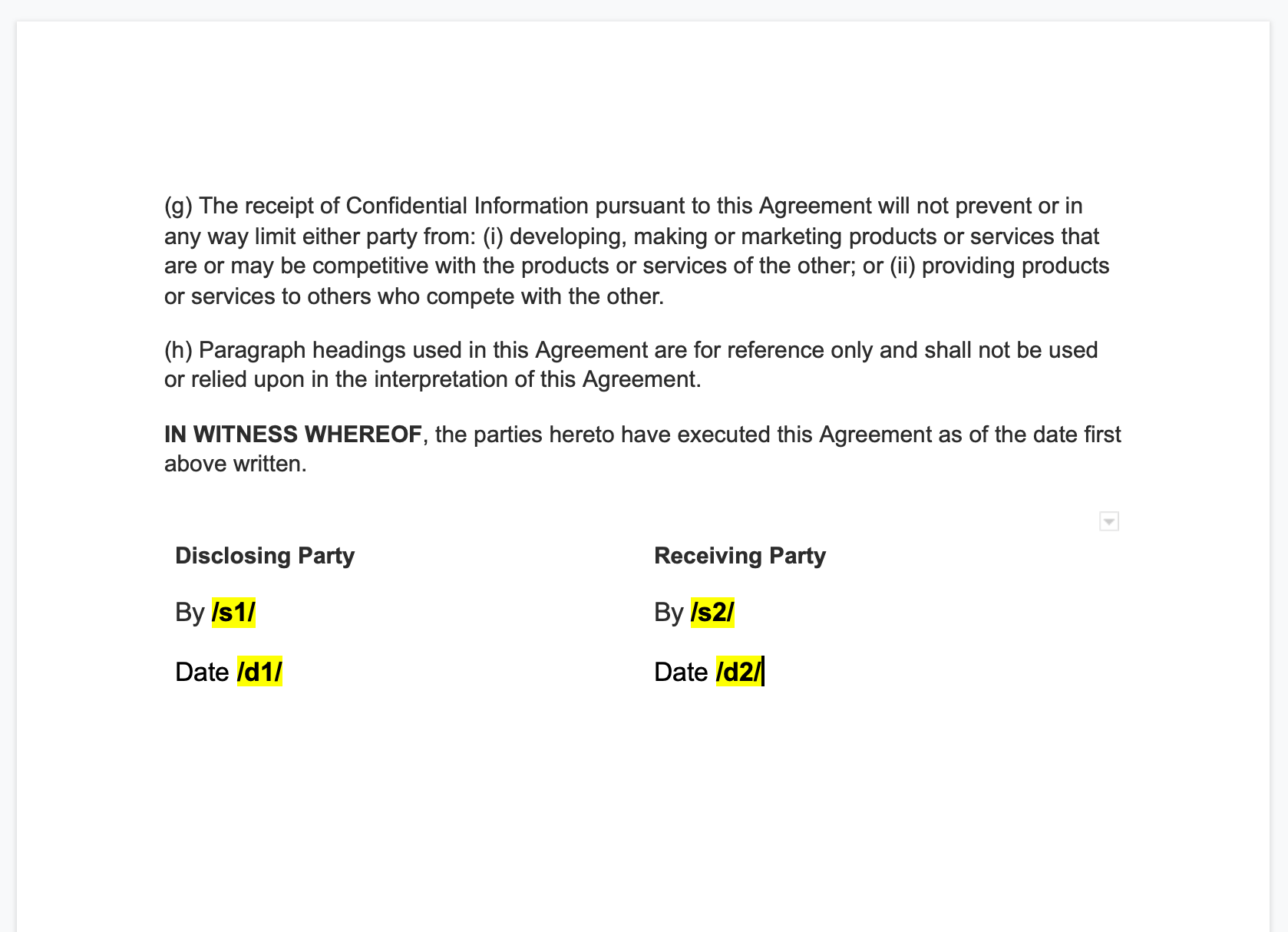
ilustración-guía-de-relleno

La etiqueta /s1/ representa un campo de firma. La etiqueta /d1/ agrega un campo de fecha. El número dentro de una etiqueta de anclaje determina el rol del firmante. Por ejemplo, /s1/ agrega un campo de firma asignado al primer firmante. Al agregar /s2/ a un documento, asignarás el campo de firma al segundo firmante.

Cuando termines de editar, guarda tu documento.

Sube el documento a airSlate SignNow

Ve a la aplicación web de airSlate SignNow y haz clic en el botón Subir Documentos. Encuentra el documento que contiene etiquetas de anclaje en tu dispositivo y selecciona subir.

Una vez que abras el documento en el editor de airSlate SignNow, notarás que tus etiquetas de anclaje ya se han convertido en campos rellenables. Ajusta su tamaño y posición según sea necesario y guarda el archivo haciendo clic en Guardar y Cerrar.
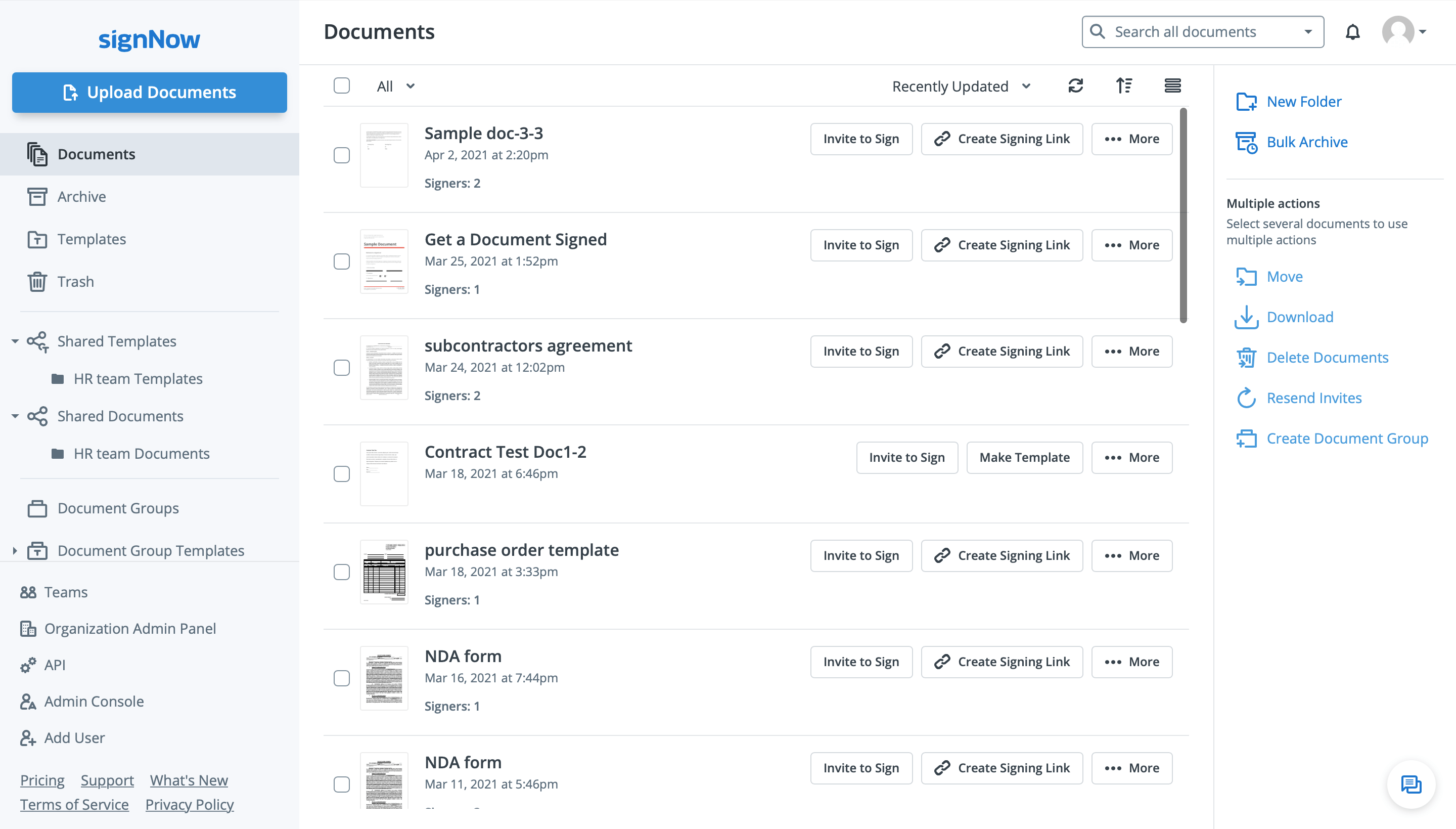
ilustración-guía-de-relleno

Una vez que hayas ajustado el tamaño y la posición de los campos, guarda el archivo haciendo clic en Guardar y Cerrar.


walmart logo
exonMobil logo
apple logo
comcast logo
facebook logo
FedEx logo
esté listo para obtener más

¡Obtenga ahora firmas vinculantes desde el punto de vista jurídico!








