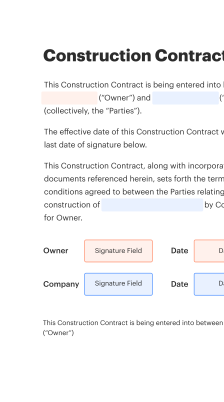
Try Signature Required with SignNow

Get rid of paper and automate digital document processing for more productivity and unlimited opportunities. Sign any papers from a comfort of your home, fast and accomplished. Experience the best way of running your business with airSlate SignNow.

Award-winning eSignature solution

What try signature required means and how it works

try signature required refers to a workflow setting that mandates an explicit signature from a specified signer before a document is considered complete. In practice, the sender designates one or more required signers; each must apply an electronic signature using the chosen eSignature solution before the system moves the document to a final state. This requirement enforces signer accountability, prevents partial execution, and integrates with verification methods such as email authentication, access codes, or multi-factor checks to increase trust in the signed record.

Why require signatures on critical documents

Requiring an explicit signature reduces incomplete transactions and provides a clear point of consent for contractual and regulatory needs.

Why require signatures on critical documents

Common challenges when enforcing required signatures

  • Missing or incorrect recipient email addresses delay completion and require resending the document.
  • Signers unfamiliar with eSignature processes may request paper alternatives, lengthening cycle times.
  • Workflows that lack identity verification risk disputes about signer authenticity and intent.
  • Complex signing orders increase the chance of a blocked or abandoned signing session.

Representative user profiles for required-signature workflows

HR Manager

An HR Manager uses required signature settings to collect employee acceptance of offer letters, policy acknowledgments, and onboarding forms. They need templates, sequential signing, and audit trails to document consent across hires and to comply with internal retention policies and regulatory review.

Accounts Payable Lead

An Accounts Payable Lead routes invoices and payment authorizations to approvers, requiring signatures at defined checkpoints. This user relies on strict signer order, reminders, and verification options to reduce payment errors and to provide evidence for audits.

Typical organizations and roles that use required-signature workflows

Companies with compliance obligations and service providers often enable required signatures to ensure transactions meet legal and internal policy standards.

  • Human resources teams managing offer letters and employment contracts.
  • Finance departments approving invoices, payment authorizations, and vendor agreements.
  • Real estate brokers and lease administrators handling leases and closing documents.

Required-signature settings are also common in HR, finance, and real estate, where finality and auditability are essential for operations and recordkeeping.

be ready to get more

Choose a better solution

Core features to support try signature required workflows

Several platform capabilities make required-signature processes reliable and auditable for common business needs, reducing manual follow-up and improving record integrity.

Sequential Signing

Define a fixed signing order so designated required signers receive and complete signatures in a controlled sequence, preventing later signers from signing before prior approvals are in place and ensuring proper authorization flows.

Signer Authentication

Apply email verification, access codes, or multi-factor authentication to confirm signer identity before allowing a required signature, which strengthens non-repudiation and supports regulatory or internal compliance requirements.

Required Fields

Mark signature, initial, and data fields as mandatory to prevent submission until required signers complete all necessary inputs, ensuring documents are fully executed and data is captured consistently.

Audit Trail

Maintain a time-stamped audit log recording each signer event, IP address, and authentication method to provide admissible evidence of execution and to support internal and external audits.

How required-signature workflows operate step‑by‑step

This sequence explains how the system enforces required signatures, tracks progress, and finalizes documents when all required signers have signed.

  • Initiate: Sender creates the envelope and sets requirements.
  • Notify: System emails each signer with instructions.
  • Authenticate: Signers verify identity if configured.
  • Complete: Document finalizes when all signatures are present.
Collect signatures
24x
faster
Reduce costs by
$30
per document
Save up to
40h
per employee / month

Quick setup: configure try signature required for a document

Follow these steps to set the signature requirement and manage signer order before sending a document for signature.

  • 01
    Upload Document: Add the PDF or form to the platform.
  • 02
    Add Signers: Enter signer names and emails in order.
  • 03
    Mark Required: Set required-signature flags on signer roles.
  • 04
    Send: Dispatch with authentication and reminders.

Managing audit trails for required-signature transactions

Maintain a clear audit trail so every required-signature event is recorded with timestamp, actor, and verification method to support legal and compliance needs.

01

Record Events:

Log signature, view, and authentication events.
02

Timestamping:

Apply UTC timestamps for traceability.
03

IP Capture:

Store signer IP addresses for verification.
04

Authentication Method:

Include the method used to verify signer identity.
05

Document Hash:

Record file hash to detect tampering.
06

Export Logs:

Provide export for audits and legal requests.
be ready to get more

Why choose airSlate SignNow

  • Free 7-day trial. Choose the plan you need and try it risk-free.
  • Honest pricing for full-featured plans. airSlate SignNow offers subscription plans with no overages or hidden fees at renewal.
  • Enterprise-grade security. airSlate SignNow helps you comply with global security standards.
illustrations signature

Typical configuration settings for a required-signature workflow

These common settings help administrators configure required-signature behavior, reminders, and retention to match organizational policy.

Setting Name Configuration
Signature Authentication Level Email or Access Code
Signing Order Enforcement Sequential Required
Reminder Frequency 48 hours
Expiration Period 30 days
Audit Trail Retention 7 years

Supported devices and technical prerequisites for try signature required

Required-signature functionality is available on modern desktop browsers, mobile browsers, and native apps, but compatibility and feature parity may vary by platform.

  • Desktop Browsers: Chrome, Edge, Safari supported
  • Mobile Devices: iOS and Android browsers or apps
  • Network Requirements: Stable internet connection recommended

Confirm that signers use supported browser versions and that corporate firewalls allow access to the eSignature service; for sensitive transactions, recommend using the vendor's native app where additional verification controls may be available.

Security controls associated with required signatures

Access Codes: Single-use code verification
Multi-Factor Auth: Optional MFA for signing
TLS Encryption: In-transit data protection
Document Encryption: At-rest file encryption
Audit Trail: Comprehensive event logs
Role-Based Access: Granular permission control

Industry examples showing required-signature workflows in action

Two concise case overviews show how required signatures ensure compliance and reduce processing time across different sectors.

Healthcare Consent Forms

Patient consent forms must be signed before procedures

  • Identity verification via secure email and access code
  • Reduces scheduling delays and provides legal consent records

Resulting in auditable clinical records that meet HIPAA expectations

Vendor Payment Approvals

Accounts payable requires a signed authorization before payment release

  • Sequential signing with manager approval
  • Lowers payment fraud and ensures dual-control checks

Leading to clearer audit trails and reduced financial risk for the organization

Best practices for accurate and secure required-signature use

Adopting consistent processes and clear communication reduces errors and supports compliance when using required signatures across teams and systems.

Standardize templates and required fields across use cases
Create centrally managed templates with predefined required-signature roles and mandatory fields to reduce sender errors, accelerate preparation time, and ensure every executed document contains the same critical information for legal and operational consistency.
Use clear signer instructions and role descriptions
Include concise guidance for each signer role within the document or email notification so recipients understand why their signature is required, what they are attesting to, and any identity verification steps they must complete.
Enable verification options appropriate to risk level
Match authentication methods to transaction sensitivity: use simple email verification for low-risk forms, access codes for moderate risk, and multi-factor or identity-proofing for high-value or regulated agreements.
Keep audit logs and retention policies aligned with compliance
Configure automated retention and export settings to retain executed documents and full audit trails for the timeframes required by legal, financial, or regulatory obligations to ease audits and legal discovery.

FAQs About try signature required

Common questions and solutions related to required-signature settings, signer access, and verification strategies to help troubleshoot typical issues.

Quick comparison: required-signature capabilities

A concise feature comparison showing availability and key technical distinctions for required-signature enforcement among common providers.

Feature or Technical Comparison Criteria signNow (Recommended) DocuSign
Sequential signing order
Access code authentication
MFA for signers Optional Optional
Audit trail detail Comprehensive Comprehensive
be ready to get more

Get legally-binding signatures now!

Risks and compliance issues when signatures are not enforced

Contractual Gaps: Disputes or unenforceability
Regulatory Fines: Penalties for noncompliance
Audit Failures: Missing evidence for reviews
Fraud Exposure: Unauthorized changes allowed
Operational Delays: Inefficient approvals
Data Loss: Unclear retention tracking

Pricing overview for required-signature capable plans

Basic pricing and plan distinctions for vendors that support required-signature workflows; prices shown are typical starting monthly rates and feature notes for comparison purposes.

Plan and Monthly Pricing signNow (Featured) DocuSign Adobe Sign PandaDoc Dropbox Sign
Starting monthly price $8 per user $10 per user $14.99 per user $19 per user $15 per user
Free or trial tier Limited trial available Free trial only Free trial only Free trial only Limited free tier
Bulk send capability Available on mid plans Available on higher plans Available on higher plans Available on higher plans Available on business plans
API access availability Available on business plans Available on business plans Available on enterprise plans Available on business plans Available via paid plans
Document storage Cloud storage included Cloud storage included Cloud storage included Cloud storage included Cloud storage included

Simplify complex workflows

Create, execute, and manage workflows of any complexity, electronically from virtually anywhere. Scalable eSignature capabilities allow you to share documents with the right people in the correct order and define roles for each recipient. Execute document workflows faster and easier than ever before.

Automate document management

Optimize complex signing processes with airSlate SignNow’s powerful features to enhance your business. Control your automated eSignature workflows to ensure they're running at peak performance with instant notifications and reminders.

Optimize in team collaboration

Bring teams together in a secure, shared environment. Manage documents, use form templates and notifications to create more efficient cross-organization collaboration. Free your employees from having to spend time on repetitive activities so that they can focus on valuable, business-critical tasks.

Integrate into your existing systems

Run your projects with industry-leading integration. Collect Salesforce, Microsoft Teams, and SharePoint all in one business flow. Connect your software to a single system for endless possibilities and more productiveness.

Stay compliant with best-in-class data protection

Feel safe knowing that your information is protected by the newest in encryption security. airSlate SignNow is GDPR and eIDAS certified and offers you visibility into your eSigning procedure with court-admissible audit trails. Set up user access permissions and roles to manage who has access to what.


walmart logo
exonMobil logo
apple logo
comcast logo
facebook logo
FedEx logo
be ready to get more

Get legally-binding signatures now!