Digital Signature Legality for Contract for Work
- Quick to start
- Easy-to-use
- 24/7 support
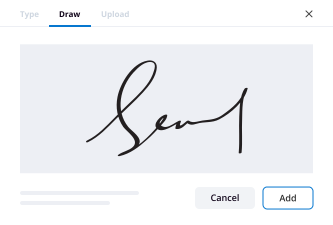


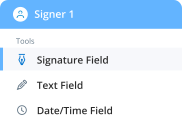


Award-winning eSignature solution




Simplified document journeys for small teams and individuals
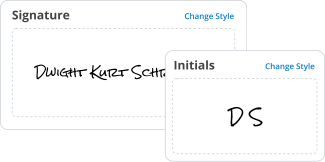

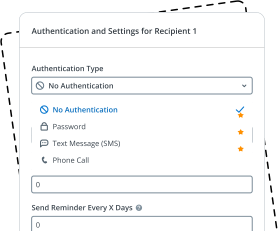
We spread the word about digital transformation







Why choose airSlate SignNow
-
Free 7-day trial. Choose the plan you need and try it risk-free.
-
Honest pricing for full-featured plans. airSlate SignNow offers subscription plans with no overages or hidden fees at renewal.
-
Enterprise-grade security. airSlate SignNow helps you comply with global security standards.







Your complete how-to guide - digital signature legality for contract for work
Digital Signature Legality for Contract for Work
In today's digital age, ensuring the legality of contracts and agreements is crucial for businesses. Utilizing digital signatures can streamline the process while maintaining legal validity. This guide will walk you through the steps of using airSlate SignNow to sign and send documents efficiently.
User Flow:
- Launch the airSlate SignNow web page in your browser.
- Sign up for a free trial or log in.
- Upload a document you want to sign or send for signing.
- If you're going to reuse your document later, turn it into a template.
- Open your file and make edits: add fillable fields or insert information.
- Sign your document and add signature fields for the recipients.
- Click Continue to set up and send an eSignature invite.
airSlate SignNow empowers businesses to send and eSign documents with an easy-to-use, cost-effective solution. It offers a great ROI with rich features suitable for various budgets and is tailored for SMBs and Mid-Market. Additionally, it provides transparent pricing without hidden support fees or add-on costs, along with superior 24/7 support for all paid plans.
Experience the benefits of airSlate SignNow today and streamline your document signing process efficiently.
How it works
Rate your experience
What is the digital signature legality for contract for work
The digital signature legality for contract for work refers to the legal recognition of electronic signatures in binding agreements related to work contracts. In the United States, the Electronic Signatures in Global and National Commerce (ESIGN) Act and the Uniform Electronic Transactions Act (UETA) establish that electronic signatures hold the same legal weight as traditional handwritten signatures. This means that when parties electronically sign a contract for work, the agreement is legally enforceable, provided that all parties consent to the use of electronic signatures and the signature process meets specific legal standards.
How to use the digital signature legality for contract for work
To effectively utilize the digital signature legality for contracts for work, users should follow a structured process. First, ensure that all parties agree to use electronic signatures. Next, select a reliable eSignature platform, such as airSlate SignNow, to create and manage the contract. Users can fill out the contract online, adding necessary details and terms. Once completed, the document can be sent for signature to all involved parties. After each party reviews and signs the contract electronically, the signed document is securely stored and can be accessed at any time, ensuring compliance with legal standards.
Steps to complete the digital signature legality for contract for work
Completing the digital signature legality for a contract for work involves several key steps:
- Prepare the contract by outlining all terms and conditions clearly.
- Choose an eSignature solution, such as airSlate SignNow, to facilitate the signing process.
- Upload the contract to the platform and fill in any required fields.
- Send the document to all parties for their electronic signatures.
- Each party reviews the contract and signs it electronically.
- Once all signatures are obtained, the completed contract is stored securely.
Legal use of the digital signature legality for contract for work
The legal use of digital signatures for contracts for work is governed by federal and state laws that recognize electronic signatures as valid. For a digital signature to be considered legally binding, it must meet certain criteria, including the intent to sign, consent to do business electronically, and the ability to retain a copy of the signed document. Users should ensure that their eSignature process complies with these legal requirements to avoid disputes and ensure enforceability in case of any legal issues.
Key elements of the digital signature legality for contract for work
Several key elements contribute to the legality of digital signatures in work contracts:
- Intent to Sign: Parties must demonstrate their intention to sign the document electronically.
- Consent: All involved parties should agree to use electronic signatures.
- Attribution: The signature must be linked to the signatory, ensuring accountability.
- Integrity: The signed document must remain unchanged after signing, maintaining its authenticity.
- Retention: A copy of the signed document must be accessible to all parties for future reference.
State-specific rules for the digital signature legality for contract for work
While federal laws provide a framework for digital signatures, individual states may have specific regulations that govern their use. It is essential for users to familiarize themselves with state-specific rules regarding electronic signatures, such as any additional requirements or exceptions. Some states may have unique laws that affect the enforceability of electronic contracts, especially in certain industries. Ensuring compliance with these regulations helps to uphold the legality of digital signatures in contracts for work.
-
Best ROI. Our customers achieve an average 7x ROI within the first six months.
-
Scales with your use cases. From SMBs to mid-market, airSlate SignNow delivers results for businesses of all sizes.
-
Intuitive UI and API. Sign and send documents from your apps in minutes.
FAQs
-
What is the digital signature legality for contract for work?
The digital signature legality for contract for work refers to the legal recognition of electronic signatures in binding agreements. In many jurisdictions, digital signatures are considered equivalent to handwritten signatures, provided they meet specific criteria. This means that contracts signed digitally are enforceable and valid under the law.
-
How does airSlate SignNow ensure compliance with digital signature legality for contract for work?
airSlate SignNow complies with various regulations, including the ESIGN Act and UETA, which govern the digital signature legality for contract for work. Our platform employs advanced security measures and authentication processes to ensure that all signatures are legally binding. This compliance gives users peace of mind when executing contracts electronically.
-
What features does airSlate SignNow offer to support digital signature legality for contract for work?
airSlate SignNow offers features such as secure document storage, audit trails, and customizable workflows that enhance the digital signature legality for contract for work. These features ensure that every signed document is traceable and verifiable, which is crucial for legal compliance. Additionally, our user-friendly interface simplifies the signing process for all parties involved.
-
Is there a cost associated with using airSlate SignNow for digital signatures?
Yes, airSlate SignNow offers various pricing plans tailored to different business needs, making it a cost-effective solution for digital signature legality for contract for work. Our plans include features that cater to small businesses as well as larger enterprises. You can choose a plan that fits your budget while ensuring compliance with legal standards.
-
Can I integrate airSlate SignNow with other software for managing contracts?
Absolutely! airSlate SignNow provides seamless integrations with popular software such as CRM systems, document management tools, and cloud storage services. This enhances the digital signature legality for contract for work by allowing users to manage their contracts efficiently within their existing workflows. Integration simplifies the process and ensures that all documents are easily accessible.
-
What are the benefits of using airSlate SignNow for digital signatures?
Using airSlate SignNow for digital signatures offers numerous benefits, including increased efficiency, reduced turnaround time, and enhanced security. The digital signature legality for contract for work is upheld through our robust authentication methods, ensuring that your agreements are safe and legally binding. This leads to improved productivity and a smoother signing experience.
-
How does airSlate SignNow handle document security for digital signatures?
airSlate SignNow prioritizes document security by employing encryption and secure access controls. This ensures that all signed documents maintain their integrity and comply with the digital signature legality for contract for work. Our platform also provides audit trails, allowing users to track who signed the document and when, further enhancing security.


Related searches to digital signature legality for contract for work
Join over 28 million airSlate SignNow users
Get more for digital signature legality for contract for work
- Unlocking eSignature Legality for Military Leave Policy ...
- Unlock eSignature Legality for Military Leave Policy in ...
- ESignature Legality for Military Leave Policy in United ...
- ESignature legality for Paid-Time-Off Policy in Mexico
- ESignature Legality for Paid-Time-Off Policy in ...
- ESignature Legality for Paid-Time-Off Policy in United ...
- ESignature Legality for Paid-Time-Off Policy in ...
- Unlock the Power of eSignature Legality for ...