Unlock eSignature Legitimacy for Personal Leave Policy in European Union
- Quick to start
- Easy-to-use
- 24/7 support




Award-winning eSignature solution




Simplified document journeys for small teams and individuals

We spread the word about digital transformation







Why choose airSlate SignNow
-
Free 7-day trial. Choose the plan you need and try it risk-free.
-
Honest pricing for full-featured plans. airSlate SignNow offers subscription plans with no overages or hidden fees at renewal.
-
Enterprise-grade security. airSlate SignNow helps you comply with global security standards.







Your complete how-to guide - esignature legitimacy for personal leave policy in european union
eSignature Legitimacy for Personal Leave Policy in European Union
In today's digital age, it's crucial to understand the eSignature legitimacy for implementing a Personal Leave Policy within European Union regulations. This guide will walk you through using airSlate SignNow to streamline your document signing process, ensuring compliance and efficiency.
Step-by-step Guide to Using airSlate SignNow:
- Launch the airSlate SignNow web page in your browser.
- Sign up for a free trial or log in.
- Upload a document you want to sign or send for signing.
- If you're going to reuse your document later, turn it into a template.
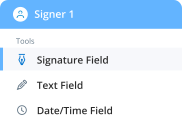
- Open your file and make edits: add fillable fields or insert information.
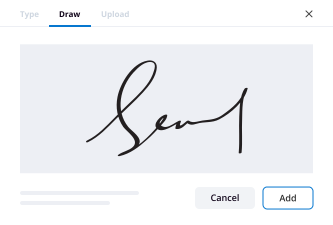
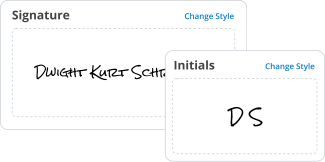
- Sign your document and add signature fields for the recipients.
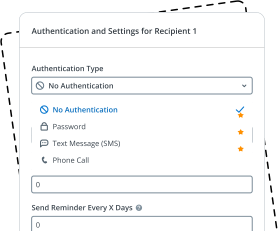
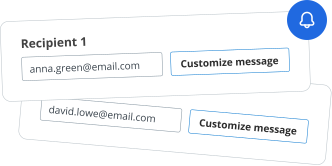
- Click Continue to set up and send an eSignature invite.
airSlate SignNow empowers businesses to send and eSign documents with an easy-to-use, cost-effective solution. It offers great ROI with a rich feature set, tailored for SMBs and Mid-Market. The platform provides transparent pricing without hidden support fees and add-on costs, coupled with superior 24/7 support for all paid plans.
Experience the benefits of airSlate SignNow today and streamline your document signing processes with ease!
How it works
Rate your experience
What is the esignature legitimacy for personal leave policy in european union
The eSignature legitimacy for personal leave policy in the European Union refers to the legal recognition of electronic signatures in the context of personal leave requests. This legitimacy is crucial for ensuring that documents related to employee leave are valid and enforceable. In the EU, electronic signatures are governed by the eIDAS Regulation, which establishes a framework for electronic identification and trust services. This regulation ensures that eSignatures have the same legal standing as handwritten signatures, provided they meet specific criteria.
How to use the esignature legitimacy for personal leave policy in european union
To effectively use the eSignature legitimacy for a personal leave policy, individuals can follow these steps: First, access the personal leave document through a digital platform that supports eSigning, such as airSlate SignNow. Next, fill out the necessary fields, including personal information and leave dates. After completing the document, users can send it for signature to the relevant parties, such as supervisors or HR representatives. Once all signatures are collected, the completed document can be securely stored or shared electronically.
Steps to complete the esignature legitimacy for personal leave policy in european union
Completing the eSignature legitimacy for a personal leave policy typically involves several straightforward steps:
- Log into your airSlate SignNow account and locate the personal leave document.
- Fill in the required fields with accurate information.
- Review the document for completeness and accuracy.
- Send the document for signature to the designated approvers.
- Monitor the signing process to ensure all parties have signed.
- Once signed, download or store the document securely in your account.
Legal use of the esignature legitimacy for personal leave policy in european union
The legal use of eSignature legitimacy for personal leave policies in the EU is anchored in the eIDAS Regulation, which provides clear guidelines on the validity of electronic signatures. For an eSignature to be legally binding, it must meet specific requirements, such as ensuring the signer's identity is verified and that the signature is linked to the document in a way that any subsequent changes can be detected. Organizations must also ensure compliance with local labor laws regarding employee leave documentation.
Security & Compliance Guidelines
When utilizing eSignatures for personal leave policies, it is essential to adhere to security and compliance guidelines to protect sensitive information. Key practices include:
- Use a reputable eSignature platform that offers encryption and secure storage.
- Implement multi-factor authentication for users accessing sensitive documents.
- Regularly audit eSignature processes to ensure compliance with legal standards.
- Train employees on best practices for handling electronic documents securely.
Documents You Can Sign
With the eSignature legitimacy for personal leave policies, a variety of documents can be signed electronically. These include:
- Personal leave requests
- Medical leave forms
- Vacation requests
- Return-to-work agreements
- HR policy acknowledgments
-
Best ROI. Our customers achieve an average 7x ROI within the first six months.
-
Scales with your use cases. From SMBs to mid-market, airSlate SignNow delivers results for businesses of all sizes.
-
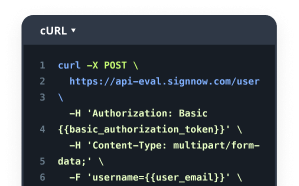
Intuitive UI and API. Sign and send documents from your apps in minutes.
FAQs
-
What is the esignature legitimacy for personal leave policy in European Union?
The esignature legitimacy for personal leave policy in European Union refers to the legal acceptance of electronic signatures in official documents related to personal leave. This ensures that employees can submit leave requests electronically, streamlining the process while maintaining compliance with EU regulations.
-
How does airSlate SignNow ensure compliance with esignature legitimacy for personal leave policy in European Union?
airSlate SignNow adheres to the eIDAS regulation, which governs electronic signatures in the EU. This compliance guarantees that all esignatures created through our platform are legally binding and recognized for personal leave policies, providing peace of mind for both employers and employees.
-
What features does airSlate SignNow offer to support esignature legitimacy for personal leave policy in European Union?
airSlate SignNow offers features such as secure document storage, customizable templates, and audit trails that enhance the esignature legitimacy for personal leave policy in European Union. These tools help organizations manage leave requests efficiently while ensuring compliance with legal standards.
-
Is airSlate SignNow cost-effective for managing personal leave policies?
Yes, airSlate SignNow provides a cost-effective solution for managing personal leave policies through its competitive pricing plans. By utilizing our platform, businesses can save on administrative costs while ensuring the esignature legitimacy for personal leave policy in European Union.
-
Can airSlate SignNow integrate with other HR tools for personal leave management?
Absolutely! airSlate SignNow seamlessly integrates with various HR tools and software, enhancing the management of personal leave policies. This integration supports the esignature legitimacy for personal leave policy in European Union by streamlining workflows and improving efficiency.
-
What are the benefits of using airSlate SignNow for personal leave requests?
Using airSlate SignNow for personal leave requests simplifies the submission process, reduces paperwork, and ensures quick approvals. This not only enhances employee satisfaction but also reinforces the esignature legitimacy for personal leave policy in European Union, making it easier for organizations to comply with regulations.
-
How secure is the esignature process with airSlate SignNow?
The esignature process with airSlate SignNow is highly secure, employing advanced encryption and authentication measures. This security is crucial for maintaining the esignature legitimacy for personal leave policy in European Union, ensuring that sensitive employee information is protected.


