What is the affiant on a quit claim deed?
The affiant on a quit claim deed is the individual who signs the document to transfer ownership of property. This person is typically the current owner, also known as the grantor. The affiant declares that they have the right to transfer the property and that they are doing so voluntarily. In the context of a quit claim deed, the affiant does not guarantee that the title is free of claims or encumbrances; rather, they simply transfer whatever interest they hold in the property.
Steps to complete the quit claim deed electronically
Completing a quit claim deed electronically with airSlate SignNow is straightforward. Follow these steps:
- Log in to your airSlate SignNow account or create one if you do not have an account.
- Upload the quit claim deed template or create a new document using the airSlate SignNow editor.
- Fill in the necessary details, including the names of the affiant and the grantee, property description, and any other required information.
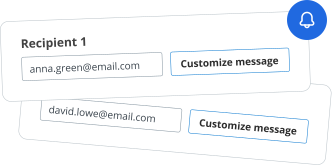
- Request signatures from the affiant and any other parties involved by entering their email addresses.
- Once the document is signed, it can be downloaded or stored securely within your airSlate SignNow account.
Legal use of the quit claim deed
A quit claim deed is commonly used in various legal scenarios, such as transferring property between family members, clearing up title issues, or conveying property in a divorce settlement. It is important to ensure that the affiant has the legal authority to transfer the property. In some states, the quit claim deed may need to be notarized to be legally binding. Always check state-specific requirements to ensure compliance.
Key elements of the quit claim deed
When preparing a quit claim deed, several key elements must be included:
- Names of the parties: Clearly state the names of the affiant (grantor) and the grantee (the person receiving the property).
- Property description: Provide a detailed description of the property being transferred, including its address and legal description.
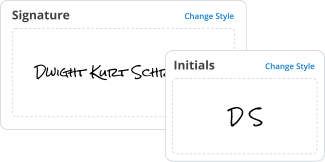
- Signature of the affiant: The affiant must sign the document to validate the transfer.
- Notarization: Depending on state laws, notarization may be required for the deed to be effective.
Sending & signing methods
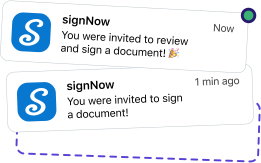
With airSlate SignNow, users can send and sign quit claim deeds using various methods. The document can be accessed via web, mobile, or app. Once the document is prepared, you can easily send it for signature by entering the email addresses of the required signers. Each signer will receive a secure link to review and eSign the document electronically. This process ensures that all signatures are captured efficiently and securely.
Security & compliance guidelines
When using airSlate SignNow to manage quit claim deeds, it is essential to adhere to security and compliance guidelines. airSlate SignNow employs advanced encryption protocols to protect your documents during transmission and storage. Additionally, electronic signatures are legally recognized across the United States, provided they meet specific criteria. Ensure that all parties involved are aware of the legal implications of signing electronically and maintain a record of all signed documents for future reference.