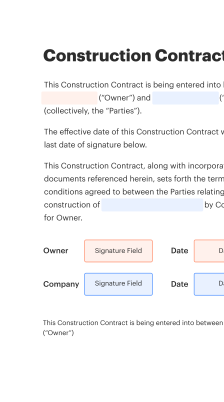
Ask for Visitor eSign with SignNow
What asking for visitor eSign means in practice
Why organizations choose to ask for visitor eSign
Asking for visitor eSign speeds check-in, reduces paper storage, creates a tamper-evident audit trail, and supports compliance requirements for records and consent in many U.S. contexts.
Common challenges before implementing visitor eSign
- Managing paper forms creates storage overhead, misplaced documents, and delays when retrieving signed records.
- Verifying a visitor’s identity at point of signing can be inconsistent without standardized authentication steps.
- Ensuring signatures are legally admissible requires consistent timestamps, audit logs, and retained metadata.
- Integrating sign-onboarding with existing CRMs and record systems often requires technical setup and mapping.
Typical user roles in visitor eSign workflows
Front Desk Clerk
A front desk clerk or receptionist manages the device used for signatures, initiates the signing session, confirms visitor identity when required, and ensures documents are routed to the correct team or archive after completion.
Site Manager
A site or compliance manager configures templates, authentication settings, retention policies, and reporting; they audit completed records and coordinate integration with backend systems for storage and access control.
Who commonly asks for visitor eSign and why it fits
Facilities with frequent public check-ins rely on visitor eSign to streamline intake and retain compliant records.
- Healthcare front desks that need patient intake and consent documentation with audit trails.
- Real estate offices and open houses capturing disclosures and tour waivers on site.
- Corporate receptions and events collecting NDAs, waivers, or contact information efficiently.
These workflows reduce manual entry and centralize signed records so staff can focus on service rather than paperwork.
Choose a better solution
Key tools that support asking for visitor eSign
Kiosk Mode
A dedicated kiosk or tablet interface lets visitors sign on a shared device without exposing other records; session isolation ensures each signing session is cleared between visitors and reduces data leakage risk.
Identity Verification
Optional authentication methods range from email and SMS verification to ID document checks and knowledge-based identity questions, allowing organizations to calibrate risk and compliance for different types of visitor transactions.
Templates
Reusable, preconfigured document templates reduce errors and accelerate check-in; templates can include required fields, conditional logic, and role assignments to guide visitors through the necessary inputs.
Audit Trail
A tamper-evident log captures timestamps, IP addresses, and signer actions so signed records are defensible and meet legal and regulatory documentation needs.
How the visitor eSign flow typically operates
-
Upload Template: Select or create form
-
Add Fields: Place signature and data fields
-
Open Session: Launch on kiosk or device
-
Complete Signing: Capture signature and finalize
Basic steps to ask for visitor eSign at a site
-
01Prepare Document: Load template with signature fields
-
02Collect Info: Capture name and contact details
-
03Request Signature: Present document on device and obtain signature
-
04Store Record: Archive signed file with audit trail
Why choose airSlate SignNow
-
Free 7-day trial. Choose the plan you need and try it risk-free.
-
Honest pricing for full-featured plans. airSlate SignNow offers subscription plans with no overages or hidden fees at renewal.
-
Enterprise-grade security. airSlate SignNow helps you comply with global security standards.
Recommended workflow settings for visitor eSign
| Setting Name | Configuration |
|---|---|
| Reminder Frequency | 48 hours |
| Signature Order | Sequential |
| Kiosk Mode Timeout | 30 seconds |
| Authentication Method | Email or SMS |
| Retention Period | 7 years |
Device and platform considerations for visitor eSign
Visitor eSign works on tablets, kiosks, and desktops but verifying compatibility and network needs before deployment avoids interruptions.
- Supported Devices: iPad, Android tablets, desktops
- Browser Requirements: Modern browsers with TLS
- Network: Stable internet preferred
Confirm device security settings, enable automatic screen locking, and ensure devices apply OS updates; offline signing options are useful where connectivity is unreliable, but require a secure synchronization process when reconnected.
Visitor eSign examples from common sectors
Healthcare Intake
A clinic presents consent forms on a tablet at check-in to collect signatures and demographic data for a new patient
- Kiosk presentation with identity capture
- Reduces paper handling and speeds triage
Resulting in faster intake and a complete, timestamped record for clinical and billing use.
Real Estate Tours
An agent opens a property lockbox and asks buyers to sign a tour waiver on a mobile device to acknowledge liability and privacy terms
- Mobile form with contact capture
- Ensures signatures are linked to contact records for follow-up
Leading to centralized records and clearer audit history for disclosures.
Best practices for secure and accurate visitor eSign
FAQs: Troubleshooting common visitor eSign issues
- Why did the signature session fail to save?
Session failures typically stem from interrupted network connectivity or device timeouts; verify the device has a stable connection, check kiosk timeout settings, and confirm the platform completed the save step before closing the session. If using offline mode, ensure queued documents synchronize when the device reconnects.
- How can I verify a visitor’s identity reliably?
Select authentication appropriate to document sensitivity: use email or SMS verification for low-risk waivers, and consider ID verification or multi-factor methods for higher-risk consents. Capture contact details and optionally photos or badge numbers to strengthen record linkage.
- What should I do if a visitor signs the wrong document?
If an incorrect document is signed, mark the record as voided and reissue the correct document. Retain the voided record with an explanation in the audit trail to preserve evidence of the error and the corrective action taken.
- How long should visitor signature records be retained?
Retention depends on legal, regulatory, and business needs; many organizations retain visitor consents and waivers for several years. Coordinate retention with legal counsel and set automated retention policies aligned with record-keeping requirements.
- Can multiple visitors sign on the same device securely?
Yes, with proper session isolation and automatic clearing between signings. Configure kiosk mode to end and clear each session, require staff to confirm session closure, and avoid persistent login credentials on shared devices.
- What steps ensure signed records are legally defensible?
Collect a complete audit trail with timestamps and IP metadata, apply appropriate signer authentication, store records in secure, tamper-evident storage, and follow ESIGN/UETA principles for consent and intent documentation to preserve admissibility.
Feature availability for visitor eSign across providers
| Capability | Recommended - signNow | Adobe Sign | DocuSign |
|---|---|---|---|
| ESIGN / UETA Validity | |||
| Audit Trail Included | |||
| Kiosk Mode / Shared Device | |||
| API Access |
Get legally-binding signatures now!
Risks of informal or unmanaged visitor signing
Entry-level pricing and plan focus for visitor eSign
| Plan/Starting Price | Recommended - signNow | Adobe Sign | DocuSign | Dropbox Sign | PandaDoc |
|---|---|---|---|---|---|
| Individual Starter | From $8/user/mo | From $9.99/mo | From $10/user/mo | From $15/user/mo | From $19/user/mo |
| Business / Team | From $15/user/mo | From $29.99/user/mo | From $25/user/mo | From $20/user/mo | From $29/user/mo |
| Enterprise Options | Custom enterprise plans | Custom enterprise plans | Custom enterprise plans | Custom enterprise plans | Custom enterprise plans |
| Kiosk or On-site Use | Available on team plans | Available via add-on | Available via product feature | Available | Available via integrations |
| API access | Included on business tiers | Included on paid tiers | Included on paid tiers | Included on paid tiers | Included on paid tiers |
Simplify complex workflows
Create, execute, and manage workflows of any complexity, electronically from virtually anywhere. Scalable eSignature capabilities allow you to share documents with the right people in the correct order and define roles for each recipient. Execute document workflows faster and easier than ever before.
Automate document management
Optimize complex signing processes with airSlate SignNow’s powerful features to enhance your business. Control your automated eSignature workflows to ensure they're running at peak performance with instant notifications and reminders.
Optimize in team collaboration
Bring teams together in a secure, shared environment. Manage documents, use form templates and notifications to create more efficient cross-organization collaboration. Free your employees from having to spend time on repetitive activities so that they can focus on valuable, business-critical tasks.
Integrate into your existing systems
Run your projects with industry-leading integration. Collect Salesforce, Microsoft Teams, and SharePoint all in one business flow. Connect your software to a single system for endless possibilities and more productiveness.
Stay compliant with best-in-class data security
Feel confident knowing that your data remains secure by the most recent in encryption security. airSlate SignNow is GDPR and eIDAS certified and provides you visibility into your eSigning process with court-admissible audit trails. Set up user authorization and rights to control who has access to what.