Bind Letter Signature with SignNow

Eliminate paperwork and optimize digital document managing for more productivity and unlimited possibilities. eSign any papers from a comfort of your home, fast and accomplished. Enjoy a greater way of running your business with airSlate SignNow.

Award-winning eSignature solution

What a bind letter signature is and why it matters

A bind letter signature is the electronic signing of a binding letter or commitment document that creates enforceable obligations between parties. In practice this means a signer applies an authenticated eSignature to a prepared letter of intent, engagement, or commitment so the document can be relied upon for legal or transactional purposes. Electronic bind letters are commonly stored with metadata, timestamps, and audit records to demonstrate integrity and signer intent under U.S. laws such as ESIGN and UETA, enabling remote execution without paper handling or in-person notarization in many workflows.

Practical reasons to adopt bind letter signature workflows

Using bind letter signatures reduces turnaround time, centralizes proof of execution, and supports compliance documentation for regulated transactions without the delays and physical storage of paper.

Practical reasons to adopt bind letter signature workflows

Common challenges when implementing bind letter signatures

  • Ensuring signer identity while keeping the process fast can require balancing multi-factor checks with user convenience.
  • Formatting legacy templates for electronic execution may reveal inconsistent signature blocks and cause placement errors.
  • Maintaining an auditable record that meets ESIGN and UETA evidence requirements requires precise timestamping and document hashing.
  • Coordinating multiple signers across jurisdictions can create sequencing conflicts and increase overall turnaround time.

Representative user roles for bind letter signature workflows

Contract Manager

A Contract Manager prepares bind letters, applies required fields, and enforces signature order. They use templates to ensure legal clauses remain unchanged and rely on the platform audit trail to resolve disputes and confirm execution timestamps for compliance.

Closing Attorney

A Closing Attorney verifies signer identity, confirms the final document integrity, and records the executed bind letter for the client. They depend on authenticated signatures and cryptographic evidence to support enforceability in transactional review and potential litigation.

Typical users and teams that rely on bind letter signatures

Legal, finance, and sales teams commonly use bind letter signatures to finalize commitments and record acceptance.

  • Legal teams needing clear audit trails and signature intent for contract formation.
  • Sales or account teams closing offers and recording acceptance remotely.
  • Finance and lending groups executing commitment letters and approvals.

Organizations adopt digital bind letter signatures to speed approvals while keeping compliance and recordkeeping intact.

Advanced tools that improve bind letter signature reliability

Beyond core features, advanced controls and integrations make bind letter signature workflows more efficient and defensible in high-volume or regulated environments.

Bulk Send

Ability to distribute identical bind letters to many recipients at once while tracking individual execution and maintaining separate audit records for each signed document.


Conditional Fields

Dynamic form logic displays relevant fields based on signer input or role, reducing clutter and ensuring all necessary data is collected before finalizing the bind letter.

Role-Based Routing

Predefined signing sequences and role assignments enforce business rules so binding commitments occur in the correct legal order and cannot be bypassed.

Integrations

Native connections to CRM, cloud storage, and document management systems allow automatic population of bind letters and centralized storage of executed documents.

API Access

Programmatic signing and template management via REST APIs enable embedding bind letter execution into custom applications and automated pipelines.

Advanced Reporting

Activity dashboards and exportable logs support compliance reviews, operational metrics, and retention reporting for bind letter processes.

be ready to get more

Choose a better solution

Essential capabilities for reliable bind letter signature workflows

Platforms that support bind letter signatures should offer template management, signer authentication, tamper-evidence, and audit logging to meet legal and operational requirements.

Template Library

Reusable templates reduce drafting errors by preserving standardized clauses, predefined signature blocks, and required data fields so bind letters remain consistent across transactions and minimize manual formatting corrections.

Authentication Options

Support for email, SMS, knowledge-based checks, and third-party identity providers gives teams flexibility to choose verification levels that match transaction risk and regulatory needs.

Tamper Evidence

Cryptographic sealing and document hashing provide tamper-evident seals to detect post-execution changes, preserving the integrity of signed bind letters for dispute resolution and audit.

Audit Trail

Comprehensive logs record signer IP, timestamps, authentication steps, and field-level events, creating admissible evidence of signing activities under ESIGN and UETA frameworks.
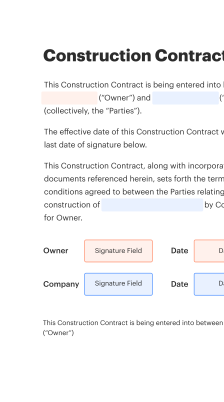
How the bind letter signature process typically flows

This overview shows the primary stages from document creation to final storage so stakeholders understand each control point.

  • Draft: Author the bind letter and lock critical clauses.
  • Configure: Place signature, date, and initial fields.
  • Sign: Signers complete identity checks and apply signatures.
  • Record: System captures audit trail and saves secure copy.
Collect signatures
24x
faster
Reduce costs by
$30
per document
Save up to
40h
per employee / month

Step-by-step: completing a bind letter signature

Follow this concise sequence to prepare, send, and finalize a bind letter signature with legal and technical safeguards in place.

  • 01
    Prepare: Load the bind letter and add signature fields.
  • 02
    Authenticate: Choose an identity verification method for signers.
  • 03
    Send: Route the document using the correct signer order.
  • 04
    Archive: Store final PDF with audit metadata and access controls.
be ready to get more

Why choose airSlate SignNow

  • Free 7-day trial. Choose the plan you need and try it risk-free.
  • Honest pricing for full-featured plans. airSlate SignNow offers subscription plans with no overages or hidden fees at renewal.
  • Enterprise-grade security. airSlate SignNow helps you comply with global security standards.
illustrations signature

Configuration checklist for bind letter signature workflows

Set these workflow options to align bind letter execution with compliance, retention, and business rules before sending at scale.

Setting Name Configuration
Reminder Frequency 48 hours
Signer Order Enforcement Sequential
Authentication Level Email + SMS
Retention Policy 7 years
Audit Record Export CSV/XML

Platform and device requirements for bind letter signature

Bind letter signatures work across common browsers and mobile devices but verifying compatibility ensures consistent signer experience.

  • Desktop browsers: Chrome, Edge, Safari supported
  • Mobile devices: iOS and Android apps available
  • PDF support: Preserves layout and signatures

Confirming browser versions, enabling JavaScript and secure transport protocols, and testing mobile app flows helps avoid rendering or signing errors during critical bind letter executions.

Security controls commonly used with bind letter signatures

Data encryption: AES-256 at rest
Transport security: TLS 1.2+ in transit
Access controls: Role-based permissions
Authentication: Multi-factor options
Document hashing: SHA-256 signatures
Activity logging: Comprehensive audit trail

Industry examples where bind letter signature is applied

Real-world scenarios show how bind letter signatures streamline commitments while maintaining evidentiary standards for regulated industries.

Real Estate Escrow

A residential purchase commitment is prepared and sent to buyer and seller with defined signature fields and sequence

  • Platform enforces signer order and records timestamps
  • Parties receive identical, tamper-evident copies with audit data

Resulting in clear proof of execution for closing and title review.

Commercial Loan Commitment

A lender issues a loan commitment letter to a borrower detailing terms and contingencies

  • Authentication verifies borrower identity before signing
  • The executed document includes cryptographic hashes and a signature audit log

Leading to an auditable record accepted by downstream underwriting and compliance teams.

Best practices to ensure secure and accurate bind letter signatures

Follow these recommended controls to reduce risk and improve the defensibility of signed bind letters in operational and legal contexts.

Use standardized templates and locked clauses
Create approved bind letter templates with locked legal language and standardized signature blocks. This reduces drafting errors, enforces consistent terms, and preserves clause integrity across transactions to prevent inadvertent modifications that could affect enforceability.
Select authentication appropriate to transaction risk
For low-risk commitments, email or SMS verification may suffice. For high-value or regulated transactions, require stronger identity proofing such as multi-factor authentication or third-party identity verification to demonstrate signer intent and authenticity.
Maintain complete, tamper-evident audit trails
Ensure every executed bind letter includes cryptographic hashing, timestamping, and a detailed event log. Retain audit records alongside documents to support dispute resolution and compliance with ESIGN and UETA evidentiary expectations.
Coordinate retention and access controls with compliance
Implement retention policies, secure backups, and role-based access to executed bind letters. Align storage duration and security settings with industry regulations such as HIPAA or FERPA when relevant.

FAQs and troubleshooting for bind letter signature issues

Answers to common problems that arise during preparation, distribution, signing, and storage of bind letters to help teams resolve issues quickly.

Feature comparison: signNow versus DocuSign for bind letter signatures

A concise feature-level comparison highlights availability and support for essential bind letter signature controls in two leading eSignature platforms.

Criteria signNow (Recommended) DocuSign
Legal Validity ESIGN/UETA ESIGN/UETA
API Available
Bulk Send
HIPAA Support Available Available
be ready to get more

Get legally-binding signatures now!

Risks and penalties to consider with bind letter signatures

Invalid execution: Contract voiding
Data breach: Regulatory fines
Incomplete audit: Evidentiary gaps
Unauthorized access: Liability exposure
Retention failure: Compliance penalties
Process errors: Contract disputes

Feature and availability comparison across common eSignature providers

This table compares practical availability of common features for bind letter signatures across several established vendors, with signNow listed first as a featured option.

Feature signNow (Featured) DocuSign Adobe Sign Dropbox Sign PandaDoc
Free plan available No free plan, trial available Trial only, no ongoing free plan No free plan Limited free tier for basic use Free eSign plan available
API access included REST API with SDKs and webhooks REST API with extensive SDKs Cloud APIs via Adobe platform Public API with SDKs REST API with integrations
Bulk send capability Bulk Send for large batches Bulk Send available Bulk send supported Batch sending with limits Bulk dispatch on paid plans
Template and library support Custom templates and reusable clauses Advanced templates and workflows Template functionality via Adobe tools Simple template library Advanced templating and content library
Enterprise SSO and controls SAML SSO and enterprise controls SAML, SCIM and SSO integrations SAML support with enterprise plans SAML available for teams SAML and SSO support for enterprise

Simplify complex workflows

Create, execute, and manage workflows of any complexity, electronically from virtually anywhere. Scalable eSignature capabilities allow you to share documents with the right people in the correct order and define roles for each recipient. Execute document workflows faster and easier than ever before.

Automate document management

Optimize complex signing processes with airSlate SignNow’s powerful features to enhance your business. Control your automated eSignature workflows to ensure they're running at peak performance with instant notifications and reminders.

Optimize in team collaboration

Bring teams together in a secure, shared environment. Manage documents, use form templates and notifications to create more efficient cross-organization collaboration. Free your employees from having to spend time on repetitive activities so that they can focus on valuable, business-critical tasks.

Integrate into your existing systems

Run your projects with industry-leading integration. Collect Salesforce, Microsoft Teams, and SharePoint all in one business flow. Connect your software to a single system for endless possibilities and more efficiency.

Remain compliant with industry-leading data safety

Feel safe knowing that your information is protected by the newest in encryption security. airSlate SignNow is GDPR and eIDAS compliant and provides you transparence into your signing process with court-admissible audit trails. Configure user authorization and roles to manage who has access to what.


walmart logo
exonMobil logo
apple logo
comcast logo
facebook logo
FedEx logo
be ready to get more

Get legally-binding signatures now!