Contract Management System for Real Estate

Experience effortless document signing and management with airSlate SignNow's user-friendly and budget-friendly solution, tailored for real estate professionals.

Award-winning eSignature solution

What a contract management system for real estate does

A contract management system for real estate centralizes creation, execution, and storage of leasing agreements, purchase contracts, addenda, and closing documents. It streamlines signature collection, preserves tamper-evident records, and maintains searchable metadata for property files. For brokers, property managers, title companies, and legal teams, the system reduces repetitive manual steps while improving visibility into contract status and obligations. When paired with compliant eSignature technology such as signNow, it supports legally valid electronic signing, automated reminders, and configurable retention rules to match organizational policies and regulatory requirements.

Why use a contract management system in real estate operations

A centralized contract management system reduces closing times, lowers error rates, and provides consistent audit trails for real estate transactions.

Why use a contract management system in real estate operations

Common contract process challenges in real estate

  • Lost or inconsistent versions of agreements across agents and offices create closing delays and disputes.
  • Manual signature collection causes scheduling friction and increases turnaround times for leases.
  • Lack of searchable metadata makes locating tenant or title documents time-consuming.
  • Inadequate audit trails complicate compliance reviews and post-closing due diligence requests.

Typical user roles and responsibilities

Listing Agent

Listing agents prepare offers, disclosures, and amendments, then track signatures and deadlines. They rely on templates, automated reminders, and mobile signing to complete transactions while coordinating with buyers, sellers, and lenders.

Property Manager

Property managers execute leases, renewals, and notices, maintain tenant records, and enforce retention policies. They need batch workflows, audit trails, and secure storage to meet operational and compliance needs across portfolios.

Teams that typically rely on real estate contract systems

Real estate organizations of various sizes adopt contract management systems to standardize document handling and speed transaction cycles.

  • Brokerage teams coordinating offers, counter-offers, and contingency documents across multiple agents and clients.
  • Property management companies handling leases, renewals, and notices for large portfolios.
  • Title and escrow professionals ensuring secure closing documents and chain-of-custody records.

These users benefit from role-based access, repeatable templates, and integrated signing to reduce administrative overhead and increase accuracy.

Core features to evaluate for real estate contract management

When selecting a contract management system for real estate, focus on features that address drafting efficiency, secure signing, searchability, integration, and auditability.

Template Library

Centralized templates with custom fields and conditional logic reduce drafting time, ensure consistency across offices, and limit legal exposure by embedding approved language and clauses.


Bulk Send

Ability to send the same document to many recipients with individualized placeholders enables mass lease renewals and notice distribution while preserving per-recipient audit trails.

Mobile Signing

Responsive signing experience on smartphones and tablets supports agents and tenants in the field, enabling execution without in-person meetings or printing.

Audit Trail

Comprehensive, tamper-evident records capture signer IP, timestamps, and activity to support due diligence and dispute resolution.

API & Integrations

APIs allow connection to CRMs, accounting systems, and document storage so contract status and data synchronize across operational platforms.

Access Controls

Granular role-based permissions, folder-level restrictions, and single-sign-on support secure sensitive property and tenant data while enabling appropriate collaboration.

be ready to get more

Choose a better solution

Integration capabilities that matter for property workflows

Integrations reduce duplicate entry and improve visibility across systems used day-to-day by real estate teams.

CRM Integration

Bi-directional syncing with CRMs like Salesforce or HubSpot ensures contact and deal data populate contract fields automatically, preserving lead and client context and reducing manual reconciliation between systems.

Document Storage

Native connectors to Google Drive and Dropbox keep signed agreements in tenant or property folders, enable automated backups, and maintain consistent file naming for audit and retrieval.

Accounting & Escrow

Integrations with accounting systems export contract terms and payment schedules to support invoicing, security deposit tracking, and reconciliation at closing or lease commencement.

Calendar & Notifications

Syncing with calendar systems and automated reminders helps teams and clients meet signature deadlines and ensures key contract milestones are visible across platforms.
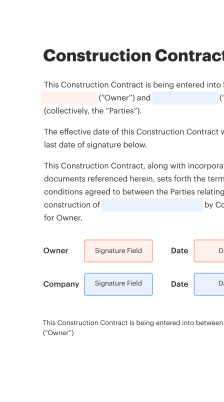
How document creation and signing flow normally works

A typical end-to-end signing process moves documents from authoring to execution and into secure storage with clear status tracking.

  • Author: Prepare contract from template with placeholders.
  • Send: Specify recipients, signing order, and authentication.
  • Sign: Recipients sign via web or mobile with audit logs.
  • Store: Finalize document and retain under policy.
Collect signatures
24x
faster
Reduce costs by
$30
per document
Save up to
40h
per employee / month

Quick setup: getting started with a real estate contract management system

Follow these initial steps to configure a contract management system for real estate workflows and ensure consistent document control from day one.

  • 01
    Account setup: Create an organizational account and define administrators.
  • 02
    Roles and access: Assign roles and permissions by job function.
  • 03
    Templates: Upload standard contracts and map signature fields.
  • 04
    Retention rules: Set storage duration and archival policies.

Managing audit trails and post-signature records

Maintain complete records after signing to support compliance, due diligence, and future disputes.

01

Record generation:

System creates final PDF with metadata.
02

Event logging:

Capture signer actions and timestamps.
03

Evidence package:

Bundle signed file with logs and certificates.
04

Storage location:

Archive in secured folder.
05

Retention indexing:

Apply searchable tags and dates.
06

Export options:

Download or push to archive.
be ready to get more

Why choose airSlate SignNow

  • Free 7-day trial. Choose the plan you need and try it risk-free.
  • Honest pricing for full-featured plans. airSlate SignNow offers subscription plans with no overages or hidden fees at renewal.
  • Enterprise-grade security. airSlate SignNow helps you comply with global security standards.
illustrations signature

Common workflow settings for real estate contract automation

These typical workflow settings help enforce consistent execution and follow-up for contracts across real estate teams.

Feature Configuration
Signing order Sequential or parallel
Reminder schedule 48 hours cadence
Authentication method Email or SMS OTP
Template locking Admin only edits
Retention policy 7 years

Device and browser requirements for consistent signing

Ensure all participants use supported platforms and browsers to avoid signing interruptions or rendering issues.

  • Desktop browsers: Chrome, Edge, Safari
  • Mobile platforms: iOS and Android supported
  • App availability: Native mobile apps

Organizations should publish supported environment guidelines to clients and agents, and test typical documents and authentication flows on target devices during rollout to reduce friction.

Security and authentication features to expect

Data encryption: AES-256 at rest
Transport security: TLS 1.2+ in transit
Access controls: Role-based permissions
Authentication options: Password and MFA
Document integrity: Tamper-evident seals
Audit logging: Comprehensive event logs

Real-world examples of contract management in real estate

Two practical scenarios show how a contract management system reduces friction and documents execution risk in typical transactions.

Residential Purchase

An agent prepares a purchase agreement and disclosures using standardized templates

  • Templates reduce drafting errors
  • Electronic signing completes acceptance faster

Leading to shorter escrow periods and clearer audit trails for lenders and title companies.

Portfolio Lease Renewals

A property manager generates renewal notices and batch lease documents from a tenant database

  • Bulk Send automates distribution
  • Tenants sign on mobile or web quickly

Resulting in higher renewal rates and consistent retention for regulatory inspections and accounting.

Best practices for secure and accurate real estate contracting

Apply consistent procedures and technical controls to reduce risk and improve execution speed across real estate transactions.

Standardize templates and clause libraries
Maintain approved templates and clause libraries to reduce drafting errors, ensure consistent legal language, and accelerate processing. Restrict editing to authorized users and version templates to track changes and approvals.
Use role-based access and least privilege
Limit document and folder access based on job responsibilities. Implement least-privilege principles and regular access reviews to prevent unauthorized changes and data exposure in tenant and title records.
Enable strong signer authentication
Choose appropriate authentication methods (email, SMS OTP, knowledge-based, or ID verification) based on transaction risk. Record authentication events in the audit trail for evidentiary support in disputes.
Document retention and backup policies
Define retention schedules aligned with legal requirements and business needs, ensure encrypted backups, and test recovery procedures to preserve transactional evidence and meet record-keeping obligations.

FAQs About contract management system for real estate

Answers to common questions about legal validity, technical issues, and configuration for real estate contract systems.

Feature availability comparison among leading eSignature providers

A concise feature checklist helps compare capabilities relevant to real estate contract workflows, with signNow listed first for clarity.

Feature / Provider signNow (Recommended) DocuSign Adobe Sign
Legally compliant eSignature ESIGN & UETA ESIGN & UETA ESIGN & UETA
API access REST API REST API REST API
Template library Extensive Extensive Extensive
Bulk Send capability Bulk Send Bulk Send Bulk Send
be ready to get more

Get legally-binding signatures now!

Typical retention and milestone dates to track

Set clear timelines and retention windows to meet legal obligations and operational needs in real estate contracting.

Offer expiration timeframe:

7 to 14 days

Contingency removal deadline:

As specified in contract

Lease retention period:

7 years post-termination

Closing document archival:

Permanent or long-term storage

Audit log preservation:

Retain with documents

Regulatory and operational risks to mitigate

Contract disputes: Loss of enforceability
Data breaches: Regulatory fines
Retention failures: Compliance violations
Improper access: Unauthorized disclosures
Incomplete records: Failed audits
Authentication gaps: Questioned signatures
walmart logo
exonMobil logo
apple logo
comcast logo
facebook logo
FedEx logo
be ready to get more

Get legally-binding signatures now!