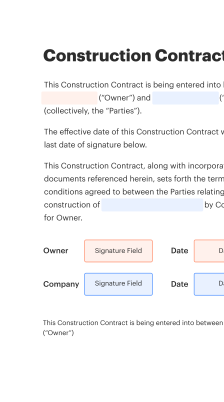
Digital Sign on Mobile with SignNow

Eliminate paperwork and optimize digital document management for more performance and unlimited possibilities. Enjoy a better manner of doing business with airSlate SignNow.

Award-winning eSignature solution

What digital sign on mobile means for modern workflows

Digital sign on mobile refers to the process of sending, receiving, and executing legally binding electronic signatures using smartphones or tablets. It covers native mobile apps and mobile-optimized web interfaces that let signers review, complete, and sign documents from any location. In the United States this approach is typically implemented to meet ESIGN and UETA standards, and platforms such as signNow provide secure mobile signing with audit logs and identity verification to support administrative and regulatory needs across industries.

Why mobile eSigning matters for organizations

Adopting digital sign on mobile reduces turnaround time, enables remote approvals, and supports distributed teams without adding complexity. Mobile signing improves accessibility for field staff and customers while preserving a compliant audit trail under applicable U.S. laws.

Why mobile eSigning matters for organizations

Common challenges when implementing mobile signing

  • Device compatibility and varying screen sizes can affect form layout and signature placement on mobile devices.
  • Poor network connectivity in the field can delay uploads and create partial submissions or duplicate attempts.
  • Inconsistent identity verification processes increase the risk of disputed signatures or noncompliance.
  • User confusion about workflows and required fields can lead to incomplete documents and processing delays.

Representative user profiles for mobile signing

HR Manager

An HR Manager uses mobile signing to complete offer letters, tax forms, and policy acknowledgements for remote hires. They value consistent identity verification, template reuse, and an auditable trail to ensure compliance with state employment regulations and company retention policies.

Field Technician

A Field Technician completes service agreements and proof-of-work forms on a tablet at the job site. Offline signing capability, clear mobile layouts, and immediate sync to central records reduce administrative backlog and speed billing and warranty processing.

Who typically uses digital sign on mobile

Mobile eSigning is used across roles that need quick, remote approvals and verifiable records.

  • Sales teams closing agreements at customer sites or during remote meetings.
  • Human resources processing onboarding paperwork for remote hires and contractors.
  • Field operations and service technicians authorizing work orders and completion reports.

These use cases prioritize speed, traceability, and secure storage while maintaining compliance with U.S. eSignature law.

be ready to get more

Choose a better solution

Core features to look for in mobile eSigning

Important mobile signing capabilities focus on security, usability, integration, and auditability to support distributed teams and remote customers.

Offline Signing

Offline capability allows users to collect signatures when network access is unavailable, then securely synchronize completed documents and event logs when connectivity is restored, ensuring field teams can continue work without interruption and central records remain comprehensive.

Templates

Reusable templates save time for recurring documents by preserving field placement, required signer roles, and conditional fields, enabling consistent mobile experiences and reducing preparation errors for contracts, waivers, and intake forms.

Third-Party Integrations

Native connectors for cloud storage, CRM, and document editors enable mobile-signed documents to flow directly into existing systems, reducing duplicate entry and simplifying downstream processes like billing, record-keeping, and customer account updates.

Audit Trail

Comprehensive logs capture timestamps, IP addresses, and user actions to provide a verifiable chain of custody for mobile signatures, supporting legal admissibility and internal compliance reviews.

How mobile signature flows typically operate

A standard mobile signing flow includes document prep, recipient verification, signing, and secure storage with an audit trail.

  • Document Creation: Create or import the document to sign.
  • Verification: Authenticate signer identity as required.
  • Signing Action: Signer reviews and taps to apply signature.
  • Completion: Signed file stored and audit logged.
Collect signatures
24x
faster
Reduce costs by
$30
per document
Save up to
40h
per employee / month

Quick step-by-step: complete a mobile signature

Follow these concise steps to prepare, send, and finalize a document using mobile signing features.

  • 01
    Prepare Document: Upload PDF or use a template.
  • 02
    Add Fields: Place signature, date, and data fields.
  • 03
    Select Signers: Enter recipient emails and roles.
  • 04
    Send and Monitor: Dispatch and track status in the app.
be ready to get more

Why choose airSlate SignNow

  • Free 7-day trial. Choose the plan you need and try it risk-free.
  • Honest pricing for full-featured plans. airSlate SignNow offers subscription plans with no overages or hidden fees at renewal.
  • Enterprise-grade security. airSlate SignNow helps you comply with global security standards.
illustrations signature

Configuring mobile signing workflows

These common settings support consistent mobile signing processes and automation for repeatable document types.

Setting Name Configuration
Signing Order Sequential
Reminder Frequency 48 hours
Expiration Period 30 days
Authentication Level Email or SMS
Auto-Archive Destination Cloud folder

Supported devices and minimum requirements for mobile signing

Ensure your devices and browsers meet minimum specifications for reliable mobile signing performance.

  • iOS Versions: iOS 14 or later
  • Android Versions: Android 9 or later
  • Supported Browsers: Latest Chrome, Safari, Edge

For enterprise deployments verify device management policies, app distribution methods, and security baselines such as screen-lock enforcement and remote wipe to protect signed documents on mobile endpoints.

Security controls relevant to mobile eSigning

AES-256 Encryption: Encryption for data at rest and in transit
TLS Transport: Secure protocols for web and app traffic
Two-Factor Auth: Optional MFA for signer accounts
Access Controls: Role-based permissions and restrictions
Document Hashing: Tamper-evident integrity checks
Audit Logs: Detailed event records for each action

Industry scenarios demonstrating mobile eSigning

These two case examples illustrate practical applications of digital sign on mobile in everyday workflows and their measurable benefits.

Healthcare Consent Forms

Clinics use mobile eSigning during visits to capture patient consent quickly and reduce paper handling.

  • Mobile-friendly forms and secure identity checks streamline the intake process.
  • Patients complete forms at the point of care, improving throughput and record accuracy.

Resulting in faster patient processing and more reliable compliance documentation for medical records.

Field Service Authorizations

A utilities provider equips technicians with tablets to collect signed service authorizations at customer premises.

  • Prebuilt templates and offline signing support field conditions.
  • Completed records sync to central systems for invoicing and warranty tracking.

Leading to reduced billing cycle times and fewer lost or misplaced work orders.

Best practices for secure and accurate mobile signing

Follow these practical recommendations to reduce errors, maintain compliance, and improve signer experience when using mobile eSigning.

Design mobile-friendly documents with clear, touch-friendly fields
Optimize form layout for small screens by using larger signature boxes, concise field labels, and single-column flows. Test templates on representative devices to ensure required fields are visible and easy to complete without zooming, reducing signer error rates and the need for rework.
Implement appropriate signer authentication based on risk
Use a tiered approach to identity verification: email for low-risk approvals, SMS or knowledge-based checks for moderate risk, and multi-factor or government ID verification for high-risk transactions. Match verification to legal and business requirements to balance user convenience and evidentiary strength.
Retain complete audit trails and signed originals
Preserve final signed documents along with metadata, access logs, and certificate details in secure storage. Maintain retention schedules aligned with regulatory and company policies to support audits, disputes, and record requests while ensuring records remain available when needed.
Train users on mobile-specific workflow differences
Provide concise guidance for mobile signers and senders that highlights common pitfalls such as incomplete fields or camera-based uploads. Periodic training and quick-reference materials reduce support requests and improve signature completion rates.

FAQs About digital sign on mobile

Common questions and solutions for mobile eSigning help teams resolve issues quickly and maintain uninterrupted workflows.

Feature comparison for mobile eSigning platforms

A concise side-by-side view of common mobile signing capabilities across leading vendors to inform platform selection for U.S. operations.

Feature signNow (Recommended) DocuSign Adobe Sign
Mobile App Availability
Offline Signing Support
Native Doc Integrations Google Docs Google Docs Microsoft Office
Bulk Send Capability
be ready to get more

Get legally-binding signatures now!

Risks and penalties of improper mobile signing

Contract Disputes: Invalid signatures
Regulatory Fines: Noncompliance penalties
Data Breach: Exposure of personal data
Operational Delays: Lost revenue from slow processes
Reputational Damage: Loss of customer trust
Litigation Costs: Defending signature validity

Make simpler challenging workflows

Generate, execute, and control workflows of any complexity, electronically from virtually anywhere. Scalable eSignature capabilities allow you to exchange documents with the right users the right order and determine roles for each receiver. Perform document workflows faster and easier than ever before.

Automate document management

Optimize complex signing procedures with airSlate SignNow�s powerful features to enhance your operation. Manage your automatic signature workflows to guarantee they're operating at peak functionality with instant notifications and reminders.

Enhance in team collaboration

Get teams together in a protected, shared workspace. Handle paperwork, use form templates and notifications to deliver more effective cross-organization collaboration. Relieve your staff from having to hang out on repetitive routines to enable them to focus on beneficial, business-vital projects.

Integrate into your current systems

Work your assignments with market-leading integration. Capture Salesforce, Microsoft Teams, and SharePoint in one business stream. Connect your applications to a single unit for countless opportunities and more productivity.

Remain compliant with industry-leading data protection

Feel confident knowing that your data is protected by the most recent in encryption security. airSlate SignNow is GDPR and eIDAS certified and provides you awareness into your signing experience with court-admissible audit trails. Set up user authorization and roles to regulate who has access to what.


walmart logo
exonMobil logo
apple logo
comcast logo
facebook logo
FedEx logo
be ready to get more

Get legally-binding signatures now!