Digital Signature Data for Secure Transactions

Get rid of paperwork and improve document processing for more efficiency and limitless opportunities. Enjoy a better manner of running your business with airSlate SignNow.

Award-winning eSignature solution

What digital signature data means and what it contains

Digital signature data refers to the electronic information and metadata that confirm intent, identity, and integrity for a signed document. It typically includes the signatory's identifier, timestamp, signature method, cryptographic hash, and an audit trail of actions. In regulated U.S. environments, digital signature data must support ESIGN and UETA requirements by preserving non-repudiation and verification evidence. Platforms such as signNow capture and store this data alongside the signed file to enable later validation, compliance reporting, and forensic review while accommodating common enterprise retention and access controls.

Why accurate digital signature data matters

Accurate digital signature data provides legally admissible evidence of signing events, helps detect tampering, and simplifies audits by preserving key metadata required under U.S. electronic signature law and sector regulations.

Why accurate digital signature data matters

Common challenges with managing digital signature data

  • Inconsistent metadata capture can hamper later verification and legal defensibility of a signed record.
  • Improper storage or weak access controls increase the risk of unauthorized access or evidence tampering.
  • Lack of standardized retention policies creates compliance gaps for regulated industries like healthcare and education.
  • Complex signing scenarios involving multiple parties and locales complicate reliable audit trail generation and interpretation.

Representative users who work with digital signature data

Legal Counsel

In-house or outside counsel review signature metadata to assess enforceability, assemble evidence packages, and confirm chain-of-custody for executed agreements when disputes or audits arise.

HR Manager

HR professionals use signed offer letters, onboarding forms, and consent records along with their metadata to meet employment, benefits, and record-retention obligations.

Who relies on digital signature data in organizations

Legal teams, compliance officers, and operations staff often rely on complete signature metadata to support audits and dispute resolution.

  • Legal and compliance teams requiring verifiable evidence for contracts and regulatory audits.
  • HR and recruiting teams needing timestamped acceptance and consent records for personnel files.
  • Sales and finance groups tracking approvals, payment authorizations, and signed agreements.

Across departments, reliable digital signature data reduces friction, shortens dispute cycles, and supports consistent recordkeeping policies.

Additional features that shape digital signature data capabilities

These supplementary features influence how robustly signature metadata is produced, stored, and made available for operations and compliance.

Templates

Reusable templates standardize field placement and metadata capture across repeatable document types, reducing signer errors and ensuring consistent audit data collection for each execution.


Bulk Send

Batch sending automates large-scale signature requests while ensuring each recipient’s metadata and audit trail are captured individually for downstream verification and reporting.

Integrations

Native integrations with CRMs, cloud storage, and HR systems let metadata flow into business records, enabling automated retention and simplifying compliance workflows across platforms.

Conditional Logic

Conditional fields and routing change the signing path based on input, which requires tracking conditional events and decisions in the audit trail for clear process visibility.

Certificate-based Signatures

Support for digital certificates provides cryptographic proof tied to signer credentials and increases technical non-repudiation in higher-assurance scenarios.

Reporting and Exports

Built-in reports and export formats enable administrators to extract signature metadata and logs for legal review, compliance checks, or long-term archival.

be ready to get more

Choose a better solution

Core features affecting the quality of digital signature data

Understanding feature-level behavior helps you select and configure an eSignature solution that produces legally robust and operationally useful signature metadata.

Audit Trail

Comprehensive, time-stamped event logs recording actions such as document view, field edits, authentication events, and signature completion. These logs form the primary verification record for disputes and compliance reviews.

Authentication Methods

Configurable options including email verification, SMS codes, knowledge-based authentication, and identity provider integrations. Stronger authentication increases the evidentiary value of the signature metadata under U.S. law.

Document Integrity

Cryptographic hashing and digital certificates ensure the signed file is tamper-evident. Integrity mechanisms indicate whether a file has been altered after signature, which is critical for admissibility.

Retention Controls

Policy-driven storage, automated archival, and secure disposal rules let organizations meet retention and privacy requirements while preserving necessary signature metadata for audits.
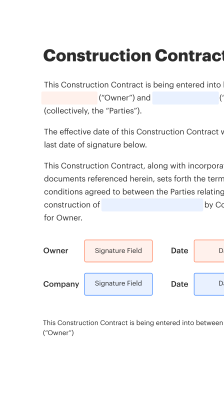
How to create and use digital signature data online

A standard online signing flow collects document artifacts and cryptographic evidence that together form the digital signature data package.

  • Upload document: Add source file and attachments.
  • Add recipients: Specify signers and order.
  • Apply authentication: Select SMS, email, or ID check.
  • Complete signing: Store signed file and metadata.
Collect signatures
24x
faster
Reduce costs by
$30
per document
Save up to
40h
per employee / month

Quick setup: capturing digital signature data reliably

Follow these core steps to ensure signature metadata is captured and retained correctly across documents and workflows.

  • 01
    Configure account: Enable required security and retention settings.
  • 02
    Design template: Add signature, initial, and data fields.
  • 03
    Set authentication: Choose MFA or identity checks.
  • 04
    Enable audit logging: Turn on full event capture.
be ready to get more

Why choose airSlate SignNow

  • Free 7-day trial. Choose the plan you need and try it risk-free.
  • Honest pricing for full-featured plans. airSlate SignNow offers subscription plans with no overages or hidden fees at renewal.
  • Enterprise-grade security. airSlate SignNow helps you comply with global security standards.
illustrations signature

Typical workflow settings that influence digital signature data

Configure the settings below to control collection, retention, and handling of signature metadata in document workflows.

Metadata Field Retention
Authentication Mode Email verification
Reminder Frequency 48 hours
Signature Order Sequential or parallel
Audit Log Retention Period 7 years
Export Format PDF/A with metadata

Where you can capture and access digital signature data

Digital signature data is typically captured and accessible across web browsers, mobile apps, and connected integrations that the eSignature provider supports.

  • Web browsers: Chrome, Edge, Safari support
  • Mobile platforms: iOS and Android apps
  • Integrations: API and workspace add-ons

Confirm your chosen provider’s supported platforms and integration options to ensure signature metadata can be collected, exported, and audited across your organization’s devices and systems.

Security controls commonly applied to digital signature data

Encryption at rest: AES-256 encryption
Encryption in transit: TLS 1.2+ channels
Access controls: Role-based access
Authentication: Multi-factor options
Tamper detection: Cryptographic hashing
Audit logging: Immutable event logs

Industry examples showing how digital signature data is used

Two practical examples show how captured signature metadata supports compliance and operational efficiency in regulated and transactional contexts.

Healthcare Enrollment

A provider collects signed consent forms for treatment, records authentication method and timestamp

  • strong identity verification step
  • reduces billing and liability disputes

Resulting in faster claims processing and clearer audit evidence.

Real Estate Closing

An agent uses an eSignature flow to capture buyer and seller approvals, preserving IP addresses and certificate fingerprints

  • coordinated multi-party signing step
  • minimizes last-minute document changes

Leading to shorter closing windows and defensible contract records for title and escrow.

Best practices for secure and accurate digital signature data

Follow these practical, controls-focused practices to maximize the reliability and legal value of your captured signature metadata.

Define retention and export policies across systems
Establish a documented retention schedule aligned with regulatory requirements, ensure exportable audit logs, and test restoration procedures to preserve evidentiary value during audits or litigation.
Enforce strong signer authentication where risk warrants it
Apply multi-factor or identity verification for high-value or regulated documents to increase confidence in signer identity and reduce later contention risks.
Standardize templates and field placement
Use consistent templates to reduce signing errors and ensure required metadata is generated uniformly for all transactions, improving machine parsing and audit analysis.
Regularly validate audit trails and cryptographic indicators
Periodically verify that stored hashes and certificates validate against signed files and that logs remain intact to confirm ongoing integrity of retained signature data.

FAQs About digital signature data

Common questions about capture, verification, and retention of digital signature data along with concise, practical answers for U.S.-based deployments.

Feature availability comparison for digital signature data

A concise feature checklist comparing how core data and compliance features are provided by common eSignature vendors in the U.S. market.

Feature Comparison Across eSignature Vendors in US signNow (Recommended) DocuSign Adobe Sign
ESIGN and UETA recognition
Comprehensive audit trail
Bulk Send / batch signing
API access for metadata export
be ready to get more

Get legally-binding signatures now!

Risks and penalties tied to poor digital signature data handling

Regulatory fines: Potential penalties
Legal exposure: Contract disputes
Data breaches: Compromised PII
Operational delays: Lost approvals
Audit failures: Noncompliance findings
Reputational harm: Eroded trust

Representative pricing and plan notes affecting digital signature data

Pricing varies by vendor and plan; below are representative entry-level and governance-related plan notes that influence metadata features and retention capabilities.

Plan and Cost Comparison signNow (Recommended) DocuSign Adobe Sign Dropbox Sign PandaDoc
Entry plan monthly price (per user) $8/user/month approximate $10/user/month approximate $14.99/user/month approximate $15/user/month approximate $19/user/month approximate
Audit trail included by default Yes; included Yes; included Yes; included Yes; included Yes; included
API access on entry plan Available on paid plans Available with developer plan Enterprise/API add-on Available on business plans Available on business plans
HIPAA-support options Available with signed BAAs Available via enterprise agreements Available with enterprise compliance Available via enterprise agreements Limited or unavailable
Document retention controls Configurable retention settings Enterprise controls Enterprise controls Business-level settings Document locking and archive options

Streamline complicated workflows

Create, perform, and manage workflows of any complexity, electronically from almost anywhere. Scalable eSignature capabilities ensure you can share contracts with the right users the right sequence and assign roles for every signee. Perform document workflows faster and easier than ever before.

Automate document management

Optimize complicated signing procedures with airSlate SignNow�s highly effective functions to improve your operation. Manage your automatic eSignature workflows to ensure they're operating at maximum efficiency with immediate notices and reminders.

Enhance in team collaboration

Join teams together in a protected, shared workspace. Handle documents, use form templates and notices to produce more efficient cross-organization communication. Free your staff from having to spend time on repeating activities to enable them to focus on beneficial, business-essential duties.

Integrate into your existing network

Work your tasks with best-in-class integration. Collect Salesforce, Microsoft Teams, and SharePoint all in one business flow. Link your software to a single system for limitless opportunities and more performance.

Remain compliant with market-leading data security

Feel safe knowing that your data is protected by the most recent in encryption security. airSlate SignNow is GDPR and eIDAS certified and provides you awareness into your eSigning procedure with court-admissible audit trails. Configure user access permissions and roles to regulate who has access to what.


walmart logo
exonMobil logo
apple logo
comcast logo
facebook logo
FedEx logo
be ready to get more

Get legally-binding signatures now!