Digital Signature Document Solutions by SignNow

Get rid of paper and automate document managing for increased performance and endless possibilities. Experience the perfect strategy for doing business with airSlate SignNow.

Award-winning eSignature solution

What a digital signature document is and how it functions

A digital signature document is an electronic record that uses cryptographic techniques to bind a signer to the content of a document and to verify integrity and origin. In the United States, enforceability commonly rests on frameworks such as ESIGN and UETA, which treat electronic signatures as legally valid when intent and consent are demonstrable. Digital signatures may include simple typed signatures, structured timestamped eSignatures, or certificate-based signatures, and they often incorporate audit trails, authentication steps, and tamper-evident seals to support evidentiary needs and regulatory compliance.

Why organizations adopt digital signature documents

Digitizing signatures reduces turnaround time, improves record accuracy, and lowers administrative costs while supporting compliance requirements and remote workflows across industries.

Why organizations adopt digital signature documents

Common challenges when moving to digital signature documents

  • Managing identity verification consistently across different signer populations can be complex and resource intensive.
  • Ensuring document formats and field placements remain intact across platforms causes occasional layout and data mapping issues.
  • Meeting industry-specific compliance like HIPAA or FERPA requires careful configuration of access controls and data handling.
  • Integrating eSignature workflows with legacy systems like on-premise CRM or ERP can require API work and testing.

Representative user roles for digital signature document workflows

Office Manager

An office manager configures templates, schedules reminders, and manages day-to-day signing flows for routine vendor and employee paperwork. They rely on consistent templates and user permissions to enforce business rules and reduce manual follow-up across departments.

Compliance Officer

A compliance officer reviews audit trails, access logs, and retention policies to ensure records meet legal and regulatory standards. They use document-level controls and reporting to demonstrate adherence to ESIGN, UETA, and industry-specific rules during audits.

Typical users and teams that rely on digital signature documents

Organizations across departments use digital signature documents to streamline approvals, contracts, and records while keeping compliance requirements in focus.

  • Legal and contracting teams managing agreements and approvals with version control and audit trails.
  • Human resources teams processing onboarding, tax forms, and policy acknowledgements for remote hires.
  • Sales and account teams executing contracts and quotes to reduce sales cycle time and manual errors.

Adoption ranges from small teams handling vendor forms to enterprise departments managing high-volume agreement workflows with delegated permissions.

Additional features that enhance digital signature document usage

Beyond core capabilities, advanced features improve scale, security, and administrative control for teams handling higher volumes or regulated processes.

Bulk Send

Send identical documents to many recipients with individualized fields for efficient high-volume transactions.


Conditional Fields

Show or hide fields based on prior responses to guide signers and enforce valid input.

Team Templates

Share and manage templates across users with permission settings to maintain consistency and governance.

Advanced Workflows

Configure routing, sequential or parallel signing, and role-based approvals for complex processes.

Single Sign-On

Integrate with enterprise SSO to centralize authentication and user lifecycle management.

API Access

Embed signing flows and automate document generation through programmatic integrations.

be ready to get more

Choose a better solution

Core features to look for in digital signature document tools

Choose features that support secure signing, easy template management, strong authentication, and integration with the systems your organization already uses.

Templates

Reusable document templates let teams predefine signature fields, data fields, and workflow steps to ensure consistency and reduce repetitive setup for common agreement types.

Authentication

Multiple authentication options such as email verification, SMS codes, and knowledge-based checks help align signer identity assurance with transaction risk and compliance requirements.

Audit Trail

Comprehensive, time-stamped logs capture every action on the document—including views, signatures, and authentication events—to provide admissible evidence and operational transparency.

Integrations

Connectors for CRM, cloud storage, and productivity apps allow documents to move into existing workflows and reduce manual data entry between systems and the eSignature platform.
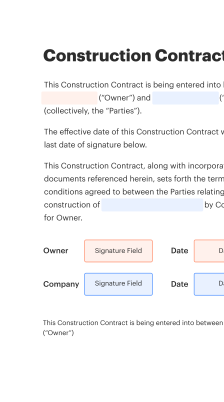
How the digital signature document process typically flows

A typical digital signature document workflow moves sequentially from document creation to signer authentication, signing, verification, and storage with an audit trail preserved.

  • Create: Draft or upload the document
  • Configure: Assign signer roles and fields
  • Authenticate: Apply chosen identity checks
  • Complete: Document signed and archived
Collect signatures
24x
faster
Reduce costs by
$30
per document
Save up to
40h
per employee / month

Quick steps to create a digital signature document

Follow these concise steps to prepare, send, and finalize a digital signature document with standard authentication and audit measures in place.

  • 01
    Prepare: Upload or create the document template
  • 02
    Place fields: Add signature, date, and data fields
  • 03
    Authenticate: Select signer verification method
  • 04
    Send: Distribute via email or link

How to manage the post-signing lifecycle for digital signature documents

After signatures are complete, follow standard steps to verify, store, and monitor documents within secure repositories and compliance frameworks.

01

Verify:

Confirm audit trail integrity and signer authentication
02

Export:

Generate certified PDFs with embedded metadata
03

Store:

Move to secure cloud or on-prem repository
04

Tag:

Apply metadata and retention labels for records management
05

Monitor:

Track access and trigger retention events
06

Audit:

Provide logs for internal and external review
be ready to get more

Why choose airSlate SignNow

  • Free 7-day trial. Choose the plan you need and try it risk-free.
  • Honest pricing for full-featured plans. airSlate SignNow offers subscription plans with no overages or hidden fees at renewal.
  • Enterprise-grade security. airSlate SignNow helps you comply with global security standards.
illustrations signature

Recommended workflow settings for digital signature documents

Suggested default settings to balance compliance, usability, and timely completion for routine signature workflows.

Setting Name Configuration
Reminder Frequency 48 hours
Signing Order Sequential
Authentication Level Email + SMS
Template Library Access Shared team library
Retention Period 7 years

Supported platforms for creating and signing digital signature documents

Digital signature document platforms typically support modern web browsers, dedicated mobile apps for iOS and Android, and integrations with common productivity tools.

  • Web browsers: Chrome, Edge, Safari
  • Mobile apps: iOS and Android support
  • Integrations: Common cloud storage and CRM

Verify specific browser versions, mobile OS requirements, and required permissions for camera or SMS features before broad deployment to end users.

Security and authentication elements for digital signature documents

Encryption: AES-256 at rest and TLS in transit
User authentication: Multi-factor options available
Access controls: Role-based permission sets
Audit logging: Immutable event records
Tamper detection: Document hash checksums
Certificate support: X.509 and digital certificates

How digital signature documents are used across industries

These concise case examples show practical, industry-specific applications of digital signature documents and measurable outcomes in common workflows.

Healthcare Release Forms

A clinic implemented digital signature documents for patient consent forms to reduce waiting room time

  • Configured identity checks and audit logs
  • Reduced processing errors and faster patient throughput

Resulting in improved patient experience and reliable compliance records.

Real Estate Purchase Agreements

A brokerage adopted digital signature documents to manage offers and counters remotely

  • Used templates and sequential signing to enforce workflows
  • Shortened negotiation cycles and reduced document version conflicts

Leading to faster closings and clearer chain-of-custody for agreements.

Practical best practices for reliable digital signature documents

Apply consistent processes and controls to protect document integrity, maintain compliance, and reduce disputes when using digital signature documents.

Standardize templates and field naming conventions
Use centrally managed templates with consistent field names and validation rules to ensure data accuracy, reduce signer confusion, and simplify reporting and integrations across teams.
Match authentication to transaction risk
Select stronger signer verification such as two-factor or certificate-based methods for high-value or regulated transactions while using lighter checks for routine approvals.
Preserve complete audit trails and metadata
Retain full event logs, signer IPs, timestamps, and document hashes to support dispute resolution, compliance attestations, and internal security reviews when needed.
Define retention and access policies centrally
Implement clear document retention schedules and role-based access controls to meet legal obligations and limit exposure of sensitive information to only authorized personnel.

FAQs and troubleshooting for digital signature documents

Common questions and practical answers about creating, authenticating, and managing digital signature documents, with troubleshooting tips for typical issues.

Feature availability comparison across major eSignature providers

A concise comparison of core features that affect legal compliance, volume handling, and basic authentication capabilities among leading vendors.

Feature signNow (Featured) DocuSign Adobe Sign
ESIGN and UETA compliance
Mobile signing app
Bulk Send capability
Comprehensive audit trail
be ready to get more

Get legally-binding signatures now!

Typical implementation milestones for adopting digital signature documents

A phased rollout helps manage risk, validate workflows, and secure stakeholder buy-in when introducing digital signature document capabilities.

01

Assessment and requirements

Define compliance and workflow needs

02

Pilot configuration

Set up templates and test with a small group

03

System integrations

Connect to CRM, storage, and identity services

04

Security review

Validate authentication and data controls

05

Training and documentation

Educate users and administrators

06

Full rollout

Expand access and monitor performance

07

Retention policy activation

Apply records management rules

08

Continuous improvement

Collect feedback and iterate

Retention and review timelines for signed digital documents

Retention timelines depend on industry rules, contract terms, and internal policy; below are common timeframes to consider when managing signed documents.

Short-term retention for transactional records:

1 to 3 years

Standard contract retention period:

5 to 7 years

Records for tax and financial audits:

7 years or per statute

Healthcare and HIPAA records:

6 years minimum

Permanent retention for key legal agreements:

Indefinite with governance

Legal and operational risks tied to improper digital signature use

Noncompliance: Regulatory fines possible
Invalid contracts: Enforceability disputes risk
Data breaches: Sensitive data exposure
Audit failures: Insufficient records
Operational delays: Rejected or missing signatures
Reputational harm: Loss of trust

High-level pricing and plan characteristics across providers

Comparison of common plan characteristics and availability across leading eSignature vendors to inform procurement decisions for different organizational sizes.

Plan/Feature signNow (Featured) DocuSign Adobe Sign HelloSign PandaDoc
Free plan available Limited free tier No free plan Trial only Free tier available Free trial available
Entry-level monthly price Starts at $8/user/month Starts at $10/user/month Starts at $14.99/user/month Starts at $15/user/month Starts at $19/user/month
Trial availability Free trial available Free trial available Free trial available Free trial available Free trial available
API included in plans API available on paid tiers API available on business tiers API available for business API on paid plans API on paid plans
HIPAA support options Business plans with BAAs Enterprise with BAA Enterprise BAA options Available with add-ons Available with enterprise agreements

Streamline complicated workflows

Generate, execute, and maintain workflows of any complexness, electronically from virtually anywhere. Scalable eSignature functionality let you exchange papers with the right users the correct sequence and set up roles for every recipient. Complete document workflows faster and easier than ever before.

Automate document managing

Improve intricate signing procedures with airSlate SignNow�s highly effective functions to enhance your business. Manage your automatic signature workflows to make sure they're running at peak performance with fast notices and reminders.

Optimize in team communication

Get teammates together in a safe, shared environment. Handle documents, use form templates and notices to deliver more efficient cross-organization collaboration. Relieve your staff from having to spend time on repeating activities so that they can center on valuable, business-vital duties.

Integrate into your current framework

Run your tasks with industry-leading integration. Collect Salesforce, Microsoft Teams, and SharePoint in multi functional business flow. Link your applications to a single environment for unlimited possibilities and higher performance.

Remain compliant with industry-leading data safety

Feel safe with the knowledge that your data remains secure by the latest in encryption security. airSlate SignNow is GDPR and eIDAS compliant and offers you awareness into your signing experience with court-admissible audit trails. Set up user authorization and roles to control who has access to what.


walmart logo
exonMobil logo
apple logo
comcast logo
facebook logo
FedEx logo
be ready to get more

Get legally-binding signatures now!