




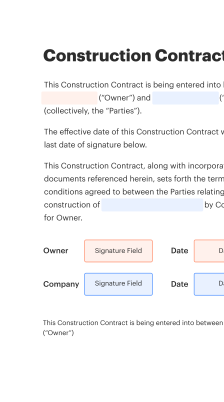
Digital Signature Network Installation Proposal
What a digital signature network installation proposal covers
Why prepare a formal installation proposal
A structured proposal clarifies scope, reduces deployment risk, aligns stakeholders, and ensures legal and security requirements are met for eSignature adoption in a consistent, auditable manner.
Common deployment challenges to anticipate
- Legacy systems lacking integration APIs require custom connectors and additional testing to preserve workflow continuity.
- Inconsistent user provisioning and permissions across teams can cause access delays and potential security gaps.
- Complex regulatory requirements for sectors like healthcare and education require documented controls and specialized configurations.
- Network and certificate management errors may lead to signature validation failures or intermittent verification issues.
Roles and typical responsibilities during deployment
IT Administrator
Responsible for configuring identity providers, setting authentication methods, installing any on-premise connectors, and managing certificate stores. They maintain deployment documentation, monitor system health, and coordinate failover and backup procedures during and after installation.
Compliance Officer
Reviews the proposal for alignment with ESIGN, UETA, HIPAA, and FERPA where applicable, approves retention schedules and audit controls, and ensures the implemented solution logs sufficient evidence for legal acceptance and internal audits.
Typical teams involved in a proposal and their concerns
IT, legal, compliance, procurement, and line-of-business leaders commonly collaborate to define technical and policy requirements before installation.
- IT: integration, hosting, and certificate lifecycle management responsibilities.
- Legal/compliance: validation, disclosure language, and regulatory alignment checks.
- Business owners: workflow mapping, user experience, and acceptance criteria.
Clear role definitions and review checkpoints reduce rework and ensure the installation meets operational, privacy, and audit needs across the organization.
Choose a better solution
Integration points to include in the proposal
signNow
Integration with signNow supports embedding signature flows, prefilled fields, and API-driven document exchange. Include authentication, callback endpoints, and template management requirements for consistent deployments.
Google Docs
Define how templates and drafts transfer between Google Docs and the signing platform, including conversion rules, field mapping, and storage location for signed copies.
CRM systems
Specify which CRM objects carry signature status, which triggers create documents, and how to store signed artifacts back to customer records for audit and reporting.
Cloud storage
Document the chosen storage provider, retention lifecycle, access permissions, and encryption standards for signed documents and backups.
How to create and use a digital signature network installation proposal online
-
Collaborate: Use shared documents for iterative drafting.
-
Map workflows: Illustrate signing sequences and roles.
-
Attach policies: Include retention and encryption specifics.
-
Publish: Distribute for approvals and archival.
Step-by-step: preparing the installation proposal
-
01Assess: Inventory systems and integration points.
-
02Define: Document authentication and retention requirements.
-
03Design: Specify architecture and failover plans.
-
04Validate: Plan testing, pilots, and acceptance criteria.
Why choose airSlate SignNow
-
Free 7-day trial. Choose the plan you need and try it risk-free.
-
Honest pricing for full-featured plans. airSlate SignNow offers subscription plans with no overages or hidden fees at renewal.
-
Enterprise-grade security. airSlate SignNow helps you comply with global security standards.
Suggested workflow configuration defaults
| Setting Name | Configuration |
|---|---|
| Reminder Frequency | 48 hours |
| Signature Validation Mode | Standard ESIGN |
| Authentication Method | SSO with MFA |
| Document Retention Period | 7 years |
| Audit Log Storage | Immutable archive |
Supported platforms and technical prerequisites
Identify the minimum client platforms, browsers, and network requirements needed for reliable signing and administrative management.
- Desktop browsers: Chrome, Edge, Safari
- Mobile platforms: iOS and Android
- Network ports: HTTPS/TLS only
Also specify required server-side runtimes, API endpoints, and IAM configuration details; document firewall rules, callback URLs, and certificate trust chains so installers can fully validate connectivity and authentication during acceptance testing.
Industry scenarios where a proposal is useful
Healthcare deployment
A midsize clinic needed electronic consents and provider authorizations with PHI protections and auditability
- Integration with the EHR system for prefilled forms
- Role-based signing for clinicians and staff to preserve chain-of-custody
Resulting in a documented rollout that met HIPAA controls and reduced paper intake while preserving legally valid consent records.
Higher education rollout
A university required FERPA-aware signature workflows for student records and financial aid forms
- Central directory integration for single sign-on
- Department-level templates and delegated signing to speed approvals
Leading to consistent signature capture across campuses, audit-ready logs for compliance reviews, and fewer manual confirmations.
Best practices when drafting the installation proposal
FAQs About digital signature network installation proposal
- What minimum legal checks are required in the proposal
Include verification that ESIGN and UETA acceptance criteria are met, ensure forms include required consent language, and document how audit trails will capture signer identity and intent for legal defensibility.
- How should authentication be specified for compliance
Define the primary authentication method such as SSO with MFA, specify fallback email or SMS verification processes, and identify any high-risk document types requiring step-up authentication.
- What testing phases belong in the installation plan
Include unit tests for API calls, integration tests with directory services and storage, a pilot with representative users, and a production readiness test validating end-to-end signing, retrieval, and audit logs.
- How to document retention and disposition policies
Specify retention durations by document type, define archival vs deletion workflows, and include responsibility assignments for legal hold scenarios to ensure records remain accessible for audits and legal needs.
- What should be included in acceptance criteria
List measurable criteria such as successful signature validation, required audit fields present, acceptable response times, successful SSO authentication, and confirmation that backup and restore procedures function as specified.
- Who signs off on the final installation deliverables
Obtain formal acceptance from IT administrators, the compliance officer, and the primary business owner; include a documented sign-off that references the acceptance criteria and test results.
Feature comparison for digital signature network installations
| Criteria | signNow (Recommended) | DocuSign | Adobe Sign |
|---|---|---|---|
| Standard eSignature Support | |||
| Bulk Send Capability | |||
| API Webhooks Support | |||
| Advanced enterprise controls | Role-based | Role-based | Role-based |
Get legally-binding signatures now!
Legal and operational risks if requirements are missed
Commercial and plan-related considerations across vendors
| Plan Feature | signNow (Recommended) | DocuSign | Adobe Sign | HelloSign | PandaDoc |
|---|---|---|---|---|---|
| Free Trial | Free trial offered on most plans | Free trial available on main plans | Trial available for new accounts | Trial available for basic plans | Trial available for small teams |
| API Access | Public API available with higher tiers | API with developer plan and enterprise | API access in enterprise plans | API access available for paid plans | API included in advanced plans |
| Mobile App Support | Native mobile apps for iOS and Android | Native iOS and Android apps | Native apps across platforms | iOS and Android apps available | Mobile apps with offline signing |
| Template Library | Reusable templates and team libraries | Template management and shared templates | Centralized templates and workflows | Templates for repeated use | Template and document management features |
| Enterprise Plan | Enterprise-level plans with account management | Enterprise agreements and SLAs available | Enterprise licensing and support options | Enterprise-grade plans available | Enterprise features and support available |
Make simpler challenging workflows
Prepare, deliver, and control workflows of any complexity, digitally from virtually anywhere. Scalable electronic signature features allow you to share contracts with the right users the proper sequence and determine roles for every recipient. Execute document workflows faster and easier than ever before.
Automate document flow
Optimize intricate signing procedures with airSlate SignNow�s powerful functions to boost your operation. Control your automatic signature workflows to guarantee they're operating at peak functionality with instant notifications and alerts.
Enhance in team communication
Join teammates together in a safe, shared environment. Manage documents, use form templates and notifications to deliver more effective cross-company communication. Relieve your workers from having to hang out on repeated activities to enable them to focus on valuable, business-essential projects.
Integrate into your existing framework
Work your projects with industry-leading integration. Collect Salesforce, Microsoft Teams, and SharePoint all in one business stream. Connect your applications to a single system for unlimited opportunities and more efficiency.
Remain compliant with industry-leading data security
Feel safe knowing that your data is protected by the newest in encryption security. airSlate SignNow is GDPR and eIDAS certified and offers you exposure into your eSigning procedure with court-admissible audit trails. Configure user authorization and roles to manage who has access to what.