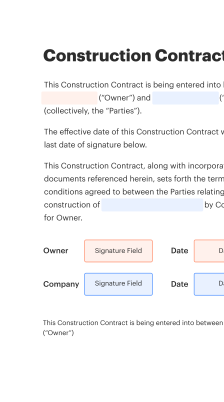
Draw Initial Signatures with SignNow

Get rid of paperwork and improve document processing for higher efficiency and endless possibilities. Enjoy the best strategy for doing business with airSlate SignNow.

Award-winning eSignature solution

What draw initial means in electronic documents

A draw initial is a signer-applied freehand mark used to indicate initials on specific pages or clauses within an electronic document. It replicates the handwritten practice of initialing by letting the signer draw their initials with a mouse, finger, or stylus. Draw initials are commonly used for multi-page agreements, acknowledgement of specific terms, and page-level consent. When recorded alongside authentication and an audit trail, a draw initial can form part of an evidentiary record that documents signer intent and context for the electronic transaction.

When draw initial is appropriate

Use draw initial for page-specific confirmations and short acknowledgements where a full signature is unnecessary; it improves clarity and mirrors established paper practices while remaining simple for signers.

When draw initial is appropriate

Common challenges when using draw initial

  • Legibility can vary widely across devices, which may complicate later verification or review.
  • If signer authentication is weak, drawn initials can be disputed as unauthenticated marks.
  • Inconsistent placement or missing initials across pages can create contractual ambiguity during audits.
  • Small touchscreen input or hurried signers may produce imprecise initials that lack reliable identification cues.

Representative user roles and how they use draw initial

Contract Manager

A contract manager uses draw initial to capture page-by-page acceptance during iterative revisions. They place initial fields at clause changes, track versions, and rely on audit logs to confirm each signer's interaction for internal compliance and dispute resolution.

Field Sales Rep

A field sales representative uses draw initial on mobile devices to record buyer acknowledgements during on-site visits. They prioritize quick, clear fields positioned for finger input and pair initials with brief authentication steps for transaction integrity.

Typical users and teams relying on draw initial

Teams across HR, real estate, finance, and healthcare frequently use draw initial to confirm page-specific acknowledgements or to initial changes during negotiations.

  • Human resources staff for policy acknowledgements and onboarding documents.
  • Real estate agents and closing teams for initialing contract pages and addendums.
  • Healthcare administrators for form page confirmations and limited consents.

Organizations that standardize placement and authentication for drawn initials reduce ambiguity and improve the record quality for audits and internal reviews.

be ready to get more

Choose a better solution

Core features that support accurate draw initial usage

Certain platform features improve reliability and legality when using draw initial, from field behavior to integration with identity checks and recordkeeping.

Draw Initial field

A designated field specifically for freehand initials that enforces placement, records input method metadata, and links the mark to a signer identity and event timestamp for evidentiary clarity.

Mobile-friendly input

Optimized touch and stylus interfaces that allow signers on smartphones and tablets to draw clean initials; the UI scales field size and stroke thickness to improve capture accuracy.

Comprehensive audit trail

Full event logs that record when the initial was drawn, IP address, device type, authentication method used, and any changes to the document to support compliance and dispute resolution.

Editor and workflow integration

Integration with document editors and workflow automation so templates can include pre-positioned initial fields and the initialing action can trigger subsequent routing or conditional steps.

How online draw initial capture operates

The fundamental flow combines field placement, signer input, authentication, and storage to create a verifiable initial event in the document lifecycle.

  • Field creation: Author adds a Draw Initial field to the document.
  • Signer interaction: Recipient draws initials using available input methods.
  • Verification: System records authentication and metadata for the event.
  • Storage: Final document and audit trail are saved securely.
Collect signatures
24x
faster
Reduce costs by
$30
per document
Save up to
40h
per employee / month

Step-by-step: Setting up a draw initial field

A concise sequence for adding a draw initial request to a document and capturing the signer’s freehand initials.

  • 01
    Upload document: Add the PDF or Word file to the platform.
  • 02
    Place initial fields: Drag a Draw Initial field to desired pages.
  • 03
    Set recipient options: Assign signer and authentication method.
  • 04
    Send and collect: Send envelope and capture drawn initials from signer.
be ready to get more

Why choose airSlate SignNow

  • Free 7-day trial. Choose the plan you need and try it risk-free.
  • Honest pricing for full-featured plans. airSlate SignNow offers subscription plans with no overages or hidden fees at renewal.
  • Enterprise-grade security. airSlate SignNow helps you comply with global security standards.
illustrations signature

Suggested workflow settings when using draw initial

Recommended configuration items to align draw initial capture with document routing, authentication, and retention policies.

Feature Configuration
Reminder Frequency 48 hours
Signing Order Sequential
Authentication Level Email + MFA
Field Validation Required
Retention Period 7 years

Device and browser considerations for draw initial

Draw initial works across modern desktops, tablets, and smartphones, but input quality varies by device and browser.

  • Desktop browsers: Mouse input supported
  • Mobile apps: Touch and stylus optimized
  • Tablet support: Larger drawing area

For the best accuracy and signer experience, use touch-enabled devices or styluses where available and verify that browsers meet current security and WebRTC/TLS standards for reliable data capture and transmission.

Security and authentication elements for draw initial

Encryption at rest: AES-256 storage
Encryption in transit: TLS 1.2+ protocols
Audit trail: Detailed event log
Two-factor authentication: Optional MFA
Access controls: Role-based limits
Document redaction: Field masking available

Practical use cases illustrating draw initial

Real-world examples show how draw initial is applied in common industries to capture concise acknowledgements or page-specific consent.

Real estate closing

Buyers initial each amended page to indicate review and acceptance

  • Initial fields placed on each changed page
  • Provides clear page-level consent during closings

Leading to faster reconciliations and reduced post-closing disputes.

Healthcare consent forms

Patients initial sections to acknowledge understanding of discrete procedures

  • Short initial fields near each procedure description
  • Confirms the patient reviewed specific items without requiring full signature per page

Resulting in clearer records for audits and compliant documentation.

Practical controls and policies for reliable draw initial use

Implementing simple controls and clear instructions reduces ambiguity, improves signer experience, and strengthens the legal defensibility of drawn initials.

Require appropriate signer authentication
Use multi-factor or verified email authentication for transactions that use draw initial for important contractual acknowledgements, ensuring signer identity ties to the drawn mark and audit data.
Standardize field placement and instructions
Place initial fields consistently and include concise on-screen guidance about how to draw initials and what the initials signify, reducing signer errors and placement disputes.
Preserve detailed audit metadata
Retain timestamps, device type, and access logs with the signed document to provide context around drawn initials and strengthen the record for compliance and potential legal review.
Train staff on when to use initials versus signatures
Establish internal rules distinguishing page-level initials from full signatures and document those policies so teams apply the correct field type for each legal or operational requirement.

FAQs and troubleshooting for draw initial

Common questions and practical fixes when drawn initials are unclear, disputed, or fail to appear in records.

How leading eSignature platforms compare on draw initial

A concise feature comparison showing draw initial support, mobile input, audit detail, and HIPAA options across providers.

Feature signNow (Recommended) DocuSign Adobe Sign
Availability of Draw Initial field
Mobile device freehand input support Yes (finger/stylus)
Audit trail and timestamp granularity Detailed timestamps Detailed timestamps Detailed timestamps
HIPAA compliance and BAA options BAA available BAA available BAA available
be ready to get more

Get legally-binding signatures now!

Retention and timeline checkpoints for draw initial records

Key dates and retention milestones to manage legal holds, audits, and routine recordkeeping for documents containing drawn initials.

Immediate preservation:

Save signed PDF and audit log

30-day review:

Confirm retention metadata

Annual audit:

Verify integrity and access logs

Legal hold trigger:

Suspend deletion when required

Retention expiration:

Purge per policy

Legal and operational risks tied to drawn initials

Noncompliance fines: Regulatory penalties
Evidence rejection: Court challenges
Data breach exposure: Privacy violations
Unauthorized signatures: Fraud risk
Retention violations: Policy breaches
Reputational harm: Client trust loss

Simplify challenging workflows

Create, execute, and maintain workflows of any complexity, digitally from almost anywhere. Scalable eSignature features ensure you can exchange documents with the right people in the correct order and set up roles for each recipient. Execute document workflows faster and easier than ever before.

Automate document managing

Improve sophisticated signing tasks with airSlate SignNow�s powerful capabilities to improve your business. Control your automated eSignature workflows to guarantee they're running at top performance with immediate notices and alerts.

Optimize in team communication

Bring teams together in a safe, shared workspace. Manage documents, use form templates and notices to deliver more effective cross-organization communication. Free your workers from having to hang out on repeated actions to enable them to give attention to valuable, business-vital tasks.

Integrate into your current systems

Manage your tasks with industry-leading integration. Collect Salesforce, Microsoft Teams, and SharePoint in multi functional business flow. Hook up your applications to a single environment for endless possibilities and more productiveness.

Stay compliant with best-in-class data security

Feel safe understanding that your information is protected by the newest in encryption security. airSlate SignNow is GDPR and eIDAS compliant and provides you visibility into your signing process with court-admissible audit trails. Configure user authorization and roles to regulate who has access to what.


walmart logo
exonMobil logo
apple logo
comcast logo
facebook logo
FedEx logo
be ready to get more

Get legally-binding signatures now!