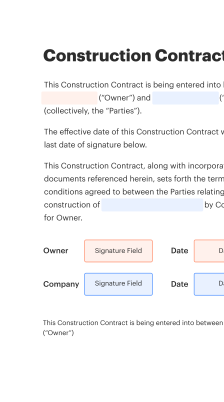
Electronic Signature Vehicle Bill of Sale Template
What an electronic signature vehicle bill of sale template is
Why use an electronic vehicle bill of sale template
A reusable electronic template ensures consistent, legible records, speeds up transactions, and centralizes storage for audits and title transfers while reducing manual errors and administrative overhead.
Common challenges with vehicle bill of sale processing
- State and local notarization rules vary and can require different steps for acceptance.
- Identity verification is essential to prevent fraud but adds friction for sellers and buyers.
- Manual entry of VIN, price, or odometer data frequently introduces transcription errors.
- Paper forms create storage, retrieval, and retention challenges for long-term compliance.
Typical user roles and responsibilities
Dealer
Sales managers at used car dealerships use templates to prepare bills of sale that include VINs, sale price, trade-in details and conditional notes. They rely on templates for speed, consistency, and to attach supporting documents like inspections and warranties before sending for signature.
Private Seller
Individual sellers use an electronic template to create a clear, dated record of the sale with required disclosures. Templates help ensure both parties complete the same fields, reduce disputes about condition or mileage, and provide a digital copy for DMV and tax records.
Who typically uses electronic vehicle bill of sale templates
Organizations and individuals who handle frequent vehicle transfers rely on templates to standardize documentation and reduce error rates.
- Used car dealerships and auto brokers processing multiple sales per day.
- Private sellers and individual buyers completing one-off transfers between parties.
- Title service providers and DMV-affiliated offices managing documentation workflows.
Templates help both occasional private sellers and high-volume dealers meet recordkeeping needs while simplifying title transfer steps.
Choose a better solution
Key template and signing features for vehicle bills of sale
Template Editor
Drag-and-drop editor for placing VIN, odometer, price, and buyer/seller fields with validation rules and conditional logic to reduce omissions and ensure consistent outputs across transactions.
Identity Verification
Multiple signer authentication methods including email, SMS, access code, and knowledge-based verification where available to help confirm signer identity before acceptance of the bill of sale.
Audit Trail
Automatic recording of signer IP addresses, timestamps, and document actions to create a tamper-evident audit trail that supports legal admissibility and administrative review.
State Fields Support
Prebuilt or customizable fields for state-specific requirements such as odometer statements, seller disclosures, and notarization placeholders to align the template with local DMV expectations.
How an electronic bill of sale workflow operates
-
Template creation: Design the bill-of-sale form and lock required fields.
-
Signer setup: Assign roles and choose authentication levels for each signer.
-
Signature capture: Collect signatures via web, mobile, or app interfaces.
-
Completion and storage: Generate signed PDF and store with audit trail information.
Step-by-step: create and complete a vehicle bill of sale template
-
01Prepare template: Create fields for buyer, seller, VIN, price, and odometer.
-
02Add rules: Set required fields and validation for VIN and dates.
-
03Set authentication: Choose email, SMS, or multi-factor signer ID options.
-
04Send and sign: Distribute to signers, collect signatures, and save final PDF.
Why choose airSlate SignNow
-
Free 7-day trial. Choose the plan you need and try it risk-free.
-
Honest pricing for full-featured plans. airSlate SignNow offers subscription plans with no overages or hidden fees at renewal.
-
Enterprise-grade security. airSlate SignNow helps you comply with global security standards.
Typical workflow configuration for electronic bill of sale templates
| Feature | Configuration |
|---|---|
| Reminder Frequency | 48 hours |
| Signer Authentication | Email or SMS |
| Template Locking | Enabled |
| Auto-archive | On completion |
| Retention Period | 7 years |
Platform and device requirements for signing
Electronic signing and template use work across modern browsers, mobile devices, and dedicated apps with few technical barriers for typical users.
- Supported browsers: Chrome, Edge, Firefox, Safari
- Mobile OS: iOS and Android supported
- PDF compatibility: Standard PDF rendering required
For reliable execution, ensure devices run current OS versions and browsers, maintain internet connectivity during signing, and use official mobile apps for enhanced authentication and offline signing where available.
Real-world examples of electronic bill of sale use
Dealer volume sales
A regional used-car dealer deploys a standardized electronic bill of sale template that auto-populates vehicle and buyer fields for each transaction
- Template enforces required fields and VIN validation
- Eliminates manual errors and speeds title package assembly
Resulting in faster daily throughput, fewer rejections at state DMVs, and clearer audit trails for compliance.
Private party transfer
Two private parties use a downloadable electronic bill of sale template pre-filled with vehicle details and signed remotely
- The template includes odometer disclosure and payment terms
- The buyer receives a signed PDF with full audit data and seller contact details
Ensures a verifiable record that supports DMV submission and reduces later ownership disputes.
Best practices for secure and accurate vehicle bill of sale templates
FAQs about electronic signature vehicle bill of sale templates
- Is an electronic signature valid for a vehicle bill of sale?
Yes; in the United States electronic signatures are generally legally enforceable under ESIGN and UETA, but specific acceptance for DMV filings or notarization requirements may vary by state, so verify local rules before relying solely on e-signatures for title transfers.
- Do states require notarization for bills of sale or titles?
Some states require notarization for title transfers or specific documents. When notarization is required, check whether remote notarization is accepted in that jurisdiction and include notarization steps or a notary block in the template if necessary.
- How can I verify signer identity when selling a vehicle?
Use multi-factor authentication such as SMS codes, government ID upload or knowledge-based checks where supported. Record authentication evidence in the audit trail to strengthen the transaction record for title agencies or later disputes.
- What fields should every vehicle bill of sale template include?
Include buyer and seller names and contact details, full VIN, make/model/year, sale price, odometer disclosure, sale date, any liens or warranties, and signature blocks. Add state-specific disclosures to comply with local DMV requirements.
- How long should I retain signed bills of sale and records?
Retention depends on state and business requirements; maintaining records for at least three to seven years is common. Keep signed PDFs and associated audit trails secure and backed up to support title issues or tax inquiries.
- What if a signer reports an error after signing?
If an error is detected, create an amendment or a corrected bill of sale and collect new signatures. Preserve the original signed file and audit trail for clarity; document the reason for correction to reduce legal ambiguity.
Feature comparison: signNow and leading eSignature providers
| Criteria | signNow (Recommended) | DocuSign | Adobe Sign |
|---|---|---|---|
| Legally binding | |||
| Mobile app | |||
| Bulk Send | |||
| Template library | Unlimited | Extensive | Extensive |
| API access | REST API | REST API | REST API |
Get legally-binding signatures now!
Risks and consequences of improper handling
Pricing snapshot for common eSignature options
| Plan | signNow (Recommended) | DocuSign | Adobe Sign | Dropbox Sign | PandaDoc |
|---|---|---|---|---|---|
| Entry-level price | Starting at $8/user/mo | Starting at $10/user/mo | Starting at $9.99/user/mo | Starting at $15/user/mo | Starting at $19/user/mo |
| Free trial | Yes, limited | Yes, limited | Yes, limited | Yes, limited | Yes, limited |
| API availability | Included in paid plans | Developer API | Included in plans | API via paid plans | API included |
| Bulk/Team features | Available on business plans | Available on business plans | Available on enterprise plans | Available on business plans | Available on business plans |
| Typical target user | SMBs and teams | Enterprises and legal teams | Enterprises and creative teams | SMBs and Dropbox users | Sales and proposal teams |
Streamline complex workflows
Prepare, deliver, and manage workflows of any complexity, electronically from almost anywhere. Scalable eSignature features allow you to exchange documents with the right people in the proper way and define roles for every signee. Execute document workflows faster and easier than ever before.
Automate document flow
Optimize sophisticated signing tasks with airSlate SignNow�s effective capabilities to enhance your business. Manage your automatic eSignature workflows to ensure they're running at maximum efficiency with fast notifications and alerts.
Optimize in team collaboration
Get teammates together in a secure, shared workplace. Manage documents, use form templates and notifications to create more efficient cross-company interaction. Relieve your staff from having to spend time on recurring actions to enable them to give attention to beneficial, business-critical activities.
Integrate into your existing systems
Run your tasks with market-leading integration. Collect Salesforce, Microsoft Teams, and SharePoint all in one business thread. Connect your software to a single unit for endless possibilities and higher efficiency.
Stay compliant with industry-leading data protection
Feel safe with the knowledge that your data remains secure by the latest in encryption security. airSlate SignNow is GDPR and eIDAS certified and offers you visibility into your signing procedure with court-admissible audit trails. Configure user access permissions and roles to control who has access to what.