Electronically Signed Deed with SignNow

Get rid of paper and optimize digital document processing for higher efficiency and unlimited opportunities. Experience a greater manner of running your business with airSlate SignNow.

Award-winning eSignature solution

What an electronically signed deed is and why it matters

An electronically signed deed is a deed document executed using an electronic signature process that captures intent, identity, and consent without a handwritten signature. In the United States, valid electronic execution depends on meeting statutory requirements under ESIGN and UETA, which focus on consent, attribution, and reliable record retention. Properly implemented electronically signed deeds include identity verification, tamper-evident seals, and an audit trail to support enforceability. Organizations use these processes to reduce turnaround time, centralize records, and ensure consistent application of signature and notarization rules across transactions.

Why use an electronically signed deed in modern transactions

Electronically signed deeds streamline closing workflows while preserving legal enforceability under U.S. law when implemented with appropriate controls and records.

Why use an electronically signed deed in modern transactions

Common challenges when adopting electronically signed deeds

  • Ensuring the signature method meets state-specific deed execution and notarization requirements can be complex and time-consuming.
  • Verifying signer identity for high-value property transfers requires multi-factor checks and documented evidence.
  • Preserving a tamper-evident record and a comprehensive audit trail is essential for later evidentiary use in disputes.
  • Integrating electronic deed workflows with title systems, recording offices, and closing platforms often needs custom mapping and coordination.

Typical user personas for electronically signed deeds

Title Officer

A title officer manages closings, coordinates signers, and ensures deeds meet recording standards. They need reliable identity verification, clear audit logs, and integration with title production software to reduce errors and speed recordings.

Real Estate Attorney

A real estate attorney prepares deed language, confirms grantor/grantee details, and requires chain-of-title integrity. They rely on tamper-evident documents and authenticated signatures to support post-closing dispute resolution.

Who typically uses electronically signed deeds

Real-estate attorneys, title companies, lenders, and closing agents commonly adopt electronically signed deeds to reduce manual steps and centralize records.

  • Title companies and closing services handling frequent property transactions and recordings across multiple jurisdictions.
  • Mortgage lenders and servicers that require consistent, auditable execution and rapid document exchange for loan closings.
  • Small law firms and solo practitioners who need secure, verifiable deed execution without physical presence.

Adoption decisions focus on legal compliance, integration with title and recording workflows, and the ability to produce defensible audit records when required.

Key tools and features for reliable electronically signed deeds

Effective electronically signed deed solutions combine signature controls, identity checks, secure storage, and logging to meet legal and operational requirements for property transfers.

Template Library

Store standardized deed templates with locked fields and required notarization blocks so documents are prepared consistently and reduce drafting errors across transactions.


Signer Authentication

Support multiple authentication methods including email OTP, SMS codes, knowledge-based checks, and identity verification to match state or lender requirements for signer validation.

Audit Logging

Comprehensive timestamped logs capture each action on the deed file, including access, field completion, signature events, and verification steps for evidentiary support.

Notary Support

Options for electronic and remote online notarization where permitted, with recorded notary acts and appended notarial certificates to meet recording office expectations.

Bulk Send

Ability to send similar deed packages to multiple recipients with individualized data, reducing repetitive setup when processing many similar transactions.

Retention Controls

Automated retention and archival capabilities enforce document retention, deletion schedules, and exportable records for compliance and audits.

be ready to get more

Choose a better solution

Integrations that support electronically signed deeds

Connecting signing workflows to your document and CRM systems simplifies preparation, tracking, and storage of electronically signed deeds.

Google Docs

Integration enables direct import of deed drafts from Google Docs, preserves version history during sign-ready preparation, and allows final signed documents to be saved back to Drive for centralized storage and access control.

CRM Systems

CRM linkage attaches deed records to borrower or property profiles, automates population of contact and property fields, and synchronizes execution status with loan or transaction records for consistent workflows.

Dropbox / Dropbox Sign

File sync with Dropbox allows deed templates and signed copies to remain in a controlled folder, supports access controls, and provides an alternate storage location for compliance-focused retention policies.

Document Management

Integration with DMS platforms stores executed deeds with metadata, supports search and retrieval, and enforces retention schedules required by internal policy or external regulation.
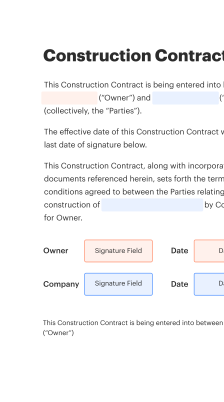
How to create and use an electronically signed deed online

Online execution follows predictable stages: document prep, secure delivery, authenticated signing, and preserved records for legal use.

  • Upload deed: Add finalized deed into the signing platform
  • Assign roles: Designate grantor, grantee, and notary roles
  • Authenticate signers: Use MFA or ID verification as configured
  • Complete signing: Capture signatures and issue signed PDF
Collect signatures
24x
faster
Reduce costs by
$30
per document
Save up to
40h
per employee / month

Step-by-step: Setting up an electronically signed deed

A concise setup sequence ensures deed documents are prepared, secured, and executed with legal reliability.

  • 01
    Prepare deed: Draft deed with required legal language
  • 02
    Apply controls: Add signature fields and verification rules
  • 03
    Verify identity: Use ID checks and authentication
  • 04
    Execute and store: Sign, notarize if needed, archive
be ready to get more

Why choose airSlate SignNow

  • Free 7-day trial. Choose the plan you need and try it risk-free.
  • Honest pricing for full-featured plans. airSlate SignNow offers subscription plans with no overages or hidden fees at renewal.
  • Enterprise-grade security. airSlate SignNow helps you comply with global security standards.
illustrations signature

Typical workflow settings for electronically signed deed automation

Key system settings determine notification cadence, authentication, and post-execution handling to align deed execution with organizational policies.

Feature Configuration
Reminder Frequency Send reminders every 48 hours, up to three times
Signer Authentication Level Require multi-factor and ID verification for grantors
Template Assignment Auto-assign deed templates by transaction type
Expiration and Revoke Set signing window expiry and revoke options
Post-sign Archival Auto-archive signed deed to DMS with metadata

Platform and device considerations for executing electronically signed deeds

Electronically signed deeds must be accessible across devices while ensuring secure authentication and consistent rendering of legal text and notary blocks.

  • Desktop browsers: Chrome, Edge, Firefox supported
  • Mobile support: iOS and Android apps available
  • PDF rendering: Consistent cross-device formatting

Test templates and notarization fields across target devices and browsers, and include fallback options such as printable certified copies for jurisdictions that lack electronic recording acceptance.

Security and protection elements for electronically signed deeds

Tamper-evident seal: Detects unauthorized edits
Audit trail: Records signer actions
Encryption at rest: Protects stored files
Transport encryption: Secures data in transit
Multi-factor authentication: Confirms signer identity
Role-based access: Controls document access

Industry case examples for electronically signed deeds

Practical scenarios show how electronically signed deeds reduce friction in real-estate transactions while meeting regulatory and recording requirements.

Title Company Closing

A regional title company integrated an electronically signed deed workflow to replace printed signings and courier delivery

  • Platform supported identity verification and notarization options
  • Closing times decreased and courier costs were eliminated

Resulting in faster recordings and improved operational consistency across multiple counties.

Lender Portfolio Refinance

A mortgage servicer executed deeds electronically for portfolio refinances across states where ESIGN and UETA applied

  • The process used multi-factor authentication for grantors
  • Document retention policies preserved audit trails for compliance checks

Leading to reduced turnaround on refinances and clearer audit evidence for secondary market underwriting.

Best practices for secure and accurate electronically signed deeds

Follow consistent processes that align document content, signer verification, and retention to maintain enforceability and reduce recording or title issues.

Use standardized deed templates
Maintain centrally managed deed templates that include jurisdiction-specific language, required acknowledgment or notary blocks, and locked fields to prevent accidental edits. Templates should be reviewed by counsel periodically and updated when recording requirements change to minimize rework.
Match authentication to transaction risk
Select signer authentication appropriate to the deed value and local rules; for high-value transfers use multi-factor verification and identity proofing. Document the chosen method and rationale to support compliance reviews and potential title examinations.
Preserve tamper-evident records
Ensure final executed deeds are secured with cryptographic seals, a verifiable audit trail, and immutable PDFs. Retain all metadata and verification artifacts required by ESIGN and UETA to demonstrate the integrity of the record in case of dispute.
Coordinate with recording authorities
Confirm county recorder or land registry acceptance of electronic signatures and remote notarization where applicable. Where a clerk requires specific formats, prepare certified paper transmittals or follow local submission protocols to avoid recording delays.

FAQs and troubleshooting for electronically signed deeds

Common questions and solutions address enforceability, recording acceptance, identity verification gaps, and document integrity concerns.

Feature comparison: electronically signed deed capabilities

Compare core capabilities across eSignature providers relevant to deed preparation, authentication, and audit evidence.

Feature signNow (Recommended) DocuSign Adobe Sign
Legally binding (US)
Advanced audit trail Detailed logs Detailed logs Detailed logs
Bulk Send capability
API availability REST API REST API REST API
HIPAA readiness Optional Optional Optional
be ready to get more

Get legally-binding signatures now!

Risks and potential penalties when electronically executed deeds are mishandled

Unenforceable deed: Possible rejection
Recording denial: Clerk refusal
Title defects: Clouded ownership
Regulatory fines: Statutory penalties
Data breach: Liability exposure
Litigation costs: Legal expenses

Pricing and plan comparison for electronically signed deed workflows

Different vendors organize plans by features and user tiers; compare plan focus, core inclusions, integrations, and target customer segments.

Plan signNow (Recommended) DocuSign Adobe Sign Dropbox Sign PandaDoc
Entry tier Individual / Basic Personal / Standard Individual / Small Business Professional Essentials
Core eSignature Included Included Included Included Included
Templates & Bulk send Included Tiered Tiered Included Included
Advanced APIs Available Available Available Available Available
Enterprise features SSO, retention SSO, CLM SSO, CLM SSO options CRM integrations

Simplify complicated workflows

Generate, deliver, and manage workflows of any complexity, electronically from near any place. Scalable eSignature capabilities allow you to exchange documents with the right users the correct order and assign roles for every recipient. Stream document workflows faster and simpler than ever before.

Automate document flow

Optimize complicated signing procedures with airSlate SignNow�s powerful tools to boost your company. Control your automated eSignature workflows to make sure they're operating at maximum efficiency with quick notifications and alerts.

Enhance in team collaboration

Join teams together in a safe, shared environment. Manage paperwork, use form templates and notices to produce better cross-company communication. Relieve your workers from having to spend time on repeating activities to enable them to focus on valuable, business-critical duties.

Integrate into your current network

Work your assignments with industry-leading integration. Capture Salesforce, Microsoft Teams, and SharePoint all in one business thread. Hook up your software to a single unit for countless opportunities and higher efficiency.

Remain compliant with industry-leading data safety

Feel confident understanding that your data is protected by the newest in encryption security. airSlate SignNow is GDPR and eIDAS certified and gives you awareness into your eSigning procedure with court-admissible audit trails. Configure user access permissions and roles to manage who has access to what.


walmart logo
exonMobil logo
apple logo
comcast logo
facebook logo
FedEx logo
be ready to get more

Get legally-binding signatures now!