Exhibit Transportation Proposal Template Mark

Eliminate paperwork and optimize digital document processing for more performance and endless possibilities. eSign any papers from your home, quick and feature-rich. Experience a better manner of doing business with airSlate SignNow.

Award-winning eSignature solution

What the exhibit transportation proposal template mark is and why it matters

The exhibit transportation proposal template mark is a reusable digital document pattern designed to standardize proposals, scopes, costs, and signature fields for moving exhibit materials between venues. It packages form fields, conditional logic, and signer roles into a template that speeds proposal creation, ensures consistent data capture, and ties each instance to a secure audit trail. When combined with an eSignature platform, the template mark lets teams predefine routing, reminders, and retention rules so proposals can be issued, signed, and archived with fewer manual steps while maintaining a clear record of approvals.

Legal validity and U.S. compliance considerations

Signatures made using the template mark can meet ESIGN and UETA requirements; include identity and intent evidence to support enforceability. For healthcare or education shipments, ensure the implementation aligns with HIPAA and FERPA safeguards and that business associate agreements or institutional policies are in place.

Legal validity and U.S. compliance considerations

Common challenges when managing exhibit transportation proposals

  • Inconsistent proposal formats across teams create confusion and slow approvals, increasing back-and-forth clarifications before signatures are obtained.
  • Missing or improperly placed signature fields lead to unsigned agreements and uncertain authorization for high-value or sensitive artifact shipments.
  • Tracking version history for multiple revisions becomes difficult without a template or centralized audit trail, increasing legal and logistical risk.
  • Coordinating schedules and carrier assignments manually often causes delays and errors when finalizing delivery windows and acceptance criteria.

Typical user profiles for template mark workflows

Event Coordinator

An event coordinator uses the template mark to assemble route plans, itemized charges, and service level commitments. They create proposals from standardized fields, route them for approvals, and monitor signer status to ensure timely confirmation ahead of exhibit move dates.

Logistics Manager

A logistics manager configures carrier assignments, insurance requirements, and delivery windows within the template. They rely on the template mark to minimize errors, compare quotes, and provide a defensible audit trail documenting acceptance and receipt of artifacts at each transfer point.

Who typically uses the exhibit transportation proposal template mark

Event planners, museum registrars, and logistics coordinators use template marks to enforce consistent proposal structure and reduce administrative overhead.

  • Exhibit managers and registrars responsible for condition reports, schedules, and contractual terms with shippers and venues.
  • Logistics coordinators and freight forwarders preparing cost estimates, carrier responsibilities, and insurance acknowledgements.
  • Legal and procurement teams reviewing indemnity, insurance, and compliance terms before contract execution.

Public institutions, commercial shippers, and in-house exhibits teams commonly adopt templates to maintain records, speed approvals, and support regulatory review.

Key features to look for in a template mark workflow

Effective template marks combine form controls, routing, and governance features so organizations can create accurate, auditable proposals at scale without repeating administrative tasks.

Reusable Template

Save a master proposal with preplaced fields, roles, and conditional logic so staff can instantiate new proposals quickly while preserving a consistent structure and preventing missing information on critical transport items.


Conditional Fields

Show or hide sections such as insurance details and climate controls based on item type or destination to reduce clutter and ensure relevant data is captured only when necessary for specific shipments.

Bulk Send

Distribute identical proposal instances to multiple recipients or carriers in a single action, tracking each instance and reducing manual repetitive sends while preserving individualized signing records for each recipient.

Role Routing

Enforce sequential or parallel signer workflows with explicit role definitions to ensure approvals and acknowledgements occur in the correct order and that each party receives the appropriate fields for signature.

Template Library

Maintain a centrally managed collection of approved proposal templates, versioned and audited so teams always select the current standard and administrators can retire outdated templates safely.

Audit Trail

Capture signer events, IP addresses, timestamps, and document hashes to provide an immutable record showing who signed what and when for dispute resolution and compliance review.

be ready to get more

Choose a better solution

Integrations that improve template mark efficiency

Connectors and integrations let you create, populate, and archive template marks directly from document storage and business systems to reduce manual re-entry and preserve contextual data.

Google Docs

Create and update proposals directly from Google Docs, import content into the template, and push signed copies back to shared Drive folders so teams maintain a single source of truth for proposal content and archival storage.

CRM Integration

Link templates to CRM records to prefill client, venue, and contact data, attach signed proposals to account histories, and trigger follow-up workflows that align logistics planning with sales and contract milestones.

Dropbox Integration

Save and retrieve supporting files, logs, or condition reports from Dropbox during template preparation and store final signed documents back to organized folders for continuity with existing document management practices.

REST API

Use API endpoints to programmatically generate proposal instances, populate fields, and retrieve signed documents and audit logs for integration with back-end systems or enterprise repositories.
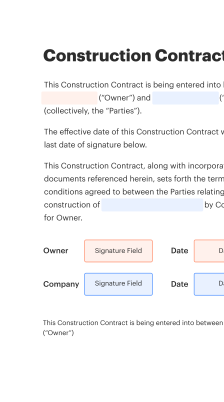
How the template mark functions across a signing workflow

A template mark guides authors through consistent field placement, assigns recipients, enforces signing order, and records each event for compliance and tracking.

  • Create Template: Define fields, logic, and metadata.
  • Share with Team: Grant template access to users.
  • Send for Signature: Initiate routing per template rules.
  • Archive Instance: Store signed copy with audit record.
Collect signatures
24x
faster
Reduce costs by
$30
per document
Save up to
40h
per employee / month

Quick setup: create and deploy a template mark

Follow these core steps to convert a standard exhibit transportation proposal into a reusable template mark that guides users and enforces required fields.

  • 01
    Prepare Document: Upload base proposal and source documents.
  • 02
    Add Fields: Place signature, date, and data fields.
  • 03
    Assign Roles: Define signer roles and permissions.
  • 04
    Publish Template: Save and share for team use.

Managing audit trails and record retention for each template instance

Use a consistent audit and retention process so every signed proposal instance includes clear evidence and can be retrieved for claims or compliance review.

01

Enable Audit:

Turn on complete transaction logging.
02

Capture Signatures:

Record signature metadata and timestamps.
03

Store Logs:

Save logs with the signed file.
04

Export Reports:

Generate compliance-ready summaries.
05

Review Events:

Audit regularly for anomalies.
06

Retention Policy:

Map retention to legal requirements.
be ready to get more

Why choose airSlate SignNow

  • Free 7-day trial. Choose the plan you need and try it risk-free.
  • Honest pricing for full-featured plans. airSlate SignNow offers subscription plans with no overages or hidden fees at renewal.
  • Enterprise-grade security. airSlate SignNow helps you comply with global security standards.
illustrations signature

Typical workflow settings for template mark automation

Configure these settings to control notifications, expirations, and signing behavior for exhibit transportation proposals.

Feature Configuration
Reminder Frequency 48 hours
Signing Order Sequential
Expiration Period 30 days
Default Language English
Attachment Limits 25 MB

Supported platforms for template mark access

Template marks and signing workflows are accessible from modern desktop browsers and native mobile apps to accommodate field staff and office teams.

  • iOS: iOS 13 or later
  • Android: Android 8 or later
  • Desktop Browsers: Chrome, Edge, Safari

Mobile apps enable on-site signings and condition confirmations, while desktop browser access supports template authoring and administrative setup; ensure devices run supported OS versions and that network connections meet security policies.

Security controls to protect template mark documents

Encryption in transit: TLS 1.2+ for data transfer
Encryption at rest: AES-256 encrypted storage
Access controls: Role-based permissions
Multi-factor auth: Optional two-step login
Audit logging: Immutable transaction records
Data residency: US hosting available

Industry examples using the template mark

Two practical examples illustrate how standardized proposal templates reduce errors and improve timelines for exhibit shipments.

Convention Freight Move

A trade-show organizer prepared a unified proposal for 120 crates to streamline carrier quotes across five vendors, saving hours of manual entry

  • Predefined weight, dimensions, and insurance fields
  • Faster approvals and consistent liability language

Resulting in reduced turnaround time, fewer clarifications with carriers, and a single approved record per shipment that supports reconciliation and claims handling.

Museum Loan Transport

A museum used the template mark to capture crating specifications, temperature requirements, and courier responsibilities for loaned works, ensuring curatorial needs were explicit

  • Conditional fields for climate requirements
  • Clear assignment of condition reporting and acceptance

Ensures traceable approvals, simplifies compliance review, and reduces risk during inter-museum transfers with a complete preservation and logistics record.

Best practices to secure and improve accuracy for template marks

Adopt these operational practices when building and distributing exhibit transportation proposal template marks to reduce risk and speed approvals.

Standardize template naming and versioning
Use a clear naming convention and include version identifiers and effective dates in the template metadata. Maintain a single authoritative library, document change reasons, and restrict editing rights to administrators to prevent accidental changes and ensure teams always use the approved document.
Use conditional logic to minimize errors
Apply conditional fields to show only relevant inputs, reducing incorrect entries in complex proposals. Validate numeric fields with ranges and require units for weights and dimensions to avoid ambiguity during carrier quoting and crate planning.
Verify signer identities appropriately
Match authentication strength to transaction risk: for high-value or international moves, require stronger identity verification such as SMS OTP or organizational SSO. Record authentication events in the audit trail for evidentiary support.
Maintain a clear retention and export policy
Define retention periods consistent with institutional policies and legal obligations. Export signed records and audit logs to institutional archives regularly to ensure availability for claims, audits, and regulatory inquiries, and test retrieval periodically.

FAQs and troubleshooting for common template mark issues

Answers to frequent questions and resolution steps for template mark problems encountered during creation, sending, or signing.

Feature comparison: signNow versus major eSignature providers

A concise feature-level comparison shows availability and key capabilities across commonly used eSignature platforms relevant to template marks.

Criteria signNow (Recommended) DocuSign Adobe Sign
ESIGN / UETA Validity
Bulk Send capability
Google Drive integration
API access and SDKs
be ready to get more

Get legally-binding signatures now!

Risks and potential penalties from poor template management

Regulatory fines: Noncompliance penalties
Loss or damage: Insurance disputes
Contract disputes: Legal exposure
Delivery delays: Operational penalties
Reputational harm: Stakeholder distrust
Data breach fines: Privacy enforcement

Plan-level comparisons across eSignature vendors

High-level plan and access differences for teams evaluating template mark workflows and administrative requirements across five eSignature platforms.

signNow (Recommended) DocuSign Adobe Sign HelloSign PandaDoc
Free trial and entry access Free trial available with limited eSignature features for evaluation and small use cases across the platform without long-term commitment.
API and developer access Public API and SDKs with sandbox access for integration development and automated template instantiation during implementation projects and testing cycles.
Enterprise support and SLAs Tiered enterprise offerings include SLA-backed support, dedicated onboarding options, and account management for high-volume or regulated deployments.
Advanced workflow features Conditional logic, bulk send, and advanced routing are offered in higher-tier plans targeted at teams with complex proposal and signing requirements.
Compliance and security features Support for ESIGN/UETA, audit trails, and optional BAA or enterprise controls to align with organizational compliance needs and data protection policies.

Simplify complex workflows

Create, execute, and manage workflows of any complexity, electronically from virtually anywhere. Scalable eSignature capabilities allow you to share documents with the right people in the correct order and define roles for each recipient. Execute document workflows faster and easier than ever before.

Automate document management

Optimize complex signing processes with airSlate SignNow’s powerful features to enhance your business. Control your automated eSignature workflows to ensure they're running at peak performance with instant notifications and reminders.

Optimize in team collaboration

Bring teams together in a secure, shared environment. Manage documents, use form templates and notifications to create more efficient cross-organization collaboration. Free your employees from having to spend time on repetitive activities so that they can focus on valuable, business-critical tasks.

Integrate into your existing systems

Run your projects with industry-leading integration. Collect Salesforce, Microsoft Teams, and SharePoint all in one business flow. Connect your software to a single system for endless possibilities and more efficiency.

Remain compliant with industry-leading data protection

Feel safe understanding that your data remains secure by the most recent in encryption security. airSlate SignNow is GDPR and eIDAS compliant and offers you awareness into your signing experience with court-admissible audit trails. Configure user access permissions and roles to regulate who has access to what.


walmart logo
exonMobil logo
apple logo
comcast logo
facebook logo
FedEx logo
be ready to get more

Get legally-binding signatures now!