Federal Contract Management for Operations

Experience effortless document sending and eSigning with airSlate SignNow's intuitive and affordable solution. Transform your operations and enhance collaboration today.

Award-winning eSignature solution

What federal contract management for operations covers

Federal contract management for operations refers to the processes and tools used to administer, execute, and monitor government contracts across operational teams. It includes document preparation, routing for approvals, signature capture, version control, compliance tracking, and archival in line with federal standards. Effective implementation reduces administrative delays, ensures traceability for audits, and supports adherence to statutory requirements such as ESIGN and UETA for digital records. For operational teams, this discipline ties contract milestones to procurement, finance, and program management workflows to maintain contract performance and accountability.

Why streamlined federal contract workflows matter

Centralizing contract tasks and using standardized digital processes reduces risk, improves audit readiness, and shortens approval cycles for operational teams managing federally funded engagements.

Why streamlined federal contract workflows matter

Common challenges in federal contract management

  • Fragmented document versions across teams cause delays and increase reconciliation work during audits.
  • Manual routing and wet-ink signatures extend cycle times and create inefficiencies in operations.
  • Inconsistent user authentication raises compliance concerns with federal identity and access requirements.
  • Poor retention policies risk noncompliance with recordkeeping obligations and Freedom of Information requests.

Representative user roles

Contract Administrator

Responsible for preparing contracts, tracking modifications, and coordinating approvals across legal, finance, and program teams. This role maintains the master document repository, ensures version control, and supports audit responses with verified signature records and timestamps.

Procurement Officer

Manages solicitations, vendor selection, and award documentation while ensuring procurement actions comply with federal regulations. The officer coordinates routing for approvals, validates authority to sign, and enforces retention schedules for contract records.

Primary operational users and stakeholders

Federal contracting involves multiple operational roles that collaborate to execute and maintain contracts from award through closeout.

  • Contract administrators coordinating deliverables, amendments, and performance tracking across agencies and vendors.
  • Procurement officers managing solicitations, award documents, and vendor onboarding processes.
  • Program managers overseeing milestone compliance and linking contract terms to operational outcomes.

These stakeholders rely on reliable document controls and auditable signoff records to support operational compliance and program continuity.

Core features that support federal operations

Operational teams benefit from integrated features that combine secure signing, workflow automation, identity assurance, and audit controls tailored for government contracts.

Templates

Prebuilt, reusable contract templates enforce clause consistency, reduce drafting time, and ensure standard metadata is captured for each federal contract before routing for approval.


Bulk Send

Send identical agreements to many recipients with individualized fields, tracking each envelope to maintain separate auditable records for bulk contract distributions.

Role-Based Access

Grant least-privilege access by role to ensure only authorized staff can edit, sign, or view sensitive contract documents and attachments.

Audit Trails

Generate immutable logs capturing every action, timestamp, and IP address to support compliance reviews and administrative investigations.

Identity Verification

Support multi-factor authentication and third-party identity checks to validate signer identity consistent with agency requirements.

Retention Policies

Apply configurable retention and disposition schedules to align document lifecycle with federal records management rules and FOIA considerations.

be ready to get more

Choose a better solution

Integrations that streamline contract operations

Connecting contract workflows with familiar systems reduces manual entry and ties contract events to operational systems like CRM, document stores, and shared drives.

Google Workspace

Integrating with Google Docs allows operational teams to prepare and send contract drafts directly from the document editor, preserving formatting and enabling a seamless handoff to the signing workflow while maintaining audit metadata.

CRM Systems

Integrations with CRMs synchronize contract data to account records, automating population of customer information and contract status updates for program and finance teams to track performance.

Cloud Storage

Connectors to repositories like Dropbox or Google Drive enable archival of signed contracts in existing storage locations while preserving tamper-evident copies and metadata for retrieval.

Identity Providers

SAML and OAuth integrations centralize authentication, allowing agencies to enforce single sign-on and existing identity policies for contract signers.
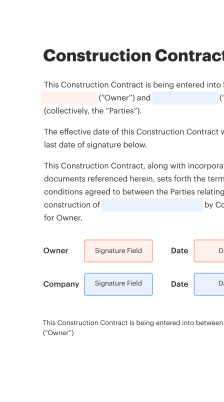
Typical document flow for operational contracts

A predictable document flow reduces errors: draft, apply fields and metadata, route for approvals, capture signatures, and archive with an immutable audit trail.

  • Drafting: Prepare contract text and required exhibits.
  • Field placement: Add signature, date, and data fields.
  • Routing: Assign reviewers and approvers in sequence.
  • Archival: Store signed records with tamper-evident logs.
Collect signatures
24x
faster
Reduce costs by
$30
per document
Save up to
40h
per employee / month

Quick operational checklist to begin

Start by defining roles, templates, and compliance rules specific to federal contracts, then configure secure signing and retention policies to support audits and operations.

  • 01
    Define roles: Map signatory authority and approval chains.
  • 02
    Create templates: Standardize common contract types and clauses.
  • 03
    Set authentication: Choose MFA and identity verification levels.
  • 04
    Configure retention: Apply federal-compliant archival schedules.

How to complete a federal contract signature sequence

Follow a consistent sequence when finalizing federal contracts to ensure valid execution and clear audit records.

01

Prepare document:

Upload final draft and apply required fields.
02

Assign roles:

Set signer and approver roles for each recipient.
03

Verify identity:

Apply MFA or credential checks prior to signing.
04

Request signatures:

Send in defined routing order to recipients.
05

Monitor progress:

Track status and send reminders where needed.
06

Archive final record:

Store signed copy with audit trail intact.
be ready to get more

Why choose airSlate SignNow

  • Free 7-day trial. Choose the plan you need and try it risk-free.
  • Honest pricing for full-featured plans. airSlate SignNow offers subscription plans with no overages or hidden fees at renewal.
  • Enterprise-grade security. airSlate SignNow helps you comply with global security standards.
illustrations signature

Recommended workflow settings for operational use

Use conservative defaults that balance security with usability; below are suggested configuration items for federal contract operations.

Workflow Automation Setting Name and Scope Configuration and Default Value for workflows
Reminder Notification Frequency for Signers 48 hours prior to deadline, repeat daily
Approval Routing Method and Escalation Sequential routing with two-level escalation
Signer Identity Verification Level MFA with optional third-party verification
Document Retention and Disposal Schedule Retain 6 years, then archive
Audit Log Preservation Settings Immutable logs retained per retention policy

Supported devices and technical requirements

Federal contract operations require cross-platform access to review, sign, and manage documents from office and field locations.

  • Desktop Browsers: Chrome, Edge, Firefox supported
  • Mobile Devices: iOS and Android apps available
  • APIs: REST API for integrations

Ensure devices run current OS and browser versions and that agency IT policies permit necessary network and API access for secure integration.

Security features to protect federal contract documents

Encryption in transit: TLS 1.2+ encryption
Encryption at rest: AES-256 storage
Access controls: Role-based permissions
Multi-factor authentication: MFA options supported
Session management: Configurable timeouts
Audit logging: Immutable event records

Operational use cases in federal settings

Real-world examples show how operational teams apply digital contract processes to stay compliant and efficient.

Defense Contract Award

A program office required rapid award execution with strict audit trails

  • Centralized templates and role-based approvals reduced negotiation cycles
  • Faster award processing and clear evidence for compliance

Resulting in reduced lead time and documented audit readiness for defense procurement

Grants Management for Education

A federal grants team needed consistent signatures and record retention for multi-year awards

  • Standardized templates and signer authentication enforced uniformity
  • Ensures regulated retention and simplifies reporting

Leading to smoother annual reviews and consistent documentation across grantees

Operational best practices for accuracy and compliance

Adopt consistent practices to reduce risk, improve visibility, and make audits routine rather than disruptive for operational teams.

Standardize templates and clause libraries
Maintain a centrally managed template library with preapproved clauses, mandated metadata fields, and version control to ensure every executed contract aligns with agency policy and legal requirements.
Enforce role-based approvals and least privilege
Assign permissions according to job responsibilities, require managerial or legal approval where needed, and regularly review access lists to prevent unauthorized edits or disclosures of sensitive contract terms.
Preserve immutable audit logs and retention metadata
Capture full event histories, signer authentication data, and retention markers at time of signing to support compliance reviews, FOIA requests, and internal audits without reconstruction effort.
Integrate with operational systems for data consistency
Link contract records to procurement, finance, and program management systems to automate status updates, reduce manual rekeying, and ensure contractual obligations are traceable to operational performance metrics.

FAQs About federal contract management for operations

Answers to common operational questions about digital contract processes, compliance, and troubleshooting for signing workflows.

Feature comparison across major eSignature providers

Comparing capabilities helps operational teams choose a provider that aligns with federal security, compliance, and integration needs.

Feature and Compliance Capability Matrix signNow (Recommended) DocuSign Adobe Sign
Federal ESIGN and UETA Compliance Status
Audit Trail and Tamper-Evidence Support Full Full Full
Integration with Federal Identity Providers SAML/OAuth SAML/OAuth SAML/OAuth
Bulk Sending and Template Limits High High Medium
be ready to get more

Get legally-binding signatures now!

Retention and deadline milestones for contract records

Map contract lifecycle milestones to retention actions to remain audit-ready and compliant with federal recordkeeping obligations.

Award Execution Date:

Start retention clock; preserve signed master copy.

Modification and Amendment Dates:

Attach and retain change orders with the original record.

Annual Performance Reviews:

Retain evaluation evidence linked to contract.

Closeout and Final Accounting:

Document deliverables and financial reconciliation.

Records Disposal Date:

Execute disposition per agency retention schedule.

Compliance risks and potential penalties

Recordkeeping violations: Fines, audit findings
Unauthorized signatures: Contract disputes
Data breaches: Notification obligations
Noncompliant retention: Legal exposure
Improper subcontracting: Contract termination
False claims: Civil penalties

Pricing and plan characteristics for operational deployments

Cost structures vary by feature set, user scale, and enterprise services; below are representative plan characteristics across providers for operational budgeting.

Entry-level cost and licensing model signNow (Recommended) low per-user subscription suitable for teams with core eSignature needs DocuSign higher per-user starting fee with broad enterprise features Adobe Sign mid-range pricing bundled with Document Cloud Dropbox Sign simple pricing aimed at small teams OneSpan enterprise-focused pricing with advanced security
Advanced feature availability in plans signNow includes templates, Bulk Send, and API access in mid plans DocuSign offers deep workflow and CLM integrations at higher tiers Adobe Sign integrates with Acrobat and enterprise tools Dropbox Sign offers core e-sign features with limited advanced automation OneSpan provides high-assurance signing and PKI options
Enterprise security and compliance support signNow supports AES-256, SOC 2, and configurable retention for federal needs DocuSign provides extensive compliance attestations and enterprise controls Adobe Sign offers broad enterprise governance and integrations Dropbox Sign covers standard security controls OneSpan emphasizes FIPS and high-assurance options
API access and developer support signNow provides REST API and documentation for integrations DocuSign offers extensive developer tools and SDKs Adobe Sign offers APIs as part of Adobe ecosystem Dropbox Sign supplies developer APIs for basic workflows OneSpan provides enterprise API and security tooling
Bulk send and template scale limits signNow supports high-volume Bulk Send and template reuse for operations DocuSign handles high-volume scenarios with enterprise plans Adobe Sign supports templates and batch sends Dropbox Sign supports smaller-scale bulk sends OneSpan supports enterprise batch processing
Support, SLAs, and onboarding services signNow offers onboarding resources and paid support tiers for teams DocuSign includes enterprise onboarding and SLA options Adobe Sign provides enterprise support and professional services Dropbox Sign offers standard support with optional upgrades OneSpan includes professional services for secure deployments
walmart logo
exonMobil logo
apple logo
comcast logo
facebook logo
FedEx logo
be ready to get more

Get legally-binding signatures now!