Fill Forms with Data Using SignNow

In airSlate SignNow you can make your document fillable. Complete it yourself or ask your colleagues and partners to fill forms with the data you need.

Award-winning eSignature solution

What it means to fill forms with data

Filling forms with data refers to entering structured information into digital form fields, using manual input, prefill data sources, or automated population from databases and integrations. In many organizations this process includes mapping fields to CRM records, using templates for repeatable forms, validating inputs against business rules, and applying secure eSignature steps where required. For U.S. use cases, platforms such as signNow support data prefill and automated form assembly while maintaining an audit trail and configuration options that reduce manual entry and improve data consistency across workflows.

Why filling forms with data properly matters

Correctly filling forms with data reduces manual errors, speeds approvals, and ensures that downstream systems receive consistent, validated information for reporting and compliance.

Why filling forms with data properly matters

Common challenges when you fill forms with data

  • Inconsistent field formats across forms lead to data cleanup and reconciliation work later in the process.
  • Manual retyping increases error rates and slows turnaround for time-sensitive transactions or approvals.
  • Lack of integration with source systems forces duplicate entry and creates versioning issues for records.
  • Unclear validation rules allow incomplete or invalid data, complicating compliance and operational reporting.

Representative user profiles

Sales Operations

A sales operations manager uses prefill to pull contact and opportunity data from a CRM into proposal templates, reducing manual entry and ensuring pricing and terms match the current deal record for consistent customer communications.

HR Administrator

An HR administrator prepares onboarding packets using templates that automatically populate employee details and benefit selections, improving accuracy and shortening time-to-complete for new hire paperwork while maintaining personnel privacy controls.

Typical users and teams that rely on automated form filling

Sales, HR, legal, and operations teams commonly rely on prefilled digital forms to standardize data capture and accelerate processes.

  • Sales operations teams that prefill proposals and contracts from CRM records.
  • Human resources for onboarding, benefits enrollment, and employee records.
  • Legal and compliance teams standardizing executed agreements and audit trails.

The same approaches scale from small teams to enterprise departments where role-based access and templates reduce risk and speed processing.

Advanced capabilities supporting large-scale form population

For enterprise use, features such as API-driven assembly, scheduled population, multi-sign workflows, conditional fields, templates library, and audit exports are essential.

APIs

REST APIs allow programmatic document assembly, field population, and retrieval of signed documents for integration into custom systems and automated pipelines.


Scheduled jobs

Automate recurring population or distribution tasks on a schedule to ensure periodic notices and renewals are sent without manual intervention.

Conditional fields

Show or hide fields based on inputs to simplify forms and ensure only relevant fields are completed by recipients.

Multi-signature flows

Sequential or parallel signature routing supports complex approvals and ensures a complete audit trail for each signer.

Template library

Centralized template management stores approved forms for reuse and version control across teams.

Audit export

Export full transaction logs for compliance reviews and archival in long-term storage systems.

be ready to get more

Choose a better solution

Core tools that simplify filling forms with data

Several platform capabilities combine to make form population predictable: templates, data mapping, integrations, and bulk operations for volume tasks.

Templates

Reusable form templates let teams standardize fields, placeholders, and field-level validation so that each instance follows the same structure and reduces the chance of omitted data or inconsistent layouts across submissions.

Data mapping

Field mapping connects form fields to external sources like CRMs or HR systems, automating data transfer and ensuring that the correct values populate each field according to defined rules and formats.

Bulk Send

Bulk Send enables sending a single template to many recipients with prefilled recipient-specific fields, streamlining high-volume use cases such as mass acknowledgements or distribution of standard agreements.

Integrations

Direct connectors with Google Workspace, Dropbox, and major CRMs enable automated document assembly, synchronization of signed records to source systems, and simplified storage and retrieval of completed forms.
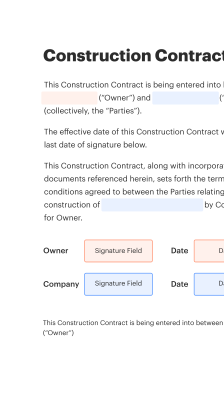
How prefill and automated form population work

Understanding the data flow helps teams design integrations and templates that reduce errors and save time.

  • Source: Identify authoritative data sources such as CRM or HRIS
  • Transform: Normalize formats and apply validation rules
  • Populate: Map and inject values into form fields
  • Confirm: Validate and capture final signed records
Collect signatures
24x
faster
Reduce costs by
$30
per document
Save up to
40h
per employee / month

Step-by-step: fill forms with data reliably

A concise workflow for preparing, populating, validating, and finalizing digital forms with data ensures accuracy and compliance.

  • 01
    Prepare: Choose a template and identify required fields
  • 02
    Map: Link form fields to source data or CRM records
  • 03
    Validate: Apply field validation and business rules
  • 04
    Finalize: Lock fields, apply signatures, and record audit trail

Audit trail steps for filled and signed forms

Maintain a clear sequence of audit artifacts from prefill through final signature to support legal validity and troubleshooting.

01

Record:

Capture initial prefill source and timestamp
02

Track:

Log edits and validation results
03

Authenticate:

Record signer authentication method used
04

Sign:

Log signature events with timestamps
05

Store:

Archive final PDF with metadata
06

Export:

Provide audit exports on request
be ready to get more

Why choose airSlate SignNow

  • Free 7-day trial. Choose the plan you need and try it risk-free.
  • Honest pricing for full-featured plans. airSlate SignNow offers subscription plans with no overages or hidden fees at renewal.
  • Enterprise-grade security. airSlate SignNow helps you comply with global security standards.
illustrations signature

Typical workflow configuration for automated form population

A recommended baseline configuration covers reminders, routing, data mapping, and retention settings for reliable operation.

Setting Name Configuration
Automatic reminder frequency interval days Default: every 48 hours until signed or recalled
Signature routing and sequencing rules Sequential signing with defined approver order
Prefill data matching and conflict handling Source overwrites only when record version is current
Retention and archival policy configuration Archive after 90 days, retain per legal policy
Notification and escalation thresholds setup Escalate after 7 days of no action

Device and browser requirements for filling forms with data

Ensure supported browsers, operating systems, and mobile apps are in use to avoid rendering and input issues when populating form fields.

  • Desktop browsers: Chrome, Edge, Safari supported
  • Mobile platforms: iOS and Android app support
  • Network needs: Stable internet and TLS access

For integrations and API use, ensure servers can make outbound HTTPS calls, that firewalls allow service endpoints, and that users run updated browser versions to maintain compatibility and security when populating and submitting forms.

Security controls for filling forms with data

Data encryption: AES-256 at rest
Transport security: TLS 1.2+ in transit
Access controls: Role-based permissions
Authentication options: Multi-factor supported
Audit logging: Immutable activity records
Data isolation: Tenant-based separation

Industry examples of filling forms with data

Practical examples show how automated prefill and templates reduce manual work across common U.S. workflows.

Real Estate Closings

Agents use templates to assemble closing packages with property and buyer data populated automatically

  • Automated field mapping pulls title, buyer, and loan details into forms
  • This reduces rekeying and minimizes numeric and address errors

Resulting in faster closings and fewer post-closing corrections for title companies and lenders

Employee Onboarding

HR teams deploy onboarding templates that prefill new hire information from offer letters and HRIS records

  • Prefill collects name, tax details, and benefit selections
  • This ensures consistent employee records and speeds benefits enrollment

Leading to reduced administrative time and fewer benefits setup errors during initial employment

Best practices for secure, accurate form population

Follow consistent design, validation, and governance around prefilled forms to reduce errors and support audits.

Design templates with required fields and input masks
Define required fields clearly, use input masks for dates and phone numbers, and include contextual guidance to reduce user error and improve downstream data quality and processing reliability.
Maintain authoritative data sources and mapping documentation
Document field mapping between forms and source systems, keep mapping rules under version control, and periodically reconcile sample records to detect drift or integration issues early.
Apply granular access controls and review workflows
Use role-based permissions to restrict who can edit templates or override prefills; require approvals for changes to critical templates to retain compliance and process integrity.
Retain auditable records and validation logs
Capture an immutable audit trail showing who filled, modified, or approved data, including timestamps and validation outcomes to support regulatory reviews and dispute resolution.

FAQs and troubleshooting when filling forms with data

Answers to frequent questions and practical fixes for common problems when automating form population.

Feature comparison for filling forms with data

A concise availability comparison across major U.S.-focused eSignature providers for prefill and form population capabilities.

Feature signNow (Recommended) Adobe Acrobat Sign DocuSign
Prefill from CRM Yes, native CRM connectors Yes, integrations available Yes, integrations available
Bulk Send support Yes, Bulk Send included Yes, Bulk capabilities available Yes, bulk via plans
Google Workspace integration Google Docs and Drive connectors Google Workspace integration Google Workspace integration
API document assembly Comprehensive REST API Robust APIs and SDKs Extensive APIs and developer tools
be ready to get more

Get legally-binding signatures now!

Retention and backup timelines for prefilling workflows

Establish clear retention, backup, and review schedules for prefilled forms and associated source data.

Short-term project retention:

Retain active project forms for the project life plus one year

Employee records retention:

Follow HR retention schedule per company policy and regulations

Backup frequency:

Daily backups for transactional records and weekly full snapshots

Legal hold procedures:

Suspend deletion when litigation or audit is anticipated

Periodic review:

Annual review of retention and deletion policies

Risks and penalties from improper form data handling

Regulatory fines: Possible monetary penalties
Privacy breaches: Exposure of sensitive data
Contract disputes: Invalid or incomplete agreements
Operational delays: Processing backlogs
Reputational harm: Customer trust erosion
Data loss: Incomplete records retention

Pricing and plan snapshot for providers that support prefill

High-level plan names and common feature presence for providers; check vendor sites for current pricing and detailed terms.

Plan / Provider signNow (Recommended) DocuSign Adobe Acrobat Sign PandaDoc Dropbox Sign
Entry-level plan name and positioning signNow Business (team-focused plan for secure eSignatures) DocuSign Personal (individual plan for basic signatures) Adobe Acrobat Individual (single-user digital signature plan) PandaDoc Essentials (document workflow and eSign starter plan) Dropbox Sign Essentials (simple eSignature plan for small teams)
Free trial and trial length details Offers a free trial period for new accounts with limited features Provides a trial for new users through account signup Free trial available with full feature exploration Free trial available to evaluate templates and eSign Trial available for essential eSignature features
Bulk Send and high-volume support notes Bulk Send included for team plans with native capabilities for multiple recipients Bulk sending available, may require higher-tier plan or add-on Bulk and enterprise features available under business plans Bulk send supported on higher tiers or via add-ons Bulk distribution offered on team plans
Typical integrations included Native integrations with Google Workspace, Salesforce, and Dropbox for document assembly and storage Integrates with major CRMs and cloud storage for workflows Connects with Adobe Document Cloud and enterprise systems Integrates with CRMs and cloud storage for document workflows Integrates with Google Workspace and cloud storage for sign workflows
Compliance and enterprise options Business plans offer enterprise controls, BAAs available for eligible accounts Enterprise plans provide advanced controls and compliance features Enterprise-grade compliance and identity controls available Business and enterprise tiers include advanced compliance features Enterprise offerings include advanced security and compliance

How to complete forms with airSlate SignNow

Whenever you need to add data to a document in PDF, DOCX, or other formats, open it in the airSlate SignNow editor and make necessary changes using the tools from the sidebar on the left.

Get started with the click of a button

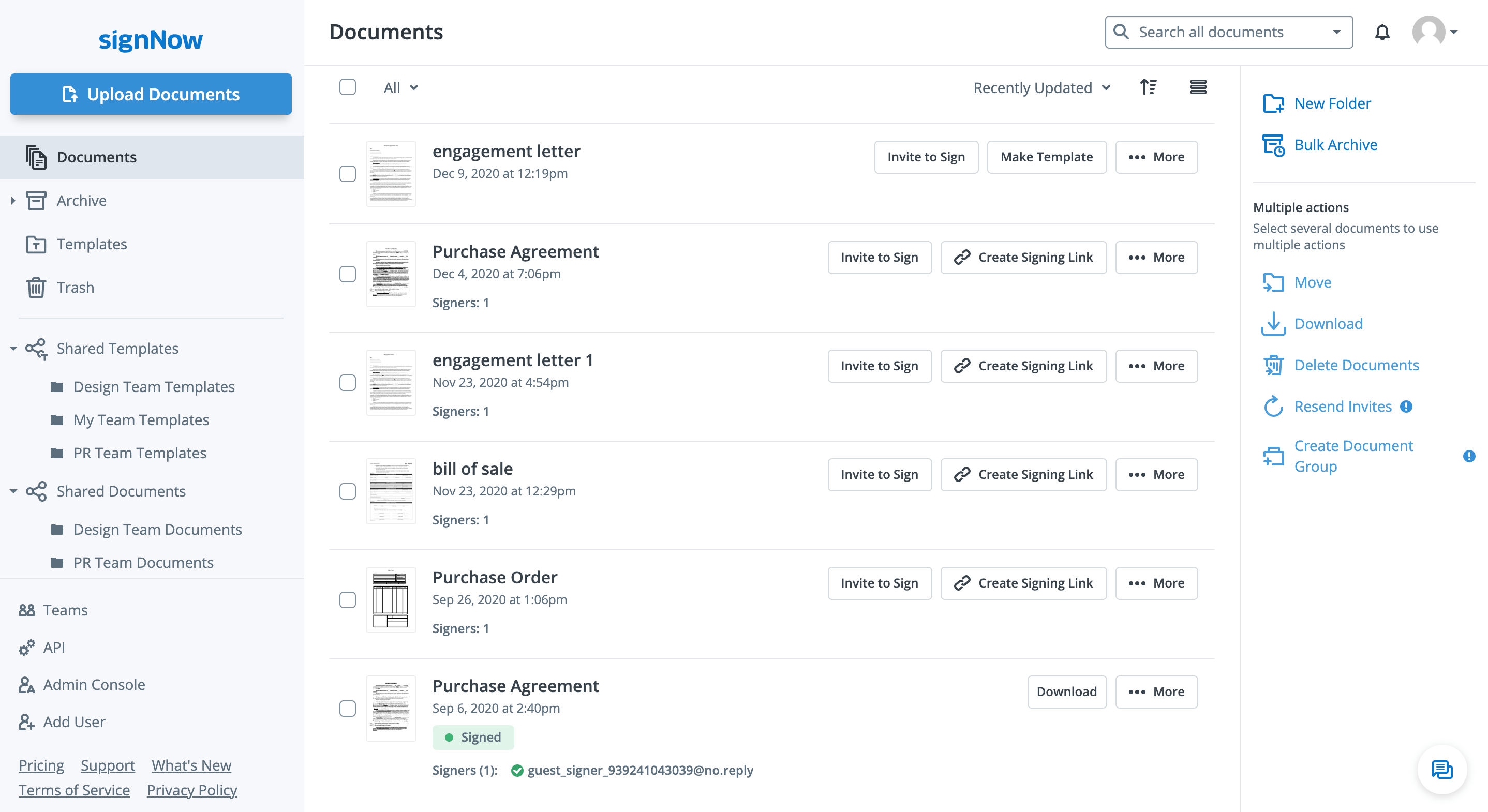
Upload a document to your airSlate SignNow account by clicking the Upload Document button. Then, open the document by double-clicking it.
fill-guide-illustration

Use the airSlate SignNow editing tools

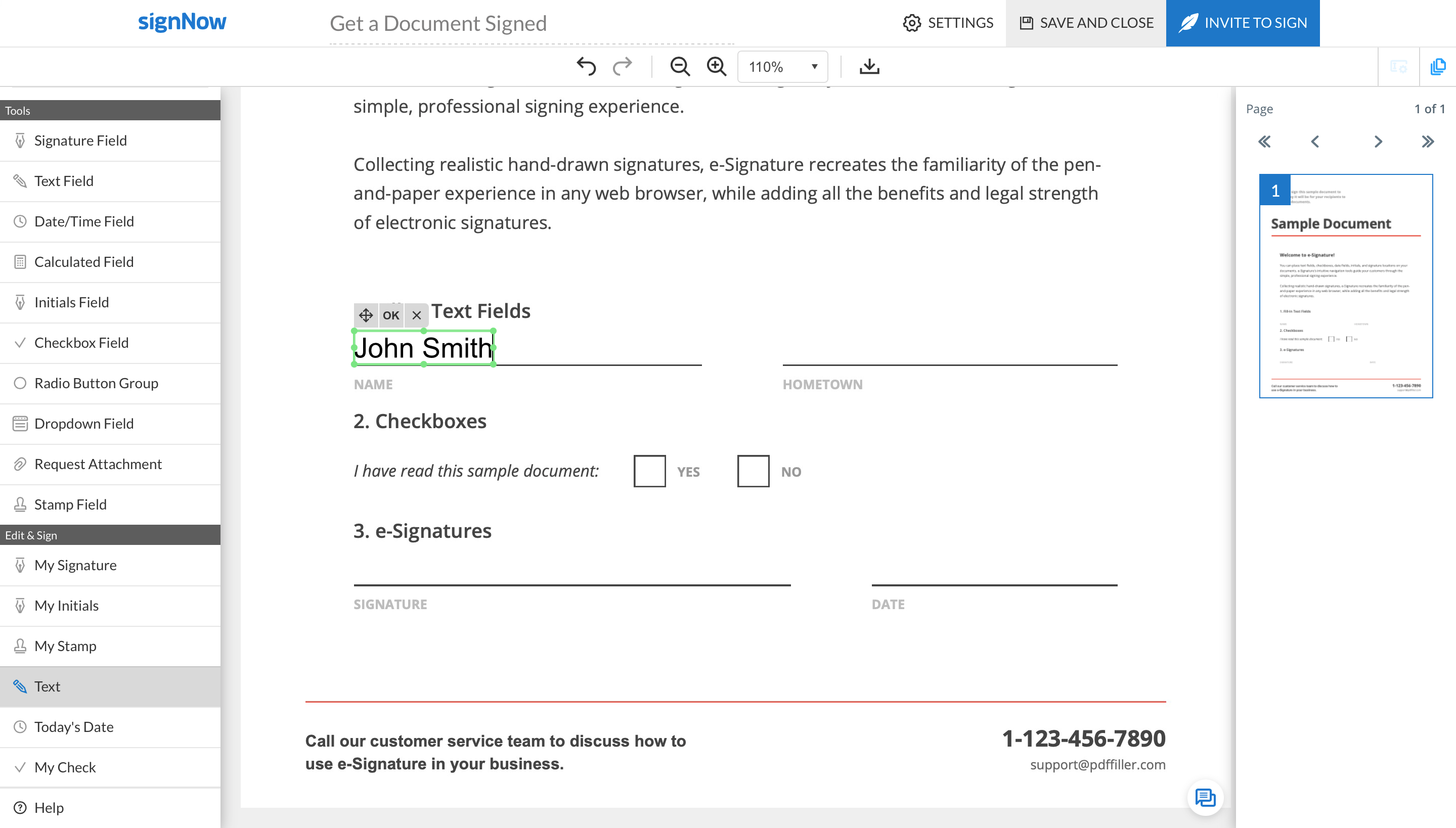
Add text to the document by selecting Text in the left-hand toolbar and clicking on the document where you need the text to appear. You can adjust the positioning of your annotations by dragging them across the document. Their size can be changed by dragging the anchor points.
fill-guide-illustration

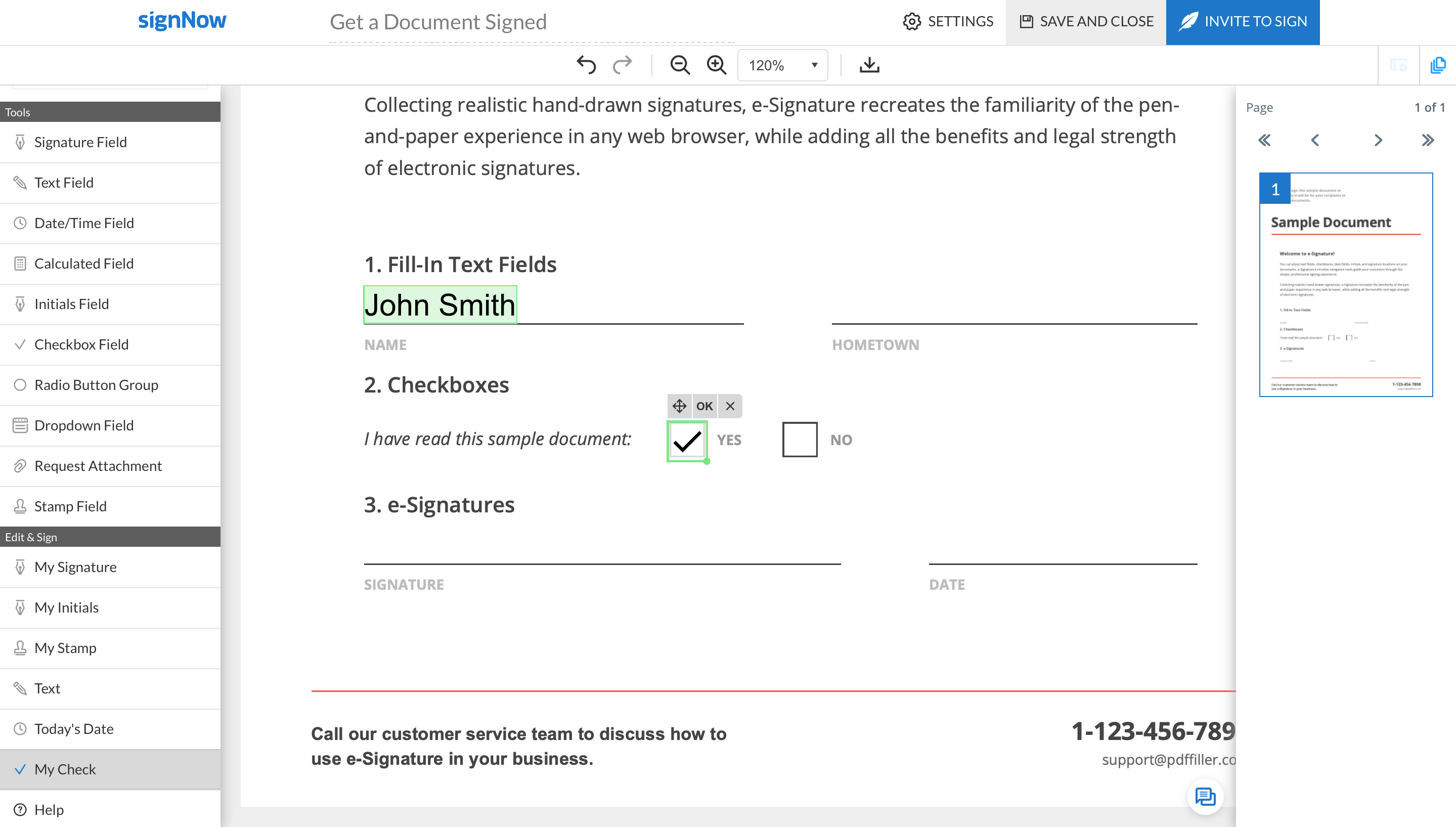
Add checkmarks by selecting My Check from the sidebar and clicking on the document.
fill-guide-illustration

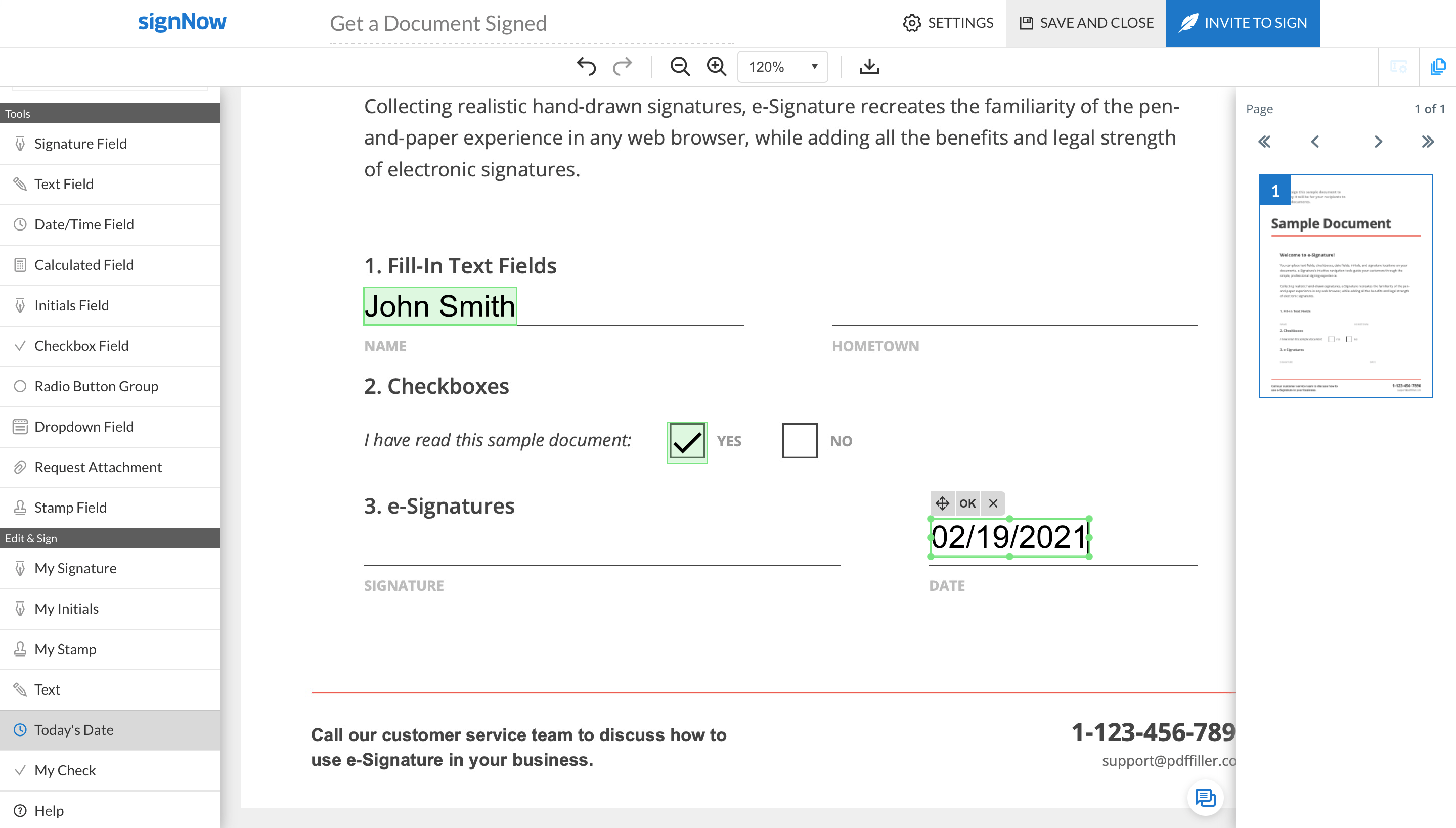
Date the document by using the Today’s Date item from the toolbar.
fill-guide-illustration

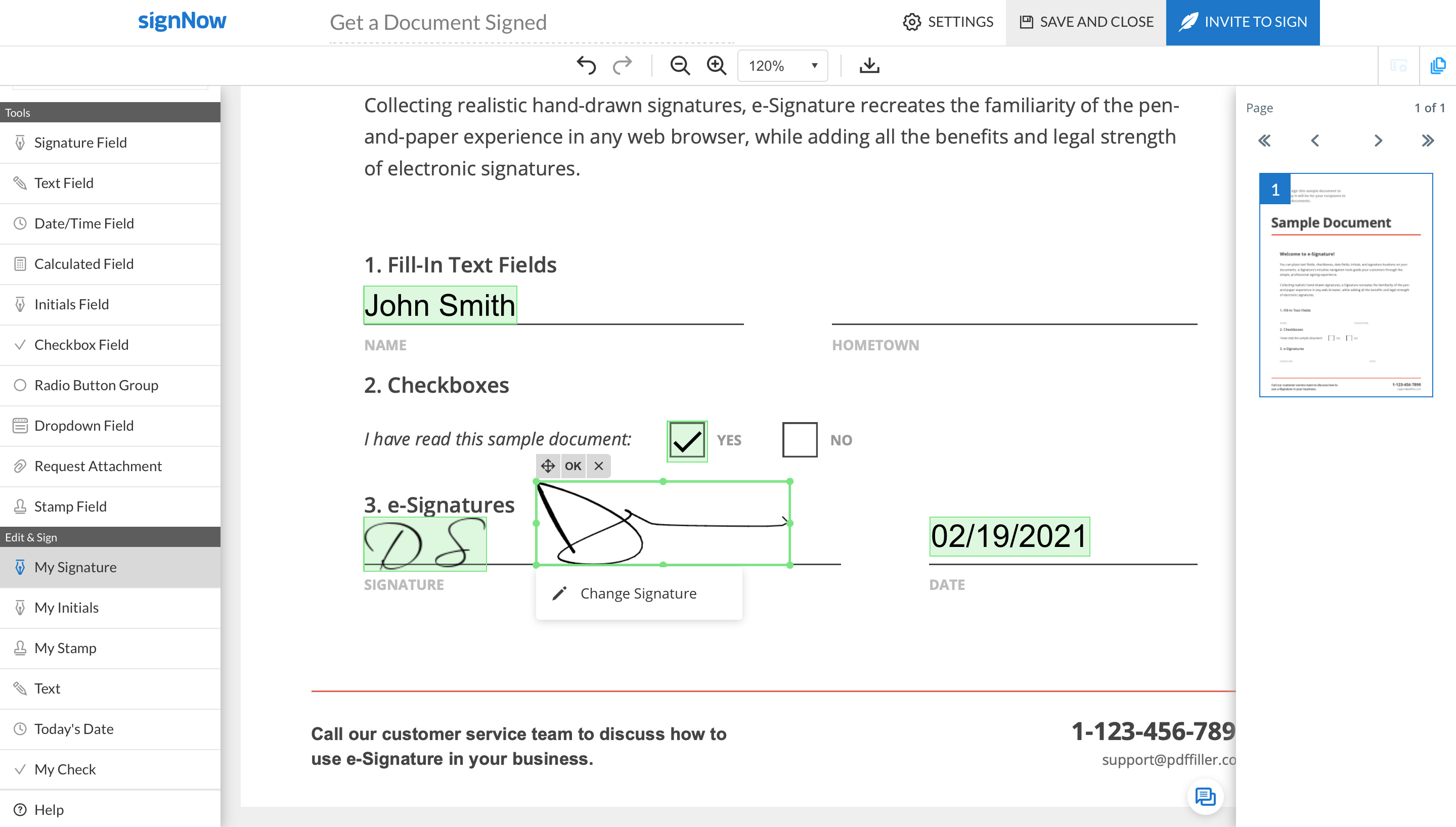
Add your initials or signature to the document. To do so, select My Initials or My Signature.
fill-guide-illustration

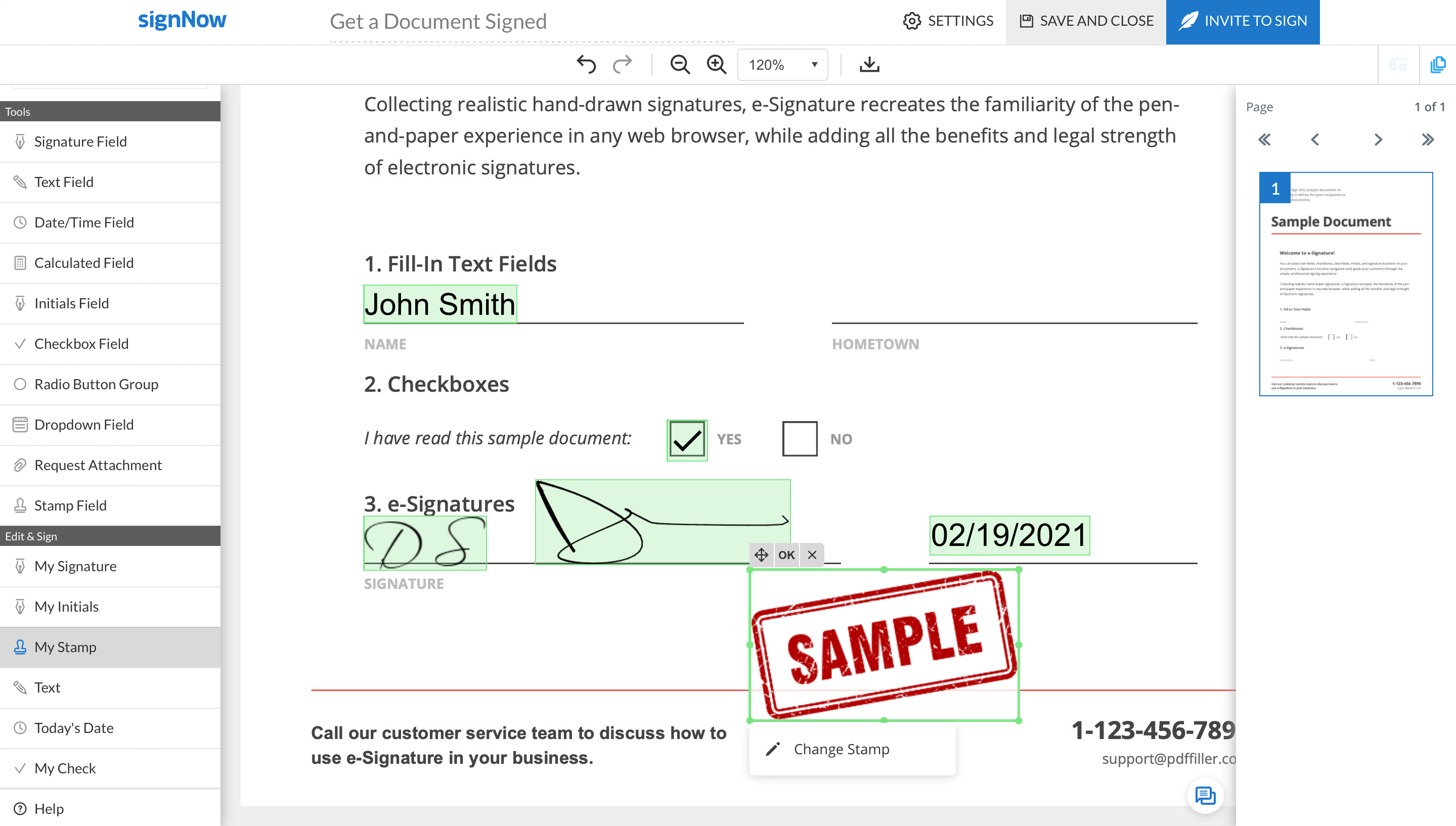
Finally, apply your stamp to the document by selecting My Stamp and clicking anywhere on the document.

fill-guide-illustration
walmart logo
exonMobil logo
apple logo
comcast logo
facebook logo
FedEx logo
be ready to get more

Get legally-binding signatures now!