Ink Signature Solutions with SignNow

Remove paperwork and automate document management for higher efficiency and endless opportunities. Experience a greater way of doing business with airSlate SignNow.

Award-winning eSignature solution

What an ink signature represents and how eSignatures differ

An ink signature traditionally denotes a handwritten mark applied to a paper document to indicate consent, intent, or acknowledgment. In modern workflows, an electronic signature reproduces that intent in a digital form, associating a signer with a specific document and timestamp. Electronic signatures may be executed directly on a touchscreen, through typed names with authentication, or via cryptographic signatures backed by a certificate. For legal and operational purposes, the crucial factors are identity verification, intent, integrity of the signed content, and an auditable record of the transaction.

Why consider replacing paper ink signatures with electronic alternatives

Replacing paper ink signatures with electronic methods reduces physical handling, accelerates turnarounds, and provides a tamper-evident audit trail while preserving legal enforceability under U.S. statutes when implemented correctly.

Why consider replacing paper ink signatures with electronic alternatives

Common challenges when shifting from ink signatures to eSignatures

  • Resistance from signers used to physical paper can slow adoption across departments.
  • Ensuring identity verification that meets industry-specific compliance standards increases setup complexity.
  • Integrating eSignature workflows with legacy systems often requires mapping data fields and testing.
  • Managing retention policies and secure backups for signed records imposes administrative overhead.

Typical user profiles for eSignature workflows

Legal Counsel

Legal counsel configures standard contract templates, reviews authentication flows, and ensures processes meet ESIGN and UETA requirements. They monitor audit trails and retention policies to support enforceability and regulatory requests.

HR Manager

HR managers use electronic signature workflows for onboarding, benefits enrollment, and confidentiality agreements. They set signer roles, enforce required fields, and track completion to maintain timely personnel records.

Which teams and professionals rely on electronic signature workflows

A variety of teams use electronic signature tools to replace paper ink signatures and speed approvals while maintaining records.

  • Human resources teams for onboarding forms, tax documents, and policy acknowledgements.
  • Legal and contracts teams for agreements, NDAs, and signature capture during negotiations.
  • Sales and procurement for quotes, purchase orders, and commission paperwork.

Organizations typically centralize eSignature administration to ensure consistent authentication, template use, and compliance oversight across departments.

Key tools that support replacing ink signatures

Modern eSignature platforms include a set of capabilities that together replicate the intent, identity verification, and evidentiary qualities of an ink signature while enabling digital workflow efficiencies.

Signature fields

Customizable signature and initial fields let administrators enforce required elements, place date stamps, and require signer initials where needed to mirror paper signing conventions.


Templates

Reusable document templates reduce repeated setup for standard forms and ensure consistent field placement and required inputs across repetitive workflows.

Bulk Send

Bulk Send functionality enables sending identical documents to many recipients in a single operation while maintaining unique audit records for each signer.

API access

APIs allow embedding signing flows into internal applications and automate document creation, sending, and retrieval without manual intervention.

Audit trail

Comprehensive audit logs record timestamps, IP addresses, and signer actions to provide an evidentiary chain for signed documents.

Access controls

Role-based permissions and team management enable administrators to control who can send, edit, and view signed documents across the organization.

be ready to get more

Choose a better solution

Common integrations that replace manual document handoffs

Integrations reduce manual steps by connecting signature workflows with common productivity and storage tools used in business operations.

Google Workspace

Integration with Google Docs and Drive lets users prepare documents and send them for signature directly from the Google environment while preserving original file structure and version history.

CRM systems

CRM integrations allow automatic population of contact and account fields, reducing rekeying errors and attaching signed agreements directly to customer records for easy access.

Cloud storage

Connections to Dropbox, Box, and OneDrive enable archived signed documents to be synchronized with enterprise storage policies and backup routines.

Accounting platforms

Integration with invoicing and accounting systems streamlines contract-to-cash workflows by linking signed purchase orders and invoices with financial records.
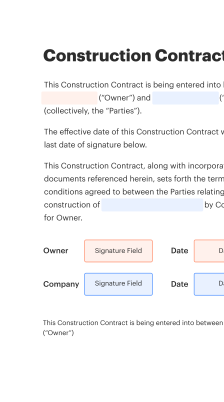
Typical signing flow across devices

A signing sequence generally moves from sender preparation to recipient authentication to signature capture and finally to secure storage and audit.

  • Sender setup: Upload document, assign fields
  • Recipient authentication: Email link or additional ID check
  • Capture signature: Touchscreen, typed, or certificate
  • Finalize record: Lock document and archive
Collect signatures
24x
faster
Reduce costs by
$30
per document
Save up to
40h
per employee / month

How to create an electronic signature for a document

A concise process to convert a paper workflow to an electronic signature flow focuses on document preparation, signer identity, placement of signature fields, and record retention.

  • 01
    Prepare document: Convert to PDF and verify content
  • 02
    Add fields: Place signature, date, and initials
  • 03
    Select signers: Specify roles and email addresses
  • 04
    Send and track: Dispatch envelope and monitor status

Managing the audit trail for signed documents

A reliable audit trail documents each action and preserves evidence of the signing transaction for compliance and dispute resolution.

01

Record creation:

Capture sender and timestamp
02

Authentication log:

Store verification details
03

Signature action:

Log signature method used
04

Document locking:

Prevent post-signing edits
05

Export options:

PDF with audit summary
06

Retention metadata:

Attach retention tags
be ready to get more

Why choose airSlate SignNow

  • Free 7-day trial. Choose the plan you need and try it risk-free.
  • Honest pricing for full-featured plans. airSlate SignNow offers subscription plans with no overages or hidden fees at renewal.
  • Enterprise-grade security. airSlate SignNow helps you comply with global security standards.
illustrations signature

Configuring automated signature workflows

Automated workflows reduce manual handling by enforcing sequencing, reminders, and conditional routing for signature requests.

Setting Name Configuration
Routing order Sequential or parallel
Reminder frequency 48 hours
Expiration policy 30 days
Conditional fields Enabled by rule
Signer authentication Email, SMS, ID

Device and browser requirements for reliable eSignature use

Most electronic signature platforms support modern desktop browsers and mobile operating systems, but confirming compatibility avoids signing interruptions.

  • Desktop browsers: Chrome, Edge, Safari
  • Mobile operating systems: iOS and Android
  • PDF viewers: Modern readers required

Ensure users run current browser versions and update mobile apps regularly; where required, provide guidance on supported PDF readers and recommend enabling cookies and JavaScript for full functionality across signing flows.

Core security controls for electronic signatures

Encryption at rest: AES-256 encryption
Encryption in transit: TLS/HTTPS connections
Access controls: Role-based permissions
Authentication options: Multi-factor support
Tamper evidence: Audit hashing
Secure storage: Redundant backups

Industry examples of replacing ink signatures with electronic processes

These examples show how digital signatures streamline operations and reduce reliance on physical ink while maintaining legal validity and secure recordkeeping.

Healthcare consent forms

A clinic digitizes patient consent to speed intake and reduce paper handling

  • Uses authenticated signer flows
  • Improves record access and auditability

Resulting in faster patient processing and consistent compliance with HIPAA documentation expectations.

Real estate closings

A brokerage moves offer and contingency signatures online to shorten closing cycles

  • Implements identity verification and document locking
  • Reduces courier delays and printing costs

Leading to fewer scheduling conflicts and clearer audit trails for each transaction.

Best practices for accurate and secure electronic signature capture

Adopt consistent procedures that preserve intent, ensure signer identity, and maintain the integrity of signed records when transitioning from ink signatures to electronic methods.

Standardize templates and required fields
Create and maintain centrally managed templates with predefined required fields to reduce errors and ensure every signed document contains the necessary elements for validity and downstream processing.
Use strong signer authentication when needed
Apply multi-factor or identity verification for high-risk or regulated documents, and match the authentication level to the legal and business sensitivity of the transaction.
Maintain clear retention and access policies
Define document retention schedules, archival procedures, and role-based access so that signed records remain retrievable and protected for the duration required by law and internal governance.
Train users and document owners
Provide concise training for senders and approvers on template selection, field placement, and signer guidance to reduce common errors and improve first-pass completion rates.

FAQs About ink signature and electronic signing

Common questions address legal validity, device compatibility, authentication options, and what to do when a signer encounters an error during the process.

Feature comparison: signNow and other major providers

A concise comparison on common capabilities related to replacing ink signatures with electronic workflows across leading U.S.-focused eSignature vendors.

Feature signNow (Recommended) DocuSign Adobe Sign
Legally binding status
ESIGN/UETA compliance
Bulk Send Limited
Mobile app availability iOS/Android iOS/Android iOS/Android
be ready to get more

Get legally-binding signatures now!

Legal and operational risks to consider

Invalid signatures: Contract disputes
Data breaches: Regulatory fines
Noncompliance: Civil penalties
Retention failures: Evidence loss
Authentication gaps: Impersonation risk
Integration errors: Workflow disruption

Pricing and plan features across providers

Summary of plan-level features and availability to provide context when evaluating the cost and capabilities of replacing paper ink signatures with digital workflows.

Feature signNow (Recommended) DocuSign Adobe Sign PandaDoc HelloSign
Free trial or free tier Free trial available Free trial available Free trial available Free trial available Free tier available
Entry-level plan Business plan with core features Individual plan Individual plan Essentials tier Starter tier
API access availability Available on business/API plans Available on API plans Available on enterprise/API Available on paid plans Available via business plans
HIPAA support Offered with BAA Offered with enterprise BAA Offered with enterprise agreement Offered via enterprise Offered via higher tiers
Bulk Send and templates Includes Bulk Send and templates Bulk Send and templates Templates and bulk features Templates and bulk send Templates and bulk sends

Simplify challenging workflows

Generate, deliver, and manage workflows of any complexness, digitally from virtually anywhere. Scalable eSignature capabilities ensure you can exchange documents with the right people in the proper order and determine roles for each signee. Execute document workflows faster and easier than ever before.

Automate document management

Enhance sophisticated signing processes with airSlate SignNow�s powerful capabilities to boost your business. Take control of your automated eSignature workflows to ensure they're running at top performance with immediate notifications and reminders.

Enhance in team collaboration

Get teammates together in a safe, shared environment. Manage documents, use form templates and notices to deliver better cross-organization collaboration. Free your workers from having to spend time on repeated actions so that they can give attention to beneficial, business-vital projects.

Integrate into your existing network

Work your tasks with best-in-class integration. Assemble Salesforce, Microsoft Teams, and SharePoint all in one business stream. Link your applications to a single environment for unlimited opportunities and more productivity.

Stay compliant with industry-leading data security

Feel safe knowing that your information is protected by the most up-to-date in encryption security. airSlate SignNow is GDPR and eIDAS certified and provides you visibility into your eSigning procedure with court-admissible audit trails. Configure user authorization and roles to control who has access to what.


walmart logo
exonMobil logo
apple logo
comcast logo
facebook logo
FedEx logo
be ready to get more

Get legally-binding signatures now!