Install Mobile App to Sign Documents on iPad or iPhone

Close deals, sign agreements, send documents for electronic signature, and track the status of signatures anytime and anywhere, even while on the go. The airSlate SignNow mobile app is the ultimate eSignature solution for your mobile device.

Award-winning eSignature solution

What it means to install a mobile app to sign documents on iPad or iPhone

Installing a mobile app to sign documents on iPad or iPhone lets users open, review, and execute agreements directly from iOS devices without printing. The process typically involves downloading the vendor app from the App Store, authenticating with an account, granting required permissions, and opening or importing a document to place signature fields. For business use, the app should support standard eSignature elements, maintain a tamper-evident audit trail, and offer settings for signer authentication, reminders, and document storage consistent with organizational policies.

Why use a mobile app for signing on iPad or iPhone

A native iOS app centralizes signing tasks, improves convenience for remote signers, and integrates device features like touch input and offline access to maintain continuity for mobile workflows.

Why use a mobile app for signing on iPad or iPhone

Common obstacles when installing and using signing apps on iOS

  • App permissions blocking document access can prevent importing files from cloud storage.
  • Older iOS versions may lack required security features for the latest app releases.
  • Confusion over account types and sign permissions can delay sending or completing signatures.
  • Inadequate network connectivity can interrupt uploads, causing timeouts or failed submissions.

Representative user profiles for mobile signing on iPad and iPhone

Field Sales

Field sales professionals use iPad or iPhone signing apps to finalize proposals and contracts onsite. They rely on fast document import from CRM, offline signing when connectivity is limited, and a verifiable audit trail to confirm client consent and preserve contract continuity.

HR Administrator

HR administrators manage onboarding on iOS devices, guiding new hires through forms and consents. They require template reuse, role-based access, and secure storage to meet internal retention policies and protect personal data on mobile endpoints.

Organizations and roles that commonly install signing apps on iOS

Companies and individuals who need signatures away from a desktop choose mobile signing to keep processes moving in the field or remotely.

  • Sales representatives signing contracts while meeting customers outside the office.
  • HR teams completing onboarding forms during remote interviews or orientation.
  • Healthcare staff collecting consents at the point of care with HIPAA controls.

Mobile signing meets needs across departments by enabling quick, secure completion of documents directly on iPad and iPhone devices.

Advanced mobile capabilities for enterprise signing on iPhone and iPad

Enterprises benefit from advanced mobile features that support secure large-scale use, integrations, and administrative control across iOS fleets.

Bulk Send

Send a single document to many recipients with individualized fields and a consolidated status view for large distribution lists or batch agreements.

Role Templates

Save common signer roles and field layouts to speed preparation and ensure consistent assignment of signature responsibilities across teams.

SAML SSO

Single sign-on integration with enterprise identity providers to centralize authentication and simplify mobile access management for iOS users.

Admin Console

Centralized administration of users, permissions, and activity monitoring that supports policy enforcement across mobile and desktop clients.

API Access

Programmatic access to signing functions and document operations for custom mobile app workflows and integrations with back-end systems.

Compliance Controls

Configurable retention, audit, and authentication settings to meet sector-specific regulatory requirements on mobile devices.

be ready to get more

Choose a better solution

Key mobile features to support signing on iPad and iPhone

Evaluate mobile apps for essential features that ensure consistent signing experience, security, and integration with existing systems and storage.

Offline signing

Support for offline signing lets users collect signatures without a network connection and automatically sync executed documents and audit details once connectivity is restored.

Biometric unlock

Biometric authentication leverages Touch ID or Face ID to control access to the app and signer sessions, improving device-level security and reducing password friction.

Cloud integrations

Built-in connectors to storage providers like iCloud, Google Drive, and Dropbox enable fast import and export of documents from familiar locations on iOS devices.

Template reuse

Mobile-accessible templates speed repetitive workflows by preplacing fields and roles for common forms, reducing preparation time on iPad or iPhone.

How signing on iPad and iPhone works in practice

A typical mobile signing flow moves from document import to placement of fields, signer authentication, execution, and final storage with an audit trail.

  • Import: Open or upload a document to the app.
  • Prepare: Add signature, initials, and data fields.
  • Authenticate: Verify signer identity as required.
  • Complete: Collect signatures and save the executed file.
Collect signatures
24x
faster
Reduce costs by
$30
per document
Save up to
40h
per employee / month

Quick setup: Install and start signing on iPad or iPhone

Follow these core steps to install the signing app on your iPad or iPhone and prepare documents for execution.

  • 01
    Download app: Find and install the vendor app from the App Store.
  • 02
    Sign in: Authenticate using corporate or personal credentials.
  • 03
    Import document: Open files from Mail, Files, or cloud storage.
  • 04
    Place fields: Drag signature and form fields before sending.

Detailed steps to sign a document on iPad or iPhone

This step-by-step grid explains the signer and sender actions required to complete a mobile signature transaction on iOS devices.

01

Open document:

Locate the file in Files or cloud storage.
02

Prepare fields:

Add signature and input fields as required.
03

Assign signers:

Set recipient roles and contact details.
04

Send request:

Dispatch signing invitation to recipients.
05

Sign on device:

Signer taps fields and confirms intent.
06

Store executed copy:

Save to approved cloud or archive.
be ready to get more

Why choose airSlate SignNow

  • Free 7-day trial. Choose the plan you need and try it risk-free.
  • Honest pricing for full-featured plans. airSlate SignNow offers subscription plans with no overages or hidden fees at renewal.
  • Enterprise-grade security. airSlate SignNow helps you comply with global security standards.
illustrations signature

Recommended workflow settings for mobile signing on iOS

Configure these workflow settings to align mobile signing behavior with organizational requirements for notifications, retention, and authentication.

Setting Name Configuration
Default reminder frequency for recipients 48 hours
Default signature authentication method applied Email OTP
Automatic archival destination for executed files Company cloud
Offline signing synchronization window On reconnect
Audit trail export retention policy 7 years

Platform and device requirements for signing apps on iOS

Verify minimum iOS version, available storage, and App Store access before installing a signing app on iPad or iPhone.

  • iOS version: iOS 14 or later
  • Storage space: At least 100 MB free
  • Network access: Wi‑Fi or cellular for sync

For enterprise deployments, confirm MDM policies and SSO compatibility; keep devices updated and audited to maintain security and app functionality on iPad and iPhone.

Security features to look for in an iOS signing app

Data encryption: End-to-end TLS and AES
Access controls: Role-based permissions
Authentication options: Multi-factor support
Audit trail: Comprehensive activity log
Document integrity: Tamper-evident seals
Local device security: Biometric unlocking

Industry examples of signing on iPad or iPhone

Practical examples show how mobile signing on iOS supports field operations, HR workflows, and patient intake without requiring desktop access.

Field contract completion

A sales representative opens a prepared contract on an iPad during a client meeting and requests a signature.

  • The app populates signature fields and captures signer intent quickly.
  • The document is stored with a time-stamped audit trail and optional signer authentication.

Resulting in legally valid contracts executed at the point of sale and faster revenue recognition.

Healthcare consent forms

A clinic receptionist uses an iPhone to present digital consent for a minor procedure and collects parental signature on the device.

  • The mobile app enforces required fields and optional identity verification.
  • Patient records are linked and archived with access controls and HIPAA safeguards.

Ensures secure intake, reduces paperwork, and keeps accurate digital records for clinical workflows.

Best practices for secure and accurate mobile signing on iOS

Follow these practices to maintain legal validity, security, and operational clarity when signing on iPad or iPhone devices.

Use strong signer authentication methods
Require multi-factor or verified email authentication for signers when documents contain sensitive data or when regulatory compliance (ESIGN, UETA, HIPAA) is a concern; document the method used.
Maintain consistent retention and backup policies
Ensure executed documents and audit trails are backed up to approved cloud storage with versioning and retention rules aligned to company policy and legal requirements.
Limit app permissions and device access
Configure the app with least-privilege settings for file access and restrict sensitive operations to managed devices where device encryption and MDM policies are enforced.
Train users on mobile signing workflows
Provide role-based training that covers importing documents, applying correct fields, verifying signer identity, and recognizing common errors to reduce signature disputes and processing delays.

FAQs: Troubleshooting common issues when installing signing apps on iPad and iPhone

Answers to frequent questions about app installation, permissions, signing errors, authentication, and file compatibility for iOS signing.

Feature comparison for signing on iPad and iPhone

A concise feature comparison focused on mobile capabilities and compliance relevant to iOS signing workflows in the United States.

Feature signNow (Recommended) DocuSign Adobe Sign
Native mobile application availability on iOS
Offline signing support and sync Limited Limited
HIPAA and healthcare compliance support
Bulk Send and mass distribution
be ready to get more

Get legally-binding signatures now!

Typical timings and retention checkpoints for mobile-signed documents

Establish timelines for signature completion, reminders, and retention to ensure compliance and operational efficiency.

Signature completion window:

7 to 30 days depending on workflow

Automatic reminder schedule:

48 hours and 7 days

Document archival period:

Retain per policy

Audit log preservation:

Indefinite or policy-defined

Periodic compliance review:

Annually recommended

Risks and penalties from improper mobile signing

Regulatory fines: Monetary penalties
Breach exposure: Data compromise
Contract disputes: Enforceability issues
Noncompliant retention: Records loss
HIPAA violations: Civil penalties
Operational delays: Process interruptions

Pricing and plan characteristics for popular signing providers

High-level plan and billing characteristics to help compare signNow with other well-known providers for mobile signing on iPad and iPhone.

Plan / Provider signNow (Recommended) DocuSign Adobe Sign Dropbox Sign PandaDoc
Entry-level plan and billing model Subscription-based with monthly and annual billing Subscription tiers with pay-as-you-go options Included with Adobe Acrobat subscriptions Per-user subscription with simple tiers Tiered subscription with templates and eSign features
Target user and primary use case Small teams and individual professionals Enterprises and regulated industries Document-centric organizations using Adobe tools SMBs and Dropbox customers Sales teams and proposal workflows
Included mobile app features summary Full iOS app, offline signing, templates Robust mobile app, integrations, advanced admin Mobile signing integrated with Acrobat Reader Lightweight mobile signing, storage integration Mobile signing plus document creation tools
Enterprise capabilities and admin controls Role-based admin, SSO, API access Extensive admin, SSO, compliance features Enterprise management through Adobe Admin Console Team management and SSO options Advanced workflow automation and user controls
Support and compliance options U.S. compliance support, enterprise SLAs available Broad compliance, enterprise support plans Compliance with enterprise plans, global controls Support via Dropbox business plans Compliance features and dedicated support for higher tiers

How to eSign a document on iPhone or iPad with the airSlate SignNow app

airSlate SignNow enables you to manage eSignatures from any device, be it your PC, smartphone, or tablet. If you are an iPhone or iPad user, download the airSlate SignNow app for iOS from the Apple Store for the most seamless and hassle-free signing experience.

Install the airSlate SignNow app

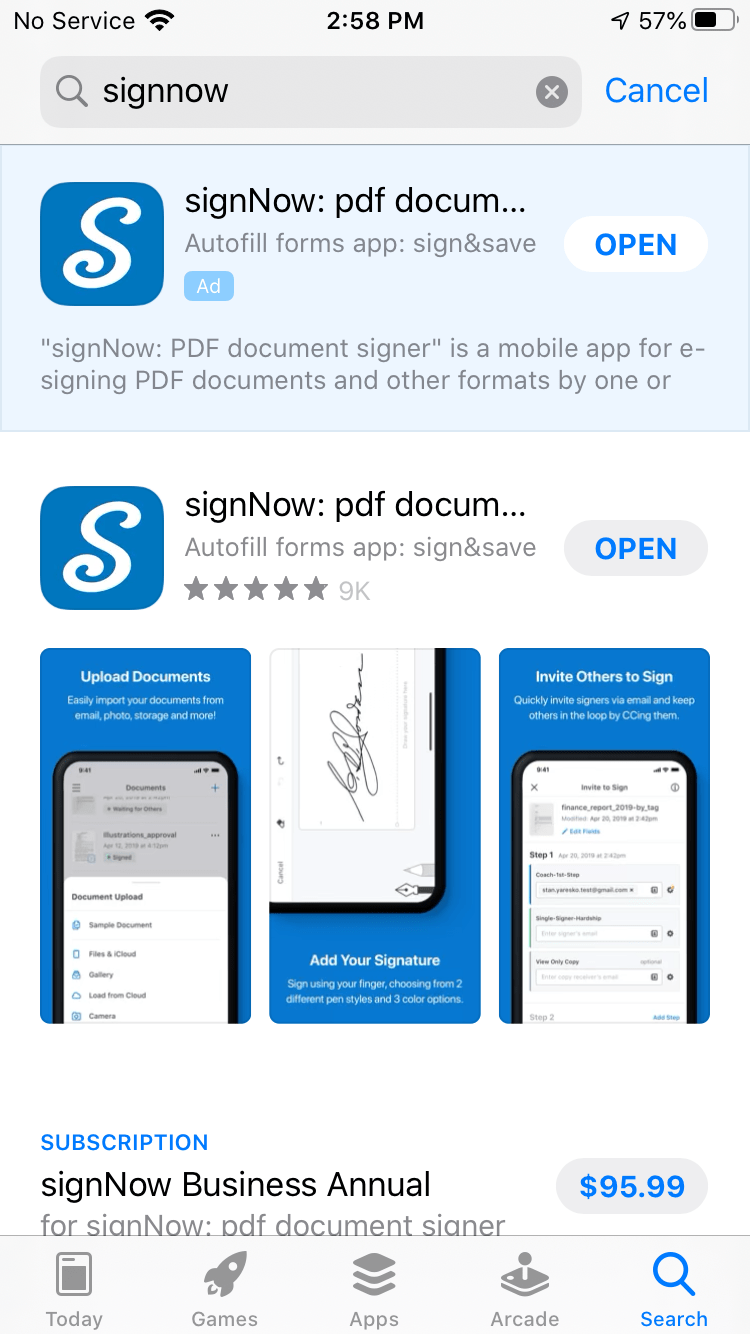
Go to the Apple Store and enter “airSlate SignNow” in the search tool. Once you find the airSlate SignNow app, tap Get. Then, open the app.
fill-guide-illustration

Sign up or log in to your airSlate SignNow account

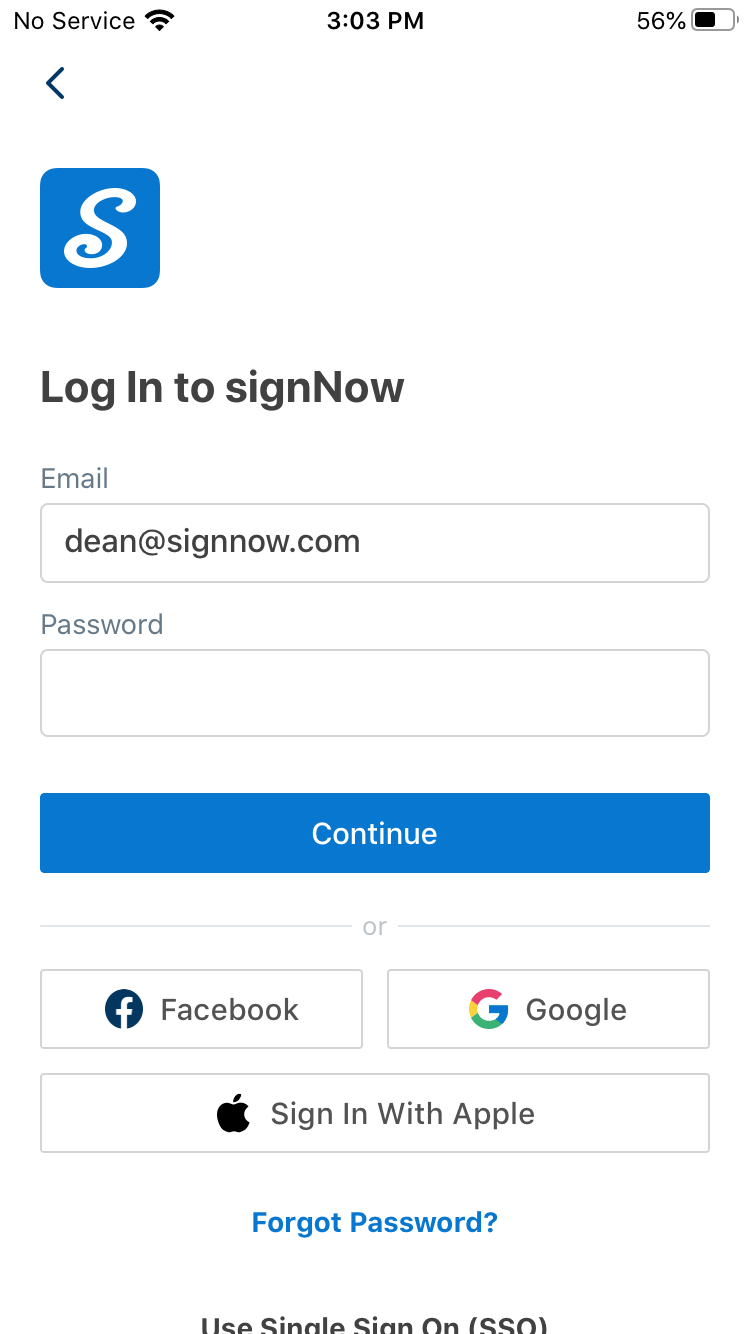
If you are new to airSlate SignNow, go ahead and create your account. If you are a registered user, log in with your airSlate SignNow credentials. You can also sign in via your Google, Facebook, or Apple account.
fill-guide-illustration

Upload a document

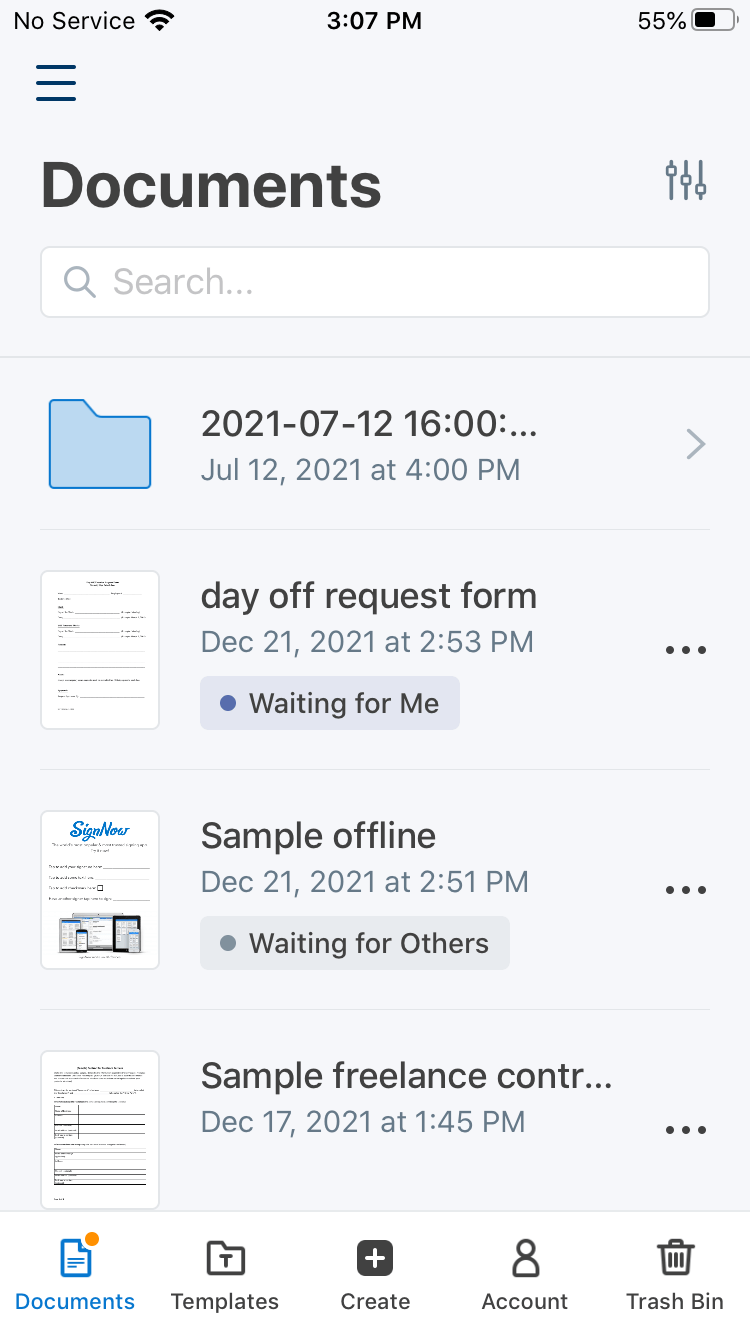
Tap Create in the bottom panel of the airSlate SignNow app.
fill-guide-illustration

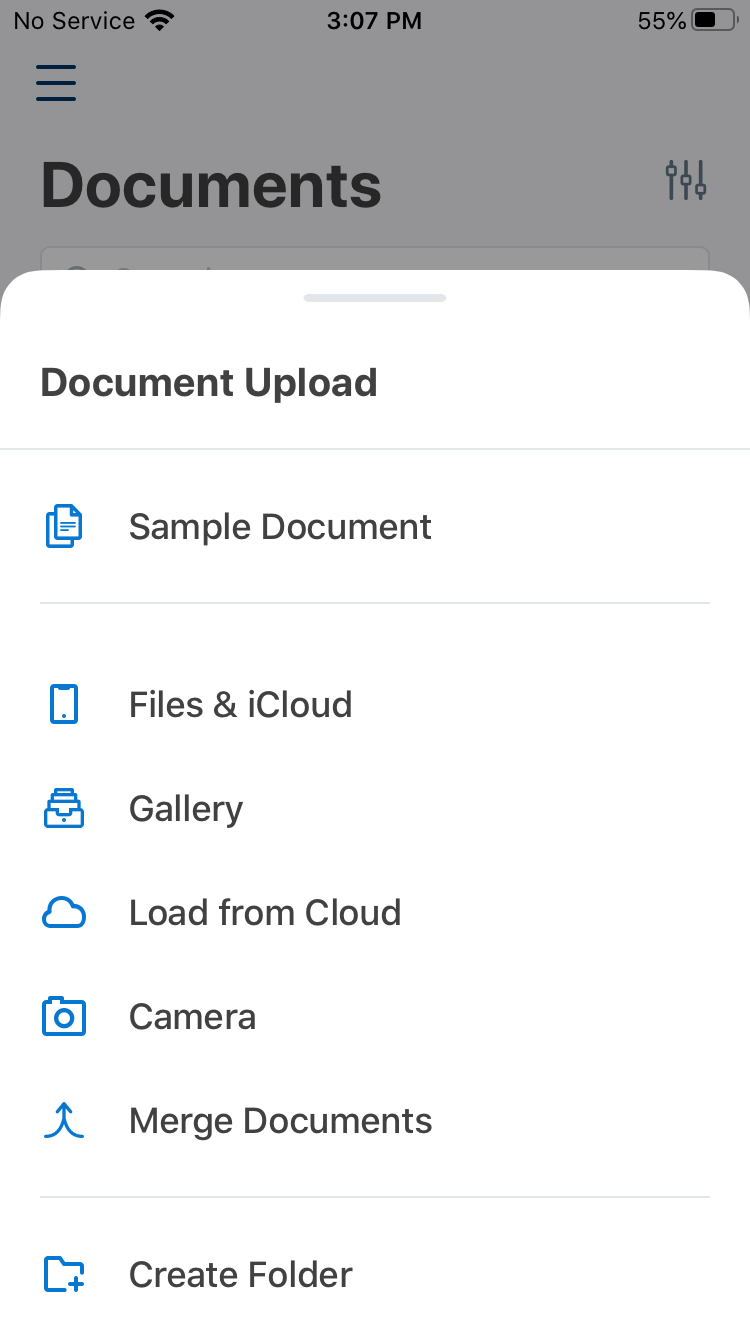
Check out the upload options

Select how you want to upload a document. You can upload a file from your device, gallery, iCloud, or third-party cloud storage. You can also take a photo of your document with a digital camera and upload it right away.
fill-guide-illustration

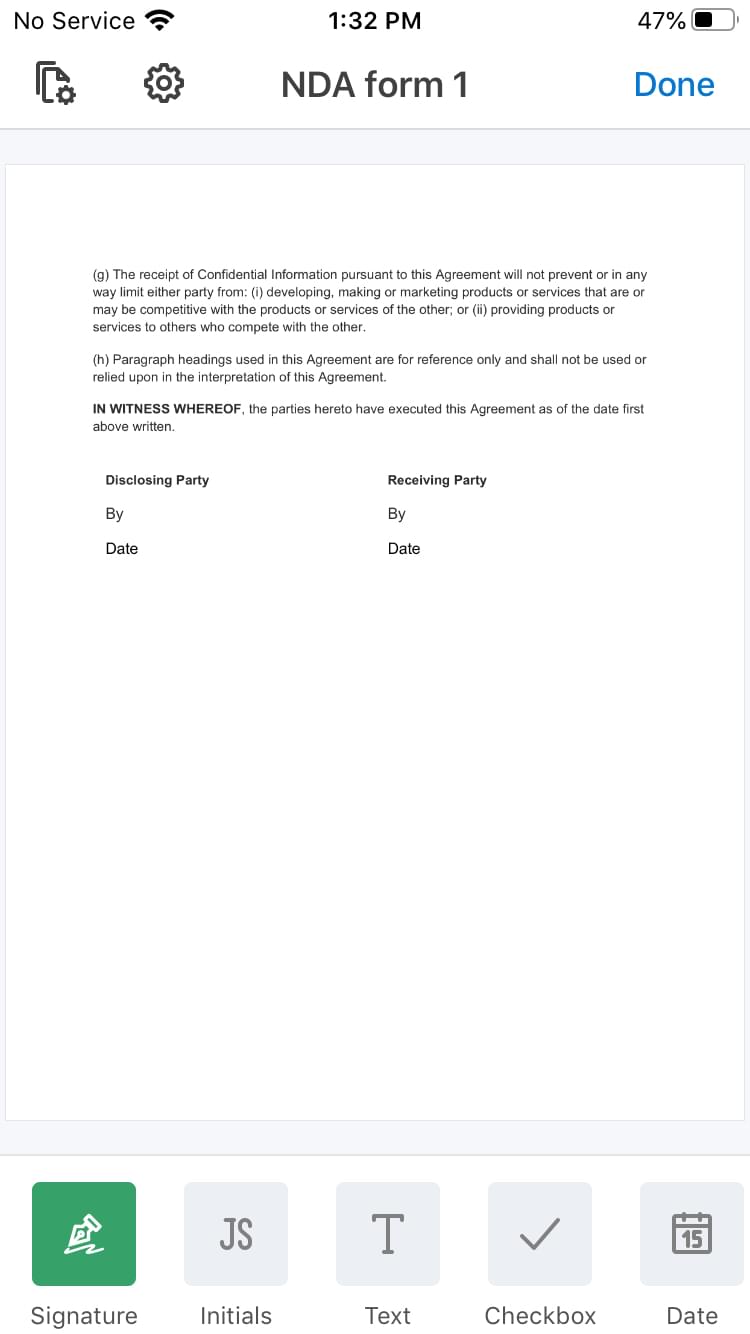
Add your eSignature in the editor

Open the document you’ve uploaded. Select Signature in the editor’s bottom toolbar and tap on the document where you need the signature to appear.
fill-guide-illustration

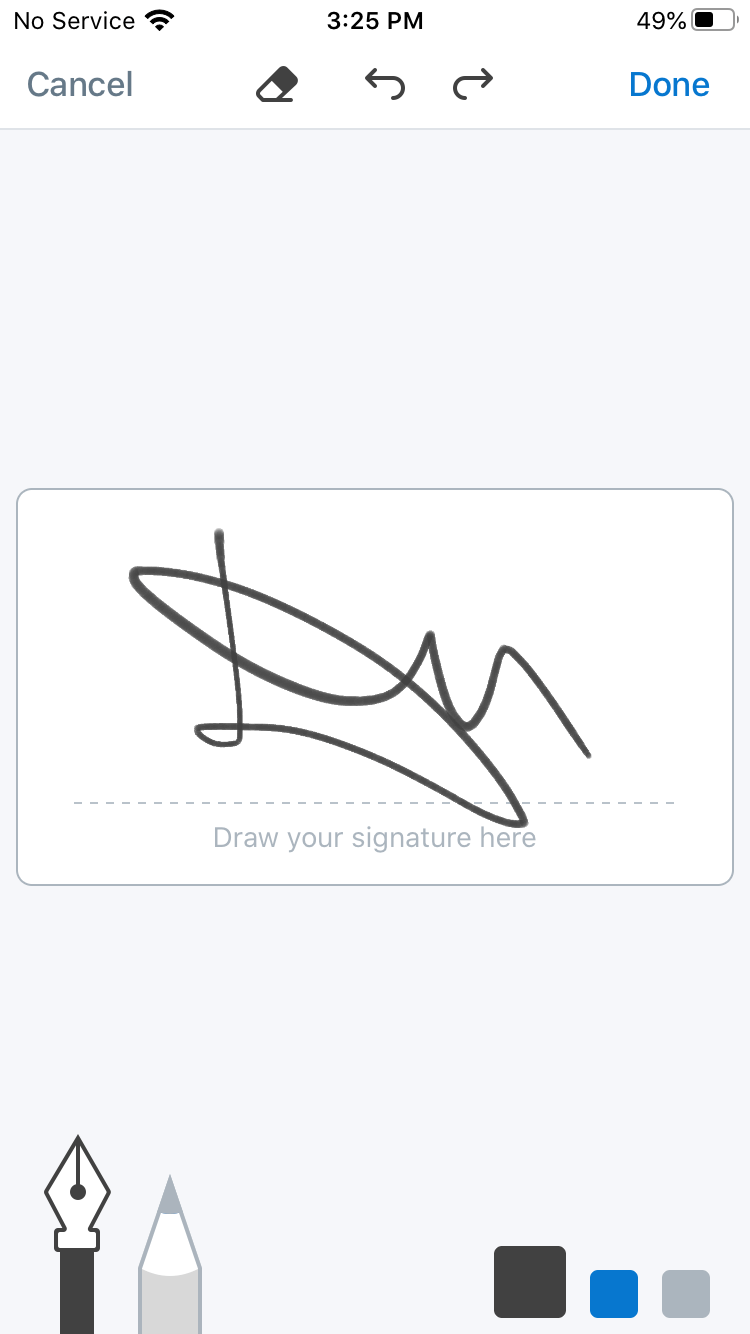
Create your electronic signature

Tap Add Signature at the bottom of the page. Then, draw your signature using the touchscreen. Once you are satisfied with the result, tap Done.
fill-guide-illustration

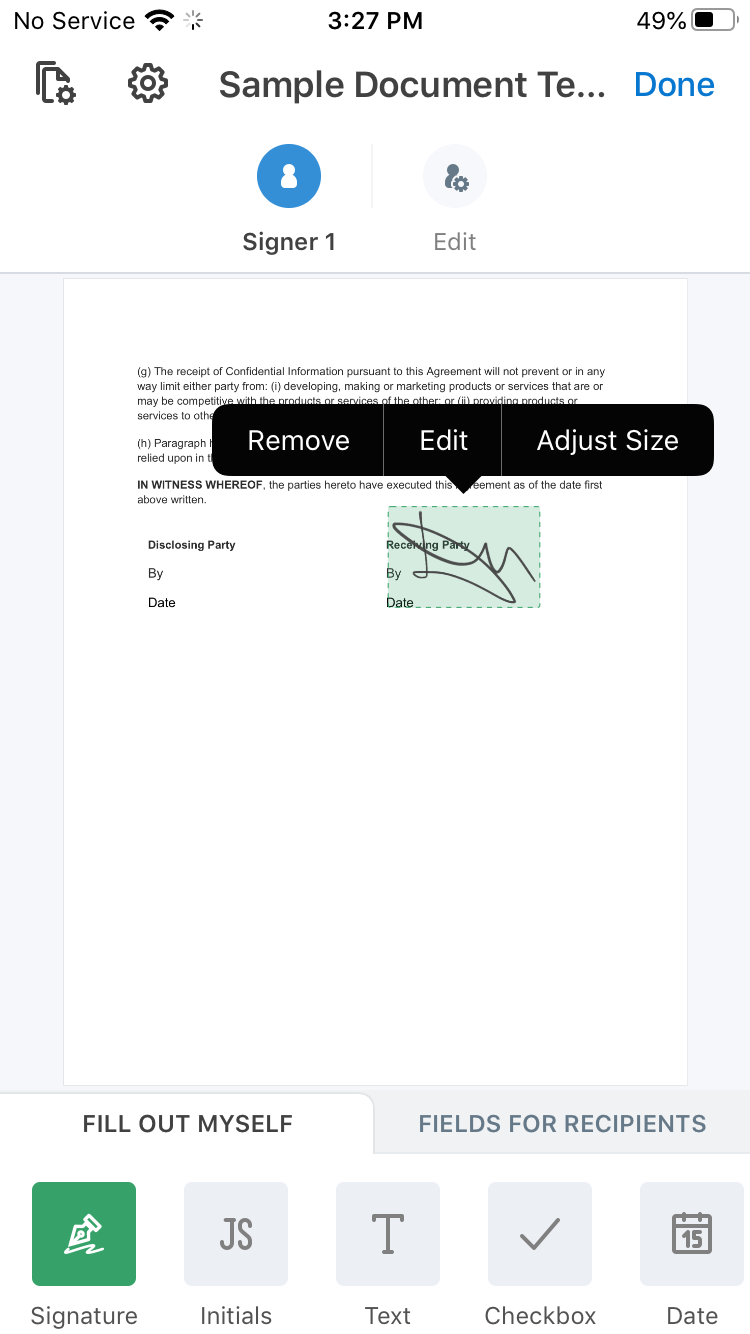
Finalize your signature

Your signature is now added to the document. Tap on the signature image to resize, edit, or remove it. Drag your signature across the page with your finger to adjust its positioning.
fill-guide-illustration

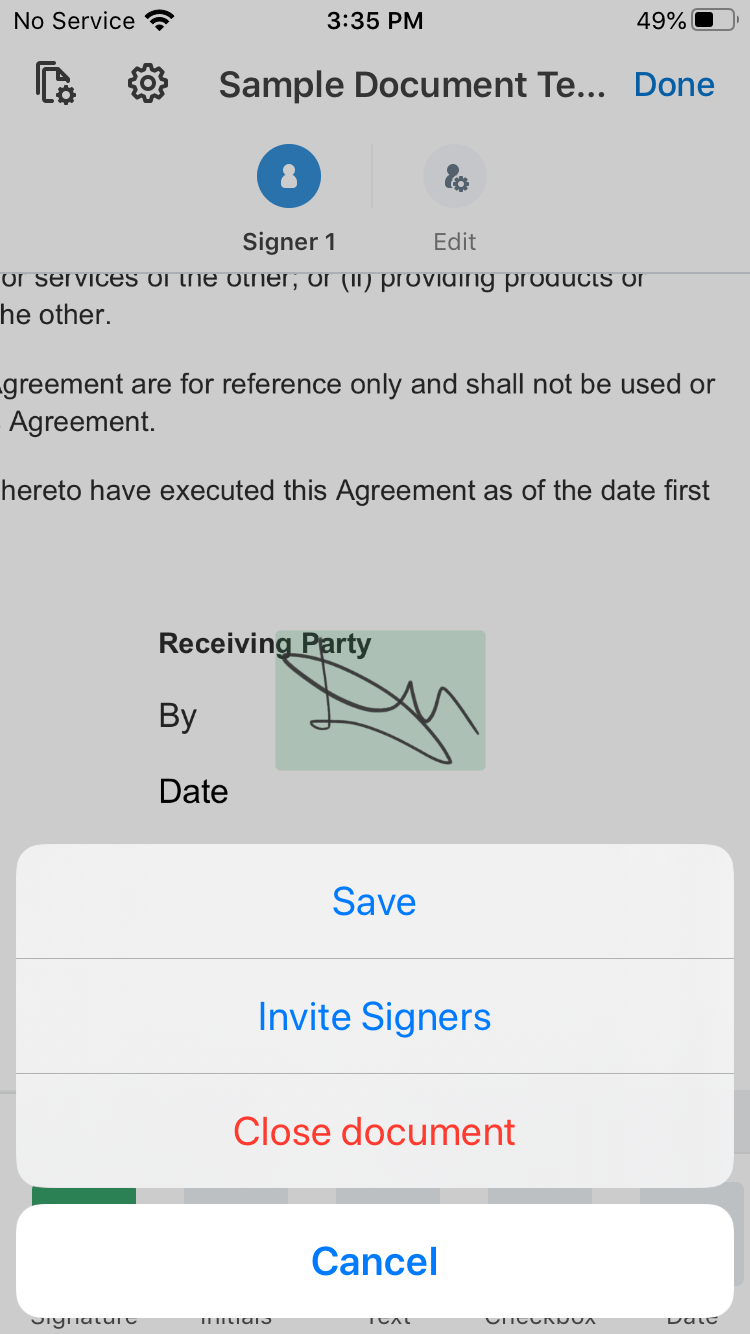
Save your changes

Once you’ve finished, tap Done > Save to save your signed document. You can then download the document, send it via email, or export it to the cloud if needed.

fill-guide-illustration
walmart logo
exonMobil logo
apple logo
comcast logo
facebook logo
FedEx logo
be ready to get more

Get legally-binding signatures now!









