Plantilla De Documento De Factura Para Banca

Simplify your invoicing process with airSlate SignNow's intuitive design and cost-effective eSigning solutions. Streamline your workflow and boost efficiency today.

Award-winning eSignature solution

What an invoice document template for banking is and why it matters

An invoice document template for banking is a standardized, reusable file designed to collect billing data, payment instructions, and required approvals in a format that meets financial and regulatory needs. Templates reduce manual entry, ensure consistent fields for payer and payee information, and embed signature and authentication steps appropriate for banking operations. For institutions, templates help enforce compliance controls, preserve audit trails, and speed reconciliation while allowing integration with accounting systems and eSignature platforms that support U.S. legal frameworks such as ESIGN and UETA.

Why banks adopt invoice templates for operational reliability

Using a dedicated invoice template minimizes input errors, ensures consistent regulatory fields, and standardizes signatures and approvals across teams to maintain faster, auditable payment processes.

Why banks adopt invoice templates for operational reliability

Common invoicing challenges in banking

  • Manual invoice workflows cause delays and increase reconciliation errors across departments and branches.
  • Inconsistent document fields create compliance gaps and complicate audit reviews during examinations.
  • Verifying signer identity and signature validity adds friction to time-sensitive treasury transactions.
  • Managing retention, backups, and legal holds for invoices requires precise policy enforcement and tracking.

Typical users and their responsibilities

Treasury Manager

A Treasury Manager configures invoice templates to include payment routing numbers, approval thresholds, and multi-signer workflows, ensuring high-value disbursements meet internal controls and external audit requirements while minimizing settlement delays.

Branch Operations

Branch Operations staff use templates for customer billings and fee notices, following preset fields and signature requirements so that branch-level transactions remain consistent and traceable for centralized reporting and compliance.

Teams and roles that rely on invoice templates

Banking operations, treasury teams, corporate payments staff, and compliance officers commonly use templates to standardize invoicing and approvals.

  • Treasury and cash management teams handling outbound payments and reconciliations.
  • Compliance and audit groups enforcing regulatory and recordkeeping requirements.
  • Accounts payable teams managing vendor invoices and payment authorizations.

Smaller banks and fintech units also adopt templates for vendor payments and loan servicing to maintain controls and reduce processing time.

Advanced capabilities for enterprise banking templates

Large institutions benefit from advanced template features that support scale, integrations, and stricter controls across distributed teams and systems.

API Integration

APIs let templates integrate directly with core banking, ERP, and treasury systems for automated population of invoice fields and synchronized status updates between platforms.


Role-Based Templates

Templates can be restricted to specific departments or roles, ensuring only authorized teams use templates appropriate to their function and maximum approval thresholds.

Advanced Authentication

Support for multi-factor and certificate-based authentication aligns signer identity assurance with transaction risk and internal verification policies.

Batch Processing

Batch or Bulk Send supports high-volume distributions while retaining per-document audit records and individualized signing flows for each recipient.

Integration Connectors

Prebuilt connectors for common CRMs, document storage, and accounting tools accelerate template adoption without heavy custom development.

Granular Audit Controls

Fine-grained logging and exportable audit reports facilitate regulator responses and internal compliance monitoring.

be ready to get more

Choose a better solution

Essential features to include in banking invoice templates

Choose template features that support compliance, identity verification, auditability, and efficient bulk processing for common banking invoice scenarios.

Templates

Reusable templates standardize invoice layout, required regulatory fields, and signature placements, reducing manual errors while ensuring every document includes the data needed for audits and reconciliations.

Conditional Fields

Conditional fields show or hide sections based on transaction type or amount, enabling templates to adapt to retail payments, corporate disbursements, and escrow instructions without multiple separate forms.

Bulk Send

Bulk Send enables distributing identical invoice requests to many recipients with individual tracking, useful for fee notices, mass reimbursements, or recurring vendor payments while preserving per-recipient audit records.

Audit Trail

A tamper-evident audit trail records every event — view, sign, authentication check — providing a chronological compliance record required for internal controls and regulator inquiries.
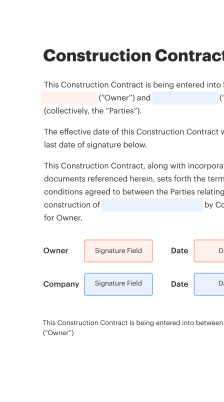
How an invoice template flows through banking processes

Templates move from creation to signature to archiving with defined handoffs to ensure accountability and traceability.

  • Create: Design template with required fields.
  • Route: Assign signing order and recipients.
  • Authenticate: Verify identities during signing.
  • Archive: Store signed records with audit trail.
Collect signatures
24x
faster
Reduce costs by
$30
per document
Save up to
40h
per employee / month

Quick steps to set up an invoice template for banking

A concise setup sequence helps create a compliant invoice template that integrates with signing and audit controls.

  • 01
    Define fields: List payer, payee, and invoice details.
  • 02
    Add controls: Include required approvals and thresholds.
  • 03
    Set authentication: Choose signer identity verification.
  • 04
    Save template: Publish and assign to teams.

Detailed signing workflow for an invoice template

Map each step in the signing process to ensure predictable routing, authentication, and final archival of signed invoices.

01

Draft:

Populate invoice fields from systems.
02

Review:

Internal compliance or legal checks.
03

Route:

Send in defined signing order.
04

Authenticate:

Run identity verification steps.
05

Sign:

Capture electronic signatures.
06

Archive:

Store signed copies with logs.
be ready to get more

Why choose airSlate SignNow

  • Free 7-day trial. Choose the plan you need and try it risk-free.
  • Honest pricing for full-featured plans. airSlate SignNow offers subscription plans with no overages or hidden fees at renewal.
  • Enterprise-grade security. airSlate SignNow helps you comply with global security standards.
illustrations signature

Recommended default workflow settings for banking invoice templates

Default workflow configurations balance security, compliance, and timely processing for signed invoices in banking environments.

Feature Configuration
Reminder Frequency for Invoice Signers 48 hours
Signing Order and Approval Routing Sequential
Template Auto-Population Source Core system API
Document Retention and Archival Policy Seven years
Audit Trail and Export Settings Enabled and exportable

Supported platforms for invoice templates and signing

Ensure templates and signing workflows work across common platforms used in banking operations before broad rollout.

  • Desktop: Windows and macOS support
  • Mobile: iOS and Android apps
  • Browsers: Chrome, Edge, Safari compatibility

Confirm browser versions and mobile OS minimums, and validate integrations with internal systems to avoid interruptions for front-line staff and remote approvers.

Security controls commonly applied to invoice templates

Encryption at rest: AES-256 encryption
Encryption in transit: TLS 1.2+ transport
Access controls: Role-based permissions
Authentication methods: Multi-factor options
Document watermarking: Visible identifiers
Audit logging: Immutable event records

Real-world banking uses for invoice templates

Two practical examples show how templates streamline payments, approval routing, and audit readiness in different banking contexts.

Corporate Lending Disbursements

Loan servicing teams use an invoice template to capture borrower ID, loan number, disbursement amount, and required covenants in a single document

  • Template fields enforce signature sequencing for credit officers and legal review
  • This reduces manual entry errors and speeds approval for time-sensitive disbursements

Resulting in faster fund release and clearer audit evidence for examinations.

Vendor Payment and Reimbursement

Accounts payable adopts a template to collect vendor remit details, W-9 or tax data references, invoice line items, and approval checkboxes in one standardized file

  • Automated fields validate account numbers and amounts before routing
  • This prevents duplicate payments and catches mismatched GL coding early

Resulting in fewer payment reversals and streamlined month-end reconciliation.

Best practices for secure, compliant invoice templates

Apply consistent controls and periodic reviews to keep invoice templates accurate, secure, and aligned with policy and regulatory expectations.

Include mandatory regulatory fields and versioning
Ensure templates contain required identifiers such as tax IDs, routing/account details, and a template version number. Maintain version history and approve changes through a controlled process to support audits and regulatory reviews.
Require appropriate signer authentication levels
Map authentication methods to transaction risk: simple MFA for low‑value items, stricter identity verification for high‑value transfers. Document authentication choices to demonstrate due diligence in compliance records.
Limit access with role-based permissions and approvals
Assign template editing and sending rights only to authorized staff. Use approval workflows with segregation of duties to prevent single-person control over invoice issuance and payments.
Schedule regular template reviews and retention audits
Review templates quarterly or when regulations change, and reconcile retention settings against institutional recordkeeping policies to ensure documents remain accessible and defensible during examinations.

FAQs about invoice document template for banking

Answers to common questions about template setup, signature validity, compliance, and integration to help administrators and users resolve typical issues.

Feature availability: signNow compared with other major providers

A concise availability comparison for core capabilities important to banking invoice templates.

Feature Availability Across eSignature Providers signNow (Featured) DocuSign Adobe Acrobat Sign
Supports templates
Mobile app availability
Banking-specific controls Advanced controls Limited
Detailed audit trails Comprehensive Comprehensive Comprehensive
be ready to get more

Get legally-binding signatures now!

Typical process milestones and timing for invoice templates

Identify timing expectations for key stages of an invoice lifecycle to set SLAs and monitor performance.

01

Template creation and approval

1–2 business days

02

Initial routing to approvers

Same day send

03

Signer response target

2–5 business days

04

Reminders and escalations

Every 48 hours

05

Final signature capture

Within SLA window

06

Archival and backup

Immediate after signing

07

Periodic compliance review

Quarterly cycle

08

Retention policy enforcement

Automated per schedule

Retention, review, and retention-related deadlines

Define clear timelines for template review, document retention, and legal holds tailored to banking requirements and records policies.

Invoice record retention period:

Minimum seven years retention

Template policy review schedule:

Quarterly reviews

Audit log preservation timeframe:

Seven years or longer

Legal hold activation window:

Immediate upon notice

Periodic access rights review:

Annual permission audit

Regulatory and operational risks to avoid

Regulatory fines: Monetary penalties
Data breaches: Loss of customer data
Failed audits: Compliance findings
Payment errors: Incorrect transfers
Reputational harm: Customer trust loss
Record retention gaps: Legal exposure

Pricing and plan comparison for eSignature providers used in banking

Overview of typical entry and business-tier pricing and feature focus for selected eSignature providers relevant to financial services teams.

Plan and Typical Pricing signNow (Featured) DocuSign Adobe Acrobat Sign Dropbox Sign PandaDoc
Entry-level plan and price signNow Business: $8 per user/month (estimated) DocuSign Personal: $10 per user/month Adobe Standard: $12.99 per user/month Dropbox Sign Essentials: $8 per user/month PandaDoc Essentials: $19 per user/month
Business-tier capabilities overview signNow Business: Templates, Bulk Send, API access DocuSign Business: Advanced workflows, integrations Adobe Sign Business: Enterprise integrations, Adobe ecosystem Dropbox Sign Advanced: Simple eSign and APIs PandaDoc Business: Document automation and CRM focus
API access and limits signNow: Included with business plans, scalable calls DocuSign: API available, tiered limits Adobe Sign: API access with plans Dropbox Sign: API available PandaDoc: API with paid tiers
Bulk sending and mass distribution signNow: Bulk Send included on business plans DocuSign: Bulk features available Adobe Sign: Bulk tools available Dropbox Sign: Bulk via APIs PandaDoc: Batch sends via workflows
Enterprise compliance and support signNow: HIPAA and enterprise support options DocuSign: Extensive compliance and enterprise support Adobe Sign: Enterprise-grade compliance Dropbox Sign: Business support available PandaDoc: Enterprise packages
walmart logo
exonMobil logo
apple logo
comcast logo
facebook logo
FedEx logo
be ready to get more

Get legally-binding signatures now!