Invoice Receipt Template for Purchasing | SignNow

See your invoicing process turn quick and seamless. With just a few clicks, you can complete all the required steps on your invoice receipt template for Purchasing and other crucial documents from any gadget with internet access.

Award-winning eSignature solution

What an invoice receipt template for purchasing is and why it matters

An invoice receipt template for purchasing is a standardized document used to record details of a purchased good or service, capturing vendor information, line items, quantities, prices, taxes, payment method, and receipt confirmation. Organizations use templates to ensure consistent recordkeeping, reduce data entry errors, and meet accounting and audit requirements. Digital templates can include fillable fields and validation to speed processing, while integrated eSignature or approval steps confirm receipt and acceptance. Properly designed templates support reconciliation, vendor communication, and retention policies for compliance.

Why using a template improves purchasing accuracy

A standard invoice receipt template for purchasing reduces manual errors, speeds reconciliation, and ensures consistent vendor records across teams.

Why using a template improves purchasing accuracy

Common challenges when managing purchase receipts

  • Inconsistent formats across vendors cause extra manual processing and slow approvals.
  • Missing or incomplete receipt fields lead to accounting mismatches and delayed reconciliations.
  • Paper receipts risk loss, require scanning, and complicate secure storage and retention.
  • Lack of audit trails makes it hard to prove receipt authenticity during compliance reviews.

Representative users and sample roles

Procurement Manager

A procurement manager uses the invoice receipt template for purchasing to verify goods receipt against POs, capture vendor delivery confirmations, and coordinate resolution of quantity or quality discrepancies with vendors and internal stakeholders.

Accounts Payable Specialist

An accounts payable specialist uses the template to validate invoice line items, apply tax and discount rules, schedule payments, and ensure documentation meets internal control and audit requirements before remittance.

Teams and roles that typically use invoice receipt templates

  • Procurement teams use templates to confirm order fulfillment and match purchase orders to receipts.
  • Accounts payable teams use receipts to validate invoices and clear vendor payments.
  • Receiving and warehouse staff use receipts to confirm quantities and note discrepancies.

Consistent use across these roles improves accuracy, speeds audit preparation, and creates a single source of truth for purchase transactions.

Advanced template features to consider

For larger organizations, adding automation, integrations, and controls to receipt templates can significantly reduce manual work and improve compliance.

Conditional Logic

Hide or show fields based on purchase type, vendor, or amount to streamline the user experience and enforce required data for specific categories of purchases.


Optical Character Recognition

Scan and auto-extract data from paper receipts or PDFs to prefill the template and reduce manual entry for high-volume receiving operations.

Bulk Processing

Process multiple receipts or delivery confirmations in a single workflow to support batch receiving from large shipments or recurring vendor deliveries.

Role-Based Approvals

Route receipts for signature based on amount thresholds and organizational hierarchy to ensure appropriate stewardship and control over approvals.

System Integrations

Connect templates to ERP, procurement, and inventory systems for real-time matching, automatic posting, and inventory updates upon receipt confirmation.

Policy Enforcement

Embed compliance checks and policy reminders within the template to flag nonconforming purchases and prevent improper approvals at the point of receipt.

be ready to get more

Choose a better solution

Essential features for an effective purchasing receipt template

Select template and platform features that streamline data capture, ensure accuracy, and integrate with accounting systems for fast reconciliation.

Fillable Fields

Dynamic, required fields for vendor, PO, item lines, tax, shipping, and totals reduce errors and allow conditional logic to hide or show sections based on purchase type.

Automated Calculations

Built-in tax and discount calculations and line-item summaries remove manual math, ensure consistent totals, and flag mismatches between invoice and receipt amounts for faster resolution.

Approval & eSignature

Integrated signature fields and approval routing capture receiving confirmation and manager sign-off, creating an auditable acceptance record tied to the receipt.

Accounting Integrations

Connect templates to accounting or ERP systems to push receipt data, auto-match to purchase orders, and reduce manual posting and reconciliation work.
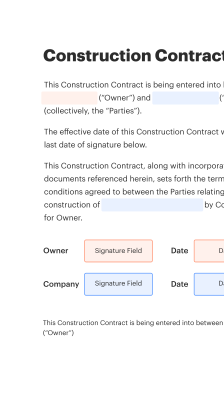
How a digital invoice receipt template typically flows

A digital template captures purchase details, routes for validation or signature, and stores an auditable copy for accounting and retention.

  • Capture: Fill fields or import PO and vendor data.
  • Validate: Automatic checks for totals and required fields.
  • Approve: Route to approver or receiving clerk for signature.
  • Store: Save final receipt with audit trail.
Collect signatures
24x
faster
Reduce costs by
$30
per document
Save up to
40h
per employee / month

Quick setup: create a reusable receipt template

Follow these core steps to create a consistent invoice receipt template for purchasing that supports approvals and auditability.

  • 01
    Define Fields: List vendor, PO number, date, line items, totals.
  • 02
    Add Validation: Require numeric fields and tax calculations.
  • 03
    Include Signatures: Add signature and date fields for confirmation.
  • 04
    Save Template: Store as reusable template in system.

Step-by-step: completing an invoice receipt template

A clear sequence helps receiving staff complete the template correctly and hand off to accounts payable.

01

Step 1:

Confirm PO and vendor details match shipment.
02

Step 2:

Record quantities and any damage or discrepancies.
03

Step 3:

Enter line-item pricing and calculate totals.
04

Step 4:

Attach any supporting delivery notes or packing slips.
05

Step 5:

Collect signature from receiving staff or manager.
06

Step 6:

Submit the finalized receipt to accounts payable.
be ready to get more

Why choose airSlate SignNow

  • Free 7-day trial. Choose the plan you need and try it risk-free.
  • Honest pricing for full-featured plans. airSlate SignNow offers subscription plans with no overages or hidden fees at renewal.
  • Enterprise-grade security. airSlate SignNow helps you comply with global security standards.
illustrations signature

Recommended workflow settings for automated receipt processing

Configure these workflow settings to standardize receipt routing, reminders, and automations for timely processing.

Workflow Setting Name and Purpose Default configuration for this workflow
Automatic Reminder Email Frequency Interval 48 hours after initial send
Approval Thresholds by Amount and Role Managers approve above $1,000
Auto-Match Tolerance for PO Reconciliation Allow 2% price variance
Attachment Requirements for High-Value Receipts Require photo of packing slip
Finalization and Archival Trigger Archive after AP posts payment

Device and platform considerations for filling receipts

  • Supported Browsers: Current Chrome, Edge, Safari
  • Mobile Support: iOS and Android apps available
  • Offline Access: Local saving for delayed sync

Test templates on the range of devices used in your receiving environments, validate touch-friendly controls for mobile capture, and confirm offline behavior before wide deployment to avoid data gaps.

Core security and protection controls

Access Controls: Role-based user access
Encryption: TLS in transit, AES at rest
Audit Logging: Immutable activity trails
Document Expiration: Time-based access limits
Two-Factor Authentication: Optional MFA for users
Data Segmentation: Tenant and folder isolation

Industry scenarios using invoice receipt templates

Below are examples showing how different organizations apply invoice receipt templates for purchasing in practical settings to improve speed and compliance.

Retail Receiving

A regional retailer uses an invoice receipt template for purchasing to capture shipment details at receiving docks and log damaged units for vendor claims

  • Template includes SKU-level line items and quantity checks
  • This reduces mismatches during monthly reconciliation

Resulting in faster vendor credits and fewer inventory discrepancies.

Healthcare Supplies

A hospital supply chain team standardizes an invoice receipt template for purchasing to record lot numbers and expiration dates for medical supplies

  • Template enforces required clinical fields and receiving signatures
  • That ensures traceability and supports recall processes

Leading to improved patient safety and clearer compliance documentation.

Best practices for secure, accurate purchase receipts

Adopt standards and controls to make invoice receipt templates reliable, auditable, and simple to use across teams.

Use standardized, mandatory data fields across templates
Design templates to require core fields such as vendor tax ID, PO number, receiving date, and signature to ensure documentation is consistent and complete for accounting and audit workflows.
Enforce validation and conditional logic for accuracy
Apply field validation for numeric values, conditional visibility for tax or discount fields, and automatic calculations to reduce manual corrections and speed approval cycles.
Retain secure, versioned copies with full audit trails
Store finalized receipts in encrypted cloud storage with immutable logs of who viewed, edited, or signed documents to support audits and compliance with data retention policies.
Train staff and centralize template management
Provide simple user instructions, maintain a single library of approved templates, and limit edit permissions to administrators to ensure consistent use and reduce unauthorized changes.

FAQs about using an invoice receipt template for purchasing

Answers to common questions about template setup, signing, storage, and integrations to help reduce setup friction and maintain compliance.

Feature availability comparison for common eSignature vendors

A concise comparison of key capabilities related to invoice receipt templates and signing across leading eSignature providers.

Verification Criteria and Feature Availability signNow (Recommended) DocuSign Adobe Sign
Audit Trail
Mobile App Signing
Bulk Send
API Access
be ready to get more

Get legally-binding signatures now!

Retention and timing considerations for receipts

Implement retention schedules and deadline steps to meet accounting, tax, and audit requirements while minimizing storage costs.

Minimum Retention Period:

Seven years for tax-related documents in many cases

Immediate Storage Requirement:

Store finalized receipt within 48 hours

Dispute Window:

Preserve receiving notes during 90-day vendor dispute period

Archival Schedule:

Move older records to cold storage after two years

Destruction Policy:

Securely delete after retention period expires

Risks and penalties for poor receipt handling

Accounting Errors: Misstated financials
Regulatory Fines: Compliance penalties
Lost Records: Missing evidence
Payment Delays: Vendor disputes
Audit Failures: Negative findings
Data Breach Exposure: Confidentiality loss

Pricing and plan highlights for signature platforms

Representative starter pricing, support, and enterprise provisions for providers commonly used with invoice receipt templates; figures and features reflect typical plan entry points.

Plan and Pricing Comparison Matrix signNow (Recommended) DocuSign Adobe Sign PandaDoc Dropbox Sign
Starting Monthly Price Individual plan starting from $8 per user per month Personal/Standard plans from $10 to $25 monthly Plans starting at approximately $9.99 per month Business plans beginning near $19 per user monthly Basic paid plans from $15 per user per month
Free Tier Availability Limited free trial and free plan for basic use Free trial only Free trial available Free trial and limited free tier Free plan with limited features
API Included API available on paid plans and higher tiers API access on enterprise and developer plans API access with subscription API available on business plans API available on paid plans
HIPAA/BAA Options HIPAA support available via BAA on eligible plans BAA available for eligible enterprise customers HIPAA and BAA available for enterprise agreements BAA available via enterprise agreements BAA available upon request for qualifying accounts
Phone and Enterprise Support Paid plans include email and chat; enterprise adds phone support and dedicated success Enterprise plans include phone support and customer success Enterprise support available with SLA options Phone and dedicated support with enterprise plans Enterprise-level support and onboarding available
walmart logo
exonMobil logo
apple logo
comcast logo
facebook logo
FedEx logo
be ready to get more

Get legally-binding signatures now!