Mobile responsiveness
Ensures required field indicators, input areas, and validations render correctly on phones and tablets so signers can complete mandatory fields without layout issues or input difficulties.




Requiring form fields improves data quality and prevents incomplete records, which saves time on follow-ups and reduces downstream processing errors while supporting regulatory recordkeeping obligations.

An HR Manager sets required fields for onboarding packets, tax documents, and policy acknowledgements. They ensure all mandatory data is provided before employees are added to payroll or benefits systems, reducing manual follow-ups and ensuring consistent compliance with internal procedures.
A Compliance Officer configures required fields for consent, disclosures, and regulatory checklists. They coordinate validation rules and audit logging so required data is captured and retained in a defensible record for regulatory review and internal audits.
Organizations with compliance needs and standardized processes commonly require form fields to guarantee complete, auditable data capture.
Required fields are practical across teams that need accurate records; thoughtful configuration reduces signer friction while preserving process integrity.
Ensures required field indicators, input areas, and validations render correctly on phones and tablets so signers can complete mandatory fields without layout issues or input difficulties.
Captures who completed which required fields and when, producing a tamper-evident log that supports compliance, dispute resolution, and internal quality controls.
Prefill required fields from CRM, HRIS, or form data to minimize signer effort and prevent blocking when data is already available from integrated systems.
Assign required fields to specific signer roles so only the intended party must complete the field, avoiding unnecessary requirements for other participants.
When sending many documents, required fields remain enforced while templates and batch sends maintain consistency across recipients and reduce manual setup.
Combine required fields with routing rules so documents progress only when mandatory fields are completed and approvals are satisfied, ensuring process integrity.
Validation rules enforce specific formats and value ranges for required fields, such as numeric only, date formats, and regular expressions, reducing data entry errors and improving downstream processing reliability.
Conditional logic lets you make a field required only when related answers meet defined criteria, so signers face fewer mandatory inputs and only supply information relevant to their situation.
Templates with pre-marked required fields speed document preparation and ensure consistency across repetitive forms, reducing setup time and the risk of forgetting critical required inputs.
APIs allow developers to set or clear required flags programmatically, prefill fields, and integrate required-field logic into other systems to maintain consistent data collection across platforms.

| Feature | Configuration |
|---|---|
| Required Field Flag | Enabled |
| Conditional Logic Rule | When checkbox true |
| Validation Pattern | Regex or format |
| Prefill Mapping | External fields |
| Reminder Policy | 48 hours |
make form field required can be configured across web, desktop, and mobile interfaces, though feature availability may vary by client or version.
Confirm the specific client version supports conditional rules and API-driven field settings; administer templates and complex logic from the web console while signing and minor edits are supported in mobile apps.
New employee onboarding requires full contact and tax data to enroll benefits immediately
Resulting in faster enrollment and fewer payroll delays.
A small business loan application collects applicant details, revenue figures, and signature authorizations for underwriting
Leading to shorter underwriting cycles and clearer audit trails.
| Criteria | signNow (Recommended) | DocuSign | Adobe Sign |
|---|---|---|---|
| Set required fields | |||
| Conditional requirements | Advanced rules | ||
| API field control | |||
| HIPAA support | BAA available | BAA available | BAA available |
| Plan/Tier | signNow (Recommended) | DocuSign | Adobe Sign | HelloSign | PandaDoc |
|---|---|---|---|---|---|
| Starting monthly price | $8 | $10 | $14.99 | $15 | $19 |
| Team plan includes | Templates, API | Advanced workflows | Enterprise templates | Team templates | CRM integration |
| Required-field support | Yes | Yes | Yes | Yes | Yes |
| API access | Available | Available | Available | Available | Available |
| Enterprise controls | SSO, BAA | SSO, compliance | SSO, compliance | SSO | SSO, advanced |
Receiving a filled-out form only to discover that some of its boxes were left blank can cause costly delays in your document processes. To avoid this, make your fields required with the click of a button.
Open your document in the editor and insert fillable fields using the toolbar on the left. Select the type of field you want to add and then click on the document where you want the field to appear. Adjust the positioning and size of your fields and assign roles as needed.
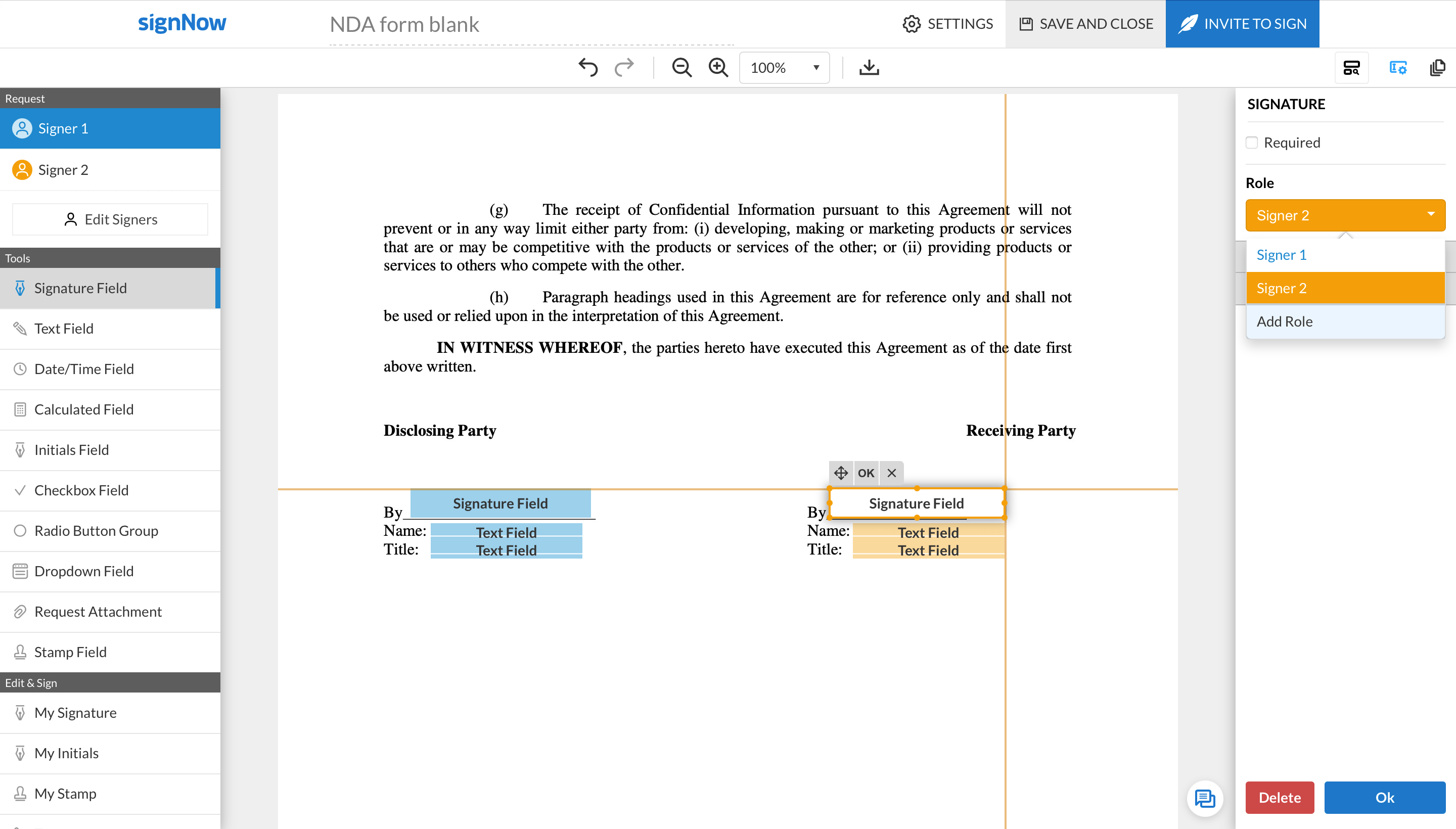
Select any field in your document that you want to make required and check the Required box at the top of the right-hand sidebar. Repeat the same process for each field that needs to be made required.
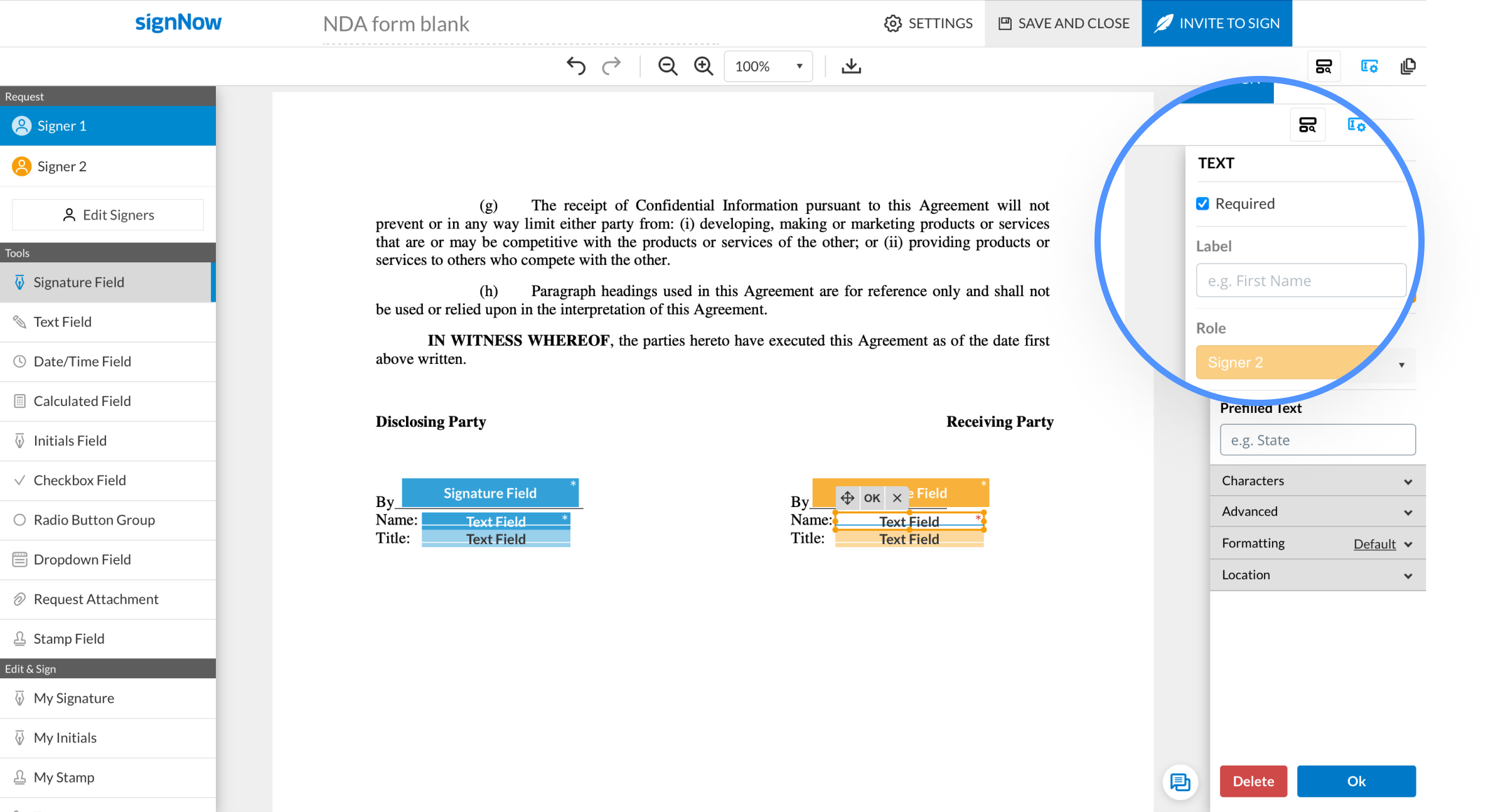
You will notice that required fields are highlighted in darker colors than optional fields. This makes it easier to distinguish between the two.











