Notarize Digital Signature with SignNow

Remove paperwork and automate document processing for more performance and limitless possibilities. Explore a greater way of doing business with airSlate SignNow.

Award-winning eSignature solution

What it means to notarize a digital signature

Notarizing a digital signature combines an electronic signature with a formal notarial act performed under applicable U.S. law. The process typically includes identity proofing, a notary acknowledgment or jurat, and a tamper-evident record attached to the signed document. State remote online notarization (RON) statutes and federal frameworks such as ESIGN and UETA determine legal effect. For regulated sectors, HIPAA and FERPA considerations can apply to underlying document handling. Platforms like signNow support secure eSignature workflows and can be configured to meet many state RON and compliance requirements.

Why notarize a digital signature for your documents

Notarizing electronically increases enforceability, reduces in-person overhead, and creates a clear audit record. It helps streamline closings and regulated transactions while maintaining evidence required for courts and regulators in jurisdictions that accept remote notarization.

Why notarize a digital signature for your documents

Common challenges with notarizing digital signatures

  • State-by-state variation in RON rules complicates a single national process and may require state-specific configurations or in-person alternatives.
  • Identity-proofing and credential verification require reliable third-party providers and add complexity to signing flows and cost structures.
  • Technical integration with existing document systems and CRMs can require API work and mapping of notarial fields and certificates.
  • Signer unfamiliarity and access issues can slow adoption; broadband, device support, and clear instructions are essential for success.

Representative user profiles for notarized eSignatures

Closing Agent

A closing agent coordinates remote notarization sessions for buyers and sellers, verifies identity documents, arranges the notary’s presence (remote or in-person), and ensures the final notarized package contains the required certificate and audit trail for title recording and lender review.

Corporate Counsel

In-house counsel uses notarized digital signatures to finalize corporate resolutions, affidavits, and international documentation, ensuring that notarial language, signer authentication, and retention policies meet regulatory and internal legal-compliance requirements.

Who typically needs to notarize digital signatures

Organizations that handle legal, financial, or property transactions commonly require notarized electronic signatures to establish formality and evidentiary weight.

  • Lenders and title companies handling loan closings and property transfer documentation.
  • Legal and corporate counsel for contracts, affidavits, and corporate authorizations.
  • Healthcare and education administrators needing verified consent or legal attestations.

Across sectors, adoption centers on workflows requiring validated signer identity, a dated notarial act, and secure long-term document retention.

Additional tools and controls for effective notarized eSignatures

Beyond the core features, these additional capabilities address scalability, governance, and integration needs for notarizing digital signatures in enterprise workflows.

Audit Trail

Detailed event logs capture timestamps, IPs, and signer steps for evidentiary support during disputes and compliance reviews.


Role Permissions

Granular account controls limit who can request notarizations, assign notaries, or export notarized packages to meet internal governance.

API Access

Programmatic endpoints allow integration of notarization flows into loan origination, HR onboarding, and case management systems for automation.

Mobile Support

Mobile-capable notarization flows and responsive signing pages enable remote participants to join sessions from tablets and smartphones.

Compliance Logging

Retention policies and exportable certificates help satisfy ESIGN, UETA, and state notarization recordkeeping obligations.

Template Controls

Template versioning and approval workflows reduce errors and ensure notarization language remains consistent and auditable across teams.

be ready to get more

Choose a better solution

Four essential features to notarize digital signature reliably

When choosing a notarization-capable eSignature workflow, focus on identity verification, audit evidence, template reuse, and secure storage to reduce friction and maintain compliance.

Identity Verification

Support for knowledge-based, document-based, and biometric verification, enabling the level of assurance required by state RON statutes and internal risk policies to validate signer identity before notarization.

Remote Notarization

Tools to schedule and conduct live notary sessions with audio/video recording, notary certificate generation, and state-specific acknowledgments so the notarial act meets jurisdictional requirements.

Template Library

Reusable notarization-ready templates that include pre-placed notarial fields and text, reducing errors and ensuring each executed package contains consistent notarial language and metadata.

Secure Archival

Long-term storage with tamper-evident seals and exportable audit trails to preserve evidentiary value and simplify later retrieval for audits or legal proceedings.
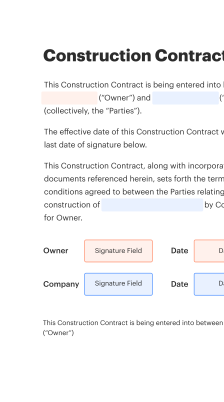
How notarizing a digital signature works in practice

This flow explains the typical stages from document creation through notarization and archival for an electronic signature that must be notarized.

  • Upload: Add document and define signers and notary.
  • Configure Fields: Place acknowledgment or jurat fields and dates.
  • Verify Identity: Run selected ID checks and MFA as needed.
  • Complete Notarization: Record the session and append notarial certificate.
Collect signatures
24x
faster
Reduce costs by
$30
per document
Save up to
40h
per employee / month

Quick step-by-step: how to notarize a digital signature

A concise four-step flow outlines what users typically do to complete a notarized electronic signature session with an eSignature platform.

  • 01
    Prepare Document: Upload files and add signature/notary fields.
  • 02
    Identify Signers: Select identity verification methods and collect ID.
  • 03
    Notary Session: Conduct remote or in-person notarization with record.
  • 04
    Finalize and Store: Attach certificate and archive signed package.

Managing audit trails when you notarize a digital signature

Maintain a robust audit process to preserve the evidentiary value of notarized electronic signatures and simplify future review or litigation.

01

Capture Timestamps:

Record each transaction time
02

Notary Certificate:

Embed formal notarial text
03

IP Addresses:

Log signer IPs
04

Session Recording:

Archive audio/video where permitted
05

Hashing:

Use cryptographic document hash
06

Export Options:

Provide PDF + audit export
be ready to get more

Why choose airSlate SignNow

  • Free 7-day trial. Choose the plan you need and try it risk-free.
  • Honest pricing for full-featured plans. airSlate SignNow offers subscription plans with no overages or hidden fees at renewal.
  • Enterprise-grade security. airSlate SignNow helps you comply with global security standards.
illustrations signature

Recommended workflow settings for notarized signature flows

Typical configuration parameters help administrators standardize notarization across teams while balancing security and user experience.

Feature Configuration
Reminder Frequency 48 hours
Notarization Mode Remote Online
Identity Verification Document check
Template Approval Admin review
Retention Policy 7 years

Device and platform requirements for notarizing digital signatures

Confirm supported platforms and minimum technical requirements before running notarization sessions to avoid interruptions and signer frustration.

  • Browser Support: Modern Chromium or Safari
  • Mobile OS: iOS 13+ and Android 8+
  • Network Needs: Stable broadband connection

Ensure notarization participants have updated browsers or supported mobile apps, reliable internet, and access to identity documents; consider providing pre-session instructions and a test connection option to reduce failed sessions.

Security controls that protect notarized digital signatures

Encryption: AES-256 at rest
Transport Security: TLS 1.2+ in transit
Tamper Seals: Document hashing applied
Audit Trail: Comprehensive event logs
Authentication: Multi-factor options available
Access Controls: Role-based permissions

Use cases: notarize digital signature in real workflows

Two practical examples show how notarizing an electronic signature improves transaction integrity and speed in regulated processes.

Real Estate Closing

A title company initiates a remote notary session for buyer and seller to sign closing documents

  • Uses multi-factor identity verification for both parties
  • Stores a timestamped notarial certificate and tamper-evident PDF

Resulting in a complete, verifiable closing package accepted by lenders and recorded with the county when required.

Loan Document Execution

A commercial lender needs notarized loan agreements across multiple states

  • Integrates identity proofing and recorded notarial acknowledgments into the loan origination flow
  • Ensures each signed document includes audit metadata and notarist information

Leading to faster funding, clearer auditability, and reduced in-person coordination overhead.

Best practices to securely notarize digital signatures

Adopt standards and process controls to minimize risk and ensure notarized electronic signatures remain legally reliable and operationally efficient.

Verify Identity with Appropriate Assurance
Select identity-proofing methods that align with the transaction risk and state RON rules. Combine document verification with multi-factor authentication and live notary confirmation where required to reduce impersonation risk.
Use Notarization-Ready Templates
Preconfigure templates with correct notarial language, signature blocks, and certificate fields to avoid ad hoc edits that could invalidate the notarial act or create inconsistencies across executed documents.
Maintain Clear Audit Trails and Exports
Ensure every notarized package includes time-stamped event logs, signer authentication records, and the notary statement. Regularly export and back up notarized records for legal and regulatory needs.
Align Retention with Legal Requirements
Define retention schedules that reflect ESIGN, UETA, state statutes, and industry rules. Implement access controls and immutable storage for notarized documents to preserve evidentiary value over time.

FAQs about how to notarize digital signature

Common questions about notarizing electronic signatures, identity checks, and legal validity in U.S. jurisdictions are addressed below.

How signNow compares on core notarization capabilities

A concise availability and capability comparison for notarization-relevant features across leading U.S. eSignature vendors.

Criteria signNow (Recommended) DocuSign Adobe Sign
Remote Notarization Supported Limited
ESIGN/UETA Compliance
API Access for Notarization
Mobile Notarization Support
be ready to get more

Get legally-binding signatures now!

Legal and operational risks when notarizing digitally

Invalid Notarization: Contract unenforceable
Statutory Fines: Regulatory penalties
Contract Disputes: Increased litigation risk
Reputational Harm: Client trust erosion
Regulatory Action: Investigations possible
Evidence Issues: Admissibility challenged

Pricing and plan highlights for notarization-capable vendors

Pricing details and plan features vary; this table summarizes typical entry points and whether notarization and API access are included or require upgrades.

Plan / Vendor signNow (Recommended) DocuSign Adobe Sign Dropbox Sign PandaDoc
Free Plan Availability Trial available Limited free trial No free tier Free tier exists Free trial only
Starting Price (monthly) $8 user/month $10 user/month $12.99 user/month $15 user/month $19 user/month
API Included Yes on paid plans Paid plans/API add-on Paid plans Paid plans Paid plans
Notarization Support Supported with configuration Supported via RON partners Limited/partner-based Limited Limited via integrations
Enterprise Capabilities Advanced admin and SSO Extensive enterprise tools Adobe Document Cloud suite Dropbox integrations Sales workflow features

Streamline complex workflows

Create, deliver, and maintain workflows of any intricacy, digitally from almost anywhere. Scalable electronic signature functionality allow you to share papers with the right people in the correct order and determine roles for every signee. Perform document workflows faster and simpler than ever before.

Automate document managing

Enhance complicated signing processes with airSlate SignNow�s powerful tools to enhance your company. Manage your automatic signature workflows to make sure they're running at peak performance with immediate notifications and alerts.

Optimize in team collaboration

Bring teams together in a safe, shared workspace. Handle documents, use form templates and notifications to deliver better cross-organization interaction. Relieve your workers from having to hang out on repeating activities so that they can center on valuable, business-vital activities.

Integrate into your existing systems

Run your assignments with industry-leading integration. Capture Salesforce, Microsoft Teams, and SharePoint all in one business stream. Connect your applications to a single system for unlimited possibilities and higher performance.

Remain compliant with market-leading data security

Feel confident knowing that your information remains secure by the latest in encryption security. airSlate SignNow is GDPR and eIDAS certified and gives you exposure into your signing experience with court-admissible audit trails. Configure user authorization and roles to manage who has access to what.


walmart logo
exonMobil logo
apple logo
comcast logo
facebook logo
FedEx logo
be ready to get more

Get legally-binding signatures now!