Logiciel De Proposition Pour Les Hautes Technologies

Empower your team to create and eSign documents effortlessly. Experience a cost-effective solution that streamlines your proposal workflow.

Award-winning eSignature solution

What proposal making software for hightech does and why it matters

Proposal making software for hightech centralizes the authoring, version control, collaboration, and electronic signing of technical proposals and sales agreements used by engineering and product teams. It streamlines repetitive sections such as technical specifications, pricing tables, and compliance statements while preserving formatting and traceability across iterations. For high-technology firms that manage complex deliverables, the software integrates with CRMs and cloud storage to reduce manual copying, maintain a single source of truth, and shorten sales cycles by enabling secure, auditable signatures and automated approval routing.

When hightech teams should adopt proposal making software

Adopting proposal making software is valuable when proposals include repeatable technical content, require multi-stakeholder approvals, or must meet regulatory controls. It reduces manual errors and accelerates time to signature while preserving compliance and auditability.

When hightech teams should adopt proposal making software

Common challenges hightech teams face without dedicated proposal tools

  • Inconsistent technical specs across proposals increase risk of delivery mismatches and rework.
  • Slow review cycles due to dispersed comments and manual consolidation of edits.
  • Difficulty enforcing compliant clauses and retention policies across varied document types.
  • Security risks from emailing unprotected drafts and storing versions in uncontrolled folders.

Typical user profiles in hightech proposal workflows

Sales Engineer

A sales engineer prepares tailored technical responses, assembles standard modules, and collaborates with product teams to confirm feasibility. They need version control, reusable content blocks, and a simple review flow to reduce time spent on administrative tasks and focus on customer engagement.

Contracts Manager

A contracts manager enforces legal language, tracks approval status, and ensures retention policies are applied. They require audit trails, role-based permissions, and easy access to past signed proposals for compliance and post-sale governance.

Which roles benefit most from proposal making software for hightech

Hightech organizations deploy proposal software across commercial, engineering, legal, and operations teams to coordinate content and approvals efficiently.

  • Sales engineers who assemble technical and pricing components for customer proposals.
  • Legal and compliance teams who standardize contract language and approve clauses.
  • Product managers and ops who verify scope, deadlines, and deliverables before sign-off.

Coordinated use across these groups improves accuracy, shortens delivery times, and ensures contractual consistency from technical scoping through signature.

Core features hightech teams rely on

Effective proposal making software combines reusable content, approval automation, integrations, and security controls tailored to technical sales cycles.

Reusable Templates

Create and manage modular templates for specifications, SOWs, and pricing to ensure consistency and reduce authoring time across proposals.


Approval Workflows

Define multistage, conditional approval paths that route proposals to engineering, product, and legal reviewers automatically based on content or value thresholds.

eSignature

Integrated electronic signature capability that supports ESIGN/UETA-compliant signatures and captures signer authentication and consent metadata.

CRM Integration

Connect proposal data with CRM records to sync customer details, opportunity stages, and proposal history for sales reporting.

Role Permissions

Granular access control and permission tiers ensure only authorized users can edit contractual clauses or finalize signatures.

Audit Trail

Immutable logs capture who viewed, edited, approved, and signed each proposal, with timestamps and IP records for compliance.

be ready to get more

Choose a better solution

Integrations that improve proposal efficiency

Integrations reduce duplicate data entry and ensure proposals reflect up-to-date customer and product information from primary systems.

Google Docs

Synchronize content blocks and export finalized proposals to Google Docs for collaborative editing, maintaining consistent formatting and version control across cloud documents.

CRM Systems

Push and pull customer, opportunity, and pricing data between the proposal tool and CRMs such as Salesforce to maintain accurate deal records and automate proposal generation workflows.

Cloud Storage

Store signed agreements and drafts in provider storage like Dropbox or Google Drive, applying retention and access policies centrally for governance.

Accounting Tools

Export pricing and contract terms to accounting systems to streamline invoicing and revenue recognition after signature and acceptance.
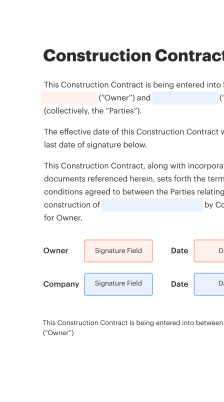
How a typical proposal moves through the system

An end-to-end flow clarifies responsibilities and preserves an auditable record from draft to signature.

  • Drafting: Assemble content from templates.
  • Internal review: Stakeholders add comments and approvals.
  • Customer delivery: Send for signature via secure link.
  • Execution: Capture eSignature and store signed file.
Collect signatures
24x
faster
Reduce costs by
$30
per document
Save up to
40h
per employee / month

Quick setup steps for proposal making software for hightech

A concise onboarding checklist helps teams configure templates, permissions, and review flows to begin producing compliant proposals quickly.

  • 01
    Template library: Create reusable technical and pricing sections.
  • 02
    User roles: Assign view, edit, and approval rights.
  • 03
    Approval flow: Define sequential or parallel approvers.
  • 04
    Signature setup: Configure eSignature authentication methods.

Audit trail and record keeping steps

Maintaining a clear audit trail protects projects and supports post-signature enforcement and compliance reviews.

01

Capture events:

Log views, edits, and approvals.
02

Timestamping:

Record precise date and time.
03

Signer identity:

Store authentication method.
04

Version history:

Keep immutable past versions.
05

Exportability:

Provide PDF and CSV exports.
06

Storage link:

Record cloud path and retention
be ready to get more

Why choose airSlate SignNow

  • Free 7-day trial. Choose the plan you need and try it risk-free.
  • Honest pricing for full-featured plans. airSlate SignNow offers subscription plans with no overages or hidden fees at renewal.
  • Enterprise-grade security. airSlate SignNow helps you comply with global security standards.
illustrations signature

Typical workflow settings to configure

Recommended technical settings align approval steps, notifications, and retention rules with corporate policies and project timelines.

Setting Name Configuration
Reminder Frequency 48 hours
Approval Timeout 7 days
Auto-escalation Rule After 3 days
Retention Period 7 years
Signature Authentication MFA required

Key security components for proposal making software

Encryption at rest: AES-256 encryption
Transport security: TLS 1.2+ required
Access controls: Role-based permissions
Authentication: Multi-factor authentication
Document redaction: Configurable redaction
Audit logging: Immutable audit trail

Hightech use cases illustrating value

Real-world scenarios show how structured proposal workflows reduce errors and speed approvals across engineering-led sales processes.

Large Systems Bid

A systems integrator used centralized proposal templates to consolidate technical specifications and vendor quotes into a single document ready for legal review.

  • Standardized module blocks reduced custom editing time per proposal.
  • Review automation cut internal approval time.

Resulting in a faster submission process and clearer contractual scope for delivery.

Software+Hardware Bundle

A hardware startup combined recurring licensing terms with device specifications into reusable templates that sales engineers could assemble on demand.

  • Integrated pricing tables ensured consistent margin calculations.
  • Built-in signature workflows captured customer acceptance promptly.

Leading to improved revenue recognition accuracy and shorter sales cycles.

Best practices for secure, accurate proposals

Applying consistent processes reduces risk and keeps proposals aligned with delivery capability and legal obligations.

Maintain modular templates and clause libraries
Build a controlled library of approved technical modules, pricing tables, and legal clauses. Each module should have an owner, version history, and clear usage guidance so authors can assemble proposals without introducing unreviewed language or inconsistent specifications.
Enforce approval gates and role separation
Require distinct review and approval steps from engineering, product management, and legal where appropriate. Use conditional routing tied to proposal value or scope changes to ensure higher-risk deals receive necessary oversight before signature.
Apply strict access controls and authentication
Limit edit and approval rights to authorized users and require multi-factor authentication for approvers and signers. Store signed records in encrypted repositories with role-based access and retention policies to meet compliance and audit needs.
Regularly review templates and retention policies
Schedule periodic reviews of templates, clauses, and document retention schedules to reflect product changes, pricing adjustments, and legal updates. Ensure archived proposals are retained according to corporate policy and regulatory requirements.

FAQs and troubleshooting for proposal making software

Answers to frequent questions and common troubleshooting steps help teams resolve issues without disrupting proposal timelines.

Feature availability comparison for hightech proposals

A compact comparison highlights core capabilities across leading eSignature and proposal vendors relevant to high-technology teams.

Feature signNow (Recommended) DocuSign Adobe Sign
Template library
Conditional approvals
HIPAA support
API available
be ready to get more

Get legally-binding signatures now!

Risks and penalties from noncompliant proposal handling

Breach exposure: Data breach fines
Contract disputes: Invalid terms risk
Regulatory fines: HIPAA or FERPA penalties
Loss of revenue: Delayed sign-offs
Reputational harm: Customer trust loss
Operational inefficiency: Manual rework costs

Pricing and plan comparison for common vendors

Pricing structures vary by feature, user counts, and enterprise controls; this table compares starting plans and selected attributes for commonly used providers.

Plan / Provider signNow (Featured) DocuSign Adobe Sign PandaDoc HelloSign
Starting plan Business plan monthly Personal/Standard monthly Individual monthly Essentials monthly Essentials monthly
Starting price $8 per user $10 per user $9.99 per user $19 per user $15 per user
Free trial Yes, 7 days Yes, 30 days Yes, 7 days Yes, 14 days Yes, 14 days
API access Included with paid plans Enterprise or paid add-on Enterprise only Paid plans include API Available on business plans
HIPAA compliance Supported with BAA Supported with BAA Supported with BAA Limited support Supported with BAA
walmart logo
exonMobil logo
apple logo
comcast logo
facebook logo
FedEx logo
be ready to get more

Get legally-binding signatures now!