Qwilr Sales Proposal Software for NPOs

Effortlessly send and eSign documents while saving time and money with our intuitive solution designed for nonprofits.

Award-winning eSignature solution

Value for nonprofit workflows

qwilr sales proposal software for npos streamlines proposal creation and distribution while integrating with eSignature providers to reduce manual handoffs, standardize content, and shorten approval cycles for grants, sponsorships, and vendor agreements.

Value for nonprofit workflows

Typical team roles and responsibilities

Program manager

Program managers prepare proposal content, ensure budget accuracy, and coordinate internal reviews; they may request signature approvals and monitor execution milestones after the agreement is signed.

Operations administrator

Operations administrators configure template libraries, manage user permissions, set retention policies, and coordinate integration with storage and CRM systems to keep proposals compliant and discoverable.

Core features nonprofits use in qwilr sales proposal software for npos

Nonprofits commonly rely on several qwilr features to produce engaging proposals while pairing with eSignature and document management tools to maintain consistency, compliance, and donor-facing clarity.

Responsive pages

qwilr’s responsive proposal pages present multimedia, line items, and impact statements in a single shareable document that adapts to desktop and mobile screens for smoother donor review and faster decision-making.


Pricing blocks

Built-in pricing and quotation blocks allow itemized budgets, optional line items, and configurable payment terms so proposals clearly present program costs and funding requests.

Custom templates

Template libraries enable consistent brand and compliance information across proposals, reducing repetitive editing while ensuring required nonprofit disclosures appear on every document.

Embedded media

Inline video, images, and charts help illustrate program outcomes and financials, improving clarity for stakeholders reviewing proposals online before signing.

Collaboration

Role-based editing and comment features support internal review cycles, keeping approvals documented and reducing versioning errors prior to signature collection.

Analytics

Built-in view and engagement metrics show which sections donors review most, helping teams refine proposals and follow up with relevant information.

be ready to get more

Choose a better solution

Integrations and templates that complement qwilr proposals

Integration points and template capabilities are important for nonprofits that need CRM linkage, cloud storage, and reusable proposal structures tied into signature capture and recordkeeping.

Google Docs

Sync content blocks from Google Docs to speed proposal drafting while keeping source documents authoritative; this helps teams reuse approved language and maintain a single source for longer narrative sections.

CRM connectors

Connect to CRMs such as Salesforce or HubSpot to prefill donor or prospect data, record proposal sends and signature events, and keep contribution or contract records aligned with constituent profiles.

Cloud storage

Integrations with cloud storage providers allow proposals and signed PDFs to be archived in designated folders, enabling centralized backup and organizational retention enforcement.

Custom templates

Create role-specific templates for grant proposals, sponsorship decks, or vendor contracts that include required nonprofit disclosures, budget tables, and signature placeholders for consistent execution.
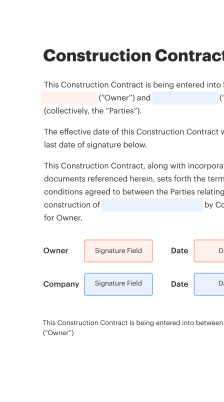
How qwilr proposals and eSigning typically flow

A standard online qwilr proposal workflow moves from template creation to recipient delivery, signing, and archival; these steps show where nonprofit-specific checks and eSignature integrations fit into the process.

  • Design: Assemble content and pricing blocks in the qwilr editor.
  • Configure: Attach signature fields and authentication requirements.
  • Send: Deliver via email link or embedded proposal URL.
  • Complete: Capture signatures, record audit trail, and store document.
Collect signatures
24x
faster
Reduce costs by
$30
per document
Save up to
40h
per employee / month

Quick setup for qwilr sales proposal software for npos

This concise setup guide outlines the basic steps nonprofit teams commonly follow to create, share, and manage qwilr sales proposal software for npos documents while integrating eSignature workflows and basic controls.

  • 01
    Create account: Register an organizational account and verify email.
  • 02
    Add team: Invite users and assign basic roles.
  • 03
    Build template: Create a reusable qwilr proposal template for consistency.
  • 04
    Enable signing: Link your eSignature provider and set authentication.

Audit trail steps for signed qwilr proposals

Maintaining a clear, accessible audit trail is essential for compliance and donor transparency; follow these steps to capture and preserve signing events and related metadata.

01

Capture timestamp:

Record signing date and time.
02

Record signer details:

Include name and email address.
03

Log IP address:

Store IP for each event.
04

Store document version:

Archive the signed PDF snapshot.
05

Retain event log:

Keep a permanent event log.
06

Exportability:

Ensure logs can be exported.
be ready to get more

Why choose airSlate SignNow

  • Free 7-day trial. Choose the plan you need and try it risk-free.
  • Honest pricing for full-featured plans. airSlate SignNow offers subscription plans with no overages or hidden fees at renewal.
  • Enterprise-grade security. airSlate SignNow helps you comply with global security standards.
illustrations signature

Recommended workflow automation and default settings

Below are practical workflow settings nonprofits often configure when combining qwilr proposals with an eSignature solution; these values balance accessibility, security, and auditability for typical organizational needs.

Setting Name Configuration
Default reminder frequency interval setting 48 hours
Automatic proposal expiration window setting 30 days
Signature authentication level requirement setting Email + SMS
Document retention period policy setting 7 years
API-triggered send workflow enabled setting Enabled

Device support and platform requirements for proposal workflows

qwilr proposals and common eSignature integrations work across modern browsers and mobile platforms, but confirming required browser versions and supported authentication methods helps avoid access issues.

  • Browser support: Recent Chrome, Firefox, Edge, Safari
  • Mobile apps: iOS and Android supported via browser
  • Offline access: Limited; best with online connection

For teams using qwilr sales proposal software for npos, verify organizational device policies and any assisted-access needs; ensure mobile responsiveness and required eSignature authentication (email, SMS, or ID verification) are tested before broad rollout.

Security controls and document protections

Transport encryption: TLS 1.2+
Data storage encryption: AES-256 at rest
Access controls: Role-based permissions
Authentication options: Email or SMS verification
Audit logging: Immutable time-stamps
Attachment protection: View and download restrictions

Practical nonprofit examples using qwilr proposals

Two representative use cases below show how qwilr proposals paired with eSignature tools can support fundraising, vendor contracting, and partner agreements for nonprofit teams.

Grant proposal with donor signature

A mid-sized charity prepared a standardized qwilr proposal template to present program goals and detailed budgets to institutional funders

  • Template included budget tables and impact metrics
  • Donor reviewed online and requested clarifications via comments

Resulting in a signed funding agreement preserved with a full audit trail and reduced turnaround time for award disbursement.

Vendor contracting for services

A regional nonprofit used qwilr to assemble scope, deliverables, and pricing in a single interactive proposal

  • The document linked to an eSignature workflow for authorized signers
  • Procurement and legal reviewers added conditional approval notes before signature

Leading to a cleared, signed contract recorded under the organization’s retention policy and faster vendor onboarding.

Best practices for secure and accurate nonprofit proposals

Follow these practical practices to reduce errors, ensure compliance, and maintain a consistent record when using qwilr proposals with eSignature solutions in nonprofit operations.

Use standardized templates with required clauses
Maintain centrally managed templates that include mandatory organizational and financial disclosures so every proposal meets internal and external compliance requirements without manual edits.
Enable appropriate signer authentication
Select authentication levels that match transaction risk; for significant agreements, require SMS codes or two-factor methods to strengthen evidence of signer identity.
Preserve signed document snapshots
Archive the final signed PDF and associated audit log immediately after completion to prevent later modification and to satisfy retention policies for audits or legal review.
Train staff on retention and privacy policies
Provide role-based guidance on how long to retain documents, how to redact or remove sensitive data, and which approvals are required before sending agreements for signature.

FAQs About qwilr sales proposal software for npos

This FAQ covers common technical and policy questions nonprofits ask when using qwilr proposals with eSignature providers and document management systems.

Digital signing versus paper: feature comparison

This quick comparison highlights common capabilities across signNow, DocuSign, and Adobe Acrobat Sign that nonprofits weigh when moving from paper to digital qwilr proposal workflows.

Solution signNow (Recommended) DocuSign Adobe Acrobat Sign
ESIGN / UETA Compliance
Audit Trail Detail Full time-stamped Full time-stamped Full time-stamped
Bulk Send Support Bulk Send Bulk Send Bulk Send
API Availability REST API REST API REST API
be ready to get more

Get legally-binding signatures now!

Recommended storage, backup, and retention timelines

Establish retention timelines that align with grant requirements, donor agreements, and regulatory obligations; use the following reference periods when defining your nonprofit’s records policy.

Short-term access period:

90 days

Operational backup retention:

1 year

Standard document retention:

7 years

Contracts and legal records:

7 to 10 years

Permanent archival considerations:

Select important records for indefinite archive

Feature and pricing tier comparison across providers

Below are commonly compared plan attributes and feature availability across five signing providers; entries reflect typical plan-level features nonprofits review when assessing total cost and capability.

Provider signNow (Recommended) DocuSign Adobe Acrobat Sign Dropbox Sign PandaDoc
Entry-level monthly price (approx.) $8 per user/month $10 per user/month $14.99 per user/month $9.99 per user/month $19 per user/month
Free or trial option Free trial available Free trial available Free trial available Free trial available Free trial available
API access on plans Available on paid plans Available on paid plans Available on paid plans Available on paid plans Available on paid plans
HIPAA-capable options Offer HIPAA-compliant configurations Offer HIPAA configurations Offer HIPAA options Limited HIPAA support Offer HIPAA with enterprise
Bulk sending and templates Included on business plans Included on business plans Included on business plans Included on team plans Included on business plans
walmart logo
exonMobil logo
apple logo
comcast logo
facebook logo
FedEx logo
be ready to get more

Get legally-binding signatures now!