Rename Sign with SignNow's Secure eSignature Solution

Eliminate paperwork and optimize digital document processing for increased efficiency and endless opportunities. Enjoy the best manner of doing business with airSlate SignNow.

Award-winning eSignature solution

What rename sign means and how it works

rename sign refers to the process of updating the signer designation or applied signature label on an electronic document after it has been created or while it is in an active signing workflow. In many eSignature platforms this can mean editing a recipient name, changing a signature field label, or renaming an applied signature image without altering the signed content. For organizations that track approvers, maintain audit trails, or correct input errors, controlled rename sign operations preserve signature integrity while keeping metadata accurate and readable for future review.

Why controlled rename sign matters for records

rename sign helps maintain accurate signer metadata, supports cleaner audit trails, and reduces administrative reconciliation when identities change or corrections are needed.

Why controlled rename sign matters for records

Common challenges around renaming signers

  • Editing signer details after completion can risk audit inconsistencies if not logged correctly.
  • Uncontrolled name changes may create legal ambiguity about who actually signed a document.
  • Bulk recipient renames are complex without proper permission roles and automation.
  • Mobile or offline editing can lead to synchronization errors if not handled securely.

Typical user roles for rename sign operations

IT Administrator

IT Administrators configure platform-level permissions and account settings that determine who can rename sign metadata. They ensure changes propagate correctly across integrations, enforce audit logging, and set retention policies to preserve evidentiary data.

Compliance Officer

Compliance Officers review and approve name-change requests tied to documents, confirm that rename actions are logged with timestamps and user IDs, and verify that changed metadata meets ESIGN and UETA recordkeeping requirements for legal admissibility.

Teams that frequently use rename sign tools

Organizations that manage changing personnel, high-volume approvals, or compliance-bound records rely on rename sign features to keep signer metadata current.

  • Human resources teams reconciling employee records and signature attributions.
  • Legal and compliance units ensuring contracts reflect correct signatory names.
  • Finance teams correcting payee or approver names on invoices and agreements.

When combined with role controls and audit logging, rename sign helps organizations maintain accuracy without undermining legal traceability.

Key tools that support accurate rename sign operations

A robust rename sign capability combines role management, granular permissions, audit logging, and integrations to keep signer metadata accurate without compromising evidence of execution.

Role Management

Granular roles let administrators restrict who can rename signer metadata, preventing unauthorized edits while allowing trusted users to correct legitimate errors.


Audit Log

Every rename action records user ID, timestamp, and before/after values so auditors can trace who made changes and why.

Field Mapping

Automatic mapping pulls signer names from HR or CRM records, reducing the need for manual renames and ensuring consistency across documents.

Template Controls

Templates lock certain recipient fields while allowing controlled edits where appropriate, balancing flexibility with standardization.

Version History

Document versions archive state before and after renames so teams can review prior signer metadata alongside signed content.

Permission Workflows

Approval steps for metadata changes require designated reviewers, adding oversight to any rename action and preserving compliance.

be ready to get more

Choose a better solution

Integrations and templates that simplify rename sign tasks

Integration with document and storage systems plus reusable templates lets teams apply consistent signer naming conventions and reduces manual corrections across common document types.

Google Docs Integration

Linking rename sign workflows to Google Docs lets users insert fields and map recipient names from document metadata. This reduces duplicate data entry and ensures signer labels reflect the latest document owner or approver information across collaborative drafts and final copies.

CRM Sync

Integrating with a CRM allows signer names and contact details to populate automatically into signature requests. When contact records update, the platform can refresh signer display names to match the CRM, helping sales and account teams keep contracts aligned with current account ownership.

Dropbox Sync

Connecting cloud storage ensures renamed signer metadata is preserved with the stored PDF and version history. That helps records teams store a single canonical file with consistent signer labeling and a clear trail of any subsequent metadata corrections.

Reusable Templates

Templates enforce consistent field assignments and recipient labels across repeated document types. Using templates with standardized signer roles reduces the need for ad hoc renames and speeds preparation for high-volume signature workflows.
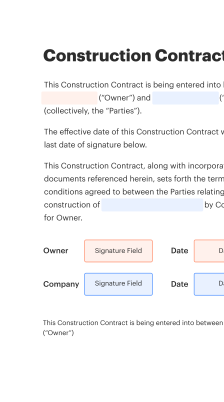
How rename sign functions during active workflows

rename sign in an active workflow requires platform support for editable recipient metadata, permission checks, and automated audit entries to document the change.

  • Identify signer: Locate recipient in workflow
  • Request edit: Initiate a controlled name change
  • Permission check: Verify role allows rename
  • Log event: Record change with timestamp
Collect signatures
24x
faster
Reduce costs by
$30
per document
Save up to
40h
per employee / month

Quick step-by-step: rename sign before sending

Follow these concise steps to set or change signer labels and ensure the correct name appears on signature fields before initiating a signing workflow.

  • 01
    Open document: Load file in the eSignature editor
  • 02
    Select recipient: Choose the signer row to edit
  • 03
    Edit name: Update display name and role
  • 04
    Save changes: Confirm and apply to fields

How to review and verify rename sign entries

Follow these verification checkpoints to confirm a rename was applied correctly and logged appropriately.

01

Check audit log:

Confirm timestamp and user
02

Validate signer identity:

Compare ID or email
03

Confirm version:

Ensure prior snapshot exists
04

Review approval notes:

Look for authorization comment
05

Sync with CRM:

Verify contact update success
06

Archive final copy:

Store signed version securely
be ready to get more

Why choose airSlate SignNow

  • Free 7-day trial. Choose the plan you need and try it risk-free.
  • Honest pricing for full-featured plans. airSlate SignNow offers subscription plans with no overages or hidden fees at renewal.
  • Enterprise-grade security. airSlate SignNow helps you comply with global security standards.
illustrations signature

Typical workflow settings for rename sign automation

Use the following configuration examples to automate controlled rename sign actions while preserving oversight and audit records.

Workflow Feature Name and Details Configuration
Reminder Frequency for Document Signers 48 hours
Automatic CRM Name Sync Schedule Daily sync
Rename Approval Requirement Manager approval
Audit Retention Period Setting 7 years
Template Lockdown Level Setting Partial lock

Platform and device considerations for rename sign

rename sign features are supported across web, mobile, and tablet clients, but certain administrative or audit functions may be limited to desktop or admin portals.

  • Web browser access: Full feature set
  • Mobile apps: Core edits supported
  • Admin console: Audit and permissions

For secure rename sign operations validate that users access the platform over encrypted connections, that mobile apps are up to date, and that administrators perform sensitive metadata edits from a controlled, logged environment to ensure reliable audit trails.

Security controls relevant to rename sign

Access control: Role-based permissions only
Authentication: Multi-factor options available
Audit logging: Immutable event records
Encryption: Data encrypted at rest
Breach detection: Activity monitoring enabled
BAA support: Available for covered data

Practical examples of rename sign in different workflows

Real-world scenarios show how rename sign reduces manual reconciliation and preserves evidentiary trails.

HR Onboarding Correction

An onboarding packet was signed with a nickname by mistake, requiring correction of the signer display name to the employee's legal name

  • Platform-level rename of the signer field preserves the original signature image and timestamp
  • Human resources avoids re-requesting signatures and maintains payroll records accurately

Resulting in consistent personnel files and minimized administrative delay while preserving audit trail integrity.

Contract Signatory Update

A contract was assigned to an approver who left the company before execution; the incoming approver needed to be reflected in signer metadata

  • The document owner updated the recipient name and role, maintaining the signature log
  • Legal reviewed the change and attached an internal note documenting authorization

Leading to clear attribution for contract enforcement and a documented internal approval record.

Best practices to ensure secure and auditable rename sign actions

Adopt these controls to minimize risk and maintain evidentiary value when renaming signer metadata across documents and systems.

Enforce role-based permissions for metadata edits
Limit rename capabilities to a small set of trusted administrators or managers. Combine permissions with approval workflows and require a documented reason for each change to preserve accountability and reduce the chance of unauthorized or erroneous edits.
Log complete before-and-after rename records
Ensure every rename action captures the original name, updated name, acting user, timestamp, and any supporting notes. Store these logs alongside the signed artifact to maintain a clear evidentiary trail for audits and disputes.
Synchronize signer data with authoritative systems
Where possible, map signer names to HR or CRM records and enable scheduled syncs. This reduces manual corrections, ensures consistency across platforms, and helps teams maintain accurate signer attribution for legal and operational purposes.
Review and retain audit logs per compliance needs
Define retention that meets ESIGN, UETA, HIPAA, or sector-specific rules. Regularly back up logs, test restore procedures, and include rename events in routine compliance reviews to verify integrity.

FAQs and troubleshooting for rename sign issues

Common questions and resolutions about renaming signer metadata, addressing synchronization, permission, and audit concerns.

Quick feature comparison: rename sign capabilities

A side-by-side check of common rename sign capabilities across two leading providers to help IT and compliance teams evaluate implementation details.

Feature Comparison Criteria and Details signNow (Featured) DocuSign
Legal admissibility
Audit trail visibility Full Full
Role-based rename controls
Bulk recipient rename Limited
be ready to get more

Get legally-binding signatures now!

Retention and backup checkpoints for renamed documents

Retention, backup, and review dates help ensure renamed signer records remain available for the required compliance window.

Document retention review schedule:

Annual compliance audit

Audit log backup frequency:

Daily incremental backup

Long-term archive timeframe:

7 years or per policy

Periodic integrity verification:

Quarterly checksum checks

Data disposal review date:

Post-retention disposal

Risks and compliance penalties linked to improper renaming

Audit gaps: Regulatory scrutiny
Contract disputes: Invalidation risk
Data breaches: Fines and exposure
HIPAA violations: Civil penalties
FERPA breaches: Educational sanctions
Recordkeeping failure: Compliance citations

Plan and feature comparison across popular eSignature platforms

High-level plan and feature availability comparison across five providers; signNow is listed first and indicated as featured for clarity in procurement discussions.

Plans and Monthly Pricing signNow (Featured) DocuSign Adobe Sign Dropbox Sign PandaDoc
Entry-level plan name Business Personal Individual Essentials Free
Free tier available Trial available Limited No Yes Yes
Template library included Yes Yes Yes Yes Yes
API access Available Available Available Available Available
Enterprise contract support Available Available Available Available Available

Make simpler complex workflows

Create, execute, and manage workflows of any complexness, digitally from near any place. Scalable eSignature capabilities enable you to exchange contracts with the right people in the proper way and define roles for each signee. Stream document workflows faster and easier than ever before.

Automate document management

Enhance complex signing procedures with airSlate SignNow�s highly effective functions to improve your company. Manage your automatic signature workflows to make sure they're running at peak efficiency with quick notices and reminders.

Enhance in team collaboration

Bring teams together in a secure, shared workspace. Handle paperwork, use form templates and notices to deliver more efficient cross-organization interaction. Relieve your staff from having to hang out on repetitive routines to enable them to concentrate on valuable, business-essential activities.

Integrate into your current framework

Work your jobs with market-leading integration. Capture Salesforce, Microsoft Teams, and SharePoint in one business stream. Hook up your software to a single environment for limitless possibilities and higher efficiency.

Remain compliant with best-in-class data safety

Feel safe knowing that your information is protected by the latest in encryption security. airSlate SignNow is GDPR and eIDAS compliant and provides you transparence into your eSigning process with court-admissible audit trails. Configure user authorization and roles to control who has access to what.


walmart logo
exonMobil logo
apple logo
comcast logo
facebook logo
FedEx logo
be ready to get more

Get legally-binding signatures now!