Require Receiver Signature with SignNow

Get rid of paper and automate digital document management for higher efficiency and countless opportunities. eSign anything from a comfort of your home, quick and professional. Explore a greater way of running your business with airSlate SignNow.

Award-winning eSignature solution

What requiring a receiver signature means

Requiring a receiver signature designates that a specific recipient must apply an electronic signature to a document before the process is considered complete. In eSignature platforms this setting enforces signing order, locks downstream actions until the required signer signs, and generates an auditable event showing who signed and when. For U.S. transactions covered by ESIGN and UETA, a required receiver signature preserves intent and consent when identity and consent capture meet legal thresholds. This control is commonly used for contracts, authorizations, and regulatory attestations.

Why require receiver signature in your workflows

Requiring a receiver signature reduces unsigned agreements, enforces signer accountability, and helps meet compliance standards by ensuring key parties explicitly sign before documents progress.

Why require receiver signature in your workflows

Common challenges when requiring receiver signatures

  • Delays when required signers are unavailable can stall downstream approvals and deadlines.
  • Incorrect recipient assignment can block the process until roles are manually corrected.
  • Overly strict authentication may frustrate signers and reduce completion rates.
  • Missing audit data or poor configuration can weaken legal defensibility of signatures.

Representative user roles for required signatures

Contract Manager

A Contract Manager configures required signer roles, sets signing order, and reviews audit trails to verify legal acceptance. They coordinate templates, reminders, and retention policies to reduce missing signatures and support downstream obligations in procurement and vendor management.

Field Technician

A Field Technician receives documents in the field, confirms identity, and applies a required electronic signature to acknowledge service completion. Their signature triggers billing and warranty workflows while the platform records time, device, and location metadata for compliance and audit purposes.

Who benefits from requiring receiver signatures

Organizations that need clear signer responsibility and auditability often make receiver signatures mandatory to reduce disputes and ensure compliance.

  • Legal and compliance teams ensuring contract enforceability and chain of custody.
  • Sales operations managing sequential approvals for high-value deals.
  • HR and benefits administrators collecting signatures for employment documents.

Making receiver signatures explicit helps these groups reduce error, speed validation, and maintain consistent records across teams.

Key tools that support required receiver signatures

Several platform capabilities make required receiver signatures reliable and auditable, reducing friction while maintaining legal defensibility for signed records.

Signing Order

Sequential signing enforces that the designated receiver signs before others, preventing downstream actions until their signature is recorded and timestamped for audit and compliance purposes.


Role Assignment

Assign explicit roles such as signer, approver, or viewer to ensure only the designated recipient can apply the required signature, reducing accidental signing by non-authorized participants.

Authentication Options

Support for email verification, SMS one-time passcodes, knowledge-based authentication, and SSO enables configurable assurance depending on the transaction risk and compliance requirements.

Audit Trail

Comprehensive logs capture signer actions, timestamps, IP addresses, and device metadata to demonstrate who signed and when, supporting ESIGN and UETA recordkeeping needs.

Mobile Signing

Mobile-capable signing allows required receivers to sign on smartphones or tablets with consistent authentication and metadata capture comparable to desktop experiences.

Conditional Fields

Conditional logic displays or hides fields based on signer roles or previous responses to ensure required signers see and complete only the fields relevant to their responsibility.

be ready to get more

Choose a better solution

Integrations and tools that simplify requiring receiver signatures

Integrations with common productivity and storage tools let you require signatures inside existing document workflows without manual file transfers.

Google Workspace

Embed signature requests directly from Google Docs and Drive so documents retain version history and required signer settings without export-import steps.

CRM systems

Connect with CRMs like Salesforce to auto-populate recipient data, trigger signature requests on deal stages, and mark required signers for contract execution workflows.

Cloud storage

Link Dropbox, OneDrive, or Box to pull documents and push signed copies back to the original folder with metadata indicating required signer completion.

API access

APIs allow developers to programmatically set required signer roles, check signature status, and integrate signature events into broader business processes.
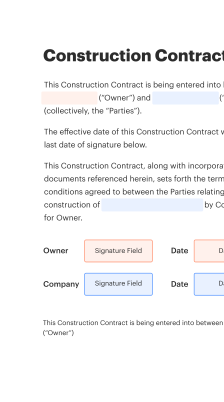
How requiring receiver signature works in a typical flow

A required receiver signature enforces sequence and prevents progression until the designated signer completes their action. Below are the logical steps in the process.

  • Prepare: Configure document fields and required signer.
  • Notify: System sends signer notification with link.
  • Authenticate: Signer confirms identity per policy.
  • Complete: Signature applied; workflow advances.
Collect signatures
24x
faster
Reduce costs by
$30
per document
Save up to
40h
per employee / month

Quick setup: require a receiver signature

Follow these four steps to configure a required receiver signature in an eSignature workflow so signing order and obligations are enforced.

  • 01
    Upload document: Add the file to the signing platform.
  • 02
    Assign recipients: Add signer roles and emails.
  • 03
    Set required role: Mark the recipient as required signer.
  • 04
    Send and monitor: Send envelope and watch status updates.

Audit trail steps when a receiver signature is required

Maintain a clear audit trail by capturing each event from sending to final signature; follow these checkpoints to validate transaction integrity.

01

Document upload:

Record file hash
02

Recipient add:

Log role and contact
03

Notification sent:

Timestamp message delivery
04

Authentication:

Log verification method
05

Signature applied:

Record signer metadata
06

Finalization:

Store signed PDF and audit
be ready to get more

Why choose airSlate SignNow

  • Free 7-day trial. Choose the plan you need and try it risk-free.
  • Honest pricing for full-featured plans. airSlate SignNow offers subscription plans with no overages or hidden fees at renewal.
  • Enterprise-grade security. airSlate SignNow helps you comply with global security standards.
illustrations signature

Recommended workflow settings for required receiver signatures

These configuration settings help ensure required signatures are tracked, reminders are sent, and the process remains auditable.

Setting Name Configuration
Signature Order Enforcement Sequential only
Reminder Frequency 48 hours
Authentication Method Email OTP or SSO
Expiry Policy 30 days
Retention Tagging Save signed copy

Platforms and device support for required signatures

Required receiver signatures should function consistently across desktop, mobile web, and native apps with the same authentication and metadata capture policies.

  • Desktop browsers: Chrome, Edge, Safari
  • Mobile platforms: iOS and Android
  • Native apps: Official mobile apps

Ensure your chosen eSignature solution documents platform requirements and provides secure, equivalent signing experiences across devices to keep required signature enforcement reliable.

Security controls tied to receiver signature requirements

Two-factor MFA: One-time passcode
Access controls: Role-based limits
Document encryption: AES-256 at rest
Transport security: TLS 1.2+
Audit logging: Detailed event logs
Session management: Idle timeouts

Practical examples of requiring receiver signatures

Two short case studies show how enforced receiver signatures work in common business scenarios and the measurable outcomes they produce.

Healthcare Consent Forms

A clinic sends treatment consent that requires the patient’s signature and identity verification

  • Uses required signature plus ID verification
  • Reduces unsigned consents and meets HIPAA audit needs

Resulting in documented patient consent and faster treatment workflows.

Field Service Completion

A utilities company issues a completion certificate that requires an on-site technician signature

  • Mobile-required signature prompts capture device and timestamp
  • Ensures billing and warranty processes trigger only after signed confirmation

Leading to improved billing accuracy and auditable service records.

Best practices for reliable required receiver signatures

Adopt these practices to reduce friction and maintain legal defensibility when you require a specific recipient's signature.

Clear role assignment and instructions
Label signer roles explicitly within the document, include short on-screen guidance for the required signer, and ensure required fields are visible only to the appropriate role to prevent confusion.
Appropriate authentication level
Match the identity verification method to transaction risk: use simple email verification for low-risk forms and stronger methods like OTP, SSO, or ID checks for regulated or high-value agreements.
Monitor and automate reminders
Configure scheduled reminders and escalation paths to reduce delays for required signers, and include automatic notifications when a signature is still outstanding near expiration.
Retain robust audit records
Ensure the platform stores complete audit trails, signed PDFs, and metadata such as timestamps and IP addresses to support ESIGN and UETA compliance and defend against disputes.

FAQs: Troubleshooting required receiver signature issues

Answers to common problems that occur when a recipient is marked as required but the workflow stalls or signatures are rejected.

Feature availability: signNow (Recommended) vs DocuSign

A concise feature availability comparison showing whether each vendor supports common controls used when requiring a receiver signature.

Feature | Vendor signNow (Recommended) DocuSign
Require Receiver Signature
Sequential Signing
SMS OTP Authentication
Embedded API Signing
be ready to get more

Get legally-binding signatures now!

Timing and retention considerations for required signatures

Key timing policies influence how required receiver signatures impact workflow deadlines, expirations, and retention schedules.

Signature request expiry:

Set a reasonable acceptance window to avoid indefinite pending status.

Reminder cadence:

Schedule reminders every 48 to 72 hours for outstanding required signatures.

Retention period:

Keep signed records for at least the minimum statutory period.

Escalation paths:

Define alternative signers or managerial approvals for delays.

Audit storage:

Archive audit trails with signed documents securely.

Risks of misconfigured required signature settings

Contract delays: Missed deadlines
Noncompliance: Regulatory fines
Disputes: Enforceability issues
Data exposure: Unauthorized access
Operational costs: Manual remediation
Customer friction: Abandoned transactions

Pricing snapshot across leading eSignature vendors

High-level pricing and plan notes to help compare cost and capability at a glance; figures reflect typical starting tiers and common plan distinctions.

Pricing Comparison signNow (Recommended) DocuSign Adobe Sign HelloSign PandaDoc
Starting plan cost Starts at $8/user/month Starts at $10/user/month Starts at $14.99/user/month Starts at $15/user/month Starts at $19/user/month
Free tier availability Limited free trial No perpetual free tier Trial available Limited free trial Trial available
API included Available on paid plans Available on paid plans Available on enterprise Available on paid plans Available with subscriptions
Enterprise support Tiered SLAs and onboarding Enterprise SLAs Enterprise SLAs Business support options Dedicated enterprise support
Compliance add-ons HIPAA available HIPAA available HIPAA available HIPAA available HIPAA available

Simplify complex workflows

Create, execute, and manage workflows of any complexity, electronically from virtually anywhere. Scalable eSignature capabilities allow you to share documents with the right people in the correct order and define roles for each recipient. Execute document workflows faster and easier than ever before.

Automate document management

Optimize complex signing processes with airSlate SignNow’s powerful features to enhance your business. Control your automated eSignature workflows to ensure they're running at peak performance with instant notifications and reminders.

Optimize in team collaboration

Bring teams together in a secure, shared environment. Manage documents, use form templates and notifications to create more efficient cross-organization collaboration. Free your employees from having to spend time on repetitive activities so that they can focus on valuable, business-critical tasks.

Integrate into your existing systems

Run your projects with industry-leading integration. Collect Salesforce, Microsoft Teams, and SharePoint all in one business flow. Connect your software to a single system for endless possibilities and more productiveness.

Stay compliant with best-in-class data security

Feel confident knowing that your data is protected by the most recent in encryption security. airSlate SignNow is GDPR and eIDAS compliant and provides you exposure into your signing procedure with court-admissible audit trails. Configure user authorization and roles to manage who has access to what.


walmart logo
exonMobil logo
apple logo
comcast logo
facebook logo
FedEx logo
be ready to get more

Get legally-binding signatures now!