Scan Autograph with SignNow's Secure eSignature Solution

Eliminate paperwork and optimize document management for increased productivity and limitless opportunities. Experience a better way of running your business with airSlate SignNow.

Award-winning eSignature solution

What scan autograph means for digital workflows

A scan autograph is a digitized image of a handwritten signature captured from paper using a scanner or mobile camera, then applied to electronic documents. In practice it combines a scanned visual signature with an eSignature workflow, where the image is embedded into a PDF or form and tracked through a signing process. Organizations often use scanned autographs for convenience when a handwritten sign-off is required but the document must be transmitted or archived digitally. Proper handling includes authentication, secure storage, and an auditable record to support legal and regulatory needs.

Why consider scanned autographs in your process

Scanned autographs let users preserve a handwritten mark while moving documents into digital workflows, reducing paper handling and enabling remote execution with a familiar visual signature.

Why consider scanned autographs in your process

Common challenges when using scanned autographs

  • Image quality and resolution can degrade legibility and produce inconsistent signature appearance across documents.
  • Forgery and unauthorized reuse risk increases without strong authentication and per-document controls.
  • Document metadata and audit trail gaps make proving intent harder in contested transactions.
  • File format, compression, and storage practices can expose signature images to tampering.

Representative user profiles for scanned autograph workflows

Legal Counsel

A legal counsel relies on scanned autographs for client approvals when originals are impractical; they require verifiable audit logs, chain-of-custody metadata, and the ability to present authentication evidence in disputes or regulatory reviews.

Real Estate Agent

A real estate agent often uses scanned autograph images to finalize documents quickly during remote closings, pairing the image with identity checks, timestamped audit trails, and secure storage to satisfy title and escrow requirements.

Typical users and teams handling scanned autographs

Legal, sales, HR, and operations teams commonly incorporate scanned autographs into approvals and agreements when a handwritten look is needed.

  • Legal counsel using scanned autographs for client consent and internal authorizations.
  • Real estate and title teams managing closing documents with handwritten signature images.
  • HR administrators collecting signed acknowledgements and personnel forms remotely.

Organizations should match user roles with authentication controls and retention policies to reduce risk while keeping document processes efficient.

Advanced capabilities that improve scanned autograph workflows

Beyond basic capture, these capabilities help scale scanned autograph use while keeping legal and security controls intact.

Bulk Send

Send documents with embedded scanned autographs to many recipients while tracking individual acceptance and maintaining separate audit trails for each signer.


Team Templates

Create reusable document templates that include designated scanned autograph fields and shared access controls for consistent application across teams.

Conditional Fields

Show or hide scanned autograph placement based on form logic, ensuring images appear only when required by workflow conditions.

API Access

Automate scanned autograph application through REST APIs to integrate image placement into document generation and approval systems.

Single Sign-On

Centralized authentication through SSO reduces password sprawl and ties scanned autograph activity to enterprise identity directories.

Role Permissions

Granular permissions control who can upload, place, or reuse scanned autograph images within the organization.

be ready to get more

Choose a better solution

Platform features that support scanned autographs

Certain eSignature features are particularly relevant when using scanned autographs; choose tools that provide verification, traceability, and secure storage for image-based signatures.

Signature placement

Precise image placement and resizing controls let administrators position scanned autograph images on fixed fields, preserving layout and ensuring that embedded images align with form requirements and appearance standards.

Audit trail

Comprehensive event logs record upload, placement, viewing, signing, and downloads so every use of a scanned autograph image is traceable and can be correlated with signer identity and session data.

Authentication options

Multiple signer verification methods such as email confirmation, SMS code, access passphrase, and knowledge-based authentication add identity assurance before a scanned autograph image is accepted.

Secure storage

Encrypted document repositories with configurable retention policies and tamper protection ensure scanned autograph images remain intact and accessible under the organization's compliance rules.
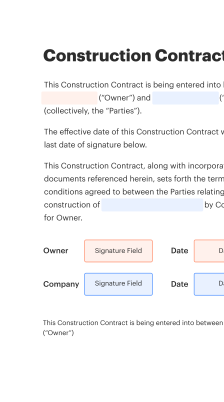
How a scanned autograph integrates with eSignature workflows

A scanned autograph becomes one element in an electronic signing flow, combined with authentication, consent capture, and an auditable record.

  • Import: Upload scanned image to the signing platform
  • Place: Drag signature image into designated field
  • Verify: Use identity checks such as email or SMS
  • Record: Generate audit trail with timestamps and IP
Collect signatures
24x
faster
Reduce costs by
$30
per document
Save up to
40h
per employee / month

Step-by-step: how to prepare a scan autograph

Follow these simple steps to capture, verify, and apply a scanned autograph safely within an electronic workflow.

  • 01
    Capture: Scan at high resolution using a flatbed or mobile camera
  • 02
    Crop: Remove background and save as PNG or PDF
  • 03
    Authenticate: Confirm signer identity before attaching image
  • 04
    Attach: Embed image into document with audit metadata

Checklist for processing a scanned autograph safely

Use this quick checklist to verify each stage of scanned autograph handling, from capture to archival, ensuring consistency and compliance.

01

Scan quality:

300+ DPI
02

Background removal:

Transparent PNG
03

Signer verification:

MFA or ID
04

Document binding:

Embed with metadata
05

Audit log:

Immutable record
06

Retention:

Policy-based storage
be ready to get more

Why choose airSlate SignNow

  • Free 7-day trial. Choose the plan you need and try it risk-free.
  • Honest pricing for full-featured plans. airSlate SignNow offers subscription plans with no overages or hidden fees at renewal.
  • Enterprise-grade security. airSlate SignNow helps you comply with global security standards.
illustrations signature

Recommended workflow settings for scanned autograph management

Configure workflow settings to enforce verification, control reuse, and maintain traceability when scanned autographs are part of document processes.

Feature Configuration
Authentication requirement Two-factor
Signature image reuse policy Disabled by default
Audit trail retention 7 years
Document sealing Enabled post-signing
Access provisioning Role-based

Device and platform considerations for scan autograph capture

Capture quality and device security determine the reliability of a scanned autograph; use supported devices and secure capture methods for best results.

  • Mobile camera: Use 8MP or higher
  • Scanner: Flatbed preferred
  • File formats: PNG or PDF

Ensure devices are updated, apply encryption during transfer, and validate images before embedding to maintain consistent quality and reduce rework when scanned autographs enter signing workflows.

Security features to protect scanned autographs

Encryption: AES-256 at rest and TLS in transit
Access controls: Role-based permissions and MFA
Audit logging: Immutable, timestamped event records
Document locking: Tamper-evident PDF sealing
Storage isolation: Segregated repositories per account
BAA availability: Business associate agreements offered

Use case examples for scanned autographs

Scanned autographs bridge handwritten signing traditions and digital workflows in regulated and customer-facing scenarios.

Real estate closing

A closing agent scans a buyer's handwritten signature on a wet-ink page to attach to the electronic closing package for remote review

  • signature image retained with a notarization image
  • speeds remote closings while preserving visual evidence

Resulting in faster transactions and an auditable package for title review and recordkeeping.

Patient consent forms

A clinic scans signed consent forms to include in an electronic health record export

  • signature images accompany structured consent fields
  • supports staff workflows while linking signature to patient identity checks

Leading to consistent retention under HIPAA controls and streamlined record retrieval during audits.

Best practices for secure and compliant scan autograph use

Adopt technical and administrative controls to preserve authenticity, maintain chain of custody, and meet regulatory obligations when working with scanned autograph images.

Require signer identity verification before image use
Implement multi-factor or government ID verification to confirm the signer's identity prior to associating their scanned autograph image with a document, reducing the risk of impersonation or later disputes.
Attach a detailed, immutable audit trail to each document
Ensure every event—upload, placement, viewing, signature, download—is logged with timestamps, user IDs, and IP addresses, creating legal evidence of process and intent if contract validity is challenged.
Store signature images separately with access controls
Retain scanned autograph images in a secured, access-restricted repository and link images to documents rather than embedding them without controls, limiting exposure and unauthorized reuse.
Use tamper-evident document sealing after signing
Apply cryptographic seals or PDF locking that indicate modifications post-signing; combining visual scanned autographs with cryptographic evidence improves document integrity and legal defensibility.

FAQs About scan autograph

Common questions about legality, security, and practical handling of scanned autographs are addressed below to clarify typical concerns and operational steps.

Feature availability: scanned autograph support

A concise feature comparison shows how scanned autograph workflows align across popular eSignature providers.

Capability signNow (Recommended) DocuSign
Mobile app signing
Bulk Send
Audit Trail
Direct Dropbox integration
be ready to get more

Get legally-binding signatures now!

Retention and review checkpoints for scanned autographs

Define retention periods and scheduled reviews to align scanned autograph records with legal, regulatory, and business requirements.

Policy review cadence:

Annual review

Retention minimums:

AS-IS per legal requirements

Contract archival check:

At signature plus 1 year

Access audit schedule:

Quarterly

Disposition notice lead time:

30 days

Risks and potential penalties from misuse

Authentication failure: Contract invalidation
Data breach: Regulatory fines
Forgery claims: Litigation exposure
Record gaps: Compliance violations
Improper retention: Legal discovery issues
Unauthorized reuse: Reputational harm

Vendor feature comparison for scanned autograph workflows

Comparing vendors by common plan and feature characteristics helps determine fit for scanned autograph use in different organizational contexts.

Plan / Feature signNow (Featured) DocuSign Adobe Sign Dropbox Sign PandaDoc
Primary use case Team and SMB e-signature workflows Enterprise-grade e-signature Enterprise document workflows Simple signing integrated with Dropbox Sales and document automation
Entry-level plan name Business Personal Individual Standard Essentials
API availability Yes, REST API included Yes, REST API included Yes, REST API included Yes, REST API included Yes, REST API available
Common integrations Google Workspace, Salesforce, Dropbox Salesforce, Microsoft 365, Workday Microsoft 365, Adobe ecosystem Dropbox, Google Workspace HubSpot, Salesforce, CRMs
HIPAA support options Available via BAA Available via enterprise agreement Available via enterprise plan Available with controls Available via enterprise options

Make simpler complex workflows

Prepare, deliver, and maintain workflows of any complexity, electronically from near any place. Scalable electronic signature capabilities let you exchange documents with the right users the right sequence and define roles for each recipient. Perform document workflows faster and simpler than ever before.

Automate document managing

Optimize intricate signing tasks with airSlate SignNow�s highly effective features to enhance your company. Control your automated signature workflows to guarantee they're operating at top efficiency with immediate notices and reminders.

Optimize in team collaboration

Bring teams together in a secure, shared workspace. Manage documents, use form templates and notifications to create better cross-company communication. Relieve your staff from having to hang out on repeated routines so that they can focus on beneficial, business-vital activities.

Integrate into your existing network

Manage your tasks with best-in-class integration. Collect Salesforce, Microsoft Teams, and SharePoint in multi functional business thread. Connect your applications to a single system for limitless opportunities and higher efficiency.

Remain compliant with industry-leading data protection

Feel confident understanding that your data remains secure by the most up-to-date in encryption security. airSlate SignNow is GDPR and eIDAS certified and offers you awareness into your signing procedure with court-admissible audit trails. Configure user authorization and rights to control who has access to what.


walmart logo
exonMobil logo
apple logo
comcast logo
facebook logo
FedEx logo
be ready to get more

Get legally-binding signatures now!