Scan Signed Electronically Form W-8BEN with SignNow

Eliminate paper and optimize digital document management for higher efficiency and limitless possibilities. eSign any papers from your home, quick and professional. Experience a greater manner of doing business with airSlate SignNow.

Award-winning eSignature solution

What scan signed electronically form w 8ben means and when to use it

A scan signed electronically form w 8ben refers to a W-8BEN tax form that has been digitally completed, signed, and stored after being scanned or uploaded. This approach combines a digital signature or eSignature workflow with a scanned copy of a completed W-8BEN, ensuring the form is preserved in an electronic record rather than maintained as paper. In practice, this method is used when non-U.S. persons submit withholding tax documentation to U.S. payors, and organizations require a verifiable, timestamped signature trace and secure storage for audit and compliance purposes.

Why using an electronic scan approach matters for W-8BEN

Digitally scanned and electronically signed W-8BEN forms reduce processing time, create a searchable audit trail, and maintain consistent storage practices while supporting U.S. legal requirements for electronic records.

Why using an electronic scan approach matters for W-8BEN

Common challenges when handling scanned, electronically signed W-8BEN forms

  • Poor scan quality can obscure signatures or required fields, delaying acceptance by payors or compliance teams.
  • Inconsistent metadata or file names makes locating the correct W-8BEN difficult during audits or reconciliations.
  • Unsigned scanned images uploaded by mistake can create liability if reliance occurs without proper signer verification.
  • Lack of standardized retention policies may lead to noncompliance with tax recordkeeping or privacy rules.

Representative user profiles for scanned W-8BEN workflows

Tax Manager

A corporate tax manager coordinates collection and verification of W-8BEN forms for multiple international vendors, enforces retention rules, and reviews audit trails to ensure that withholding and reporting align with IRS requirements and internal policies.

Independent Contractor

A non-U.S. contractor submits a scanned, electronically signed W-8BEN to a U.S. client to claim treaty benefits and correct withholding; the contractor expects clear confirmation and secure storage of the submitted form.

Typical organizations and roles that process scanned W-8BEN forms

Companies and departments that handle cross-border payments often require scanned and electronically signed W-8BEN forms to document tax status.

  • Accounts payable teams processing vendor or contractor payments across borders.
  • Tax and compliance teams verifying withholding status and maintaining records.
  • Freelancers and non-U.S. service providers submitting documentation to U.S. clients.

Proper role alignment and standard operating procedures reduce errors and speed verification for both payors and payees.

Advanced capabilities for enterprise W-8BEN processing

Larger organizations benefit from advanced features that automate validation, control access, and integrate scanned W-8BEN handling into broader financial systems.

OCR and field extraction

Automated optical character recognition extracts names, addresses, and tax identification numbers from scanned W-8BEN forms to reduce manual data entry and improve processing speed across large volumes of documents.


Template validation

Predefined templates validate required fields are present on each scanned W-8BEN, flagging incomplete or inconsistent entries to minimize downstream withholding or reporting errors.

Audit trail reporting

Comprehensive logs record who scanned, uploaded, and applied the electronic signature to each W-8BEN, providing an immutable timeline for internal reviews and IRS audits.

Single sign-on

Integration with corporate SSO systems simplifies authentication for staff who manage scanned W-8BEN records while preserving access controls and reducing password management overhead.

API integrations

APIs connect scanning and signature processes to payroll, accounts payable, and CRM systems so scanned W-8BEN data flows directly into payment and vendor records without manual transfers.

Retention policies

Configurable retention and deletion rules ensure scanned W-8BEN files remain available for required statutory periods and are removed according to corporate or tax authority rules.

be ready to get more

Choose a better solution

Core tools to manage scanned and electronically signed W-8BEN forms

A concise set of platform features supports accurate capture, validation, and long-term storage of scanned W-8BEN documents for tax and compliance teams.

Document scanning

High-resolution image capture and automatic image cleanup to ensure legible scanned W-8BEN pages, reducing rejection risk and improving OCR accuracy for key field extraction.

eSignature capture

Time-stamped electronic signatures with signer authentication and tamper-evident seals so the scanned W-8BEN record includes verifiable signature metadata for audit purposes.

Metadata indexing

Attach searchable fields such as taxpayer name, foreign tax ID, and date of signing to scanned files to speed retrieval during audits and payment processing.

Encrypted storage

Secure, encrypted repositories preserve scanned W-8BEN files with configurable retention settings and role-based access to protect confidentiality and meet recordkeeping obligations.
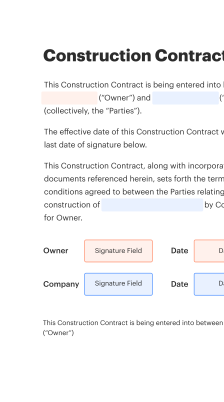
How scanning and eSigning a W-8BEN works in practice

This sequence explains the common workflow from receipt of a paper form to an electronically signed, stored record suitable for compliance.

  • Receipt: Collect paper or image file from the signer.
  • Verification: Confirm identity and completeness of the form.
  • Electronic signing: Capture eSignature and timestamp on the scanned file.
  • Archival: Store with retention metadata and access controls.
Collect signatures
24x
faster
Reduce costs by
$30
per document
Save up to
40h
per employee / month

Step-by-step: completing a scanned, electronically signed W-8BEN

Follow these essential steps to convert a completed W-8BEN into a compliant, electronically signed record ready for storage and verification.

  • 01
    Prepare form: Complete all required W-8BEN fields accurately.
  • 02
    Scan document: Use a high-resolution scan to preserve legibility.
  • 03
    Apply eSignature: Use a verifiable eSignature method with timestamp.
  • 04
    Store securely: Save with encryption and indexed metadata for retrieval.
be ready to get more

Why choose airSlate SignNow

  • Free 7-day trial. Choose the plan you need and try it risk-free.
  • Honest pricing for full-featured plans. airSlate SignNow offers subscription plans with no overages or hidden fees at renewal.
  • Enterprise-grade security. airSlate SignNow helps you comply with global security standards.
illustrations signature

Recommended workflow settings for scanned W-8BEN processing

These configuration items reflect typical defaults for secure, auditable handling of scanned and electronically signed W-8BEN forms within an enterprise eSignature platform.

Setting Name Configuration
Signature method enforcement Email OTP
Scan quality threshold 300 DPI
Retention period rule 7 years
Audit log retention 10 years
Automated reminders 48 hours

Supported platforms and basic technical requirements

Scanning and electronically signing a W-8BEN typically works across modern web browsers, mobile devices, and desktop scanner utilities.

  • Web browser: Chrome, Edge, Safari
  • Mobile device: iOS and Android apps
  • Desktop scanners: TWAIN or WIA drivers

Ensure devices have current OS updates, that browsers support TLS 1.2 or higher, and that scanning hardware produces 300 DPI or better images to meet legibility standards.

Security controls relevant to scanned W-8BEN records

Encryption at rest: AES-256 level
Encryption in transit: TLS 1.2+
Access logging: Comprehensive logs
Two-factor authentication: Optional per user
Document watermarking: Visual protection
Role-based access: Least privilege

Practical examples of scanned, electronically signed W-8BEN usage

Two concise case examples show how scanned W-8BEN forms are used by payors and independent contractors in routine transactions.

Cross-border vendor onboarding

A mid-size U.S. software company collects scanned W-8BEN forms from European contractors to document nonresident status

  • Feature point: electronic timestamp and audit metadata are stored with each scanned copy
  • Benefit point: reduces manual verification work for AP teams

Resulting in faster vendor setup and fewer withholding misclassifications during quarterly reviews.

Freelancer payment processing

An independent contractor uploads a scanned and electronically signed W-8BEN to a freelancer portal to claim treaty benefits

  • Feature point: embedded signer authentication and file integrity checks
  • Benefit point: the payer can verify signature authenticity without paper handling

Leading to lower payment delays and clearer compliance documentation when reconciling payments.

Best practices for accurate, secure scanned W-8BEN records

Follow these recommended practices to reduce errors, preserve legal validity, and simplify verification when accepting scanned, electronically signed W-8BEN forms.

Use high-quality scans and verify legibility
Scan documents at a minimum of 300 DPI, correct skew and contrast, and visually confirm that all required W-8BEN fields and the signature area are legible before accepting the file for processing.
Require signer authentication matched to the form
Enforce an authentication step such as email OTP, knowledge-based verification, or SSO to confirm the identity of the person submitting the scanned W-8BEN and link that identity to the electronic signature metadata.
Preserve tamper-evident audit trails
Use platforms that embed a timestamped audit trail and a tamper-evident seal with the scanned file so any post-signature changes are detectable and the signature remains verifiable during audits.
Implement retention and deletion policies
Define retention schedules aligned with IRS guidance and corporate policy, ensure secure deletion after the retention period, and maintain an index for quick retrieval during regulatory or tax reviews.

Frequently asked questions and troubleshooting for scanned W-8BEN forms

Answers to common technical and compliance questions when working with scanned and electronically signed W-8BEN documents.

Feature comparison: signNow and other major eSignature providers

A concise technical comparison shows how signNow stacks up against other leading eSignature platforms on common capabilities relevant to scanned W-8BEN workflows.

Criteria signNow (Recommended) DocuSign Adobe Sign
U.S. ESIGN and UETA compliance
Audit trail detail and export options Detailed logs Detailed logs Basic export
Bulk Send capability and limits Available Available Available
Mobile native signing and apps iOS/Android apps iOS/Android apps iOS/Android apps
be ready to get more

Get legally-binding signatures now!

Risks and penalties tied to improper handling

Withholding errors: Financial penalties
Audit findings: Compliance costs
Data breaches: Regulatory fines
Invalid signatures: Rejected forms
Retention failures: Recordkeeping violations
Incorrect residency claims: Tax adjustments

Pricing snapshot for signNow and competitors

High-level pricing and plan characteristics vary by vendor; this snapshot highlights typical entry options and notable commercial differences for teams assessing scanned W-8BEN processing costs.

Pricing Comparison Overview signNow (Recommended) DocuSign Adobe Sign HelloSign PandaDoc
Free or trial option Free trial available Free trial available Free trial available Free plan available Free trial available
Entry-level monthly price From $8 per user From $10 per user From $14.99 per user From $15 per user From $19 per user
Enterprise plan availability Yes, scalable Yes, scalable Yes, scalable Yes, scalable Yes, scalable
API access in plans Included in higher tiers Included in higher tiers Included in higher tiers Developer API available Included in higher tiers
Bulk send limits (typical) Custom limits by plan Tiered limits Tiered limits Basic limits Tiered limits

Simplify complex workflows

Create, execute, and manage workflows of any complexity, electronically from virtually anywhere. Scalable eSignature capabilities allow you to share documents with the right people in the correct order and define roles for each recipient. Execute document workflows faster and easier than ever before.

Automate document management

Optimize complex signing processes with airSlate SignNow’s powerful features to enhance your business. Control your automated eSignature workflows to ensure they're running at peak performance with instant notifications and reminders.

Optimize in team collaboration

Bring teams together in a secure, shared environment. Manage documents, use form templates and notifications to create more efficient cross-organization collaboration. Free your employees from having to spend time on repetitive activities so that they can focus on valuable, business-critical tasks.

Integrate into your existing systems

Run your projects with industry-leading integration. Collect Salesforce, Microsoft Teams, and SharePoint all in one business flow. Connect your software to a single system for endless possibilities and more productivity.

Remain compliant with industry-leading data security

Feel safe with the knowledge that your information remains secure by the most recent in encryption security. airSlate SignNow is GDPR and eIDAS compliant and offers you exposure into your signing process with court-admissible audit trails. Configure user authorization and roles to regulate who has access to what.


walmart logo
exonMobil logo
apple logo
comcast logo
facebook logo
FedEx logo
be ready to get more

Get legally-binding signatures now!