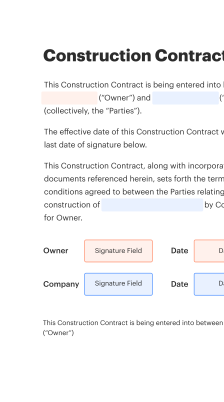
Send Electronic Signature Form with SignNow

Eliminate paper and automate document management for higher performance and endless opportunities. Sign any papers from your home, fast and feature-rich. Discover the best way of running your business with airSlate SignNow.

Award-winning eSignature solution

What it means to send electronic signature form

Sending an electronic signature form means delivering a digital document to one or more recipients for signature, tracking, and secure storage. This process replaces paper routing with an electronic workflow that captures signer identity, intent, time stamps, and a tamper-evident audit trail. In the United States, properly implemented electronic signature processes comply with ESIGN and UETA when they capture consent and produce reliable records. Organizations use electronic signature forms to accelerate approvals, reduce physical handling, and centralize document retention while maintaining an evidentiary record suitable for most business and legal needs.

Why send electronic signature form instead of paper

Electronic signature forms streamline approvals, reduce turnaround times, and lower administrative costs while creating an auditable record. They also reduce physical storage needs and improve version control for frequently updated documents.

Why send electronic signature form instead of paper

Common challenges when you send electronic signature form

  • Ensuring signer identity when relying on email-only authentication can leave questions about non-repudiation.
  • Configuring workflows poorly can create bottlenecks if routing order and permissions are not aligned.
  • Misformatted documents may cause fields to appear incorrectly across devices, delaying signatures.
  • Retention policies that are inconsistent with industry regulations can expose organizations to compliance risk.

Representative user roles for electronic signature workflows

HR Manager

An HR Manager prepares offer letters and onboarding documents and relies on an electronic signature form workflow to collect signatures, verify identity, and archive signed files. They require template management, role permissions, and audit reporting to demonstrate compliance during audits.

Procurement Lead

A Procurement Lead uses electronic signature forms to route purchase agreements for multiple approvals, ensure sequential signer order, and integrate signed contracts into contract management or ERP systems for tracking spend and supplier obligations.

Who typically sends electronic signature form

Organizations of many sizes send electronic signature forms to speed approvals, standardize agreements, and maintain auditable records.

  • Human resources teams for onboarding, offer letters, and consent forms.
  • Legal and procurement for contracts, NDAs, and vendor agreements.
  • Sales and finance for quotes, purchase orders, and invoicing approvals.

The same workflows scale from small teams to enterprise departments, with controls adjusted for role-based access and audit requirements.

be ready to get more

Choose a better solution

Core features to look for when you send electronic signature form

When evaluating tools for sending electronic signature forms, focus on secure authentication, flexible templates, integration support, and reliable audit trails to meet business and compliance requirements.

Templates

Reusable templates reduce preparation time by storing field layouts, default text, and signer order for recurring document types, ensuring consistent data capture across teams.

Authentication

Multiple authentication choices such as email, SMS one-time passcodes, and knowledge-based verification help align signer identity controls with organizational risk profiles and regulatory expectations.

Integrations

Connectors to cloud storage, CRM systems, and document management platforms allow automatic routing of signed files and metadata to downstream systems for lifecycle management.

Audit Trail

Tamper-evident audit logs capture timestamps, IP addresses, and event history for each signer action, supporting contract enforceability and dispute resolution.

Workflow overview for sending electronic signature form

A typical electronic signature form workflow moves a document from creation to signed completion while recording each event and preserving integrity.

  • Document creation: Author or upload the source file
  • Field placement: Insert signature and data fields
  • Authentication: Select email, SMS, or knowledge-based checks
  • Completion: Signed document stored with audit log
Collect signatures
24x
faster
Reduce costs by
$30
per document
Save up to
40h
per employee / month

Step-by-step: How to send electronic signature form

Follow a clear sequence to prepare, send, and track an electronic signature form to reduce errors and speed completion.

  • 01
    Prepare document: Upload and convert to compatible format
  • 02
    Add fields: Place signature, date, and required inputs
  • 03
    Set recipients: Define signer order and authentication
  • 04
    Send and monitor: Dispatch and watch the audit trail

Operational checklist for sending electronic signature form

Use this checklist to validate documents and recipient settings before sending to reduce rework and ensure audit readiness.

01

Confirm signers:

Verify correct email addresses
02

Validate fields:

Ensure required fields present
03

Set authentication:

Choose appropriate verification
04

Attach references:

Link supporting documents
05

Review routing:

Check signer order and delegates
06

Record retention:

Assign archive policy
be ready to get more

Why choose airSlate SignNow

  • Free 7-day trial. Choose the plan you need and try it risk-free.
  • Honest pricing for full-featured plans. airSlate SignNow offers subscription plans with no overages or hidden fees at renewal.
  • Enterprise-grade security. airSlate SignNow helps you comply with global security standards.
illustrations signature

Suggested workflow configuration when you send electronic signature form

Recommended workflow settings help balance speed and compliance while providing consistent behaviors for signers and administrators.

Workflow Setting Name and Configuration Default Configuration
Reminder Frequency for Pending Documents 48 hours
Signature Routing Order Setting Sequential
Document Expiration Interval 90 days
Authentication Methods Required Email + SMS OTP
Auto-Archive Policy for Completed Files Retain 7 years

Device and platform considerations for sending electronic signature form

Ensure recipients can view and sign forms on common devices and browsers to avoid accessibility issues during signing.

  • Desktop browsers: Chrome, Edge, Safari supported
  • Mobile platforms: iOS and Android apps available
  • Document formats: PDF and common image types

Test templates across devices, confirm mobile layouts, and verify that authentication flows (email links, SMS codes) work consistently to prevent signature delays and improve completion rates.

Security and authentication elements for electronic signature forms

Encrypted storage: AES-256 encryption
TLS transmission: TLS 1.2+ protection
Two-factor options: Email and SMS OTP
Certificate support: PDF digital signatures
Access controls: Role-based permissions
Audit records: Complete event logs

Industry examples of sending electronic signature form

Practical case examples show how different teams implement electronic signature forms to meet business and regulatory needs.

Healthcare Consent Forms

A regional clinic moved consent and intake forms online to reduce waiting-room time and improve record accuracy.

  • Form templates pre-populate patient demographics to reduce manual entry.
  • Electronic signatures combined with identity checks reduce administrative errors and improve auditability.

Resulting in faster patient throughput and clearer compliance documentation for HIPAA audits.

University Enrollment Agreements

A university adopted electronic signature forms for enrollment agreements and financial aid acknowledgments to simplify remote processing.

  • Staff use templates to enforce required fields and consent checkboxes.
  • Centralized signed records streamline reporting and protect student privacy.

Leading to fewer lost forms, faster processing, and clearer adherence to FERPA requirements.

Best practices for secure and accurate electronic signature forms

Adopt standardized processes and sensible security settings to maintain reliability, legal compliance, and user clarity when sending electronic signature forms.

Standardize templates and required fields
Create centrally managed templates with clearly marked mandatory fields and consistent language to reduce errors and ensure all necessary information is collected before signature.
Match authentication to risk level
Use stronger signer verification, such as SMS OTP or identity proofing, for high-value transactions while permitting email-based signatures for low-risk documents.
Maintain clear retention policies
Define retention and deletion schedules aligned with legal, tax, and industry-specific requirements and ensure signed documents are archived securely and recoverably.
Keep audit trails intact
Preserve original signed PDFs and associated metadata in a secure, read-only archive to support future verification and legal admissibility.

FAQs About sending electronic signature form

Answers to common questions about preparing, sending, and verifying electronic signature forms in a US business context.

Comparison: security and availability when you send electronic signature form

A quick feature availability comparison across common eSignature providers to help assess basic security and compliance capabilities.

Feature name and provider columns signNow (Recommended) DocuSign Adobe Sign
Two-factor authentication available
HIPAA support options Yes (BAA) Yes (BAA) Yes (BAA)
Bulk Send capability Bulk Send Bulk Send Bulk Send
API access for integrations REST API REST API REST API
be ready to get more

Get legally-binding signatures now!

Risks and compliance penalties to consider

Regulatory fines: Monetary penalties
Contract disputes: Enforceability issues
Data breaches: Notification costs
HIPAA violations: Significant fines
FERPA concerns: Student data risk
Audit failures: Operational sanctions

Pricing and plan characteristics for sending electronic signature form

Summary of plan-level characteristics and availability for commonly used eSignature providers; confirm current pricing with vendors before purchase.

Provider Plans Comparison signNow (Recommended) DocuSign Adobe Sign HelloSign PandaDoc
Plan Types Individual, Business, Enterprise Personal, Standard, Business Pro Individual, Team, Business, Enterprise Free, Pro, Business Free eSign, Essentials, Business
API access availability Available on Business and Enterprise Available on Business Pro and above Available on Business/Enterprise Available on paid plans Available on Business plans
HIPAA / BAA offering BAA available for enterprise BAA available for enterprise BAA available for enterprise BAA available on request BAA available for enterprise
Bulk sending support Included in paid tiers Included in higher tiers Included in business plans Included in business plans Available in paid tiers
Free trial or free tier Free trial and limited free option Free trial available Free trial available Free tier and trial Free eSign option

Simplify complex workflows

Create, execute, and manage workflows of any complexity, electronically from virtually anywhere. Scalable eSignature capabilities allow you to share documents with the right people in the correct order and define roles for each recipient. Execute document workflows faster and easier than ever before.

Automate document management

Optimize complex signing processes with airSlate SignNow’s powerful features to enhance your business. Control your automated eSignature workflows to ensure they're running at peak performance with instant notifications and reminders.

Optimize in team collaboration

Bring teams together in a secure, shared environment. Manage documents, use form templates and notifications to create more efficient cross-organization collaboration. Free your employees from having to spend time on repetitive activities so that they can focus on valuable, business-critical tasks.

Integrate into your existing systems

Run your projects with industry-leading integration. Collect Salesforce, Microsoft Teams, and SharePoint all in one business flow. Connect your software to a single system for endless possibilities and more productivity.

Stay compliant with industry-leading data security

Feel confident knowing that your data remains secure by the most up-to-date in encryption security. airSlate SignNow is GDPR and eIDAS compliant and gives you transparence into your eSigning experience with court-admissible audit trails. Set up user access permissions and roles to manage who has access to what.


walmart logo
exonMobil logo
apple logo
comcast logo
facebook logo
FedEx logo
be ready to get more

Get legally-binding signatures now!