Send Electronically Signed Contract with SignNow

Eliminate paper and automate document management for increased productivity and endless possibilities. eSign anything from your home, fast and feature-rich. Explore a greater way of doing business with airSlate SignNow.

Award-winning eSignature solution

What it means to send an electronically signed contract

Sending an electronically signed contract is the process of preparing, delivering, and securing a legally binding signature on a digital agreement using an eSignature platform. The workflow typically includes uploading a contract, placing signature and data fields, specifying signer order and authentication, delivering the document to one or more recipients, and recording a tamper-evident audit trail. In the United States this approach relies on laws such as ESIGN and UETA to establish enforceability. Platforms like signNow provide the tools to send, track, and store executed agreements while preserving chain-of-custody records and metadata.

Why sending electronically signed contracts is commonly adopted

Switching to electronic contract delivery reduces turnaround time, lowers paper handling costs, and centralizes signature records while preserving legal enforceability under U.S. law.

Why sending electronically signed contracts is commonly adopted

Common challenges when you send electronically signed contract

  • Ensuring signer identity when using basic email-only authentication can leave room for dispute risks.
  • Poorly configured field placements lead to incomplete forms and frequent back-and-forth with signers.
  • Inconsistent retention policies across systems create compliance gaps and increase legal exposure.
  • Integrations that are not maintained can break automated sends and disrupt business workflows.

Typical user roles for sending electronic contracts

Account Manager

Account managers prepare contract packages, customize fields, and track signer progress. They rely on templates and reminders to manage multiple client agreements concurrently and ensure timely execution.

Legal Counsel

Legal counsel reviews contract language, configures required authentication levels, and retains executed agreements as part of corporate recordkeeping for compliance and dispute readiness.

Who typically sends electronically signed contracts

  • Sales teams sending customer agreements and proposals to close deals faster.
  • Human resources processing offer letters, NDAs, and onboarding documents for new hires.
  • Legal and procurement teams executing vendor contracts, amendments, and renewals.

Use cases vary by industry and volume, and teams choose platforms that match their security, compliance, and automation needs.

Core features to look for when you send electronically signed contract

Robust functionality improves accuracy, security, and scalability for teams that regularly send contracts for signature.

Template Library

Create reusable contract templates with predefined fields and conditional logic to reduce preparation time and standardize legal language across teams.


Bulk Send

Send identical contracts to many recipients using a single job, with individualized fields and separate audit records for each signer.

Advanced Authentication

Support email, SMS, knowledge-based verification, and third-party ID checks to match signer identity requirements for different risk profiles.

Audit Trail

Record timestamps, IP addresses, and document versions to create an evidentiary chain that supports enforceability and dispute resolution.

Role-Based Access

Assign granular permissions for creators, senders, and administrators to control who can edit templates, send contracts, or access executed files.

APIs and Webhooks

Programmatic access for automating send, status monitoring, and retrieval of signed documents within existing systems and custom applications.

be ready to get more

Choose a better solution

Integrations that streamline sending electronically signed contracts

Connecting eSignature to common productivity and business systems reduces manual steps and centralizes executed agreements for workflow continuity.

Google Workspace

Embed signing and template insertion directly inside Google Docs and Drive so teams can prepare and send contracts without switching tools, preserving document metadata and simplifying storage.

CRM Integration

Link contract sends to customer records in CRMs to auto-populate fields, update deal stages on execution, and keep a single source of truth for signature events.

Cloud Storage

Automatically archive executed agreements to services such as Dropbox or Google Drive to enforce retention policies and make signed files available to business users.

Accounting Systems

Connect signature completion events to billing or invoicing workflows so revenue recognition and invoice issuance trigger on executed contracts.
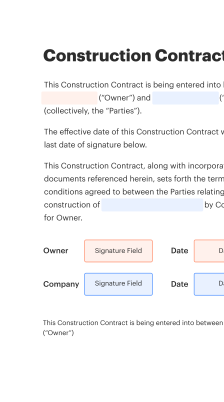
How sending an electronically signed contract works in practice

A standard send flow moves a document from draft to executed state while preserving audit data and access controls.

  • Drafting: Create or import the contract and insert fields.
  • Authentication: Choose email, SMS, or identity verification for signers.
  • Execution: Recipients review and apply signatures electronically.
  • Storage: Executed copies are stored with a complete audit trail.
Collect signatures
24x
faster
Reduce costs by
$30
per document
Save up to
40h
per employee / month

Quick setup: send your first electronically signed contract

Follow these core steps to assemble, send, and finalize an electronically signed contract with consistent signer handling.

  • 01
    Upload Document: Add the contract PDF or Word file to the platform.
  • 02
    Prepare Fields: Place signature, date, and data capture fields where required.
  • 03
    Set Recipients: Enter signer emails and specify signing order if needed.
  • 04
    Send and Monitor: Dispatch the envelope and track progress in the dashboard.

How to complete a received electronically signed contract

Signing parties follow a short sequence to review and apply their electronic signature to a contract received for signing.

01

Open Link:

Click the emailed signing URL to access the document.
02

Authenticate:

Complete the required verification step, such as email OTP.
03

Review Terms:

Read the contract and any attachments thoroughly.
04

Complete Fields:

Fill required data and initial where requested.
05

Apply Signature:

Use drawn, typed, or stored signature method.
06

Finish and Download:

Finalize signing and save the executed copy.
be ready to get more

Why choose airSlate SignNow

  • Free 7-day trial. Choose the plan you need and try it risk-free.
  • Honest pricing for full-featured plans. airSlate SignNow offers subscription plans with no overages or hidden fees at renewal.
  • Enterprise-grade security. airSlate SignNow helps you comply with global security standards.
illustrations signature

Sample automation settings for sending electronically signed contracts

These example settings illustrate common configurations when automating contract sends and follow-ups in an organization.

Feature Value
Reminder Frequency 48 hours
Expiry Period 30 days
Signing Order Sequential
Auto-Archive Location Shared Drive
Webhook Notifications On completion

Supported devices and platform requirements

  • Desktop Browsers: Chrome, Edge, Firefox
  • Mobile Platforms: iOS and Android apps
  • Minimum Versions: Recent two major releases

For reliable performance, use current browser versions, keep mobile apps updated, and ensure network security policies allow TLS encrypted connections to the eSignature service.

Security and protection features when sending contracts

Encryption: AES-256 at rest
Transport Security: TLS 1.2+ in transit
Access Controls: Role-based permissions
Audit Logs: Detailed event records
Authentication Options: Multi-factor available
Document Integrity: Tamper-evident seals

Industry examples of sending electronically signed contracts

Real-world scenarios show how different teams use eSignatures to replace paper and speed execution.

Small Business Sales

A regional services firm sends proposals and contracts to clients via an eSignature workflow to shorten sales cycles and reduce printing.

  • Uses prebuilt templates and sequential signing.
  • Faster signature completion and fewer manual errors.

Resulting in cleared orders and predictable revenue recognition within days.

Healthcare Agreements

A clinic executes business associate agreements and vendor contracts electronically to maintain auditable consent and operational continuity.

  • Requires HIPAA-compliant handling and stronger signer verification.
  • Secure storage and traceable access controls reduce administrative overhead.

Leading to improved compliance posture and faster vendor onboarding.

Best practices for secure and accurate electronic contract sends

Adopt consistent policies and setup practices to reduce errors and strengthen legal defensibility when sending contracts electronically.

Standardize templates and field placement across teams
Maintain a controlled template library with locked sections for legal text and predefined data fields to reduce signer confusion, minimize mistakes, and accelerate reviews while ensuring consistent contract language.
Select authentication levels based on transaction risk
Use basic email authentication for low-risk agreements and stronger methods, such as SMS OTP or identity verification, for contracts that require higher assurance or regulatory validation.
Retain full audit records and executed PDFs
Ensure every completed contract includes an audit trail and a tamper-evident PDF stored according to your retention schedule to support legal discovery and compliance.
Train users and monitor usage periodically
Provide role-based training and review sending logs and templates regularly to catch misconfigurations, improve efficiency, and enforce governance policies.

FAQs and common issues when sending electronically signed contracts

Frequently encountered problems have clear fixes; this section addresses typical questions and operational troubleshooting steps.

Feature availability: signNow compared to other major providers

A concise feature availability comparison highlights common capabilities across eSignature platforms used in U.S. enterprises.

Criteria signNow (Recommended) DocuSign Adobe Sign
Basic eSignatures
Bulk Send Limited
HIPAA Support
API Access REST API REST API REST API
be ready to get more

Get legally-binding signatures now!

Document retention and retention timelines

Define retention schedules for executed contracts that match legal, financial, and operational requirements for your organization.

Employment Contracts Retention:

7 years after termination

Customer Agreements Retention:

6 years from last activity

HIPAA Business Associate Agreements:

6 years per HIPAA rules

Tax and Financial Contracts:

7 years per IRS guidance

General Vendor Contracts:

Retain for contract term plus 3 years

Risks and penalties to consider

Noncompliance: Regulatory fines
Data Breach: Notification costs
Invalid Signature: Contract unenforceable
Retention Failures: Legal discovery exposure
Authentication Gaps: Fraud risk
Integration Breaks: Operational downtime

Typical plan comparisons for sending electronically signed contracts

Pricing and plan features vary; the table below summarizes common plan types and capabilities across five providers to inform comparisons for routine contract sends.

Plan Type signNow (Recommended) DocuSign Adobe Sign Dropbox Sign PandaDoc
Entry-Level Cost Per user monthly; competitive pricing Per user monthly; higher entry cost Per user monthly; enterprise focus Per user monthly; mid-market Per user monthly; includes templates
Bulk Sending Included Available on business plans Available on business plans Enterprise only Available Available on paid tiers
API Access Included Available on developer plans Available on enterprise plans Available Available Available
HIPAA Compliance Option BAA available BAA available BAA available BAA available BAA via enterprise
Document Retention Controls Configurable retention policies Configurable Configurable Basic controls Configurable

Simplify complex workflows

Create, execute, and manage workflows of any complexity, electronically from virtually anywhere. Scalable eSignature capabilities allow you to share documents with the right people in the correct order and define roles for each recipient. Execute document workflows faster and easier than ever before.

Automate document management

Optimize complex signing processes with airSlate SignNow’s powerful features to enhance your business. Control your automated eSignature workflows to ensure they're running at peak performance with instant notifications and reminders.

Optimize in team collaboration

Bring teams together in a secure, shared environment. Manage documents, use form templates and notifications to create more efficient cross-organization collaboration. Free your employees from having to spend time on repetitive activities so that they can focus on valuable, business-critical tasks.

Integrate into your existing systems

Run your projects with industry-leading integration. Collect Salesforce, Microsoft Teams, and SharePoint all in one business flow. Connect your software to a single system for endless possibilities and more productivity.

Stay compliant with industry-leading data security

Feel confident understanding that your data is protected by the latest in encryption security. airSlate SignNow is GDPR and eIDAS certified and provides you transparence into your eSigning process with court-admissible audit trails. Configure user authorization and roles to control who has access to what.


walmart logo
exonMobil logo
apple logo
comcast logo
facebook logo
FedEx logo
be ready to get more

Get legally-binding signatures now!