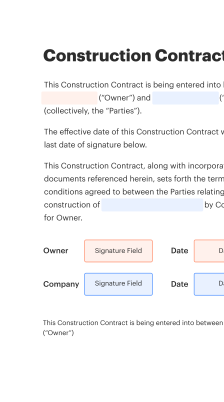
Sign Bill of Sale with SignNow's Secure eSignature Solution

Eliminate paper and optimize digital document processing for increased performance and limitless opportunities. Explore a better strategy for running your business with airSlate SignNow.

Award-winning eSignature solution

What it means to sign bill of sale electronically

Signing a bill of sale electronically means executing the document with an electronic signature that creates a legally enforceable record of transfer under U.S. law when done in compliance with ESIGN and UETA. The process typically includes preparing a bill of sale template, verifying signer identity, applying an auditable electronic signature, and retaining the executed document with a timestamped audit trail. For transactions involving vehicles or other titled property, electronic execution may interact with state motor vehicle department requirements and records. Platforms such as signNow provide the technical tools to collect signatures while preserving audit data and authentication logs.

Why choose electronic signing for a bill of sale

Electronic signing reduces turnaround time and simplifies recordkeeping while preserving legal validity under ESIGN and UETA. It minimizes physical handling and centralizes executed documents for quicker transfers of ownership and clearer auditability.

Why choose electronic signing for a bill of sale

Common challenges when signing a bill of sale

  • State-specific requirements can vary, creating confusion about notarization and acceptable signature methods.
  • Identity verification gaps increase the risk of fraud or later buyer-seller disputes over ownership.
  • Manual routing and paper handling lead to delays and higher administrative overhead for transfers.
  • Inconsistent document templates or missing vehicle details can invalidate the transfer or cause title problems.

Representative users and their needs

Car Dealer

A dealer processes multiple vehicle transfers daily and needs batch signing, standardized bill of sale templates, integrated title transfer workflows, and reliable audit trails to support compliance and reduce dealership processing time.

Private Seller

An individual selling a personal vehicle needs a clear bill of sale template, straightforward identity checks, and secure document storage so both parties have an accepted proof of sale and a timestamped record of the transaction.

Who typically uses electronic bills of sale

Buyers and sellers across retail, automotive, boat sales, equipment leasing, and private transfers use electronic bills of sale for faster, auditable transactions.

  • Car dealerships and fleet managers handling high-volume vehicle transfers
  • Private sellers completing individual vehicle or asset transfers
  • Small businesses and resellers transferring inventory or equipment

Legal, accounting, and title departments also rely on electronic bills of sale to centralize records and support compliance during ownership changes.

be ready to get more

Choose a better solution

Key features that streamline signing a bill of sale

Certain platform features address the recurring needs of bill of sale workflows, reducing manual steps and preserving compliance-ready records.

Templates

Reusable bill of sale templates ensure consistent inclusion of required fields such as VIN, odometer disclosure, sale price, and seller/buyer information, reducing errors and saving time during repeated transactions.

Bulk Send

Bulk Send lets organizations dispatch thousands of bills of sale with pre-filled fields and recipient lists, enabling high-volume dealers or fleet sellers to complete multiple transfers without repetitive manual setup.

Authentication

Configurable authentication methods, including SMS verification, knowledge-based questions, and optional multi-factor authentication, help confirm signer identity according to the transaction risk and state requirements.

Audit Trail

A tamper-evident audit trail records timestamps, IP addresses, and signer actions for each signed bill of sale, creating an evidentiary record suitable for audits and dispute resolution.

How the electronic bill of sale workflow typically flows

A standard workflow moves from document preparation to signer authentication, signature capture, and final archiving with audit records for each step.

  • Document creation: Draft or select a bill of sale template
  • Route to signers: Set signing order and recipient emails
  • Signer authentication: Apply email, SMS, or knowledge-based checks
  • Completion and storage: Finalize signatures and archive with audit metadata
Collect signatures
24x
faster
Reduce costs by
$30
per document
Save up to
40h
per employee / month

Step-by-step: how to sign bill of sale online

Follow these concise steps to prepare, execute, and retain a legally compliant electronic bill of sale for most U.S. transactions.

  • 01
    Prepare: Collect buyer, seller, and asset details
  • 02
    Upload: Add the bill of sale document to the eSignature platform
  • 03
    Verify: Authenticate signers with chosen identity checks
  • 04
    Execute: Apply signatures and generate the audit trail

Audit trail management when you sign bill of sale

Manage audit information carefully to ensure the signed bill of sale is admissible and supports title transfer or dispute resolution if needed.

01

Timestamp capture:

Record precise UTC timestamps
02

Signer IP logging:

Log IP and device details
03

Authentication record:

Store method and proof
04

Field change history:

Track edits and pre-fill changes
05

Document versioning:

Keep pre- and post-sign copies
06

Exportable audit report:

Generate PDF audit summaries
be ready to get more

Why choose airSlate SignNow

  • Free 7-day trial. Choose the plan you need and try it risk-free.
  • Honest pricing for full-featured plans. airSlate SignNow offers subscription plans with no overages or hidden fees at renewal.
  • Enterprise-grade security. airSlate SignNow helps you comply with global security standards.
illustrations signature

Recommended workflow settings for bill of sale transactions

Configure the workflow to match transaction complexity, signer authentication needs, and retention requirements to maintain efficiency and compliance.

Setting Name Configuration
Reminder Frequency and Retry Schedule 48 hours; two reminders
Signing Order and Recipient Roles Sequential with defined signer types
Authentication Method and Strength Email + SMS or ID check
Template Library and Field Locking Pre-approved templates; locked fields
Auto-Archive and Retention Policy Auto-archive after signature; seven years

Platform and device requirements for signing a bill of sale

Prepare a supported browser or mobile app and stable internet connection to ensure a smooth signing experience and reliable audit logging.

  • Supported browsers: Chrome, Edge, Safari
  • Mobile platforms: iOS and Android apps
  • Connectivity needs: Stable internet required

For notarization or state-specific filings, confirm whether the jurisdiction accepts remote electronic signatures or requires in-person notarization; check mobile app capabilities if signers use smartphones to complete the bill of sale.

Security and document protection features

Encryption: AES-256 encrypted storage
Authentication: Multi-factor options available
Audit Trail: Complete timestamp records
Tamper Seal: Document integrity checks
Access Controls: Role-based permissions
Compliance Standards: SOC 2 and industry controls

Practical examples of signing a bill of sale

Real-world scenarios show how an electronic bill of sale streamlines transfer, recordkeeping, and compliance for different transaction types.

Dealer vehicle sale

A dealership prepares a standardized bill of sale for each purchase with VIN, odometer reading, and seller declarations.

  • Uses template automation and Bulk Send to populate documents across transactions.
  • Reduces processing time and errors while centralizing executed records for audit.

Resulting in faster title submissions and fewer registration delays for buyers.

Private party transfer

Two private parties complete a car sale with an electronic bill of sale that captures identity verification and a timestamped signature.

  • The seller uploads vehicle details and photos, the buyer signs online, and both parties receive copies.
  • This preserves evidence of transfer and creates a searchable record for future reference.

Leading to clearer proof of sale and reduced risk of ownership disputes.

Best practices for secure and accurate bill of sale signing

Adopting consistent practices improves legal clarity and reduces administrative risk when signing bills of sale electronically.

Verify identities before signing
Use multi-factor or government ID checks when transferring high-value assets to reduce fraud risk and provide defensible proof of signer identity for future disputes or title transfers.
Use state-specific bill of sale templates
Include state-required fields such as odometer disclosures, transfer declarations, and any notarization language to ensure the executed document meets local motor vehicle and tax office expectations.
Record full transaction metadata
Ensure audit trails capture timestamps, IP addresses, authentication method, and signer order so the executed bill of sale can support regulatory reviews or title applications when needed.
Maintain retention and backup policies
Archive executed bills of sale in encrypted storage with defined retention periods aligned to state recordkeeping requirements and the organization’s document retention policy.

FAQs About sign bill of sale

Common questions about legality, identity verification, notarization, and document storage for electronically signing a bill of sale in the United States.

Comparison of core capabilities for signing a bill of sale

A concise feature comparison shows how three major eSignature providers support key capabilities relevant to bill of sale workflows.

Feature or Support Criteria for Vendors signNow (Recommended) DocuSign Adobe Sign
Recognition under U.S. state laws
Audit trail and timestamp granularity Detailed Detailed Detailed
Bulk Send or mass signing support
Native mobile apps for signing iOS & Android iOS & Android iOS & Android
be ready to get more

Get legally-binding signatures now!

Risks and penalties for improper signing

Invalid transfer: Ownership dispute
Fraud exposure: Unauthorized signatures
Title delays: Registration hold-ups
Tax implications: Reporting errors
Legal liability: Breach claims
Regulatory fines: State penalties possible

Simplify complex workflows

Generate, deliver, and control workflows of any complexness, electronically from near any place. Scalable eSignature features enable you to share papers with the right people in the proper sequence and set up roles for every recipient. Complete document workflows faster and simpler than ever before.

Automate document management

Enhance intricate signing procedures with airSlate SignNow�s effective functions to enhance your business. Manage your automated eSignature workflows to guarantee they're operating at top efficiency with immediate notices and alerts.

Enhance in team collaboration

Bring teammates together in a secure, shared workspace. Handle paperwork, use form templates and notices to create better cross-organization interaction. Free your employees from having to spend time on repeated activities so that they can focus on valuable, business-vital tasks.

Integrate into your existing network

Manage your projects with best-in-class integration. Assemble Salesforce, Microsoft Teams, and SharePoint all in one business stream. Link up your software to a single system for endless possibilities and higher productivity.

Remain compliant with industry-leading data protection

Feel confident understanding that your information is protected by the most recent in encryption security. airSlate SignNow is GDPR and eIDAS certified and gives you visibility into your eSigning process with court-admissible audit trails. Configure user authorization and rights to control who has access to what.


walmart logo
exonMobil logo
apple logo
comcast logo
facebook logo
FedEx logo
be ready to get more

Get legally-binding signatures now!