Reusable Templates
Store standardized invoice layouts that teams can duplicate and populate for each job, reducing setup time and ensuring consistent terms, formatting, and required signer fields across multiple locations and technicians.



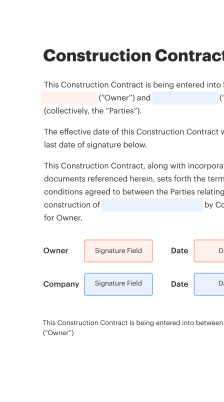
Using a template for sign maintenance invoices speeds generation, reduces data entry mistakes, and ensures consistent billing details across locations and technicians.

Store standardized invoice layouts that teams can duplicate and populate for each job, reducing setup time and ensuring consistent terms, formatting, and required signer fields across multiple locations and technicians.
Create fields for asset IDs, job numbers, technician notes, serial numbers, and warranty codes so invoices capture the exact data needed for service histories and internal tracking without freeform errors.
Configure line-item math for labor, parts, taxes, discounts, and totals to avoid manual arithmetic mistakes and to present an accurate final amount for faster payer processing and fewer disputes.
Maintain timestamped records of when invoices were sent, viewed, signed, and downloaded so you can verify signer actions and meet documentation needs during audits or client inquiries.
Populate a template with recipient data in bulk to distribute invoices to many customers at once while tracking individual delivery and signature status for each recipient.
Connect with accounting systems, CRMs, and cloud storage to sync customer data, post invoices automatically, and archive signed documents in centralized repositories for retention policies.
Link templates to Google Docs and Sheets to populate invoices from spreadsheets, import customer data, and save signed PDFs back to Drive for centralized access and version control.
Sync contact and job data from CRM systems so invoices pre-fill customer details and job history, reducing duplicate data entry and improving billing accuracy across sales and service teams.
Automatically store signed invoices in Dropbox or other storage buckets and apply folder organization rules to maintain retention schedules and facilitate audits without manual uploads.
Use template permissions, conditional fields, and branded layouts so invoices meet corporate policies, include necessary legal language, and adapt fields based on service types or customer categories.
| Workflow Setting Name and Description | Default configuration values |
|---|---|
| Reminder Frequency | 48 hours |
| Approval Sequence Order | Sequential two-step |
| Field Validation Rules | Required fields enforced |
| Auto-archive Retention | 90 days then archive |
| Signer Authentication Method | Email OTP or password |
Verify mobile apps and browser versions before rollout, and confirm PDF rendering and signer authentication flows to avoid interruptions in field placement, signature capture, or audit logging across devices.
A multi-location sign service chain standardizes invoices for technician crews to ensure consistent billing and warranty tracking across territories.
Resulting in faster reconciliations and clearer service histories that simplify customer inquiries and warranty claims.
A facilities contractor integrates invoice templates with its project management system to auto-fill job details for recurring maintenance tasks.
Leading to improved cash flow and fewer client disputes over service scope and charges.
| Comparison Criteria and Signing Options Overview | signNow (Recommended) | Adobe Sign | Paper |
|---|---|---|---|
| Legal validity under ESIGN and UETA | Varies | ||
| Authentication and identity verification | Email OTP | Email OTP & TLS | Handwritten ID |
| Typical completion time for recipients | Minutes to hours | Minutes to hours | Days to weeks |
| Audit trail and tamper evidence | Detailed | Detailed | Limited |
Create redundant backups within 24 hours.
Keep invoices accessible for 1 year.
Retain records for 3 to 7 years.
Store warranty-related invoices per contract length.
Purge per policy after retention period.