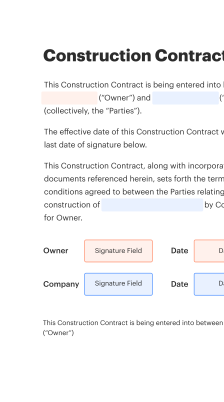
Signature Block Acceptance with SignNow
What signature block acceptance means and how it works
Why a clear signature block acceptance matters
A well-defined acceptance block reduces disputes by documenting intent, creates consistent audit data for compliance, and speeds approvals by guiding signers to the exact place to record consent.
Common challenges when implementing signature block acceptance
- Placement errors that leave the acceptance ambiguous and create disputes over whether the signer intended to agree.
- Inadequate authentication that weakens evidentiary value when legal or regulatory scrutiny arises.
- Integrations that fail to carry acceptance metadata into downstream systems, causing process gaps.
- Cross-jurisdiction differences in electronic signature rules that complicate global acceptance strategies.
Representative users and roles
Legal Counsel
Corporate and compliance attorneys use signature block acceptance to ensure agreements contain verifiable proof of signer intent and a complete audit trail. They review field placement, authentication options, and retention policies to minimize contractual risk and support enforceability under ESIGN and UETA.
HR Manager
Human resources managers configure acceptance blocks for onboarding packets, policy acknowledgments, and payroll forms. They rely on clear acceptance indicators to confirm employee consent, automate recordkeeping, and meet internal retention and audit requirements.
Who relies on signature block acceptance
Organizations across legal, HR, sales, procurement and healthcare teams use acceptance blocks to capture clear consent and reduce processing time.
- Legal teams seeking enforceable signature evidence for contracts and negotiated agreements.
- Human resources teams managing onboarding, policy acknowledgements, and benefit elections.
- Sales and operations using acceptance blocks to finalize orders, quotes, and service agreements.
Clear acceptance fields help each group reduce manual follow-up and maintain a consistent record for audits and internal controls.
Choose a better solution
Core features that support effective signature block acceptance
Acceptance Field Types
Multiple field options such as signature, checkbox, initial, and date ensure the acceptance element matches the document requirement and captures explicit consent in a standardized manner for auditability.
Authentication Options
Flexible signer verification methods including email verification, SMS codes, and two-factor options let administrators choose an assurance level appropriate to the transaction and regulatory needs.
Audit and Tamper Evidence
Comprehensive audit logs record signer actions, IP and device data, and document hashes so the acceptance event can be validated during internal reviews or external compliance checks.
Template Controls
Reusable templates lock acceptance block placement and field settings across documents, reducing human error and ensuring consistent capture of signer intent across recurring workflows.
How signature block acceptance flows in a signing process
-
Document Delivery: Recipient receives the document link
-
Prompt to Accept: Signer sees the acceptance block
-
Authentication: Platform verifies signer identity
-
Audit Recording: System logs timestamp and metadata
Quick setup: create a signature block acceptance
-
01Upload Document: Add the file to the e-sign platform
-
02Place Acceptance Field: Drop a clearly labeled acceptance block
-
03Configure Authentication: Select email, SMS, or 2FA
-
04Save and Send: Finalize settings and dispatch
Why choose airSlate SignNow
-
Free 7-day trial. Choose the plan you need and try it risk-free.
-
Honest pricing for full-featured plans. airSlate SignNow offers subscription plans with no overages or hidden fees at renewal.
-
Enterprise-grade security. airSlate SignNow helps you comply with global security standards.
Recommended workflow settings for reliable signature block acceptance
| Workflow Setting Name and Value | Default configuration value or short description |
|---|---|
| Reminder Frequency | 48 hours |
| Signer Authentication Level | Email with optional SMS |
| Acceptance Field Locking | Locked after signing |
| Retention Period | Minimum seven years |
| Audit Trail Depth | Full event logging enabled |
Industry examples demonstrating signature block acceptance
Healthcare Consent
A hospital presents an electronic treatment authorization form with a clearly labeled acceptance block and identity verification steps for patients.
- The system requires a signed acceptance field plus authentication.
- This reduces administrative follow-up and secures a timestamped record of consent for medical procedures.
Resulting in a defensible patient consent record and streamlined checking during billing and audits.
Real Estate Closing
A brokerage uses an e-signature process that anchors acceptance blocks next to signature lines on purchase contracts and disclosures.
- The workflow captures signer IP, timestamp, and authentication level.
- This preserves chain-of-custody and reduces late-stage disputes over execution.
Leading to faster closings, clearer title documentation, and fewer post-closing contract challenges.
Best practices for secure and accurate acceptance blocks
FAQs About signature block acceptance
- Is signature block acceptance legally binding in the United States?
Yes. Under ESIGN and UETA, electronic records and signatures, including clearly documented acceptance blocks, are generally enforceable when they demonstrate signer intent and consent and are reliably associated with the signed record.
- What authentication level is recommended for high-risk documents?
For high-value or regulated transactions, require stronger authentication such as SMS one-time passcodes, knowledge-based verification, or identity verification services to provide greater assurance of signer identity and help meet compliance expectations.
- How do I prove a signer actually accepted the signature block?
Maintain an immutable audit trail with timestamps, signer identifiers, IP and device metadata, and document hashes. Show the acceptance field placement and related instructions to demonstrate the signer had clear opportunity to review and accept.
- What are common reasons an acceptance is disputed?
Disputes often arise from ambiguous field placement, unclear language, lack of authentication, missing audit data, or procedural errors during transmission that create uncertainty about signer intent or who completed the action.
- How should documents be prepared for consistent acceptance capture?
Use templates with locked acceptance blocks, clear labeling, contextual instructions, and required fields. Test workflows for edge cases, and ensure integrations preserve acceptance metadata when exporting or archiving documents.
- What retention and backup practices support acceptance records?
Retain signed documents and full audit logs per legal and policy requirements, implement regular backups with encryption, and apply access controls. Retention periods should align with regulatory obligations such as tax, healthcare, or education records.
Feature and compliance matrix: signature block acceptance capabilities
| Feature and Compliance Matrix for Providers | signNow | DocuSign | Adobe Sign |
|---|---|---|---|
| Support for HIPAA-compliant electronic workflows | |||
| Bulk Send or Mass Sending Capabilities | |||
| API access and developer toolset availability | |||
| Template library and reusable field templates |
Get legally-binding signatures now!
Risks from poorly implemented acceptance blocks
Pricing snapshot across common e-sign providers
| Pricing Comparison Table | signNow | DocuSign | Adobe Sign | Dropbox Sign | PandaDoc |
|---|---|---|---|---|---|
| Free Tier Availability | Limited free trial or free features | Limited trial offer | No permanent free plan | Free for basic single-user usage | Free trial available |
| Entry-level Price | From $8/user/mo | From $10/user/mo | From $9/user/mo | From $10/user/mo | From $19/user/mo |
| API Access Included | Available across plans | Available with API plans | Available with subscription | Available in paid plans | Available in paid plans |
| Advanced Authentication Options | 2FA and SMS options available | Multi-factor options available | Enterprise authentication available | 2FA options available | SSO and 2FA in premium plans |
| Typical Target Customers | Small to large businesses | Large enterprise and regulated sectors | Enterprises and agencies | SMBs and Dropbox users | Sales and marketing teams |
Make simpler complicated workflows
Generate, deliver, and maintain workflows of any intricacy, digitally from almost anywhere. Scalable electronic signature functionality enable you to exchange contracts with the right people in the proper sequence and define roles for every recipient. Perform document workflows faster and easier than ever before.
Automate document flow
Improve complex signing tasks with airSlate SignNow�s powerful functions to boost your operation. Take control of your automated eSignature workflows to ensure they're running at top efficiency with quick notifications and alerts.
Enhance in team collaboration
Join teammates together in a safe, shared workplace. Manage paperwork, use form templates and notifications to deliver better cross-organization interaction. Free your workers from having to spend time on repeating routines so that they can concentrate on valuable, business-crucial activities.
Integrate into your current network
Manage your tasks with industry-leading integration. Assemble Salesforce, Microsoft Teams, and SharePoint in multi functional business stream. Hook up your applications to a single environment for endless opportunities and more performance.
Remain compliant with market-leading data safety
Feel safe understanding that your data remains secure by the most recent in encryption security. airSlate SignNow is GDPR and eIDAS compliant and offers you visibility into your eSigning procedure with court-admissible audit trails. Set up user authorization and roles to control who has access to what.