Signature Block Construction Proposal for Secure eSignatures

Get rid of paper and automate digital document management for higher performance and endless opportunities. Discover a greater strategy for running your business with airSlate SignNow.

Award-winning eSignature solution

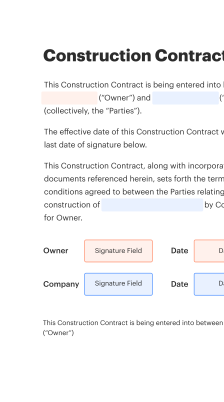
What signature block construction proposal means

A signature block construction proposal combines the standard elements of a construction contract signature block with electronic signature workflows to create a verifiable, consistent closing section for proposals and contracts. It defines signer names, titles, dates, company details, and any witness or notary lines, and aligns those fields with authentication methods, audit trails, and document seals. In practice this ensures each party’s acceptance is captured in a tamper-evident record that can be integrated into proposal templates, stored for retention, and referenced during project execution and audits.

Why standardize signature blocks in construction proposals

Standardized signature blocks reduce errors, accelerate approvals, and improve legal clarity by ensuring all required signer details and authentication settings are consistently applied across proposals.

Why standardize signature blocks in construction proposals

Common challenges when building signature blocks

  • Inconsistent formatting across documents causes missing fields and signer confusion, delaying approvals and increasing rework.
  • Manual signature processes create scheduling delays and paper handling inefficiencies that slow project start dates.
  • Insufficient authentication or missing signer information increases the risk of disputes and contract invalidation.
  • Poor integration with procurement and CRM systems means signed proposals are not automatically recorded in project workflows.

Typical user roles for signature block workflows

Project Manager

Project managers prepare and review proposals, coordinate signer order, and verify that signature blocks contain required titles and dates. They use standardized blocks to ensure approvals are correctly routed and recorded for compliance and project handover.

Contract Administrator

Contract administrators maintain template libraries, apply role-based signing rules, and reconcile executed proposals with contract registers. They rely on audit trails and retention settings to support dispute resolution and regulatory reviews.

Who uses signature block construction proposals

Construction firms, general contractors, subcontractors, and project owners commonly rely on standardized signature blocks for consistent contract execution.

  • General contractors managing multiple subcontractor agreements and purchase orders across projects.
  • Project owners and developers needing clear acceptance records for budgets and scope approvals.
  • Estimators and sales teams sending formal proposals that require verifiable client approval.

These stakeholders benefit from reduced administrative friction, clearer audit records, and improved alignment between proposals and downstream project documentation.

Key tools that support signature block construction proposals

Effective signature block workflows combine template control, authentication, mobile support, integrations, and automation to ensure consistent, auditable execution of construction proposals.

Template Library

Reusable signature block templates let teams embed standardized fields, titles, and witness lines into proposals to maintain consistency and reduce preparation time across multiple projects and document types.


Role-Based Signing

Assign signing roles and order so the correct representative from each party signs in sequence, enforcing corporate signatory limits and ensuring approvals follow contractual requirements.

Bulk Send

Distribute identical proposal documents and signature blocks to many recipients efficiently, while tracking responses and ensuring each file captures a complete audit trail and signer metadata.

Mobile Signing

Support for signing on smartphones and tablets enables field personnel and on-site stakeholders to sign proposals immediately, reducing delays caused by travel or office-only approval processes.

Conditional Fields

Conditional logic displays or hides signature block elements based on project type or contract value, keeping proposals concise while ensuring required fields appear when applicable.

API Integration

APIs connect signature block workflows to CRM, ERP, and document management systems so executed proposals populate project records and trigger downstream processes reliably.
be ready to get more

Choose a better solution

How electronic signature blocks operate in proposals

This flow describes the typical sequence from document creation to an executed, recorded signature block within a proposal.

  • Upload: Import the proposal into the eSignature platform.
  • Tag fields: Insert signature block and signer fields precisely.
  • Authenticate: Verify signer identity with chosen methods.
  • Execute: Collect signatures and secure the finalized file.
Collect signatures
24x
faster
Reduce costs by
$30
per document
Save up to
40h
per employee / month

Quick steps to build a signature block for a construction proposal

Follow these essential actions to prepare a signature block that captures required signer details and aligns with your eSignature process.

  • 01
    Prepare document: Assemble proposal text and required attachments.
  • 02
    Add block fields: Place name, title, company, date, and witness fields.
  • 03
    Set authentication: Choose access and verification methods for signers.
  • 04
    Send and store: Distribute for signature and archive executed copies.

Audit trail checklist for signature block transactions

Use these audit elements to ensure each executed signature block is verifiable, timestamped, and defensible in dispute resolution.

01

Event capture:

Record every user action
02

Timestamps:

UTC time of each event
03

IP logging:

Capture signer IP addresses
04

Document hashing:

Store cryptographic hash
05

Exportable logs:

Downloadable audit reports
06

Retention control:

Apply policy-driven retention
be ready to get more

Why choose airSlate SignNow

  • Free 7-day trial. Choose the plan you need and try it risk-free.
  • Honest pricing for full-featured plans. airSlate SignNow offers subscription plans with no overages or hidden fees at renewal.
  • Enterprise-grade security. airSlate SignNow helps you comply with global security standards.
illustrations signature

Automation and workflow configuration for signature blocks

These settings outline common workflow configurations used to automate signature block application and routing in proposal workflows.

Setting Name Configuration
Signature sequencing rules Fixed order
Reminder Frequency 48 hours
Conditional field logic Enabled by template
Archival retention policy 7 years
API callback/webhook Event-driven webhook

Supported platforms for signing and administration

Accept signatures and manage signature blocks from common desktops, tablets, and smartphones using modern browsers or platform apps.

  • Desktop: Windows and macOS supported
  • Mobile: iOS and Android apps available
  • Browsers: Chrome, Edge, Safari compatible

For consistent results, ensure devices run current OS versions and browsers, enable TLS 1.2 or higher, and validate app updates; follow organizational IT policies for device management and secure access.

Security features relevant to signature block proposals

Encryption: AES-256 at rest and in transit
Audit Trail: Full event logging
Access Controls: Role-based permissions
Two-Factor: Optional two-step verification
Document Sealing: Tamper-evident seals
Compliance Modes: HIPAA and FERPA options

Real-world examples of signature block use

Two brief case summaries show how standardized electronic signature blocks improved proposal accuracy and project timelines in construction settings.

Case Study 1

A mid-sized general contractor standardized signature blocks across bid packages to remove missing signatory details and speed approvals.

  • Template automation reduced field omissions.
  • Approval time fell by two days on average.

Resulting in faster contract execution and clearer audit records for project closeouts.

Case Study 2

A specialty subcontractor integrated signature block templates with its CRM to attach signed proposals directly to customer records.

  • Integration eliminated manual uploads.
  • Administrative time per contract dropped significantly.

Leading to improved billing accuracy and a consistent repository of verified authorizations for compliance checks.

Best practices for secure and accurate signature blocks

Follow these practices to minimize disputes, speed approvals, and maintain strong compliance when using signature blocks in construction proposals.

Standardize signature block layout across templates
Create centrally managed templates that include required signer name, title, company, date, and any witness or notary lines. Consistent layout reduces omissions and accelerates reviewer familiarity during approval and audit.
Require explicit signer identity fields
Collect full printed name, job title, and contact information adjacent to the signature to make the signer’s authority and role clear for contract enforcement and recordkeeping.
Apply appropriate authentication levels
Match authentication strength to contract risk. Use multi-factor or certificate-based verification for high-value or regulatory-sensitive proposals to increase evidentiary weight.
Keep detailed, exportable audit logs
Retain timestamped event logs, IP data, and version history in a format suitable for legal review or third-party audits, and ensure logs are backed up according to retention policy.

FAQs About signature block construction proposal

Common questions and practical answers about creating, validating, and managing signature blocks in construction proposals.

Feature comparison: electronic signature support for proposal signature blocks

A compact comparison of common capabilities that affect how signature blocks are created, authenticated, and tracked across popular eSignature vendors.

Criteria signNow (Featured) DocuSign Adobe Sign
Native template support
Bulk Send capability
Mobile app availability
Audit trail completeness Full logs Full logs Full logs
be ready to get more

Get legally-binding signatures now!

Document retention and deadline considerations

Retention policies and important deadlines help ensure executed signature blocks remain available for legal and operational purposes.

Retention policy length:

Align retention with contract and regulatory requirements, commonly seven years for construction records.

Signature expiry windows:

Set reasonable signing deadlines, for example 14 to 30 days, to avoid stale approvals.

Renewal reminders:

Automate reminders 7 and 3 days before expiration for time-sensitive proposals.

Export schedules:

Regularly export executed records for backup and compliance archives.

Legal hold procedures:

Implement holds to prevent deletion during disputes or audits.

Risks and potential penalties from poor signature blocks

Contract disputes: Increased litigation risk
Payment delays: Delayed invoicing cycles
Regulatory fines: Noncompliance penalties
Reputation damage: Client trust erosion
Project delays: Construction schedule impacts
Data exposure: Potential breaches

Pricing and plan comparisons relevant to construction proposals

Comparing entry-level pricing and key plan inclusions that affect how vendors support signature block usage in proposals and contract workflows.

Plan / Feature signNow (Featured) DocuSign Adobe Sign HelloSign PandaDoc
Entry-level price per user Starting $8/user/month Starting $10/user/month Starting $9.99/user/month Starting $15/user/month Starting $19/user/month
Free trial availability Yes, limited Yes, limited Yes, limited Yes, limited Yes, limited
API access included Available in paid plans Available in paid plans Available in paid plans Paid plans include API Paid plans include API
Bulk send in base plan Included on select plans Add-on or higher plan Included on select plans Included on select plans Included on higher plans
HIPAA compliance option Available for enterprise Available enterprise option Available enterprise option Available with business plans Available with enterprise plans

Streamline challenging workflows

Create, execute, and manage workflows of any intricacy, digitally from almost anywhere. Scalable eSignature capabilities enable you to exchange contracts with the right users the proper sequence and assign roles for every receiver. Perform document workflows faster and easier than ever before.

Automate document management

Optimize complicated signing tasks with airSlate SignNow�s effective functions to enhance your operation. Take control of your automatic signature workflows to make sure they're operating at peak functionality with fast notifications and alerts.

Enhance in team communication

Bring teams together in a secure, shared environment. Handle paperwork, use form templates and notices to produce better cross-company interaction. Relieve your staff from having to hang out on recurring routines to enable them to focus on beneficial, business-crucial activities.

Integrate into your existing systems

Run your assignments with best-in-class integration. Assemble Salesforce, Microsoft Teams, and SharePoint in one business stream. Link up your software to a single unit for limitless opportunities and higher efficiency.

Remain compliant with best-in-class data security

Feel confident knowing that your data is protected by the newest in encryption security. airSlate SignNow is GDPR and eIDAS compliant and provides you visibility into your signing procedure with court-admissible audit trails. Set up user authorization and roles to regulate who has access to what.


walmart logo
exonMobil logo
apple logo
comcast logo
facebook logo
FedEx logo
be ready to get more

Get legally-binding signatures now!