Signature Demand: Secure eSignature Solutions

Get rid of paper and improve document managing for increased efficiency and countless possibilities. Explore a greater strategy for doing business with airSlate SignNow.

Award-winning eSignature solution

What signature demand means for document workflows

Signature demand refers to the process of formally requesting one or more electronic signatures on a document or package, tracking signer actions, and recording a verifiable audit trail. It covers preparing documents, assigning signing order, authenticating signers, and managing reminders and expirations. In U.S. contexts signature demand workflows are typically implemented with eSignature platforms that comply with ESIGN and UETA, integrate with storage or CRM systems, and support role-based access to protect sensitive data while keeping execution times fast and auditable.

Why an organized signature demand process matters

A structured signature demand reduces execution time, lowers administrative overhead, and creates a consistent, auditable process for approvals and agreements across teams and systems.

Why an organized signature demand process matters

Common challenges when managing signature demand

  • Unclear signing order creates delays and requires manual follow-up to determine next steps.
  • Poor authentication increases legal risk and may make signed documents harder to defend in disputes.
  • Scattered storage and inconsistent retention policies complicate retrieval and regulatory compliance.
  • Lack of automation for reminders and batching wastes staff time and slows transaction throughput.

Representative users and their typical needs

Procurement Manager

Responsible for large-volume vendor contracts and renewals; needs bulk sending, sequential signing, and a clear audit trail to demonstrate contract lifecycles and approvals for internal audits.

HR Director

Handles sensitive employee documents requiring secure access controls and retention; requires templates for consistency, authentication options for identity verification, and integrations with HR systems for automated record keeping.

Teams and roles that commonly initiate signature demand

Legal, HR, sales, procurement, and operations teams regularly start signature demand processes to finalize contracts, onboarding, and approvals.

  • Legal teams managing contract execution and enforcement across stakeholders.
  • Sales teams closing deals and collecting client agreements efficiently.
  • HR and compliance teams handling onboarding, benefits, and policy acknowledgements.

Centralizing requests through consistent templates and defined roles reduces exceptions and makes signature demand predictable and auditable.

Core features that support efficient signature demand

Effective signature demand tools combine document tools, signer controls, automation, and compliance features to keep transactions fast, secure, and auditable.

Templates

Reusable document templates reduce repetitive setup for common agreements and ensure consistent field placement, standard clauses, and signer roles across multiple transactions.


Bulk Send

Send identical documents to many recipients simultaneously with individualized fields, reducing manual sending time and improving parallel processing of similar signature demands.

Sequential Signing

Define signing order to enforce approvals and reviews in a fixed sequence, preventing out-of-order execution and preserving intended authorization workflows.

Authentication Controls

Support for email verification, SMS codes, and third-party identity checks enables stronger signer verification when needed for higher-value or regulated documents.

Audit Trail

A complete, tamper-evident record of actions, timestamps, IP addresses, and document versions that supports legal defensibility and internal audit requirements.

Integrations

Connectors for CRMs, storage, and document editors automate sending, retrieval, and storage of signed documents within existing enterprise systems and processes.

be ready to get more

Choose a better solution

Integrations and templates that streamline signature demand

Integrations and template capabilities are essential for scaling signature demand across departments while maintaining consistency, security, and data flow.

Google Docs Integration

Create or import documents from Google Docs, map fields, and send directly for signature while preserving version history and reducing copy-paste errors.

CRM Connectors

Link signature demand to CRM records so agreements auto-populate customer data, update deal stages, and store executed documents on contact or account records.

Cloud Storage Sync

Automatic storage to Dropbox, Google Drive, or other cloud repositories ensures signed documents are archived according to team storage practices.

Reusable Templates

Save preconfigured templates with fields, roles, and reminders to shorten preparation time and standardize legal language across recurring signature demands.
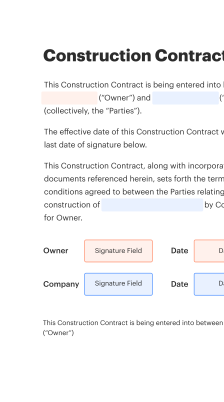
How signature demand flows through a transaction

A typical signature demand passes through document preparation, signer notification, signature capture, and final archiving with audit details captured at each step.

  • Prepare: Create templates and place signing fields.
  • Notify: Send signer invitations with instructions.
  • Sign: Signers complete fields and apply signatures.
  • Archive: Store final PDF with audit trail.
Collect signatures
24x
faster
Reduce costs by
$30
per document
Save up to
40h
per employee / month

Step-by-step: Create a signature demand request

Follow these core steps to prepare, send, and complete a signature demand with clear roles and verifiable records.

  • 01
    Prepare document: Upload and convert source file for eSigning.
  • 02
    Assign roles: Set signer order and responsibilities.
  • 03
    Select authentication: Choose email, SMS, or ID check.
  • 04
    Send and monitor: Track status and send reminders.

Audit trail checklist for signature demand transactions

Capture and preserve these key audit elements to maintain the legal and operational integrity of each signature demand transaction.

01

Document version:

Record file hash or checksum
02

Signer identity:

Method and result
03

Timestamps:

Sign and event times
04

IP addresses:

Log origin addresses
05

Field changes:

Track edits and who made them
06

Final certificate:

Embed completion summary
be ready to get more

Why choose airSlate SignNow

  • Free 7-day trial. Choose the plan you need and try it risk-free.
  • Honest pricing for full-featured plans. airSlate SignNow offers subscription plans with no overages or hidden fees at renewal.
  • Enterprise-grade security. airSlate SignNow helps you comply with global security standards.
illustrations signature

Suggested configuration for signature demand automation

These settings represent a typical baseline configuration to automate reminders, signing order, and archival for signature demand workflows.

Setting Name Configuration
Reminder Frequency 48 hours
Signing Order Mode Sequential
Default Authentication Email
Auto-Archive Delay 1 day
Retention Policy 7 years

Platform support for signature demand across devices

Signature demand tools should support modern browsers, mobile apps, and responsive interfaces so signers can complete requests on any device.

  • Desktop browsers: Chrome, Edge, Safari
  • Mobile platforms: iOS and Android apps
  • Offline signing: Limited support

Ensure your chosen solution provides secure mobile SDKs or native apps for on-the-go signers, consistent rendering across devices, and integration points for enterprise single sign-on and accessibility needs.

Security controls relevant to signature demand

Encryption in transit: TLS 1.2+ protection
Encryption at rest: AES-256 storage
Access controls: Role-based permissions
Authentication options: Email, SMS, OAuth
Audit logging: Comprehensive event logs
Data residency: US-based storage available

Practical examples of signature demand in action

These examples show how signature demand applies across common business processes and the tangible benefits for each scenario.

Vendor Contract Lifecycle

A procurement team prepares a master services agreement with clause-specific fields for each vendor to complete

  • bulk send and sequential signing reduce administrative touchpoints
  • standardized authentication reduces contract disputes and speeds onboarding

Leading to faster vendor activation and clearer audit evidence for compliance reviews.

New Hire Onboarding

An HR department issues an onboarding packet including offer letter, tax forms, and policy acknowledgements in a single request

  • prefilled templates and role-based fields minimize signer errors
  • secure identity verification protects personal data while preserving record integrity

Resulting in shorter administrative cycles and consistent retention of signed employee records.

Best practices for secure and accurate signature demand

Adopt consistent policies and technical controls to reduce errors, improve compliance, and preserve the evidentiary value of signed documents.

Use standardized templates and field validation
Establish validated templates with required fields and format checks to reduce signer errors, speed completion, and ensure documents meet internal and regulatory formatting requirements.
Enforce role-based signing order and permissions
Define clear signer roles and sequence to ensure approvals occur in the correct order and that sensitive fields are only editable by authorized users.
Apply appropriate authentication based on risk
Match identity verification strength to transaction sensitivity, using SMS or ID verification for high-value agreements and basic email authentication for routine approvals.
Maintain retention policies and exportable audit logs
Preserve signed documents and their audit trails according to legal and business retention schedules, and ensure logs are exportable for audits or legal review.

FAQs about signature demand and common troubleshooting

Answers to frequent questions address legal validity, signer access issues, and steps to recover or reissue signature demand requests.

Feature comparison for common eSignature vendors on signature demand

A concise comparison of how leading providers support signature demand features commonly used in U.S. business and compliance contexts.

Comparison Criteria for eSignature Options signNow (Featured) DocuSign Adobe Acrobat Sign
ESIGN / UETA compliance
Bulk Send capability
API access and SDKs Available Available Available
HIPAA-ready options BAA available BAA available Enterprise BAA
be ready to get more

Get legally-binding signatures now!

Document retention and signature demand deadlines

Set retention and expiration rules to meet regulatory, contractual, and operational requirements for signed documents and related metadata.

Standard retention timeframe:

7 years

Short-term operational records:

1 year

Employment and HR records:

Duration per policy

Contract expiration actions:

Notify 90 days prior

Audit log retention:

Minimum 7 years

Risks from poorly managed signature demand

Regulatory exposure: Fines or penalties
Contract disputes: Enforceability issues
Data breaches: Unauthorized access
Operational delays: Missed deadlines
Audit failures: Incomplete evidence
Reputational harm: Business impact

Pricing and plan characteristics across signature demand providers

Overview of entry-level pricing and common plan features that impact cost and scalability for signature demand operations.

Provider signNow (Recommended) DocuSign Adobe Acrobat Sign HelloSign PandaDoc
Starting price (per user) From $8/user/mo From $10/user/mo From $14.99/user/mo From $13/user/mo From $19/user/mo
Free trial availability Free trial available Free trial available Free trial available Free trial available Free trial available
Bulk Send included Included on select plans Included on business plans Included on business plans Limited Included on business plans
API access Available with API plans Available Available Available Available
HIPAA compliance options BAA offered on business plans BAA offered Enterprise BAA Available with BAA Available with BAA

Simplify complex workflows

Generate, execute, and maintain workflows of any complexness, electronically from virtually anywhere. Scalable eSignature features enable you to share contracts with the right users the correct way and define roles for every signee. Complete document workflows faster and easier than ever before.

Automate document management

Improve complicated signing processes with airSlate SignNow�s highly effective tools to boost your operation. Take control of your automated eSignature workflows to make sure they're running at peak performance with quick notifications and alerts.

Enhance in team collaboration

Get teams together in a protected, shared environment. Manage documents, use form templates and notices to produce more efficient cross-company communication. Free your employees from having to hang out on recurring activities so that they can concentrate on valuable, business-critical activities.

Integrate into your current network

Run your jobs with best-in-class integration. Assemble Salesforce, Microsoft Teams, and SharePoint in one business flow. Connect your applications to a single unit for countless possibilities and more productivity.

Stay compliant with market-leading data protection

Feel safe knowing that your data is protected by the most recent in encryption security. airSlate SignNow is GDPR and eIDAS certified and provides you awareness into your signing procedure with court-admissible audit trails. Configure user authorization and roles to regulate who has access to what.


walmart logo
exonMobil logo
apple logo
comcast logo
facebook logo
FedEx logo
be ready to get more

Get legally-binding signatures now!