Signature Letter Solutions with SignNow

Eliminate paperwork and automate document processing for increased productivity and limitless possibilities. Enjoy the perfect way of doing business with airSlate SignNow.

Award-winning eSignature solution

What a signature letter is and how it’s used

A signature letter is a document that records a signer’s intent, approval, or authorization by including a signature and contextual details such as date, recipient, and purpose. In modern workflows this can be delivered electronically, using eSignature platforms that capture identity, time, and document integrity. For many U.S. transactions, an electronic signature on a signature letter meets legal standards under ESIGN and UETA when the process preserves intent, consent, and an audit trail. Organizations use signature letters for agreements, authorizations, disclosures, and confirmations across administrative and regulated processes.

Why a formal signature letter matters

A clear signature letter establishes signer intent, creates an auditable record, and reduces disputes by documenting terms and consent in a single document, whether signed on paper or electronically.

Why a formal signature letter matters

Common challenges when managing signature letters

  • Missing or ambiguous signer intent increases the risk of unenforceable agreements and dispute resolution costs.
  • Manual routing and physical signatures create delays, lost documents, and inconsistent retention practices across teams.
  • Limited authentication and weak audit trails make it harder to prove validity in regulated or contested transactions.
  • Inefficient template use and version control lead to inconsistent language and increased legal or operational exposure.

Typical roles drafting and sending signature letters

HR Manager

An HR manager prepares offer letters, policy acknowledgements, and termination notices. They need consistent templates, signer authentication, and an audit trail to demonstrate consent and meet employment record retention requirements.

Compliance Officer

A compliance officer oversees signature letters for regulated processes, ensuring authentication methods, document retention, and logging meet internal policies and applicable U.S. regulations such as HIPAA or FERPA where relevant.

Who relies on signature letters

Teams across industries use signature letters to document approvals, consents, and transactional commitments where a clear, dated signature is required.

  • Human resources for offer letters, policy acknowledgements, and employment authorizations.
  • Real estate and lending for disclosures, loan authorizations, and closing acknowledgements.
  • Healthcare and education for consents, authorizations, and records release forms.

Organizations prioritize signature letters where legal validity, recordkeeping, and rapid turnaround are necessary for daily operations and compliance.

Advanced features that support signature letter programs

For organizations managing high volumes or regulated signature letters, advanced features provide control, scale, and compliance support.

Team Templates

Centralized template libraries with role permissions let teams reuse approved language while controlling who can edit or deploy signature letter templates.


Bulk Send

Automated bulk distribution lets administrators send signature letters to many recipients with individualized tracking and status reporting for each signer.

Conditional Fields

Fields that appear based on prior responses reduce signer confusion and ensure signature letters collect only relevant data for each scenario.

Advanced Authentication

Options like SMS, knowledge-based verification, or multi-factor authentication match security to document sensitivity and compliance needs.

API Access

Programmatic document creation and signing integrate signature letters into proprietary systems and automate end-to-end workflows.

Enterprise Controls

Account-level policies, SSO, and audit exports support governance and large-scale administration of signature letter programs.

be ready to get more

Choose a better solution

Key tools that improve signature letter workflows

Specific features streamline creation, authentication, and recordkeeping for signature letters when integrated into existing document processes.

Templates

Reusable signature letter templates enforce consistent language and required fields, reducing drafting time and the risk of missing clauses or signature blocks across repeated transactions.

Bulk Send

Send identical signature letters to many recipients in a single operation, tracking responses and reducing manual distribution for mass acknowledgements or standard authorizations.

Integrations

Connect with Google Docs, CRMs, and cloud storage to streamline document creation, prefill fields from records, and save signed letters directly to established folders.

Audit Trail

Comprehensive event logs record timestamps, IP addresses, and actions to support legal validity and internal compliance reviews for signed documents.
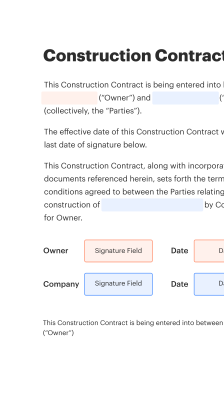
How electronic signature letters typically work

Electronic signature letters use a sequence of upload, prepare, authenticate, and record steps to capture intent and preserve integrity.

  • Upload: Add the document to the eSignature system.
  • Prepare: Place signature, initial, and date fields.
  • Authenticate: Verify signer identity per chosen method.
  • Record: Generate an audit trail and store securely.
Collect signatures
24x
faster
Reduce costs by
$30
per document
Save up to
40h
per employee / month

Step-by-step: drafting a signature letter

Follow these concise steps to prepare a clear, enforceable signature letter suitable for electronic or paper signing.

  • 01
    Define purpose: State the reason and scope briefly.
  • 02
    Include parties: List full legal names and roles.
  • 03
    Specify terms: Describe obligations, dates, and limits.
  • 04
    Capture signature: Provide clear signature block and date.

Managing the audit trail for signature letters

Maintain a clear sequence of records that link the signature letter to signer identity, timestamps, and system events to support validation and compliance.

01

Capture metadata:

Record signer IP, timestamps, and device data.
02

Log actions:

Document uploads, edits, and signature events.
03

Store snapshots:

Preserve final signed document versions.
04

Exportability:

Provide logs in common formats for review.
05

Retention linkage:

Associate audit logs with retention schedules.
06

Legal export:

Produce records suitable for legal review.
be ready to get more

Why choose airSlate SignNow

  • Free 7-day trial. Choose the plan you need and try it risk-free.
  • Honest pricing for full-featured plans. airSlate SignNow offers subscription plans with no overages or hidden fees at renewal.
  • Enterprise-grade security. airSlate SignNow helps you comply with global security standards.
illustrations signature

Typical workflow settings for signature letter automation

Configure core workflow settings to match organizational processes and ensure signature letters route, notify, and expire according to policy.

Setting Name Configuration
Reminder Frequency 48 hours
Signature Order Sequential
Expiration Period 30 days
Notification Recipients Sender and CC list
Auto-archive Enabled

Using signature letters on mobile, tablet, and desktop

Signature letters can be signed and managed across common devices; ensure compatibility and browser support for a predictable signer experience.

  • Desktop browsers: Chrome, Edge, Firefox, Safari
  • Mobile apps: iOS and Android native apps
  • File formats: PDF and common document types

Test device and browser combinations, verify mobile authentication flows, and confirm document rendering before broad deployment to ensure consistent signature letter presentation.

Security features relevant to signature letters

Encryption: At-rest and in-transit
Access controls: Role-based permissions
Audit logging: Detailed event history
Transport security: TLS protected channels
Data residency: Regional storage options
HIPAA support: BAA availability

Industry examples using signature letters

Real-world examples illustrate how signature letters streamline approvals, reduce risk, and create verifiable records in regulated environments.

Healthcare consent form

A clinic converted paper consent letters to signed electronic signature letters to capture patient authorization

  • signed forms used identity verification and time-stamping
  • this reduced clerical errors and improved record retrieval

Resulting in faster check-in and clearer audit records for patient care oversight.

Real estate disclosure

A brokerage standardized seller disclosure signature letters to digital format to ensure consistent language and tracking

  • each document included signer authentication and an audit trail
  • workflows routed documents to legal and escrow automatically

Leading to fewer closing delays and clearer dispute resolution evidence.

Best practices for preparing signature letters

Adopt consistent drafting, authentication, and retention practices to ensure signature letters are clear, enforceable, and auditable.

Use clear, unambiguous language in the document
Draft concise statements of intent and obligations to minimize interpretive disputes, and ensure signature blocks reference the signer’s capacity and date of signing for legal clarity.
Select appropriate signer authentication methods
Choose authentication consistent with transaction risk—email verification for low-risk, knowledge-based or multi-factor authentication for sensitive or regulated documents.
Standardize templates and version control
Maintain centrally managed templates and a single source of truth to avoid inconsistent clauses and to simplify audit and compliance reviews across teams.
Preserve full audit trails and retention metadata
Ensure signed letters include event logs, signatory identifiers, and retention metadata to support legal validity and meet organizational recordkeeping policies.

Frequently asked questions about signature letters

Common questions address legality, authentication, document formatting, and trouble-shooting signer issues for signature letters.

Feature comparison for signature letter platforms

A concise feature table to compare core capabilities relevant to signature letters across popular eSignature providers.

Criteria signNow (Recommended) DocuSign Adobe Sign
eSignature legality
Bulk Send capability
Advanced authentication options SMS/MFA SMS/MFA SSO/MFA
Native integrations Google/CRM/Cloud Salesforce/ERP Adobe ecosystem
be ready to get more

Get legally-binding signatures now!

Retention and review timelines for signature letters

Define retention periods and scheduled reviews to align signature letter storage with legal, operational, and organizational requirements.

Short-term correspondence:

Retain 1–3 years for non-contractual approvals.

Employment records:

Retain 7 years or per state law.

Financial agreements:

Retain 7–10 years for audit purposes.

Healthcare consents:

Retain per HIPAA and state rules.

Permanent records:

Retain indefinitely when legally required.

Risks from poorly managed signature letters

Invalid agreements: Legal unenforceability
Data breaches: Exposure of sensitive data
Regulatory fines: Compliance penalties
Contract disputes: Increased litigation
Operational delays: Process bottlenecks
Reputational harm: Loss of trust

Cost and plan comparison for signature letter needs

High-level plan and capability comparisons to help assess cost drivers and feature availability for signature letter programs.

Provider signNow (Recommended) DocuSign Adobe Sign Dropbox Sign PandaDoc
Free plan availability Free trial & limited free tier Trial only Trial included with Acrobat Limited free trial Trial only
Entry-level user price From $8/user/month billed annually From $10/user/month From $14.99/user/month From $15/user/month From $19/user/month
API access availability Available on APIs plans Available with business APIs Available for enterprise Available via Dropbox API Available via API plans
Bulk Send support Included in business plans Add-on or higher plan Enterprise feature Available on paid plans Available on business plans
Enterprise support options Dedicated support and SLAs Enterprise SLAs and services Enterprise agreements Business support tiers Enterprise customer success

Simplify challenging workflows

Generate, deliver, and control workflows of any complexity, electronically from almost anywhere. Scalable electronic signature capabilities let you share documents with the right people in the correct order and assign roles for every receiver. Complete document workflows faster and simpler than ever before.

Automate document flow

Improve complicated signing tasks with airSlate SignNow�s highly effective features to enhance your business. Control your automated signature workflows to guarantee they're running at peak functionality with instant notifications and reminders.

Enhance in team collaboration

Get teammates together in a protected, shared workspace. Manage documents, use form templates and notices to produce more efficient cross-company collaboration. Free your employees from having to hang out on repetitive actions so that they can focus on beneficial, business-critical tasks.

Integrate into your existing network

Run your tasks with industry-leading integration. Assemble Salesforce, Microsoft Teams, and SharePoint in one business thread. Link your software to a single unit for endless possibilities and more productivity.

Stay compliant with best-in-class data security

Feel safe with the knowledge that your data is protected by the newest in encryption security. airSlate SignNow is GDPR and eIDAS compliant and gives you exposure into your eSigning experience with court-admissible audit trails. Configure user access permissions and rights to manage who has access to what.


walmart logo
exonMobil logo
apple logo
comcast logo
facebook logo
FedEx logo
be ready to get more

Get legally-binding signatures now!