Size Signature for Secure eSignatures with SignNow

Eliminate paperwork and automate digital document management for increased performance and unlimited opportunities. Experience a greater way of running your business with airSlate SignNow.

Award-winning eSignature solution

Understanding size signature in electronic documents

The term size signature refers to the visible footprint or data footprint of an electronic signature within a document and the configurable display dimensions for signature fields. It covers both the visual appearance—pixel or point dimensions used for on-screen and printed copies—and the metadata footprint that accompanies an eSignature event, including hashed data, signer identity tokens, timestamps, and cryptographic markers. For organizations, managing size signature involves balancing clear, readable signature blocks with compact file sizes, cross-device rendering, and the preservation of forensic metadata required for legal validation under U.S. eSignature laws.

Why controlling size signature matters

Managing size signature improves document readability, ensures consistent printing and reduces file bloat while preserving the audit evidence required by ESIGN and UETA for legal validity.

Why controlling size signature matters

Common challenges when handling size signature

  • Large embedded signature images inflate PDF size and complicate email delivery and storage.
  • Inconsistent field dimensions create alignment issues across mobile, tablet, and desktop devices.
  • Removing visual elements can unintentionally strip metadata needed for audit trails and dispute resolution.
  • Organizations may misconfigure compression or flattening, degrading signature legibility on printed records.

Typical roles involved with size signature policy

Legal Counsel

Legal counsel defines retention and evidentiary requirements for signature metadata, ensures templates meet ESIGN and UETA standards, and advises on recordkeeping policies for dispute readiness and regulatory audits.

IT Administrator

IT administrators implement technical settings that control image compression, PDF generation, field dimensions, and integration points to maintain consistent rendering and acceptable storage footprints.

Teams that regularly manage size signature settings

Operations and compliance teams set standards for signature appearance and metadata retention across document workflows.

  • Legal and compliance groups ensuring evidentiary integrity and regulatory alignment.
  • IT and systems administrators managing file sizes, storage, and rendering across platforms.
  • Business users and account managers preparing templates and client-facing documents.

Clear roles and documented procedures reduce rework and ensure consistent signature presentation across departments.

Additional capabilities that impact size signature

Beyond basic controls, platforms include tools that influence signature visibility, forensic integrity, and cross-system compatibility for enterprise workflows.

Template versioning

Version control provides change history for template dimension adjustments, enabling rollback and auditability when signature size standards are updated across an organization.


Conditional fields

Conditional visibility lets signatures or initials appear only when required, minimizing clutter and reducing unnecessary image embedding in routine documents.

Field locking

Locking field properties prevents accidental resizing by template editors, maintaining consistency across distributed template authors and reducing layout drift.

Compression policies

Centralized policies allow administrators to apply uniform compression and flattening rules to signed documents before archival to balance fidelity and storage efficiency.

API controls

APIs that accept explicit size parameters ensure programmatic document generation adheres to signature field standards during automated workflows.

Print-friendly modes

Special rendering options optimize signed documents for printing, scaling signature fields for physical copies while preserving digital audit data.

be ready to get more

Choose a better solution

Key size signature controls in eSignature platforms

Platforms provide controls that directly affect the visual and forensic aspects of signatures; understanding these lets organizations make deliberate configuration choices.

Field dimension presets

Predefined width and height options let administrators apply consistent signature sizes across templates, simplifying document design and ensuring predictable print and on-screen appearance for all signers.

Image compression

Adjustable compression balances image clarity and file size, enabling lower storage and faster transfers while retaining sufficient visual detail for acceptance and recordkeeping.

Metadata retention

Controls for retaining cryptographic hashes, signer identity tokens, and timestamps ensure that audit evidence remains intact even when visual elements are optimized for size.

Device scaling

Responsive rendering options ensure signature fields scale correctly on phones, tablets, and desktops, preserving usability and legal clarity across platforms.
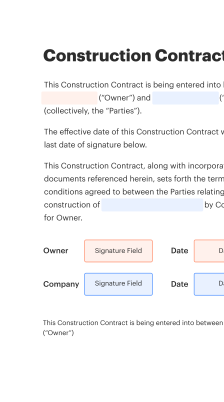
How size signature affects signing workflows

This sequence explains how a chosen size signature setting flows through preparation, signing, and storage phases.

  • Template creation: Set signature field dimensions when creating templates.
  • Signer interaction: Signers see scaled fields on their device screens.
  • Document finalization: System embeds metadata and flattens visual signatures.
  • Archival: Compressed PDFs and audit logs are stored securely.
Collect signatures
24x
faster
Reduce costs by
$30
per document
Save up to
40h
per employee / month

Step-by-step: set a consistent size signature

Follow these core steps to standardize signature field size and associated metadata in your document templates.

  • 01
    Identify standards: Define pixel or point dimensions for signature fields.
  • 02
    Adjust templates: Update all templates with standardized field sizes.
  • 03
    Test rendering: Preview documents on desktop and mobile devices.
  • 04
    Preserve metadata: Ensure audit and cryptographic data are retained.
be ready to get more

Why choose airSlate SignNow

  • Free 7-day trial. Choose the plan you need and try it risk-free.
  • Honest pricing for full-featured plans. airSlate SignNow offers subscription plans with no overages or hidden fees at renewal.
  • Enterprise-grade security. airSlate SignNow helps you comply with global security standards.
illustrations signature

Recommended workflow settings for managing size signature

Below are typical configuration settings to control signature appearance, metadata retention, and automated handling across document workflows.

Workflow Setting Name and Description Default Configuration
Reminder Frequency 48 hours
Signature Field Size Standard 200 x 50 points
Image Compression Level Medium compression
Metadata Retention Duration Indefinite audit logs
Auto-flatten on Completion Enabled for archival

Device and platform considerations for size signature

Verify platform compatibility and rendering differences when standardizing signature dimensions across operating systems and browsers.

  • Supported browsers: Chrome, Edge, Firefox
  • Mobile platforms: iOS and Android
  • Desktop requirements: Recent OS and PDF viewers

Test templates on representative combinations of browser and device to confirm alignment, touchscreen scaling, and that printed outputs match organizational layout requirements before mass deployment.

Security and compliance attributes related to size signature

ESIGN/UETA compliance: Meets U.S. electronic signature law
Audit trails: Cryptographic event records retained
Data encryption: At-rest and in-transit encryption
Access controls: Role-based permissions available
HIPAA support: Optional business-associate configurations
FERPA considerations: Metadata handling for student records

Industry scenarios showing size signature best use

Real-world examples illustrate how size signature settings affect document workflows, compliance, and user experience across sectors.

Mortgage Closings

A lender standardized signature field dimensions across loan packages to ensure consistent print layout

  • Fixed field sizes reduced notarization mismatches
  • Smaller embedded images lowered PDF sizes, improving electronic distribution

Resulting in faster closings and reduced storage costs while preserving full audit trails for compliance.

Healthcare Consent Forms

A clinic reduced embedded image resolution for consent forms to meet storage limits while maintaining timestamped metadata

  • Minimal visual detail kept legal acceptability
  • Reduced file sizes eased EHR integration and backups

Resulting in preserved evidentiary metadata with more efficient recordkeeping and HIPAA-aligned handling.

Practical best practices for size signature management

Implement these practices to achieve consistent appearance, maintain legal evidence, and limit file growth across your eSignature workflows.

Define signature field size standards across teams
Create documented standards that specify pixel or point dimensions for signature and initial fields, ensuring consistent rendering and predictable printed layouts for client-facing documents.
Use vector or optimized image formats where possible
Prefer vector graphics or optimized PNGs for logos and signature images to maintain clarity at smaller sizes while keeping file sizes modest and avoiding raster artifacts when printing.
Preserve audit metadata regardless of visual optimizations
Ensure compression or flattening routines do not remove cryptographic hashes, timestamps, or signer identifiers required for ESIGN/UETA-compliant audit trails and potential legal challenges.
Test templates on representative devices and printers
Regularly validate templates on common mobile devices, web browsers, and printers to check alignment, readability, and that signature fields remain within designed margins without truncation.

FAQs about size signature and resolving common issues

Answers to frequent questions about signature dimensions, rendering issues, audit evidence, and compliance considerations in U.S. workflows.

Feature availability for size signature management

This matrix compares core capabilities related to signature appearance and evidence retention across two widely used eSignature providers.

eSignature Platform Capabilities and Availability Matrix signNow (Recommended) DocuSign
Legally binding under ESIGN/UETA
Native audit trail included
Bulk Send capacity High limits Enterprise limits
Mobile app support iOS and Android iOS and Android
be ready to get more

Get legally-binding signatures now!

Retention and document handling timeframes related to size signature

Establish retention periods and archival timelines that preserve both signed document visibility and associated metadata for compliance and operational needs.

Minimum audit log retention:

7 years

Common document retention period:

3 to 10 years

Temporary signed copy staging:

30 days

Compression review interval:

Annually

Template standard review:

Every 12 months

Risks of misconfigured size signature settings

Evidentiary gaps: Weakened dispute defense
Storage cost increases: Higher cloud fees
Regulatory noncompliance: Potential fines
Rendering errors: Misaligned documents
Data leakage: Exposed PII in images
Operational delays: Rework and support tickets

Feature and policy comparison across eSignature vendors

The table summarizes how several mainstream providers handle size signature-related features, retention, and compliance options at a glance.

Feature signNow (Recommended) DocuSign Adobe Sign Dropbox Sign OneSpan Sign
Free trial availability Yes, trial offered Yes, trial offered Yes, trial offered Yes, trial offered Yes, trial offered
Per-user billing model Monthly and annual options Monthly and annual options Monthly and annual options Monthly and annual options Primarily enterprise pricing
API access and controls REST API with sizing parameters Robust REST API REST API with integrations REST API available Enterprise-focused API
HIPAA-compliant configurations Available via BAA Available via BAA Available via BAA Available via BAA Available via agreements
Enterprise template controls Template locking and policies Advanced template controls Template management Team templates Centralized enterprise templates

Simplify complicated workflows

Create, deliver, and control workflows of any difficulty, digitally from almost anywhere. Scalable eSignature functionality let you exchange documents with the right users the correct sequence and assign roles for every signee. Complete document workflows faster and easier than ever before.

Automate document management

Optimize sophisticated signing procedures with airSlate SignNow�s powerful functions to improve your company. Control your automated eSignature workflows to ensure they're operating at top functionality with quick notifications and reminders.

Enhance in team communication

Join teammates together in a secure, shared environment. Manage documents, use form templates and notifications to create better cross-organization interaction. Free your workers from having to hang out on recurring actions to enable them to center on valuable, business-essential activities.

Integrate into your current systems

Work your projects with industry-leading integration. Capture Salesforce, Microsoft Teams, and SharePoint in multi functional business stream. Connect your applications to a single system for endless possibilities and more efficiency.

Remain compliant with industry-leading data safety

Feel safe knowing that your data remains secure by the newest in encryption security. airSlate SignNow is GDPR and eIDAS certified and gives you exposure into your eSigning process with court-admissible audit trails. Configure user access permissions and roles to control who has access to what.


walmart logo
exonMobil logo
apple logo
comcast logo
facebook logo
FedEx logo
be ready to get more

Get legally-binding signatures now!